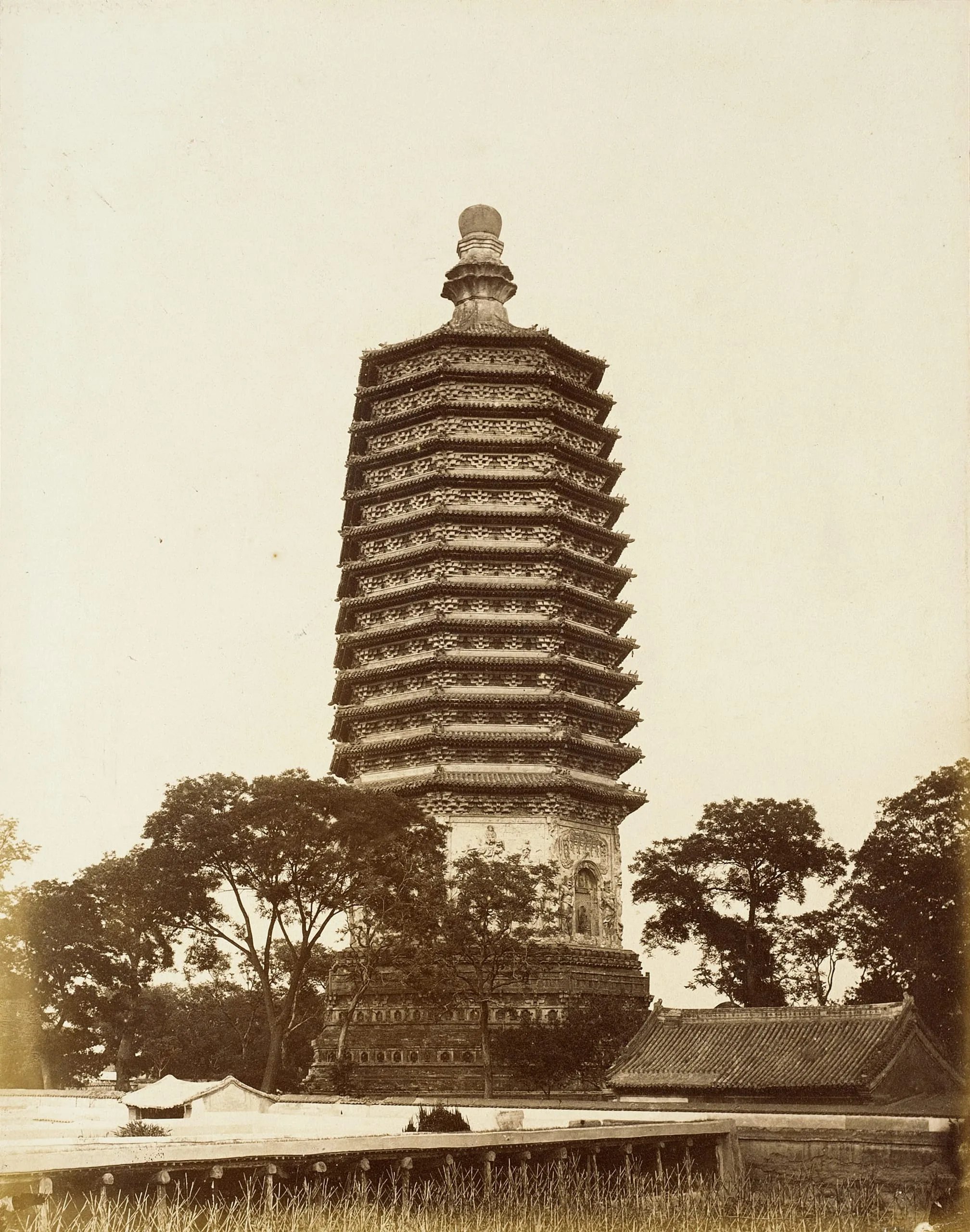
The Tianning Temple, located in the Xicheng District of Beijing, is one of the oldest surviving pagodas in China’s capital city. Built in the Liao dynasty (907–1125) and rebuilt during the Jin (1115–1234) using the advanced engineering techniques of the time, it reflects the evolution of Chinese Buddhist architecture through centuries. The octagonal structure, 189 feet tall with thirteen tiers, is constructed primarily of brick and embellished with intricate stone and wood carvings. The design fuses traditional Indian stupa styles (indicative of Buddhism’s origins) and Chinese architectural elements such as multiple tiers and eaves.
Felice Beato, an Italian-British photographer, spent several months in China in 1860, accompanying British and French military forces during the final stages of the Second Opium War (1856–60). He documented not only the war but also architectural monuments and daily life. Beato was one of the first photographers to create extensive visual records of China, and his work was sold to collectors, published in albums, and used as a reference for illustrations in periodicals.
Britt Salvesen
2025


![Artists Represent Themselves: Frida Orupabo on “Untitled (sources unknown except Shadman Shahid [bottom left])”](/_next/image?url=https%3A%2F%2Funframed.lacma.org%2Fsites%2Fdefault%2Ffiles%2Fstyles%2Farticle_full%2Fpublic%2Ffield%2Fimage%2FM2020_265_1_1-4-20221012-Access.jpg%3Fitok%3DemgBGR8Z&w=828&q=75)


