The Great Wall of China has a history spanning more than 2,000 years, evolving from regional fortifications into a massive defense system. Initially, various warring states built walls for protection, but in 221 BCE, Qin Shi Huang unified and extended them to guard against northern invaders. The Han dynasty (206 BCE–220 CE) further expanded the wall to secure the Silk Road. Subsequently, it was largely neglected until the Ming dynasty (1368–1644), when it was extensively rebuilt with stone and brick, incorporating watchtowers and signal systems to defend against Mongol incursions. With the rise of the Qing dynasty (1644–1911), which controlled lands beyond the wall, it lost its military importance and fell into disrepair.
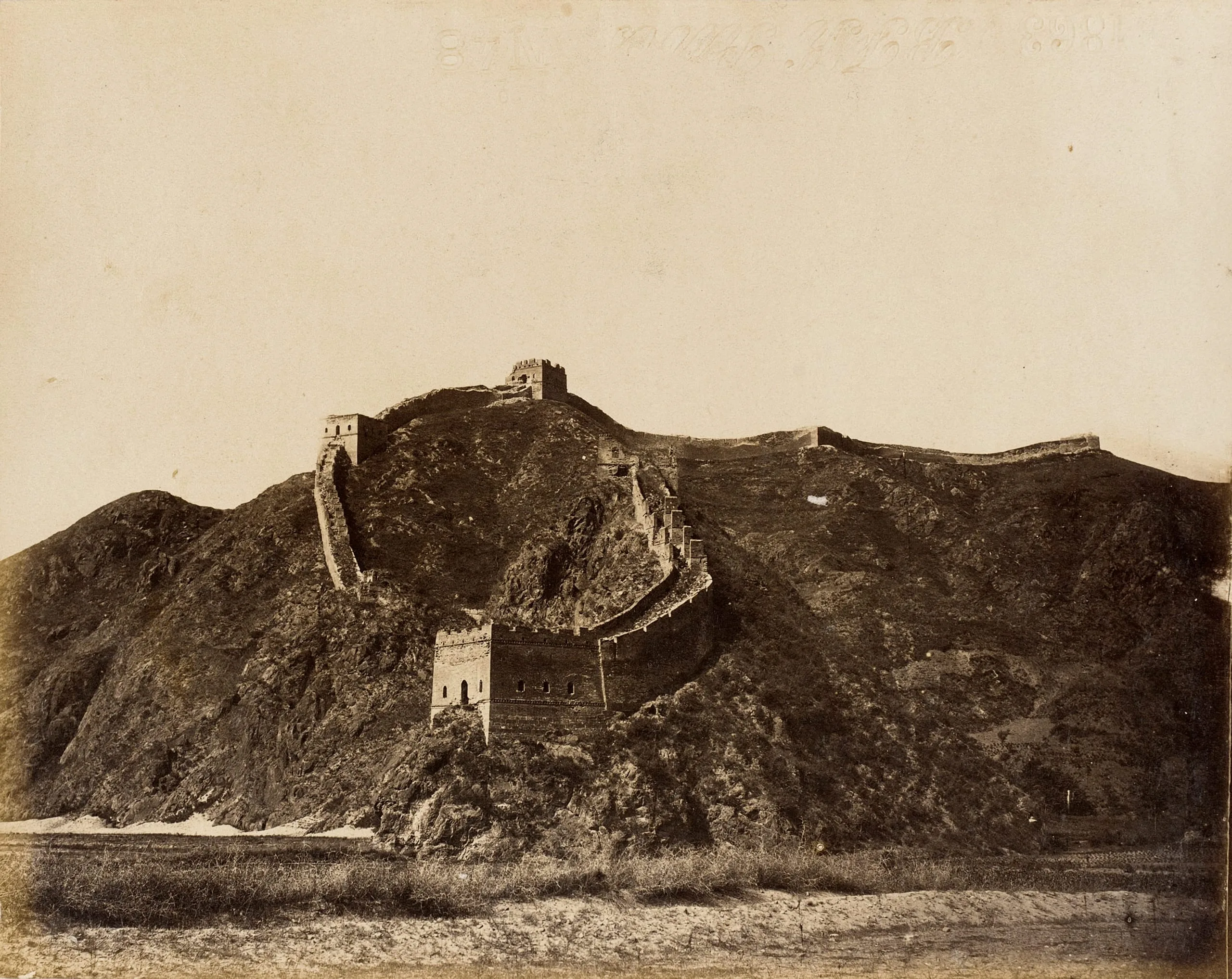
Felice Beato, an Italian-British photographer, spent several months in China in 1860, accompanying British and French military forces during the final stages of the Second Opium War (1856–60). His primary purpose was to document the war and its aftermath, as well as monuments such as the Great Wall. British and French forces bypassed the wall on their way to Beijing, highlighting its declining strategic role. Beato was one of the first photographers to create extensive visual records of China, and his work was sold to collectors, published in albums, and used as a reference for illustrations in periodicals.
Britt Salvesen
2025


![Artists Represent Themselves: Frida Orupabo on “Untitled (sources unknown except Shadman Shahid [bottom left])”](/_next/image?url=https%3A%2F%2Funframed.lacma.org%2Fsites%2Fdefault%2Ffiles%2Fstyles%2Farticle_full%2Fpublic%2Ffield%2Fimage%2FM2020_265_1_1-4-20221012-Access.jpg%3Fitok%3DemgBGR8Z&w=828&q=75)


