- Title
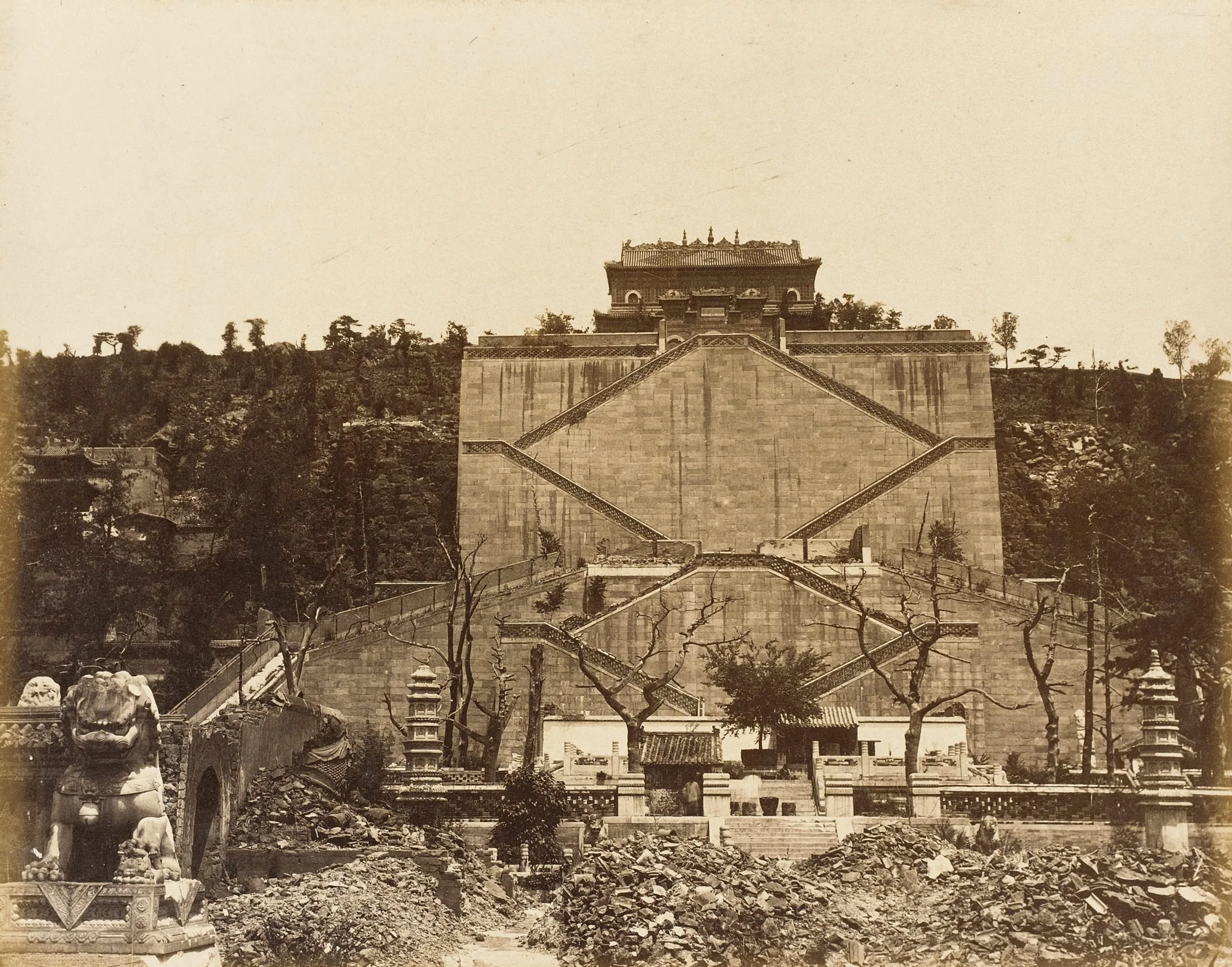
- Untitled
- Date Made
- ca. 1860-1880
- Medium
- Albumen silver print
- Dimensions
- Image: 7 1/2 × 9 1/2 in. (19.05 × 24.13 cm)
Primary support: 7 1/2 × 9 1/2 in. (19.05 × 24.13 cm)
Secondary support: 14 1/4 × 20 3/4 in. (36.2 × 52.71 cm)
Mat: 22 × 18 in. (55.88 × 45.72 cm)
- Accession Number
- M.83.302.39
- Curatorial Notes
Built in 1750 during the Qing dynasty, the Old Summer Palace (Yuanmingyuan) served as a luxurious imperial retreat. It was also a key site for political affairs, as emperors conducted state business there in the summer months. The palace is a masterpiece of traditional Chinese garden design, blending natural landscapes with artificial features such as pavilions, bridges, and corridors. Felice Beato, an Italian-British photographer, spent several months in China in 1860, accompanying the British and French military during the final stages of the Second Opium War (1856–60). His primary purpose was to document the war and its aftermath, including the destruction of the Summer Palace by Anglo-French forces. Seen in ruins in this photograph, the palace was rebuilt in the 1880s under Empress Dowager Cixi, its restoration reflecting China’s resilience in the face of foreign aggression.
Britt Salvesen
2025


![Artists Represent Themselves: Frida Orupabo on “Untitled (sources unknown except Shadman Shahid [bottom left])”](/_next/image?url=https%3A%2F%2Funframed.lacma.org%2Fsites%2Fdefault%2Ffiles%2Fstyles%2Farticle_full%2Fpublic%2Ffield%2Fimage%2FM2020_265_1_1-4-20221012-Access.jpg%3Fitok%3DemgBGR8Z&w=828&q=75)


