LACMA

ShopMembershipMyLACMATickets
LACMA
Los Angeles County Museum of Art
5905 Wilshire Blvd.
Los Angeles, CA 90036
info@lacma.org
(323) 857-6000
Sign up to receive emails
Subscribe
© Museum Associates 2025

Museum Hours

Monday

11 am–6 pm

Tuesday

11 am–6 pm

Wednesday

Closed

Thursday

11 am–6 pm

Friday

11 am–8 pm

Saturday

10 am–7 pm

Sunday

10 am–7 pm


  • About LACMA
  • Jobs
  • Building LACMA
  • Host An Event
  • Unframed
  • Press
  • FAQs
  • Log in to MyLACMA
  • Privacy Policy
© Museum Associates 2025
Collections

Rufino Tamayo
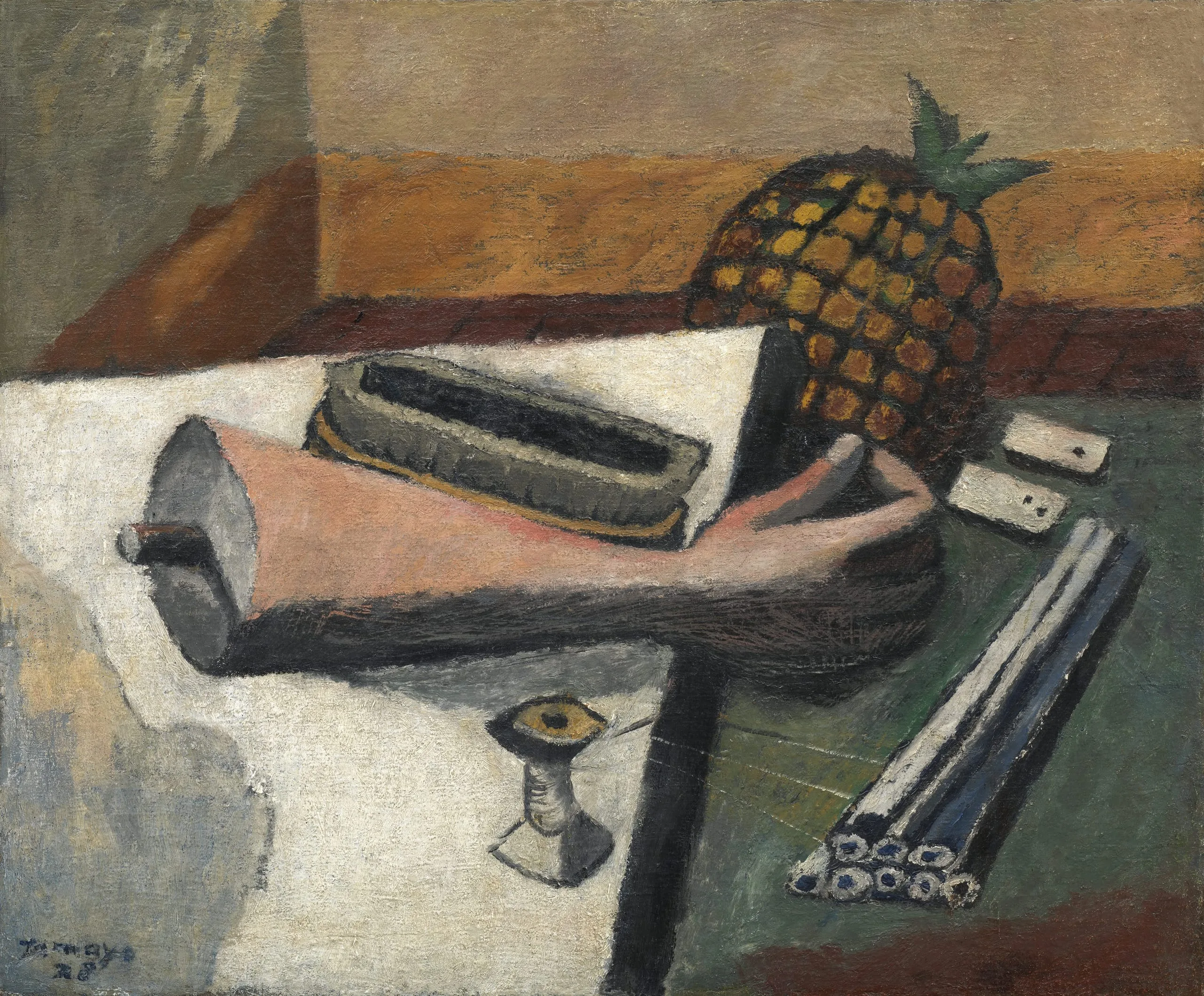
Arrangement of Objects (Arreglo de objetos)1928

Not on view
Oil painting still life with a pineapple, rolling pin, spool of thread, and bundled white sticks on a white cloth, in muted greens, tans, and dusty rose
Artist or Maker
Rufino Tamayo
Mexico, 1899-1991
Title
Arrangement of Objects (Arreglo de objetos)
Date Made
1928
Medium
Oil on canvas
Dimensions
Canvas: 19 1/2 × 23 1/2 in. (49.53 × 59.69 cm); frame: 23 1/2 × 27 3/4 × 1 3/4 in. (59.69 × 70.49 × 4.45 cm)
Credit Line
The Bernard and Edith Lewin Collection of Mexican Art
Accession Number
M.2006.213.2
Classification
Paintings
Collecting Area
Latin American Art
Curatorial Notes

The art and literary magazine Contemporáneos first appeared in Mexico in 1928, privileging personal expression and creativity as counterpoints to the narratives of nationalism that arose in cultural circles following the Mexican Revolution (1910–20). At a time when detractors criticized easel painting as elitist, artists associated with Contemporáneos, including Rufino Tamayo, created small-scale paintings that introduced avant-garde themes and ideas.

Arrangement of Objects appeared in an exhibition organized by the magazine in December 1928. The composition assembles a grouping of seemingly disparate objects, thrust together despite their incongruity. The fingers of the hand curl in relaxed manner, as if about to touch the pineapple or in a moment of rest. However, the limb ends abruptly just below the
elbow, pierced by a metal rod signaling that this disembodied hand belongs to a mannequin, rather than a living person. The hand simultaneously suggests a human presence and its absence, invoking the uncanny associations favored by the Surrealist movement, ideas that resonated in the pages of Contemporáneos.


For more information see the catalogue entry by Rachel Kaplan in Rufino Tamayo: The Essential Figure, 2019, pp. 16–17.
Selected Bibliography
  • Kaplan, Rachel. Rufino Tamayo: The Essential Figure. Los Angeles: Los Angeles County Museum of Art, 2019.