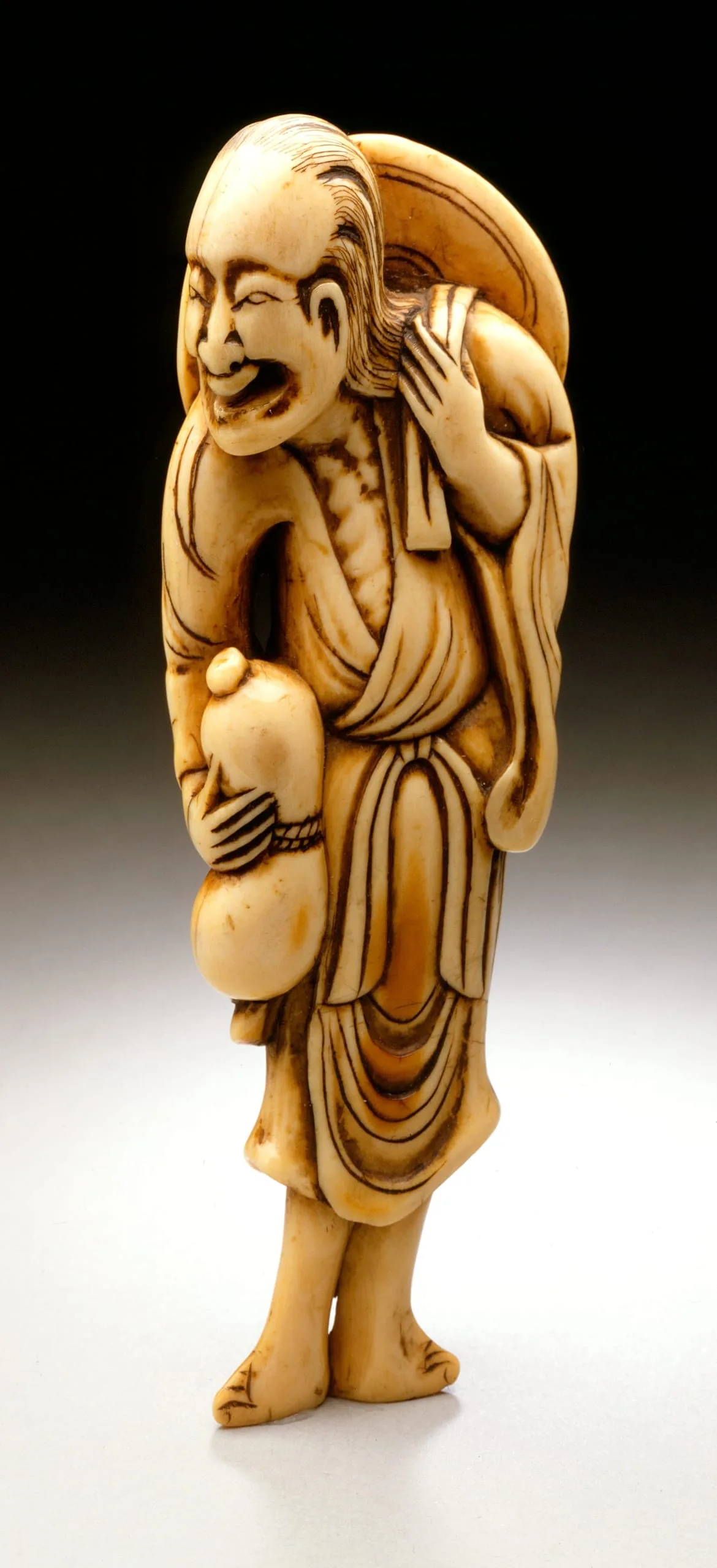
Netsuke carvers employed a variety of both native and imported materials, wood and ivory being the most common by the Edo period (1615−1868). Imported ivory was seen as an exotic substance with connotations of foreign lands and peoples, which may account for the abundance of netsuke depicting Chinese lions, qilin (J. kirin), and foreigners, including Chinese, Koreans, and Dutch. Tall, standing figural netsuke may have been inspired by Ming-dynasty (1368−1644) ivory carvings, as suggested by the myriad renditions of mythical figures, beasts, and heroes from Chinese folklore, and of Daoist immortals (sennin), as represented here in this tiny sculpture. He carries one of his attributes, a gourd, container of the elixir of immortality and symbol of longevity.
The slim carving is indicative of how netsuke makers put ivory’s physical limitations to aesthetic use. As an imported good, ivory was costly and not easy to come by, thus carvers took care in designing forms that utilized as much of the material as possible. The tusk’s original curved surface is often apparent in the final piece, such that many figures have a triangular, tapered form. Here, the rounded head, hat, and upper torso taper to narrowing legs and small feet. Although ivory’s natural color was ideal for creating soft tones or striking contrasts, carvers often used staining or black ink (sumi) to accentuate surface details and recesses, as seen here.
2024