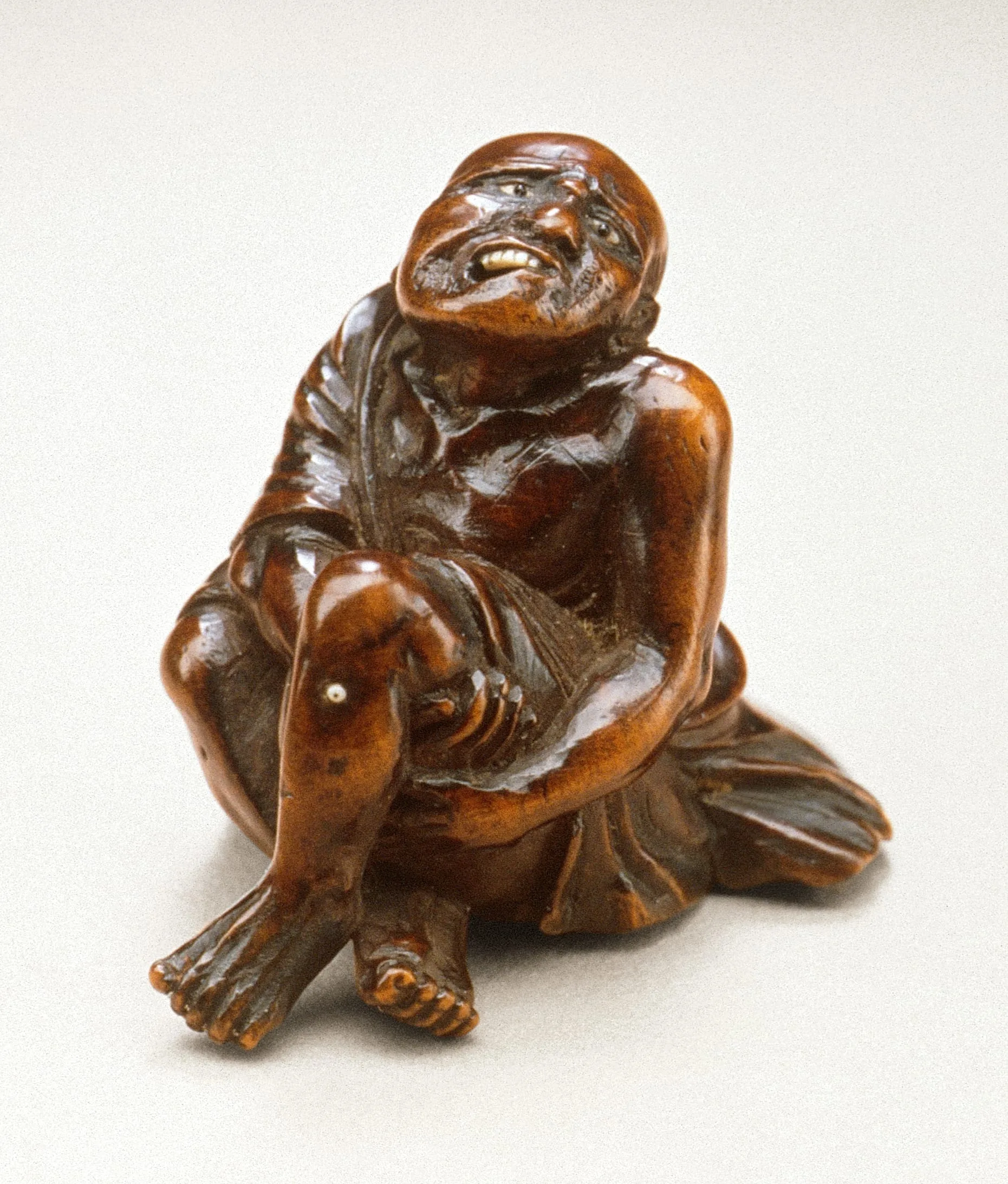
Scenes of daily life were a popular theme in nineteenth-century netsuke production. Favorite subjects included street vendors, people at work, preparing food, and tending to everyday chores. In this tiny wood sculpture, a man grimaces in pain after receiving moxibustion treatment below the knee. The moxa pellet, teeth, and eyes are inlaid with ivory, the pupils delineated with dark horn. Nineteenth-century netsuke carvers often combined materials such as seen here.
Moxicautery or moxibustion (J. kyū) is a healing technique that came to Japan from China. In their search for immortality, Chinese Daoists were among the earliest people to explore the products of nature for their healing properties. Natural remedies were documented in Chinese publications that made their way to Japan, where many of the treatments were adopted by the Japanese. Mugwort is the principal ingredient in moxa, a puttylike substance used in a healing practice akin to acupuncture. In moxibustion, a very small, cone-shaped pellet of the paste is applied to key areas on the body and set alight, producing intense heat at the spot. The word moxa is derived from the Japanese mogusa, a combination of moe (burn) and kusa (herb). This manipulation of specific points on the body is believed to restore the flow of energy (qi), thereby bringing relief to those suffering from any number of ailments. Moxibustion was used extensively during the Edo period (1615−1868) not only to treat illness but as a means of maintaining physical wellbeing.
2024