- Title
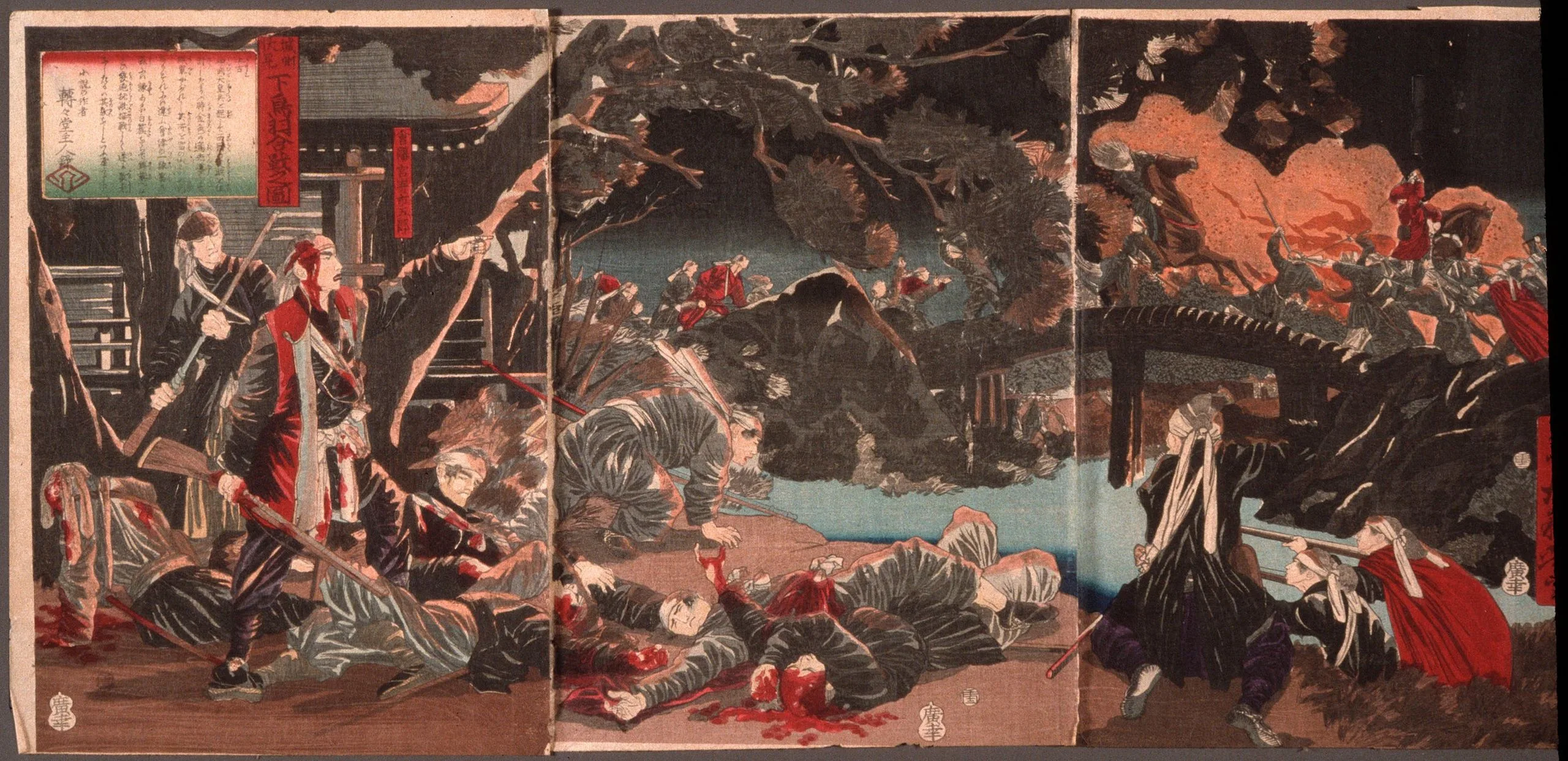
- The Battle of the Lower Toba at Fushimi in Yamashiro Province
- Date Made
- 1874, 12th month
- Medium
- Triptych; color woodblock print
- Dimensions
- 13 9/16 x 28 13/16 in. (34.4 x 73.1 cm)
- Accession Number
- M.84.31.204a-c
- Curatorial Notes
In this triptych, we see the rout of the samurai by the imperial troops at the Battle of Lower Toba at Fushimi in 1868. At far right, rifle-bearing imperial soldiers crouch next to dead and dying comrades, taking aim at samurai fleeing across a river. Rifles offered the imperial troops a distinct advantage, yet as evidenced by the numerous mangled bodies of the soldiers, the traditional swords and pikes of the samurai inflicted great damage on their ranks. A blood-soaked figure to the left stands upright and appears to command the battle, with his left hand gesturing toward the direction of the fleeing samurai. Yoshitoshi's direct witnessing of the Battle of Ueno led him to translate into print the horrors of war and bravery of the soldiers who faced it. His intent to portray these gruesome realities is evident in this and many more prints of his early career.