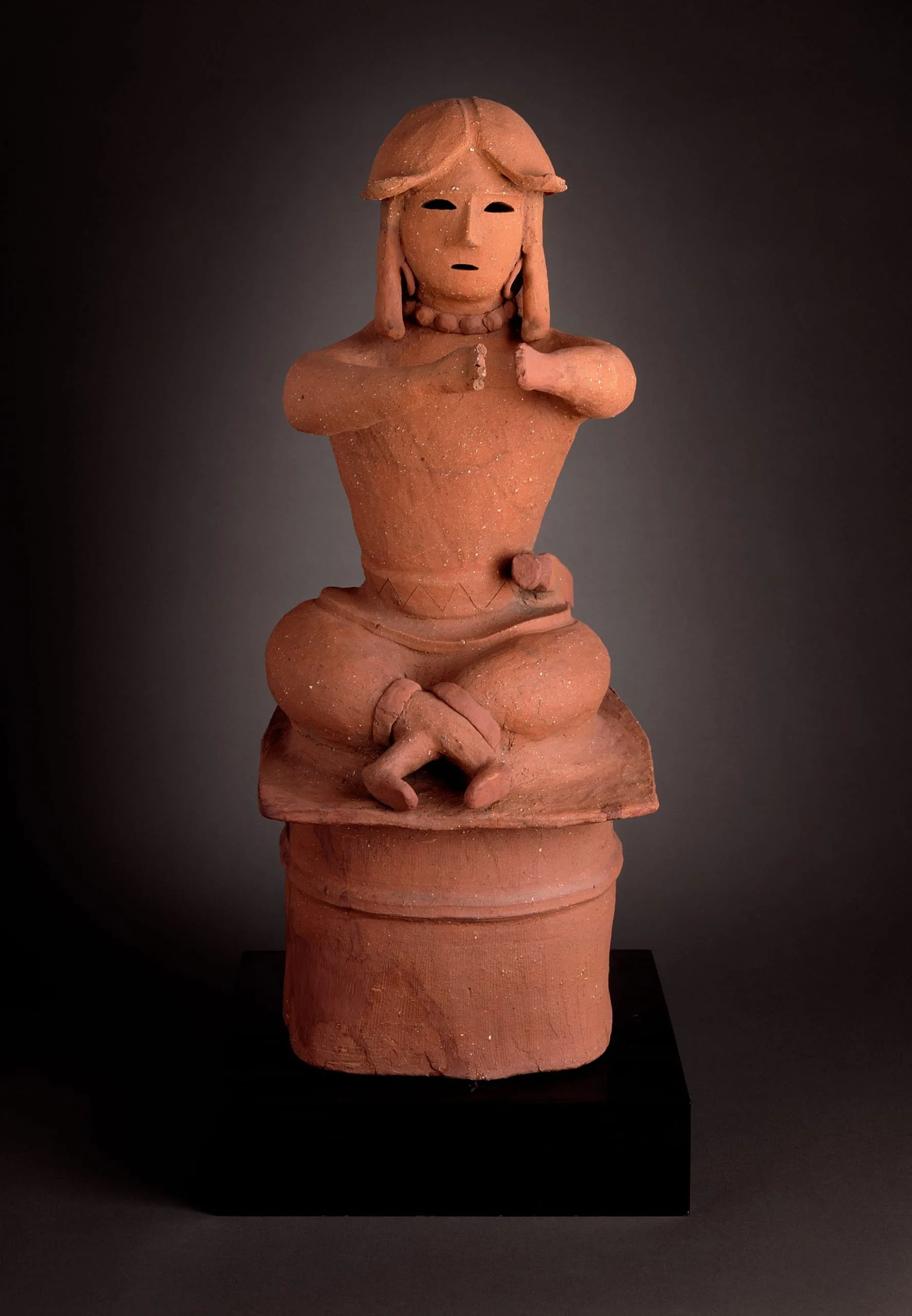
This beguiling figure of a seated warrior is a haniwa (cylinder), which was used to decorate the tomb of a noble during the Kofun, or Tumulus, era (250 600 a.d.). Originating in the mid-second century as simple cylindrical forms, haniwa evolved into more complex figural representations of houses, weapons, animals, and humans. They show us much about life at that time. This warrior, identified as such by his helmet and sword, wears a belted tunic, trousers, and beads. His hands, positioned in front of his chest, probably held a spear. The reddish, low-fired, and iron-rich clay of this haniwa is typical, as are the neatly cut eye and mouth holes. Nearly all seated figures such as this one have disproportionately tiny legs, perhaps indicating that the head and torso were perceived as the defining section of the figure. The warrior's hairstyle parted in the middle, with loops of hair tied in front of the ears was common for men at the time. This haniwa was made during the late Kofun era (late 5th-6th century), when most figural haniwa were created. Such figural haniwa were placed either low along the bank of the keyhole-shaped tomb mound opposite the entrance to the tomb, or were clustered near its entrance.