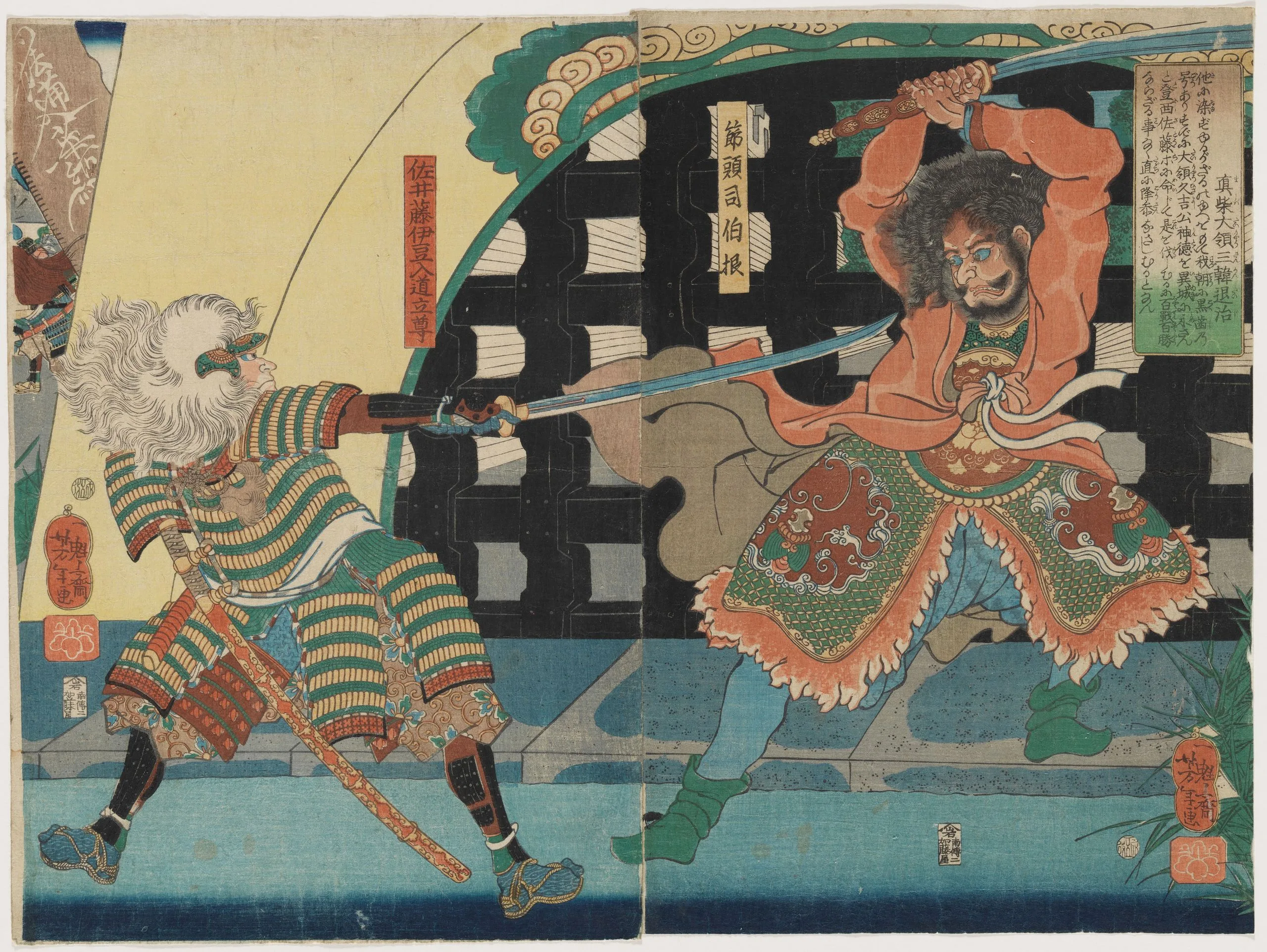
This print displays an iconic figure whose presence underscores his lasting resonance in Japanese cultural history. Mashiba Hisayoshi is a false name used to refer to Toyotomi Hideyoshi (1537-1598), the name being a subversion required by government regulations against the depiction of recent historical events during the Tokugawa period (1615-1868). Lord Mashiba is seen here in full military garb with his sword drawn in front of him. His stance reflects his status as a brilliant general and as leader of the invasion of Korea in 1592-Hideyoshi's long hair is shown white, as this invasion came at the very end of his life.
This print was designed in 1862 at the end of the Tokugawa period. The war depicted here, called the Seven Years War, began in 1592 when Toyotomi Hideyoshi invaded Korea. While having reached rulership through completing the unification of Japan, his efforts against Korea stagnated. 1598 saw both Hideyoshi's death from illness and his army's withdrawal from Korea. Despite his final hubris, Hideyoshi's legacy as his country's unifier remains secure in Japanese history.