Porcelain production began in Japan in 1616 with the discovery of a suitable clay in Arita, an area located on the west side of Kyūshū, the southernmost of Japan’s five main islands. Subsequently, Arita became home to the country’s first porcelain kilns, which in the early years produced wares for domestic use. Prior to the mid-seventeenth century, the Chinese porcelain factories at Jingdezhen met the demands of the European market. However, the turbulent transition from the Ming (1368−1644) to the Qing (1644−1911) dynasty severely disrupted operations there. Forced to seek alternate sources, the Dutch East India Company turned to the nascent Japanese porcelain workshops to supply inventory for their customers in the West.
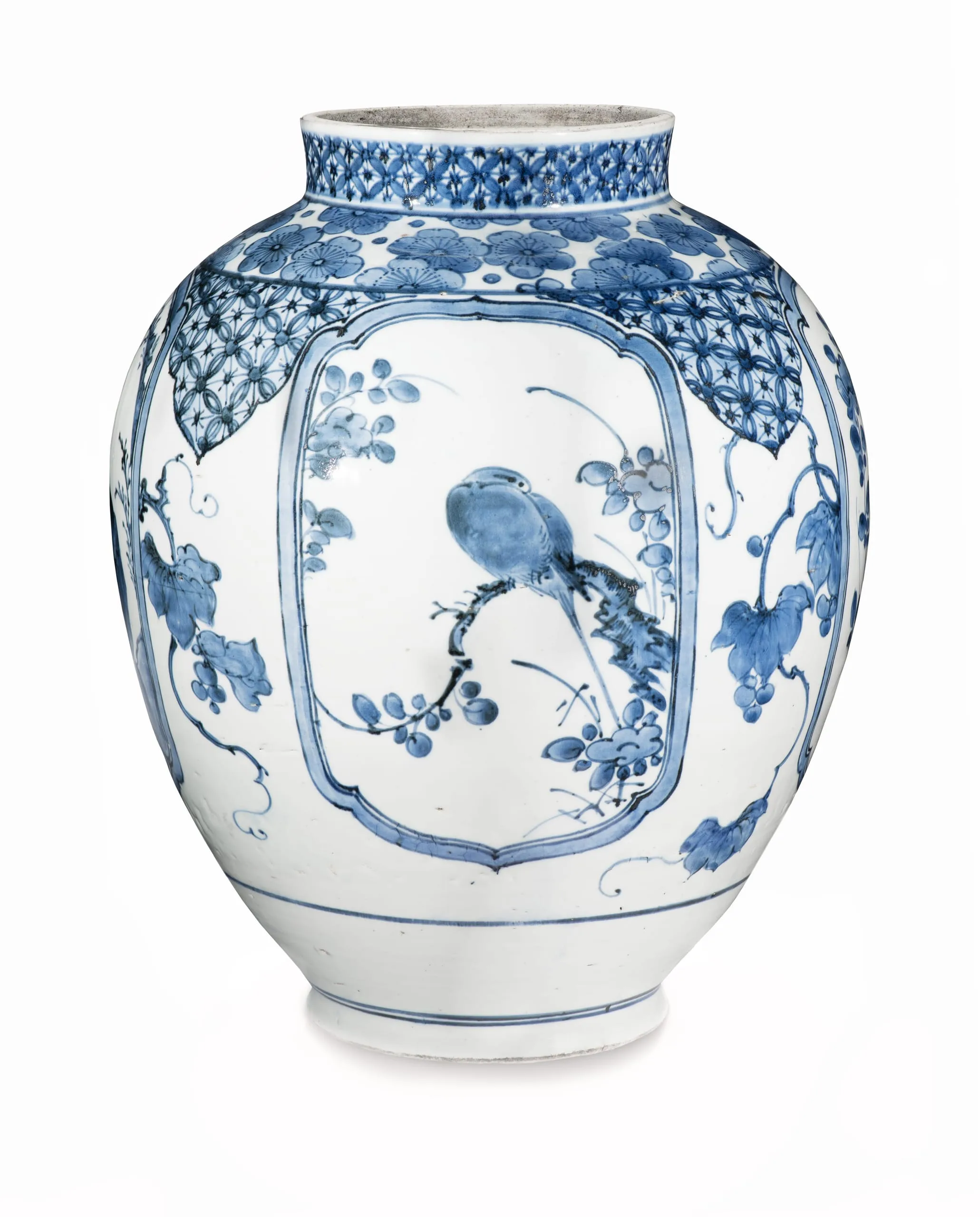
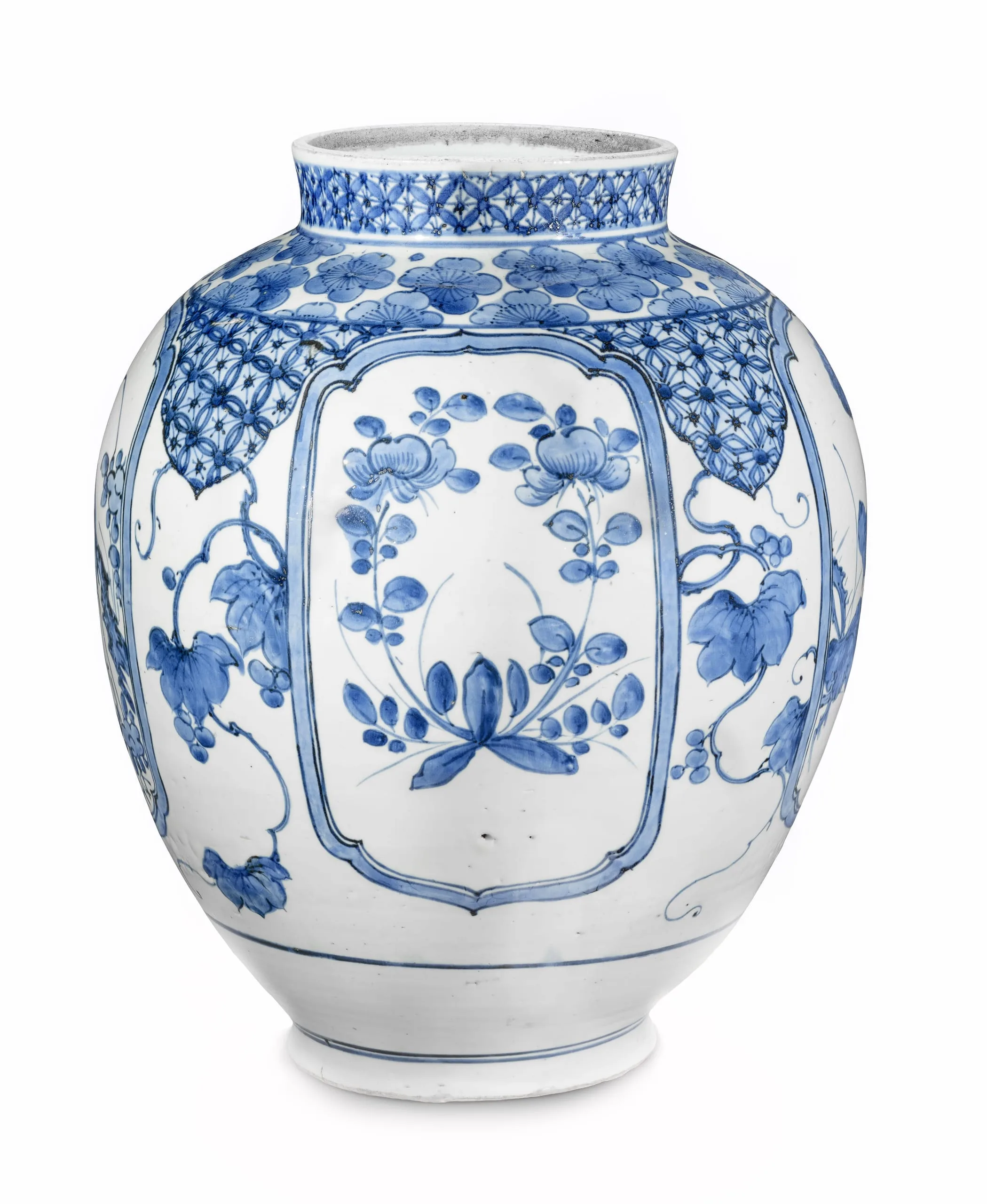
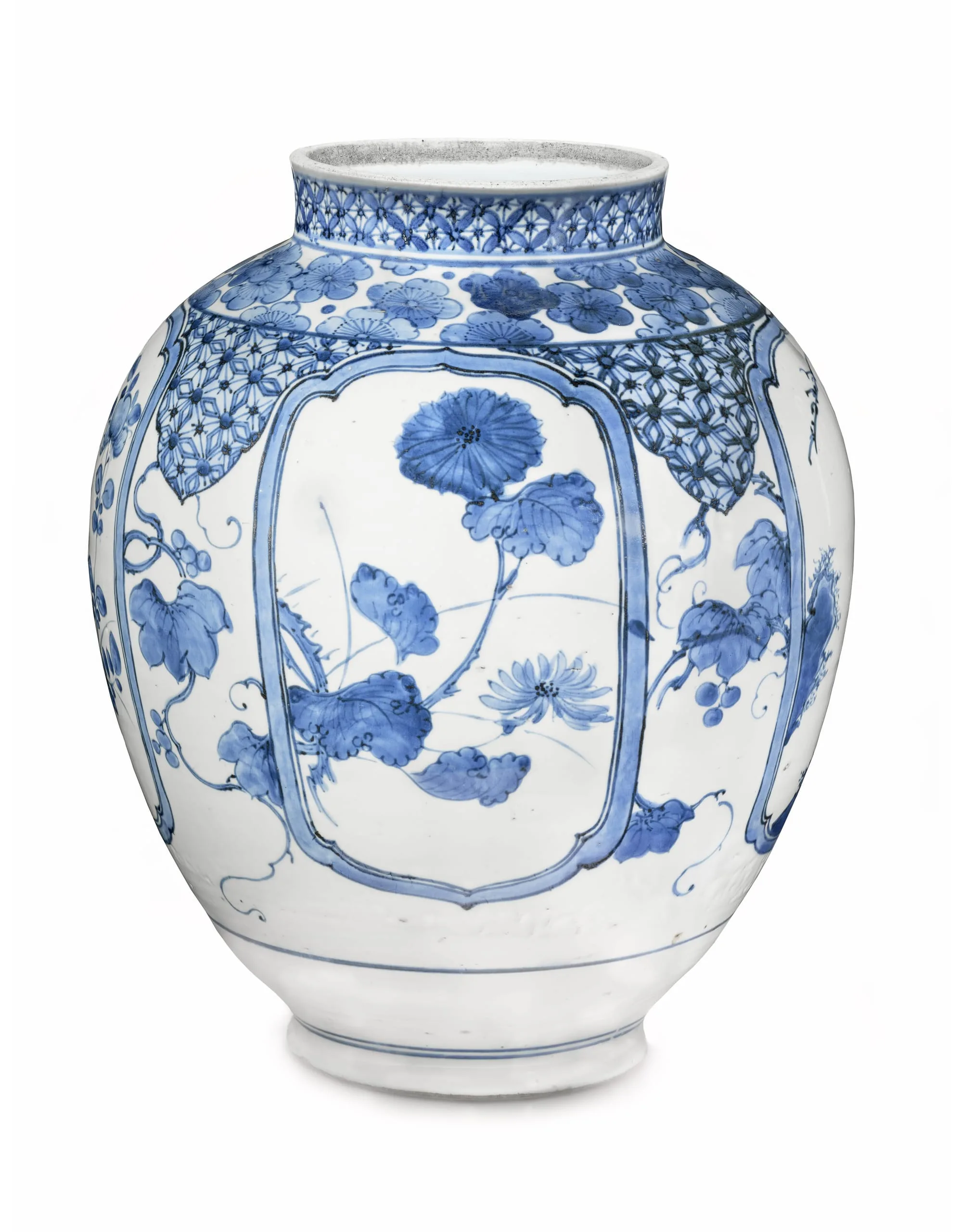
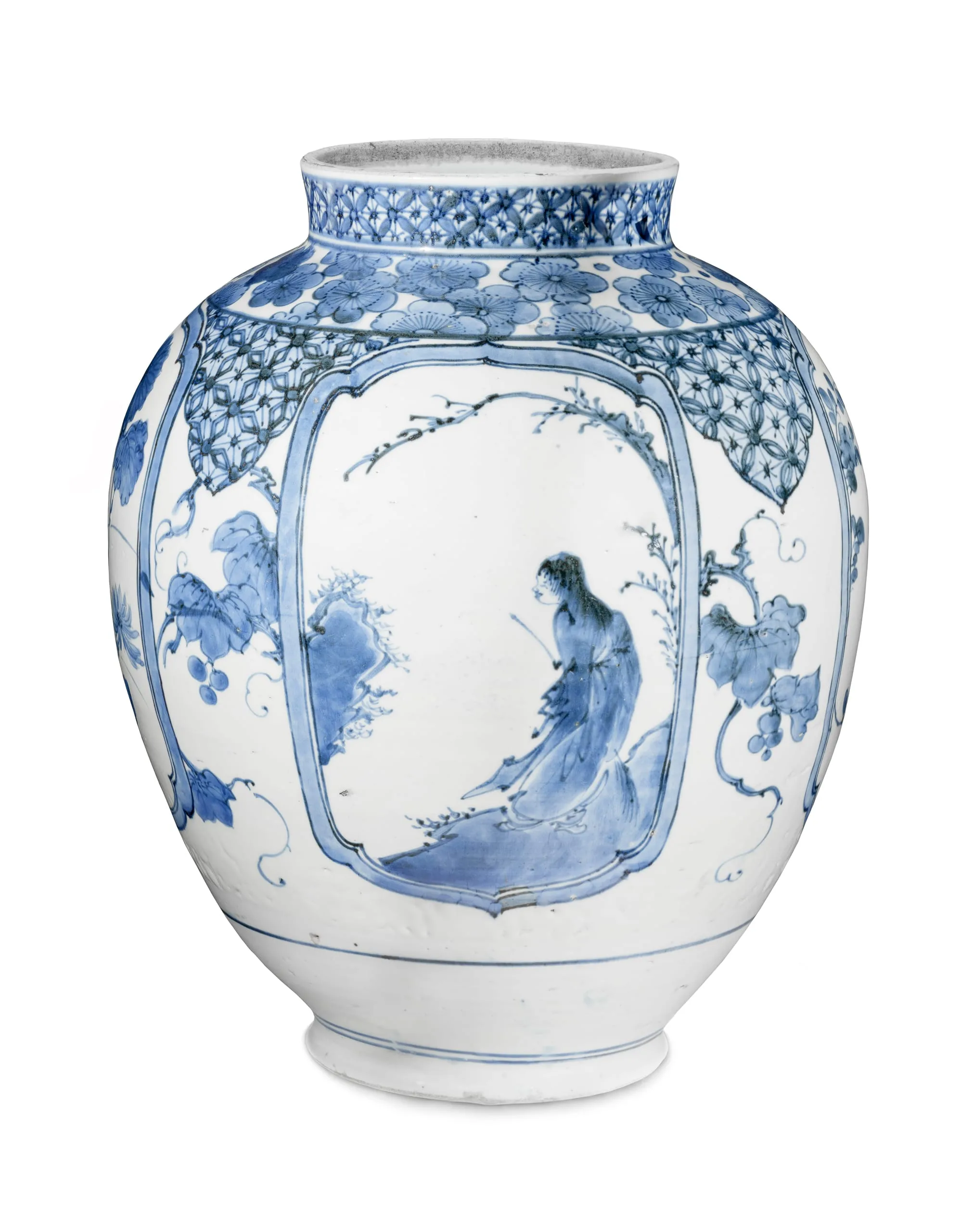
An example of early Japanese porcelain, this jar was made for export. Encircling the form are four elaborately shaped panels, each containing a different image: a bird resting on a branch, a stem of chrysanthemum blossoms, a mountain recluse holding a broom, and a symmetrical flower arrangement. Between the panels are grapevines. Bold scattered plum blossoms embellish the shoulder, and the neck and upper part of the body are decorated with a design of overlapping circles, a pattern known as shippo. The shape of this vessel and the lack of glaze on the neck’s inner top rim suggest that it originally had a lid.
2025