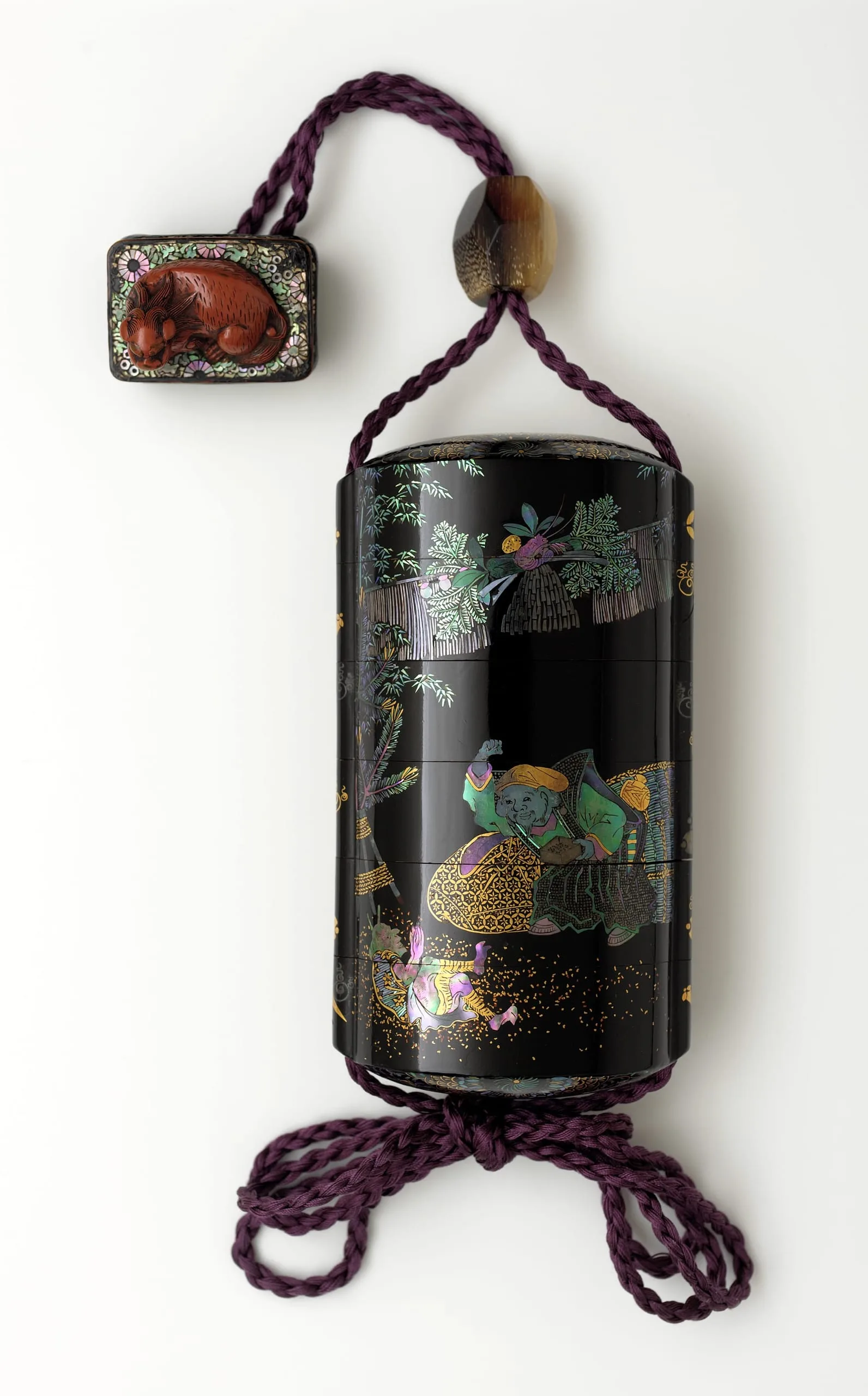
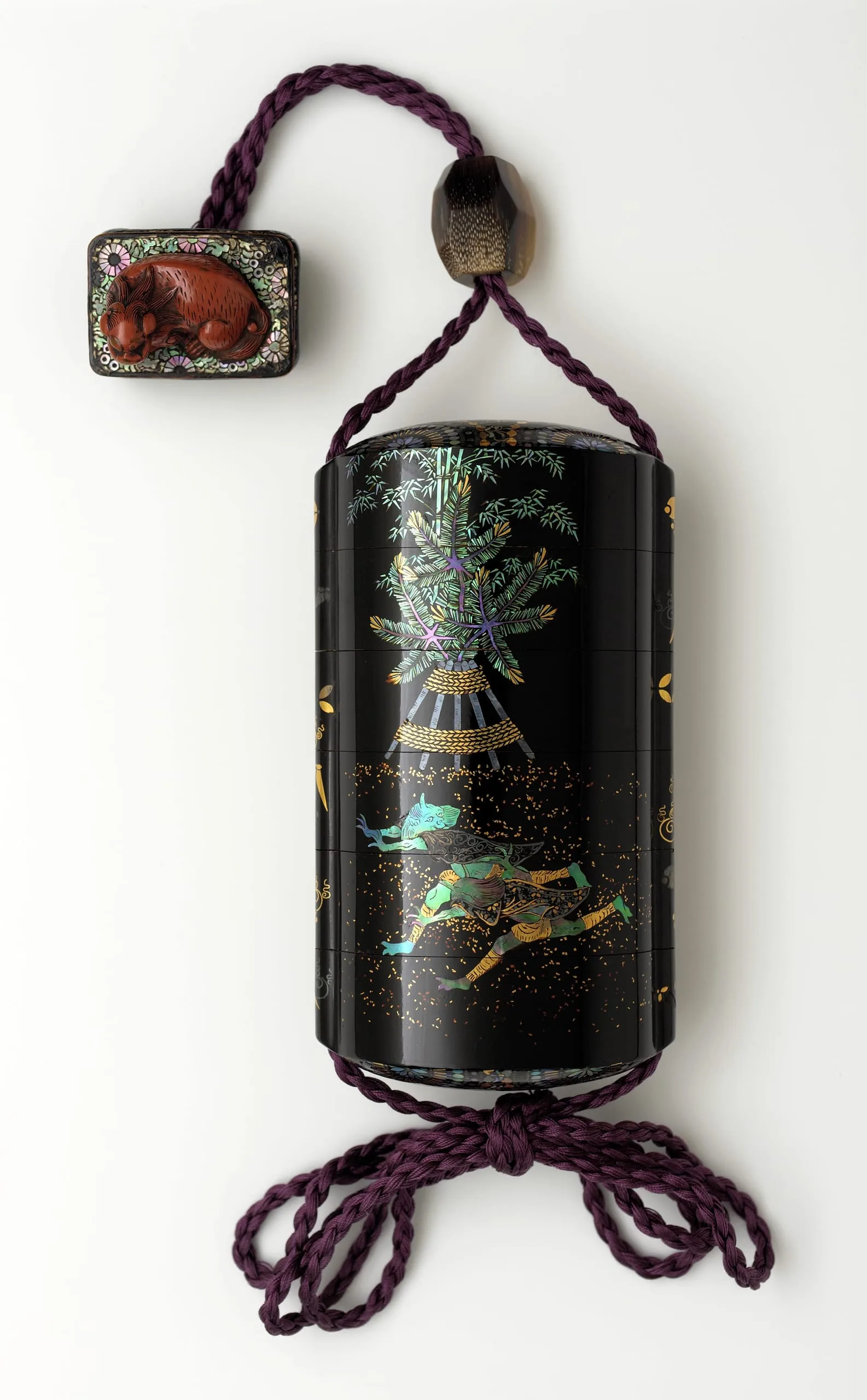
During the Edo period (1615−1868), Japanese carried small personal articles in containers that hung on a cord from the sash (obi) used to secure the kimono, Japan’s traditional attire. These containers included tobacco pouches (tabako-ire) and pipe cases (kiseruzutsu), portable writing implements (yatate), money pouches, and small, multi-compartment boxes known as inrō. Recorded evidence indicates that inrō were in use by the early seventeenth century. The term is a combination of in (seal or stamp) and rō (basket), suggesting that inrō were first used to carry one’s personal seal. Though made of wood, ivory, and ceramic, the favored material was lacquer, as here. This inrō features an image of Daikoku, god of wealth and good fortune. Wearing a beretlike cap, with a wooden wish-granting mallet tucked into his sash, Daikoku performs a ritual known as setsubun that was believed to purge bad spirits and illness. Here, evil and misfortune—represented by demons (oni)—are pelted with dried soy beans. One oni fends off the attack at Daikoku’s feet, while the back side of the inrō shows two others fleeing the scene.
Setsubun (16.18.2) was performed at the start of the New Year to ensure good fortune in the coming year. Reiterating the New Year theme is a shimekazari, a decorative arrangement of rope (made of braided rice straw) and auspicious items. Here, a lobster, daidai (a bitter citrus fruit), stalks of bamboo, and fern branches bestow good wishes on the household. On the back is another New Year decoration, a standing assemblage of pine and bamboo known as a kadomatsu.
A number of lacquer families produced inrō in Edo-period Japan. Lacquer artists typically descended from a long line of lacquerers whose decorative styles and techniques were passed down for generations through a system of apprenticeship. Training typically began when a boy was eleven to thirteen years of age and would continue for at least ten years. At the completion of his training, he would be given permission to establish his own studio. Upon the retirement or death of the master, the son or most able apprentice would take over the family business.
The Somada lineage began in 1678 when Lord Maeda Masatoshi requested the services of Somada Yahei Kiyosuke (c. 1633−1700), a recognized master of shell inlay. Upon being summoned, he moved from Kyoto to the castle town of Tōyama, located on the island of Honshū, where Lord Maeda built the artisans a studio. For more than 200 years, eight generations of the Tōyama Somada workshop produced fine lacquer inrō. Mitsumasa, who made and signed LACMA’s inrō, was the sixth master in the Somada line, inheriting the business from his father in 1826. The workshop closed in the late nineteenth century as Japan transitioned from a feudal state to a modern nation.
The Somadas’ distinctive style of inlay was inspired by Chinese Ming examples that arrived in Japan in the latter sixteenth century. Somada Kiyosuke purportedly learned his techniques from a Chinese craftsman residing in Nagasaki. The Somada workshop became known for the use of very thin slices of iridescent blue-green shell (aogai). Along with gold foil, tiny shell pieces were laid into a ground of rich glossy black lacquer to create intricately detailed designs. Here, the diaper pattern on Daikoku’s bag is indicative of the ornate surface treatment employed on many Somada lacquers.
2025