An ancient and wide spread art form, quilting was first a utilitarian act. As a cooperative task, it gave women in small communities a respite from their frequently solitary labors. Their quilts constitute a valued legacy to the present, and in recent years the American quilt has been sought by enthusiasts and museums that recognize the aesthetic merits of its complex geometric patterns and arresting colors.
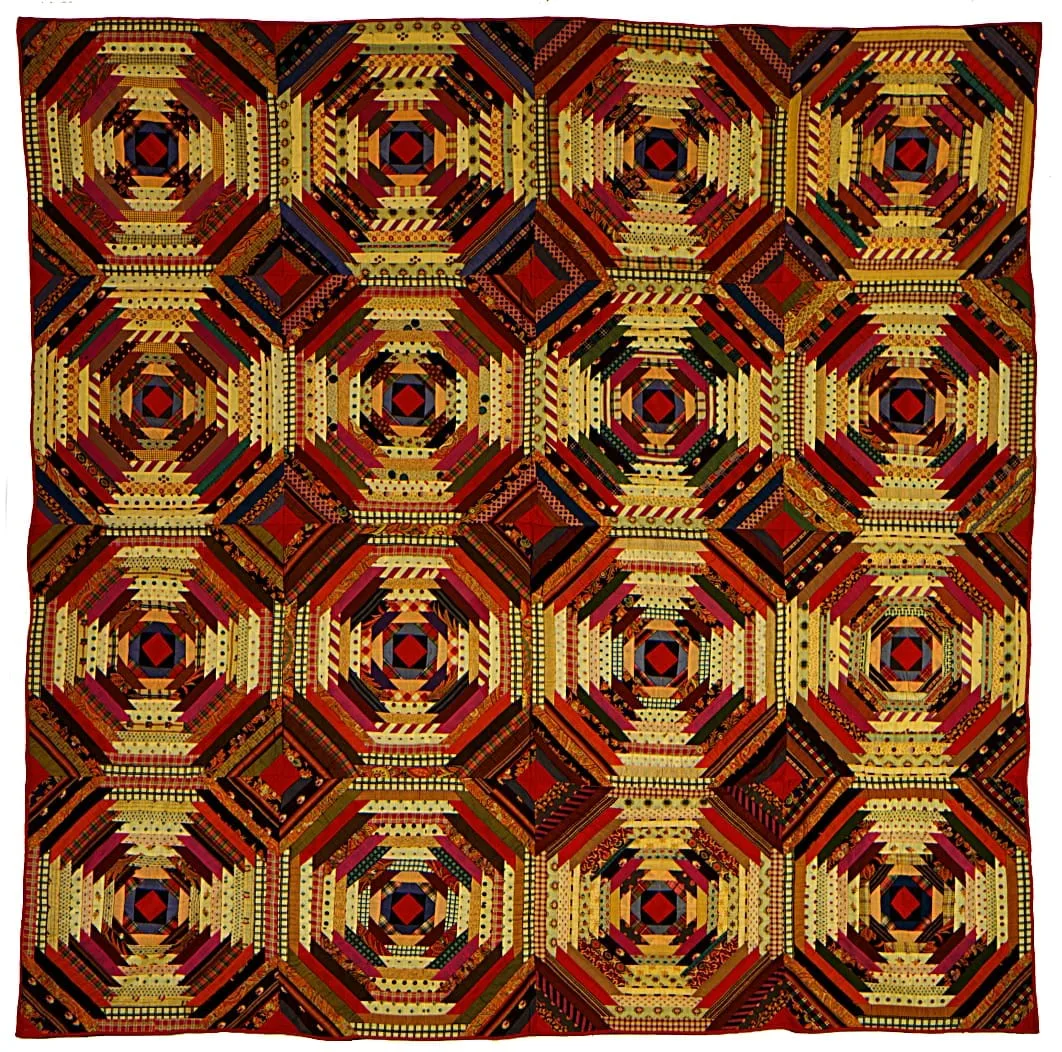
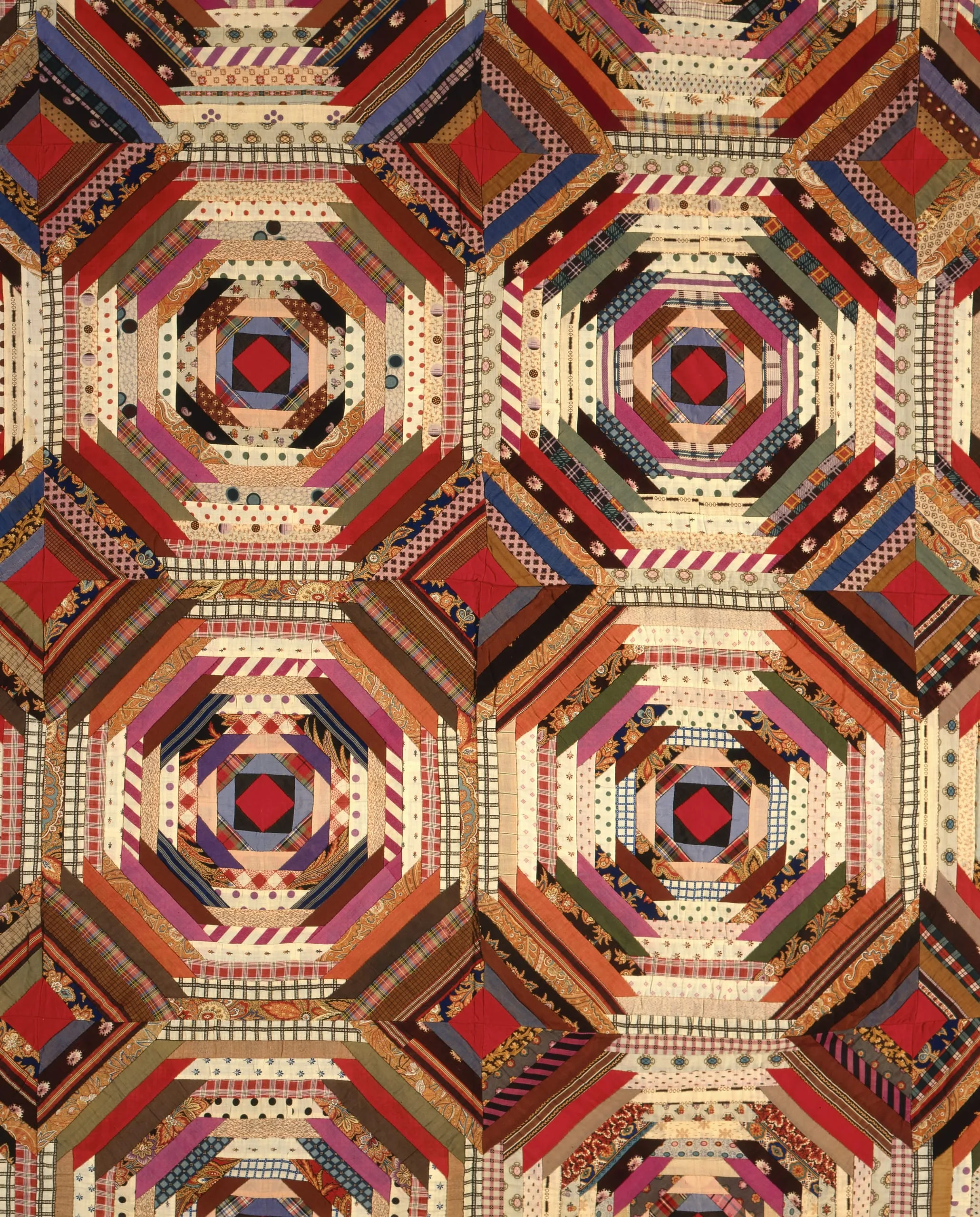
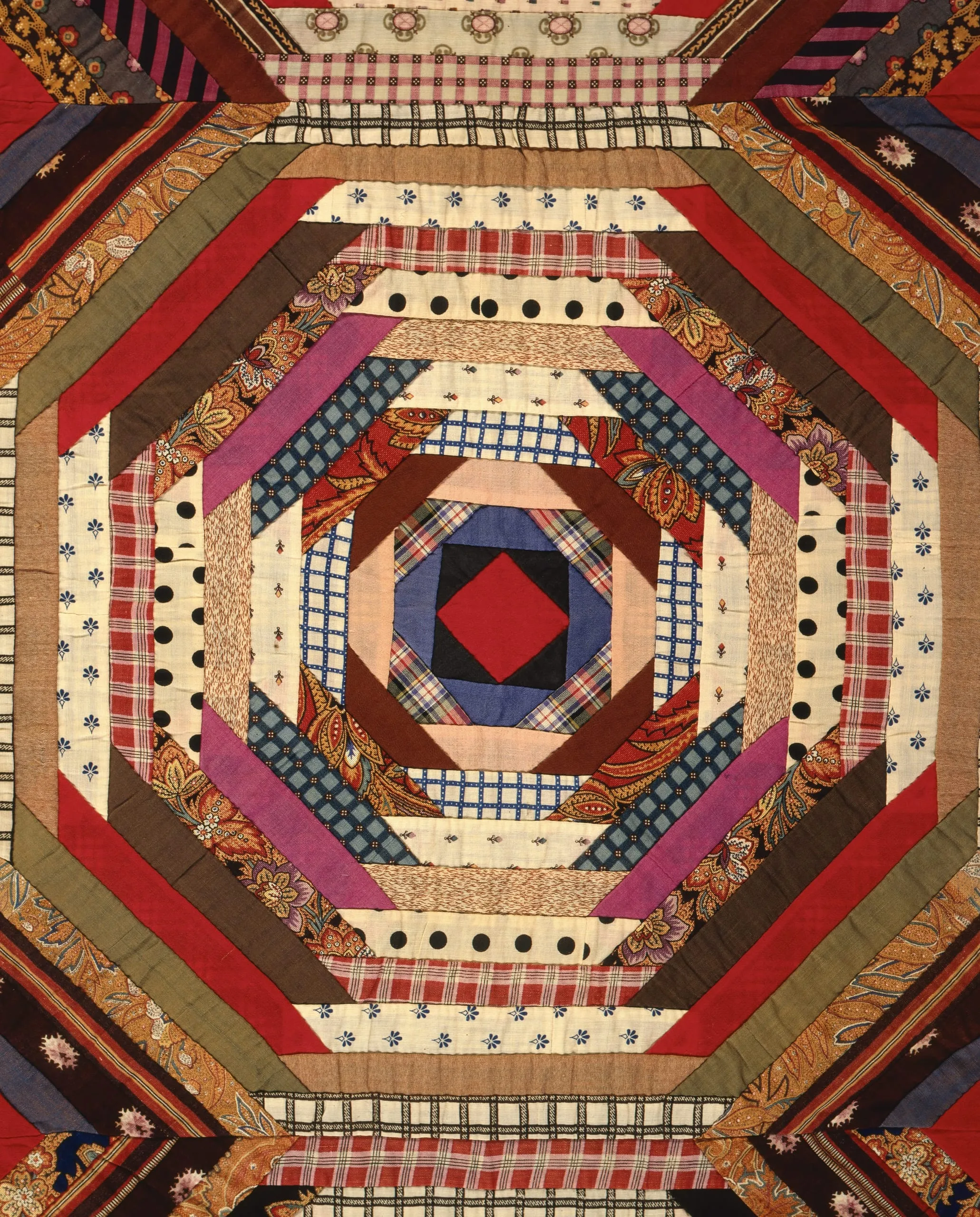
This variant of the Log Cabin pattern quilt, with its strips set diagonally across the corners of each center square, ends angled and lapped, sets up a lively visual counterpoint. The traditional alternation of light and dark segments in each component square creates spiny pineapple shapes. They advance and retreat, sometimes setting up a visual illusion of wildly spinning, spiky wheels. The center squares of Log Cabin blocks are traditionally red, although other colors are not uncommon. Here they are a mosaic of red, blue, and black triangles.
The Log Cabin square is an extremely versatile quilt-building unit with a pleasing architectural strength. The names of its variant patterns reveal metaphors of their origins: Court House Steps, Barn Raising, Running Furrow, Light and Dark.