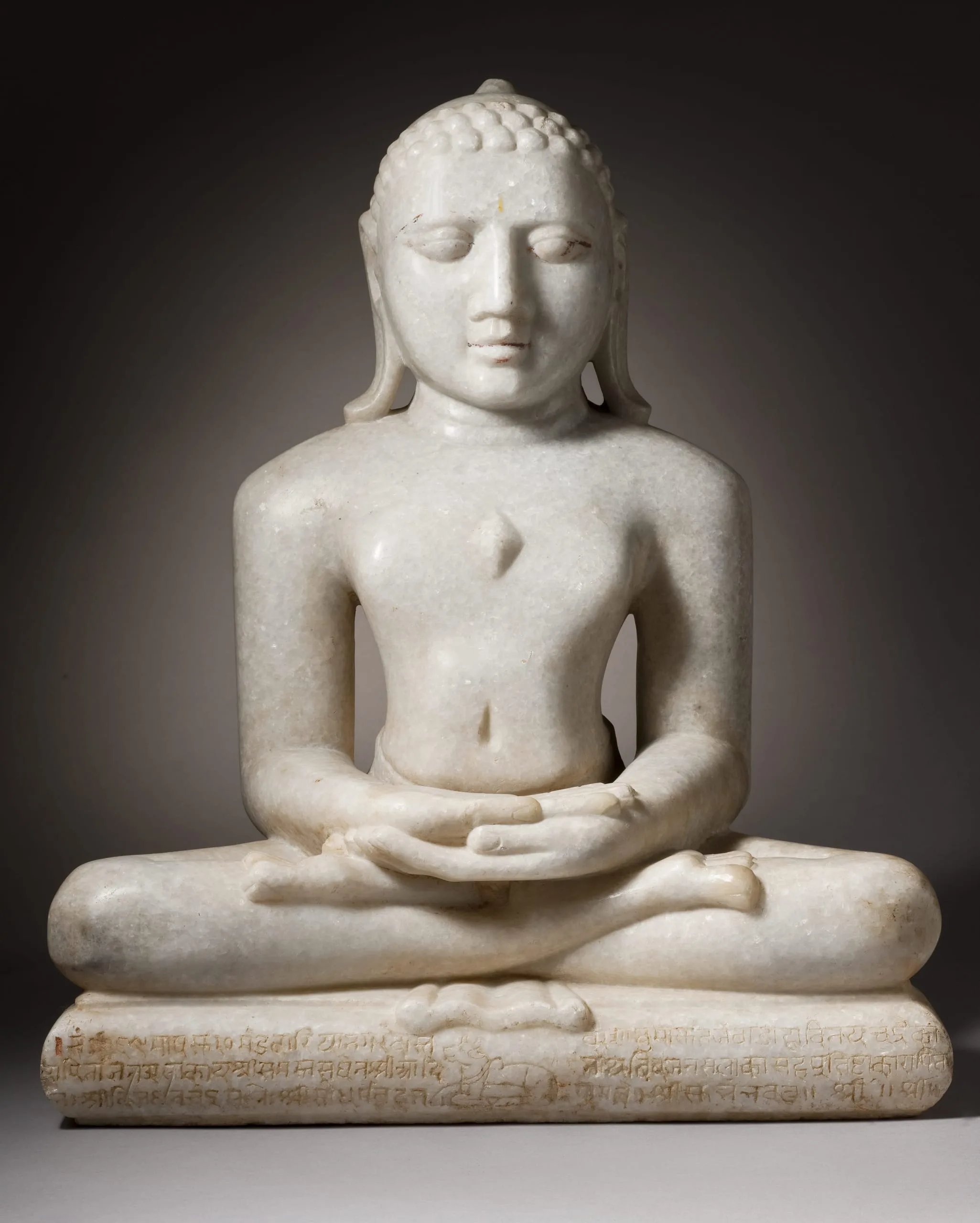
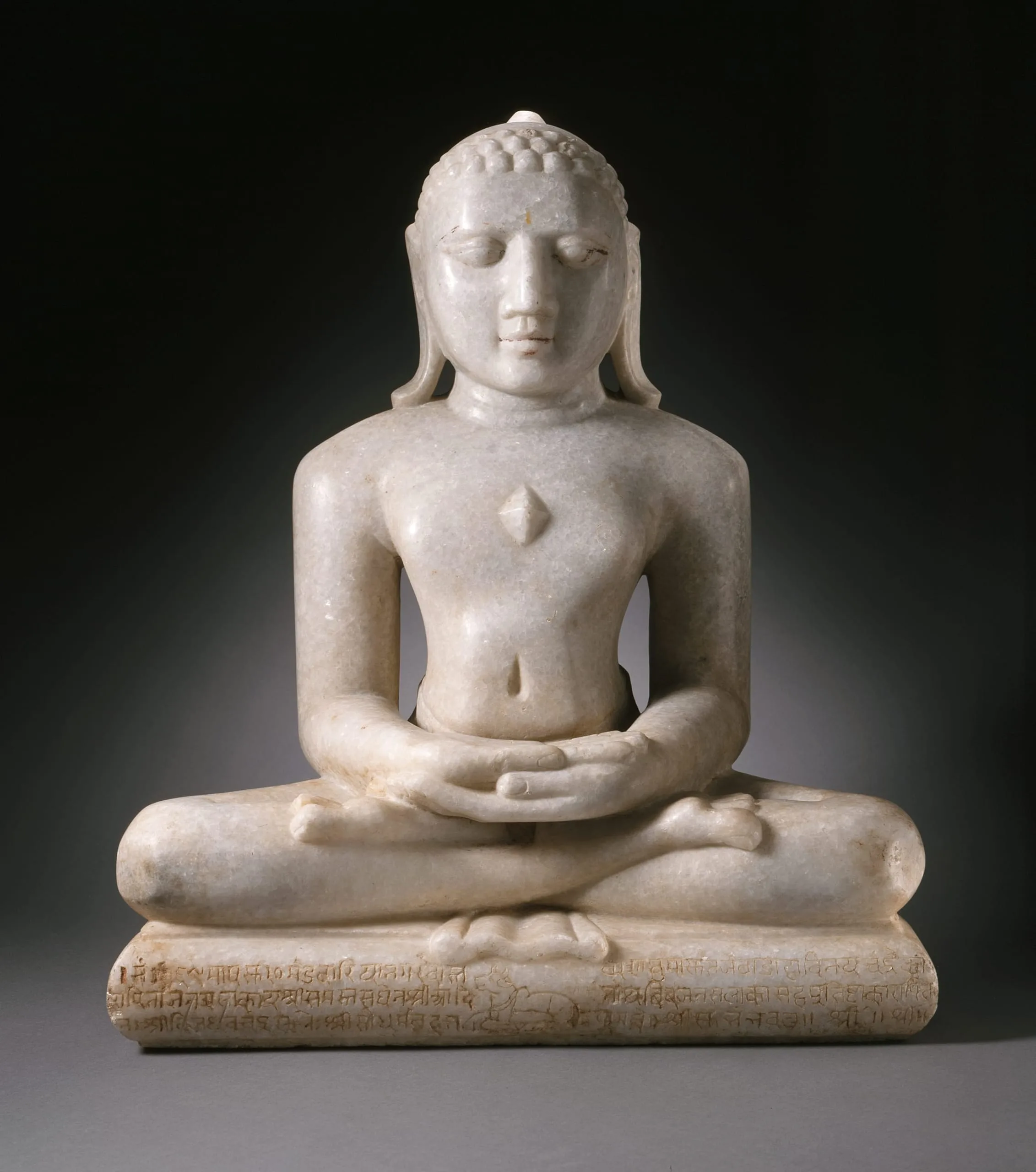
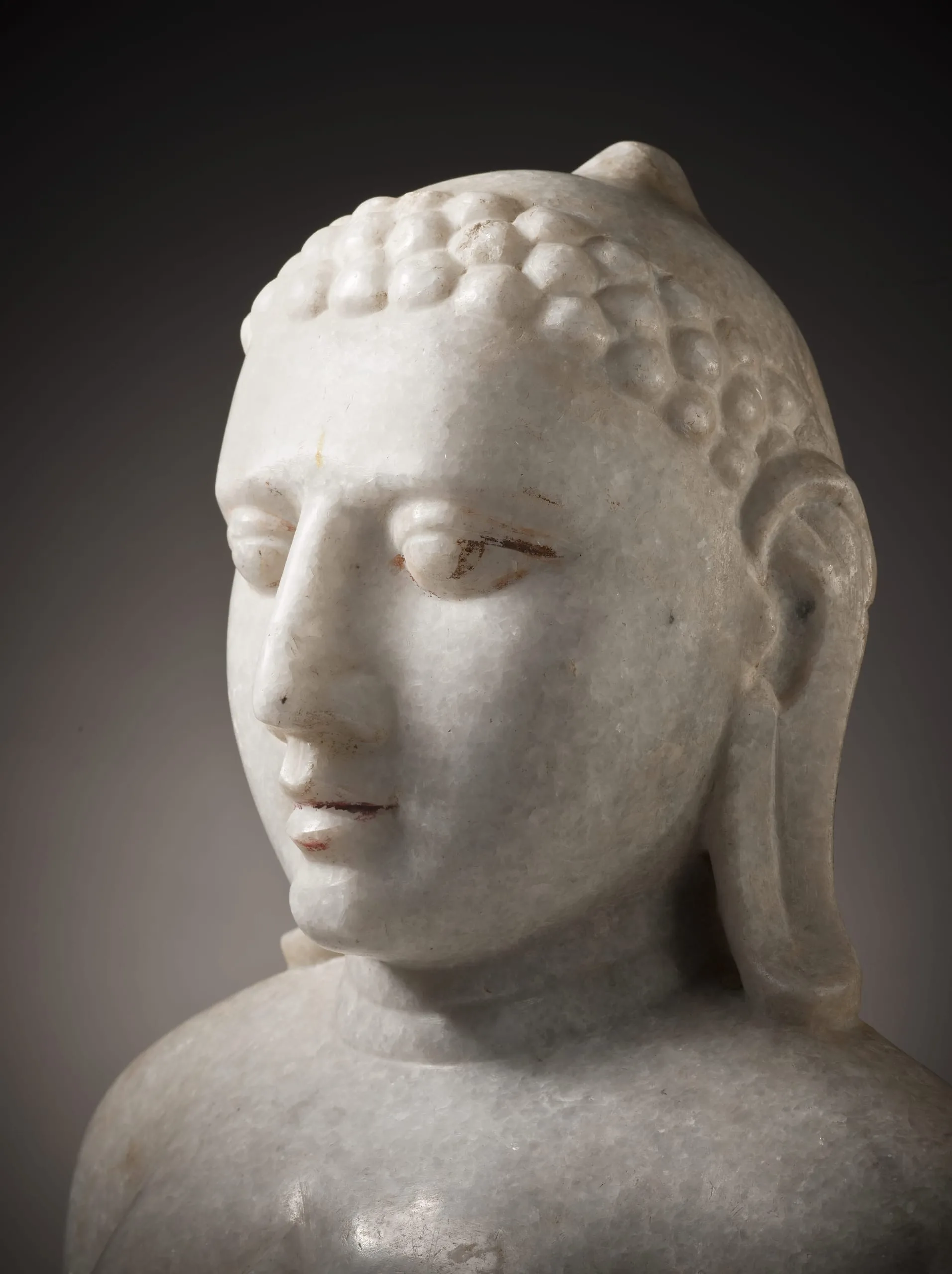
Jina Rishabhanatha is regarded as the earliest and one of the most important of the twenty-four Jain saviors. He is venerated by the Jains as mankind’s first and foremost teacher of the arts and sciences, particularly pottery, painting, and weaving. According to the Jain literary tradition, Rishabhanatha was an actual historical figure who lived many millennia ago. Excavation finds attest that his worship dates from as early as the 7th century BCE.
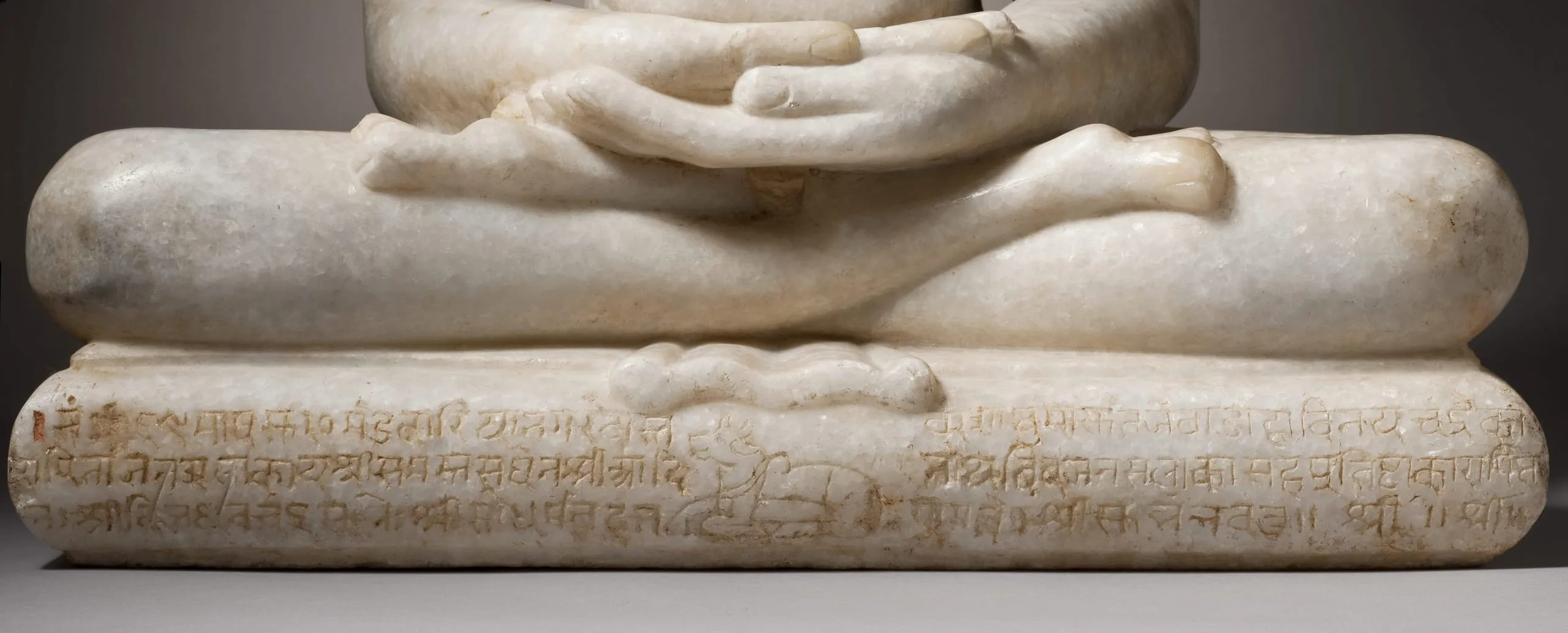
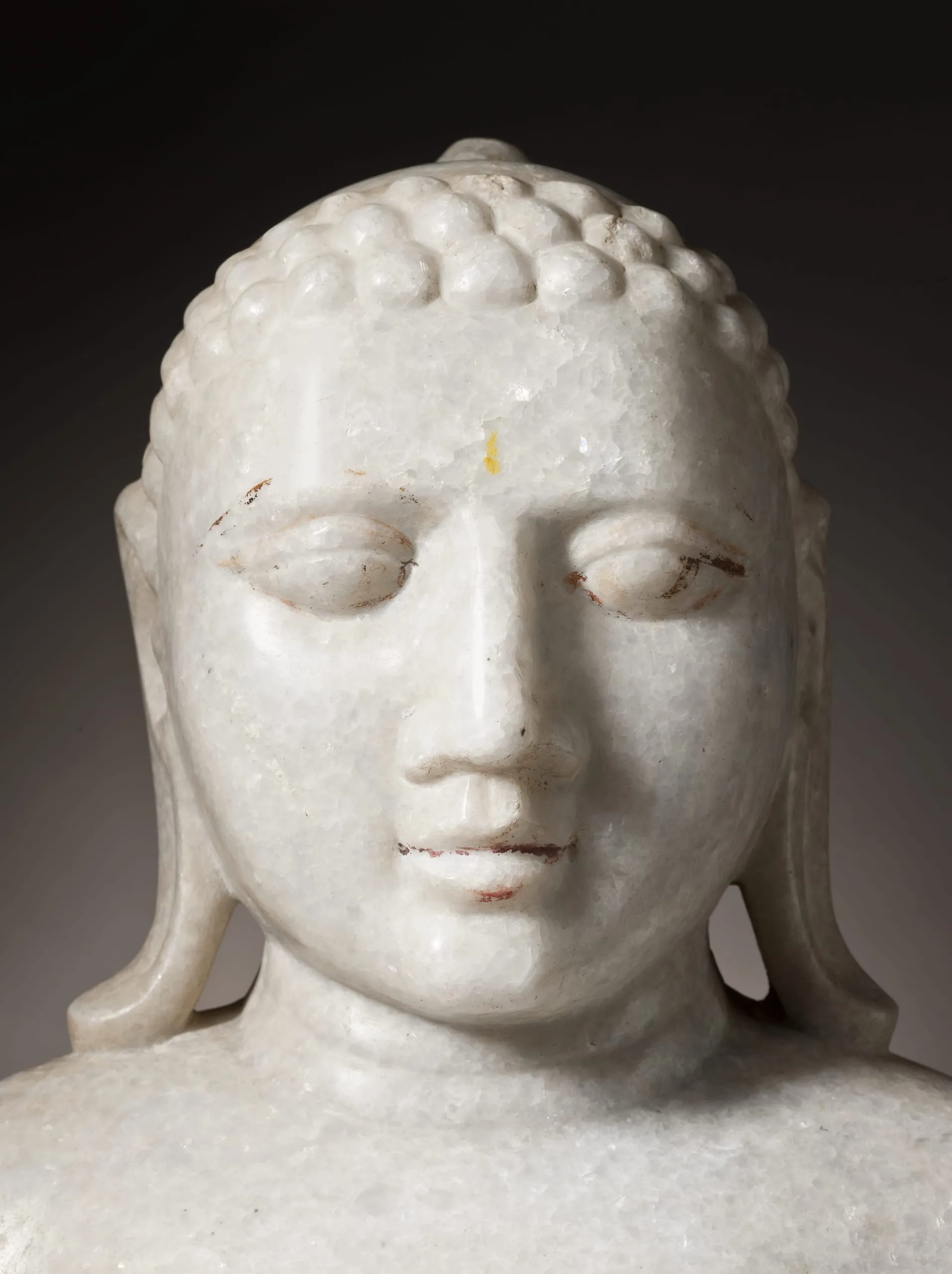
This image would have been entirely clothed and adorned when under worship, with traces of its painted eyebrows and eyes still visible. The narrow band of curled hair is both a religious and a practical feature, insofar as images of Jinas, like those of Buddhas, are prescribed to have this type of hairstyle. Since the image would have worn a silver or gilt silver crown when under worship, here the artist presumably limited the amount of hair to what would be visible in the front. The strip of cloth emerging from beneath the Jina is the tail end of his wrap-around garment, the upper edge of which is visible around his waist. The fact that the Jina is clothed and was once crowned indicates that this image was commissioned for a member of the Shvetambara (White-clad) Jain sect. Rishabhanatha’s bull mount is depicted on the base. The Sanskrit inscription is a standard donor’s record and is dated in an Indian era corresponding to AD 1612 (?). It records that the consecration ceremony for the image was funded by three Jain lay-followers, Jetha, Daha, and Vinayachandra of the now unknown city of Mandavariya in western India.
See also M.85.55.