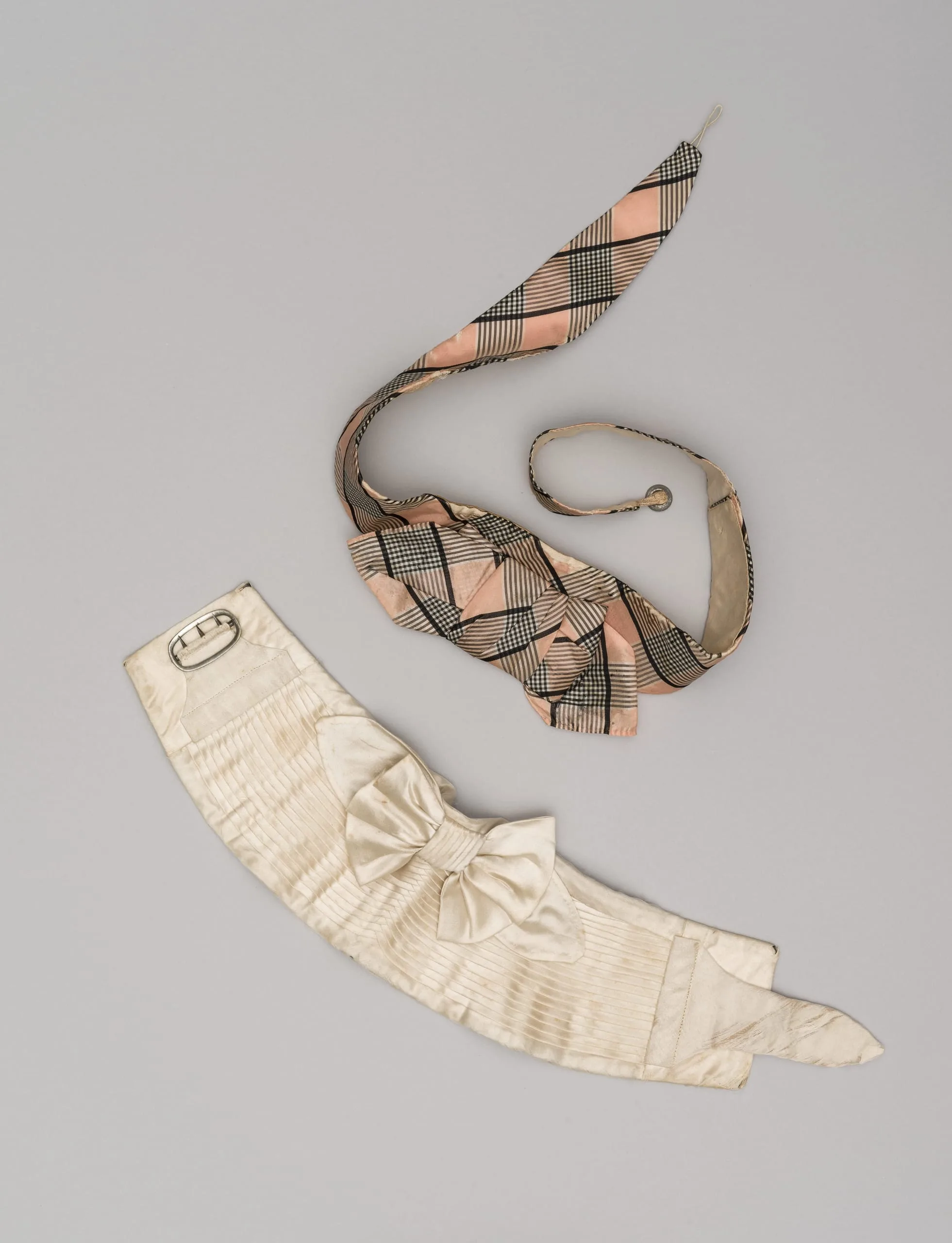
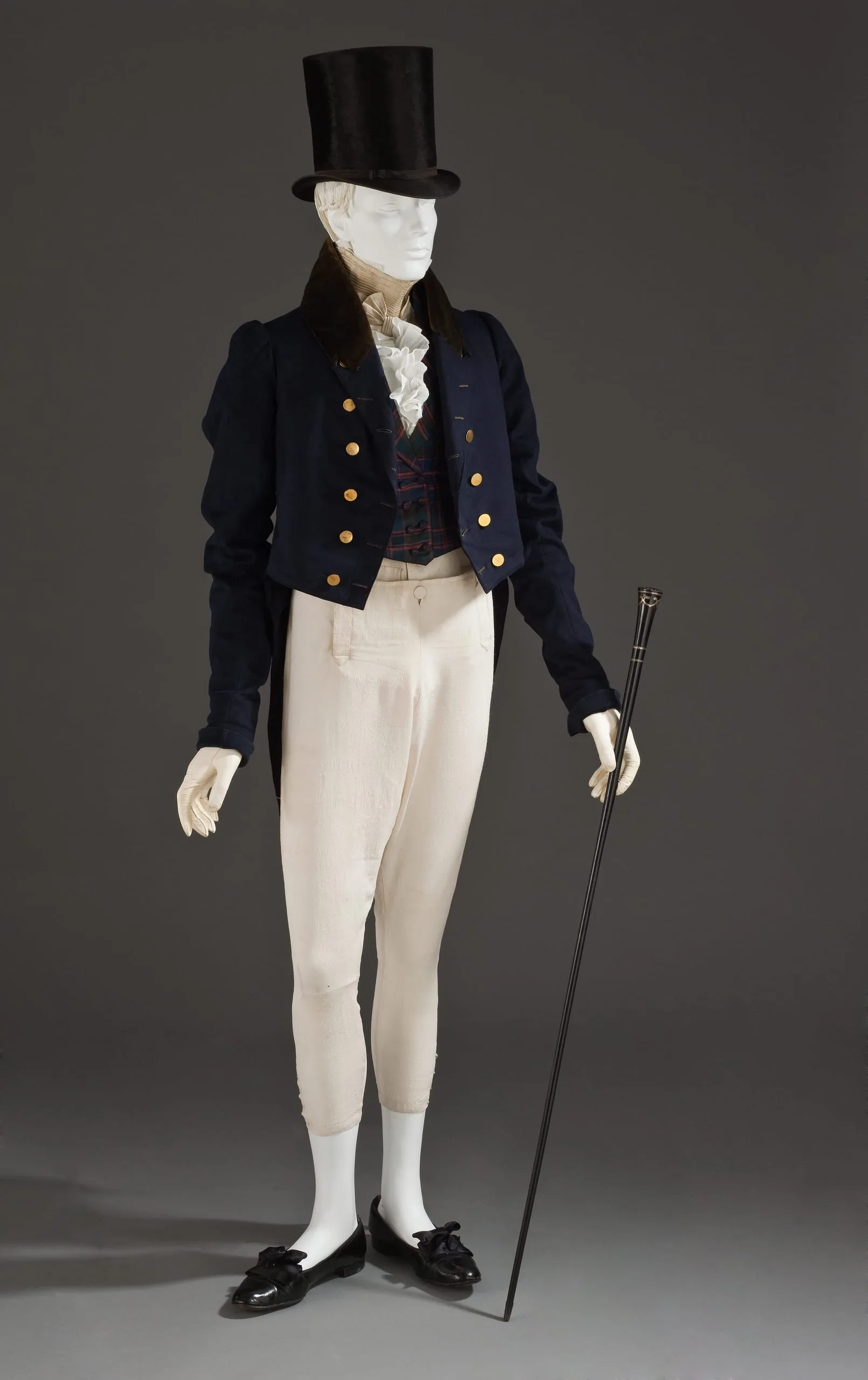
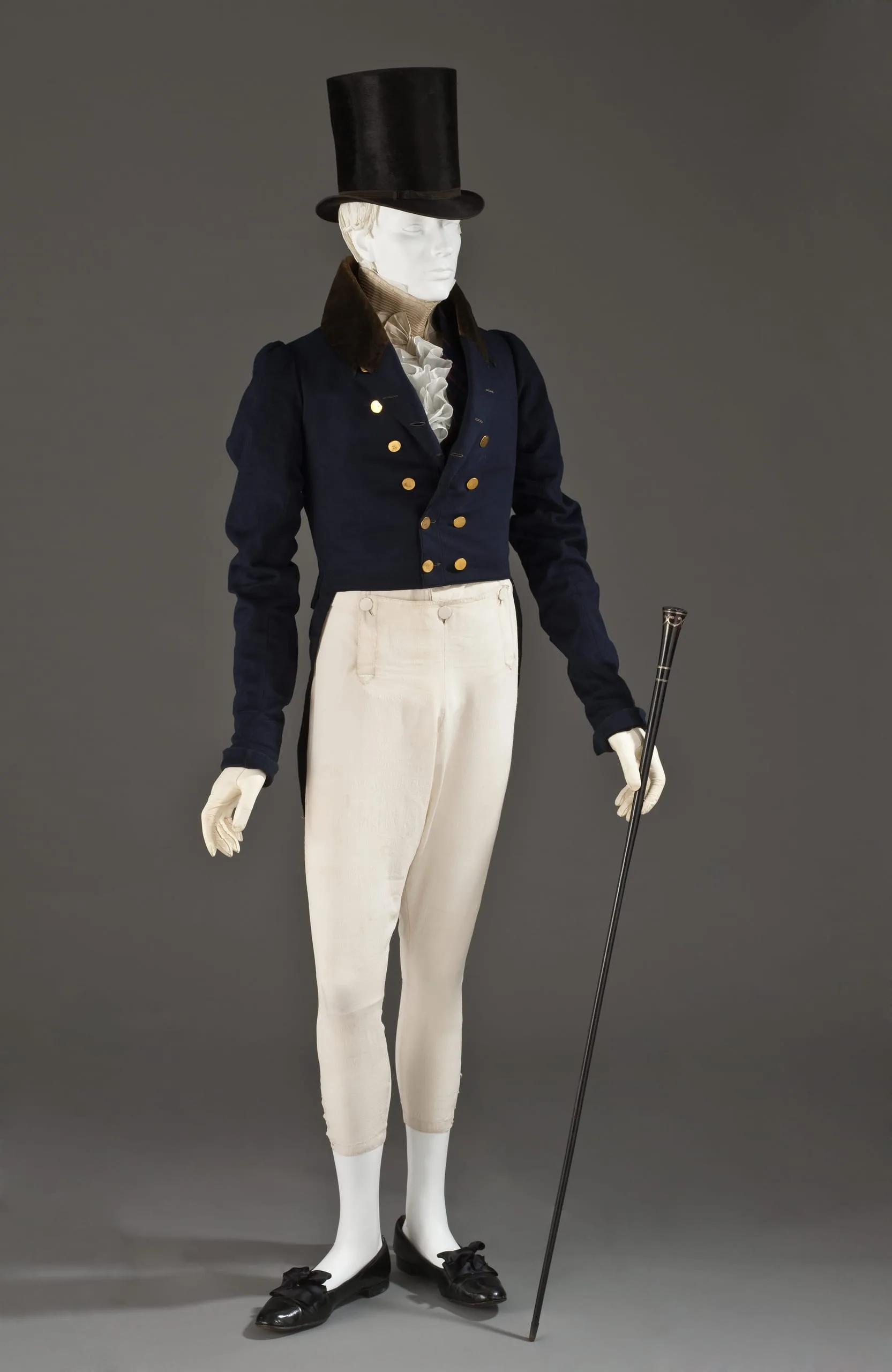
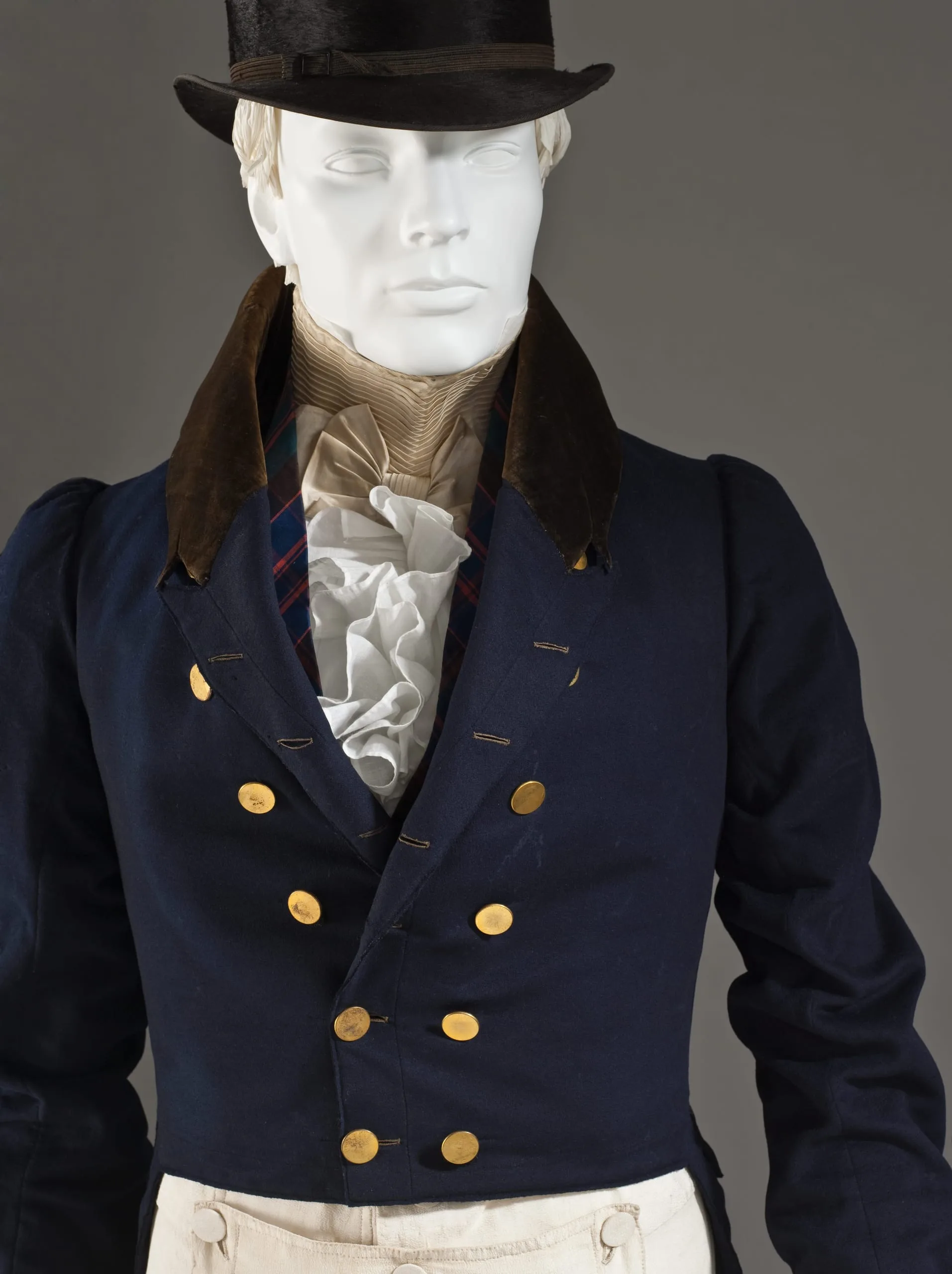
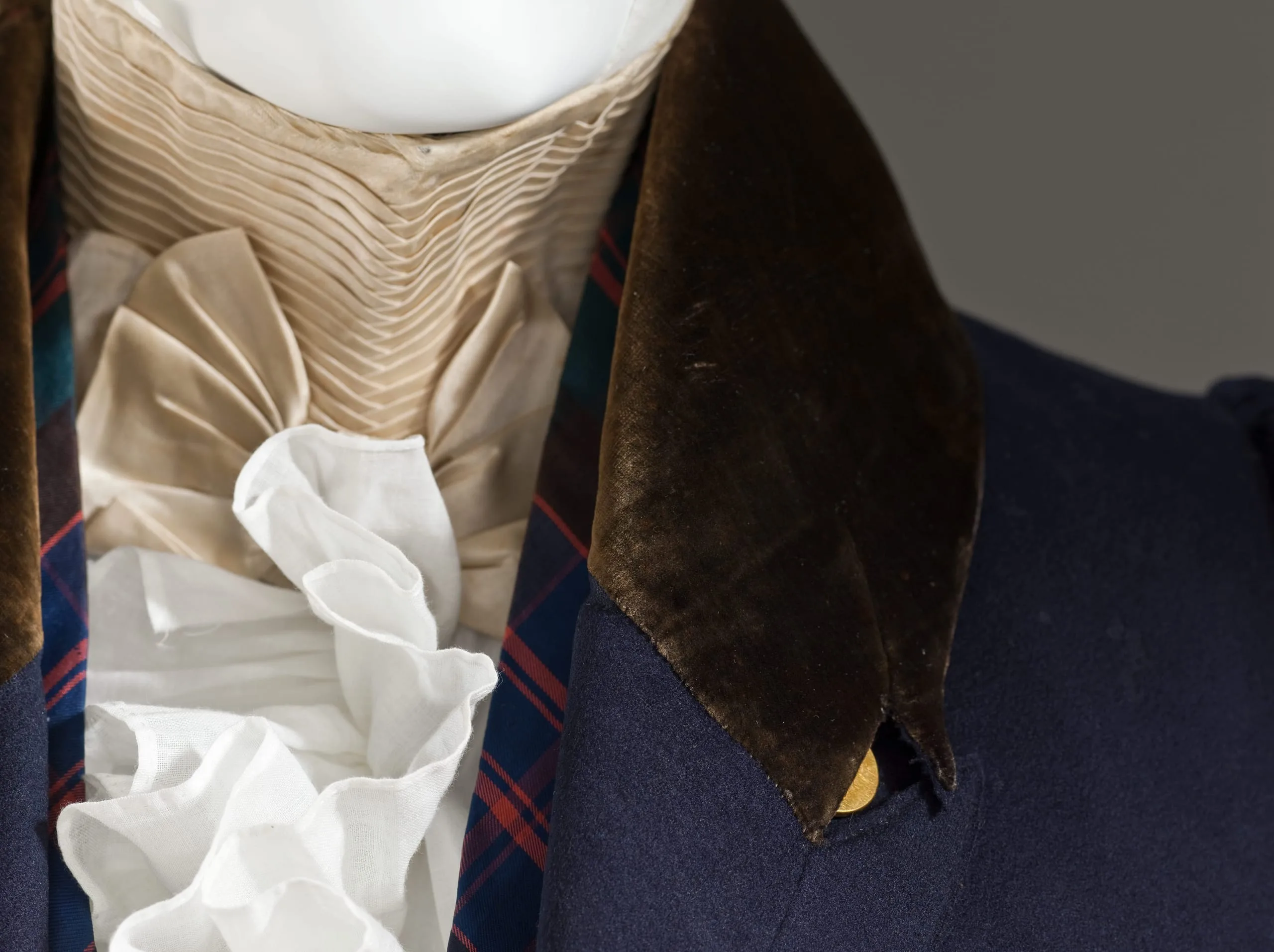
During the first half of the nineteenth century, a stock, a type of neckwear for men, was an important accessory to complete the typical male ensemble, which included a somber tailcoat, vest, and trousers. This formal off-white example was made with rows of finely pleated silk satin and an attached bow. These refined elements were carefully sewn onto a backing of buckram, a stiff fabric that holds the shape of the stock when worn around the neck. Fastening at the back of the neck with a buckle, the stock would have been worn over a white shirt and collar, with the collar points fashionably framing the face under the jawline. This style of stock became popular as men’s neckwear became increasingly complex; prior to the stock, a cravat was worn, and was typically wrapped several times around the neck and then tied in a variety of knots and bows. A stock such as this one would have not only held its shape but significantly reduced the time needed for a man to put on his neckwear.
Clarissa M. Esguerra
2024