LACMA

ShopMembershipMyLACMATickets
LACMA
Los Angeles County Museum of Art
5905 Wilshire Blvd.
Los Angeles, CA 90036
info@lacma.org
(323) 857-6000
Sign up to receive emails
Subscribe
© Museum Associates 2025

Museum Hours

Monday

11 am–6 pm

Tuesday

11 am–6 pm

Wednesday

Closed

Thursday

11 am–6 pm

Friday

11 am–8 pm

Saturday

10 am–7 pm

Sunday

10 am–7 pm


  • About LACMA
  • Jobs
  • Building LACMA
  • Host An Event
  • Unframed
  • Press
  • FAQs
  • Log in to MyLACMA
  • Privacy Policy
© Museum Associates 2025
Collections

Unknown
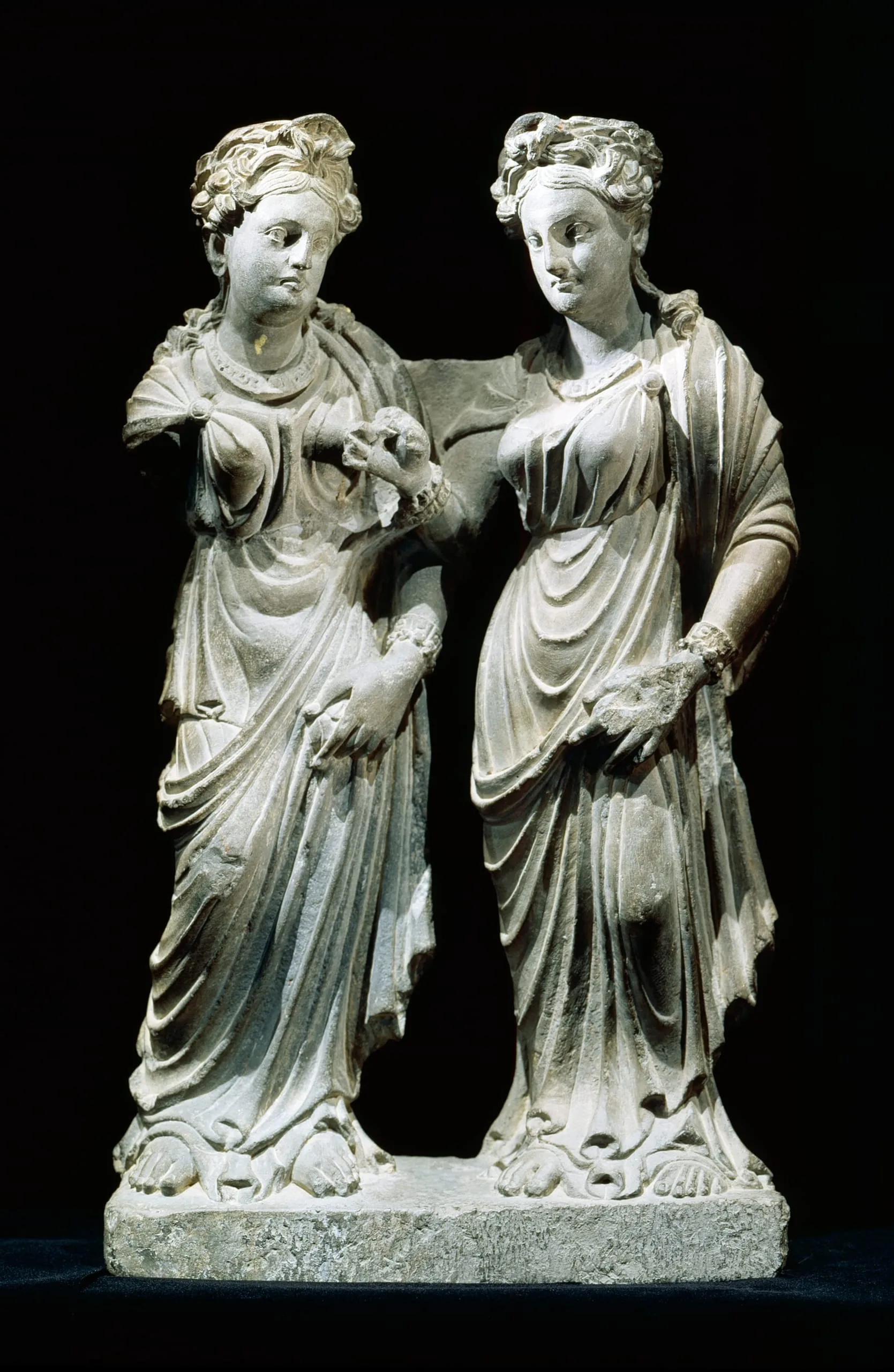
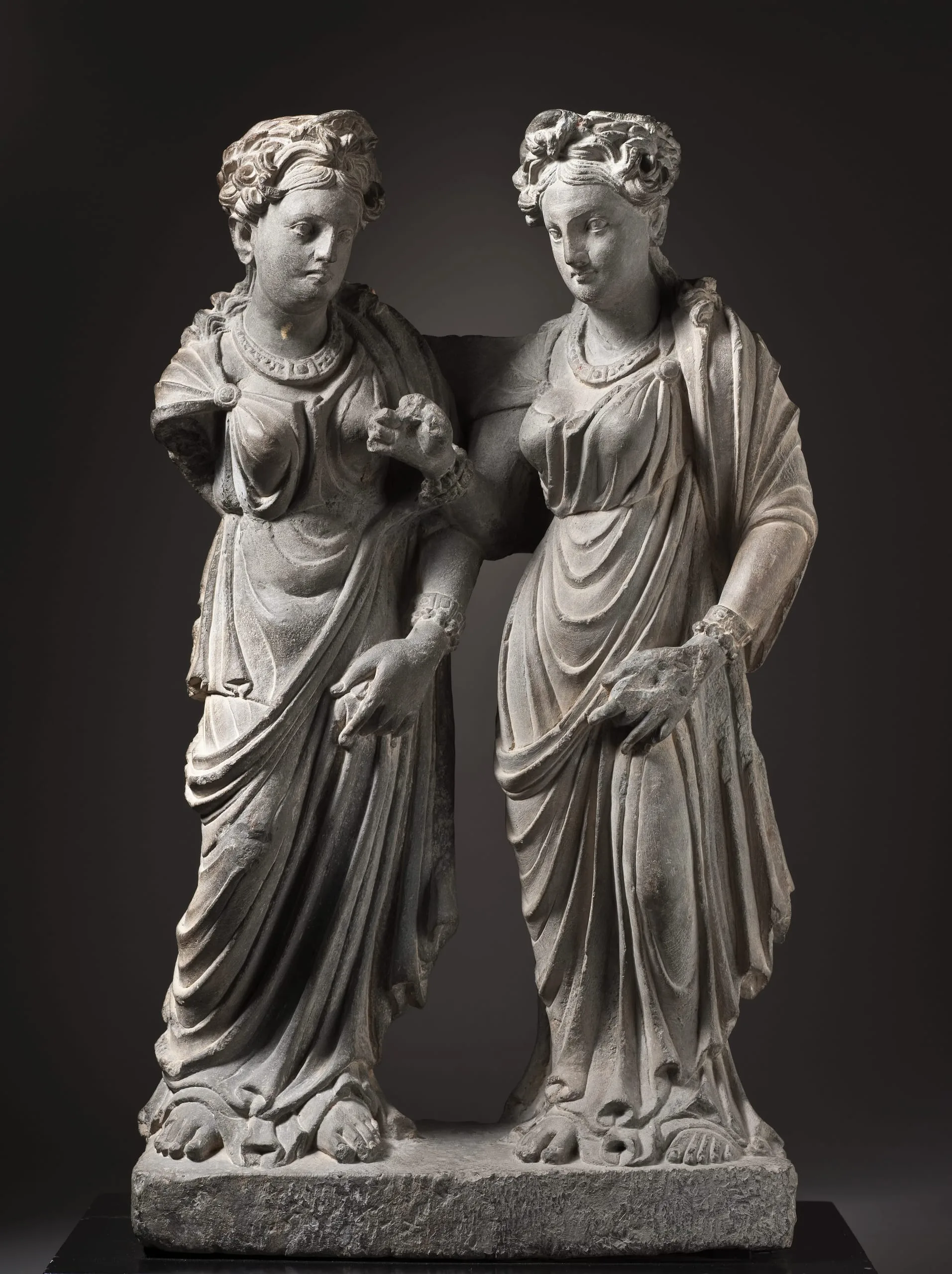
The Aristocratic Women, Illustration of the tale of 'The Necklace of Thread', From the Maha-Ummagga Jataka (Story of the Great Tunnel) (?)2nd century

Not on view
Gray stone sculpture of two standing draped female figures facing each other, their hands joined, on a shared rectangular base
Marble sculptural group of two standing female figures in draped robes, facing each other with one figure extending an arm toward the other; both wear elaborately coiffed hair and jewelry, with finely carved fabric folds, on a shared base.
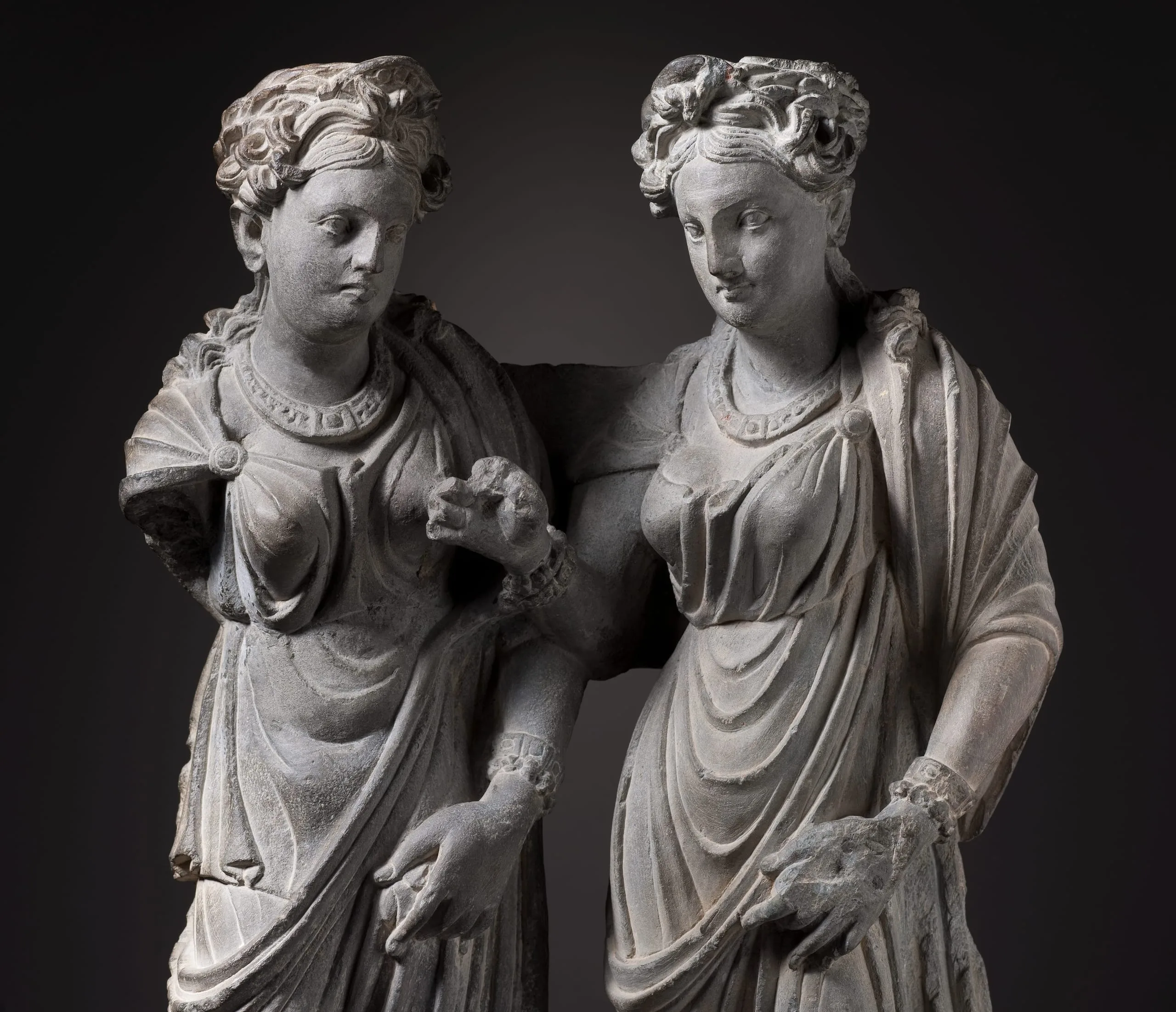
Gray schist sculpture of two standing female figures in Gandharan style, draped in flowing robes with beaded necklaces and bracelets, curled hair, facing slightly toward each other against a dark background.
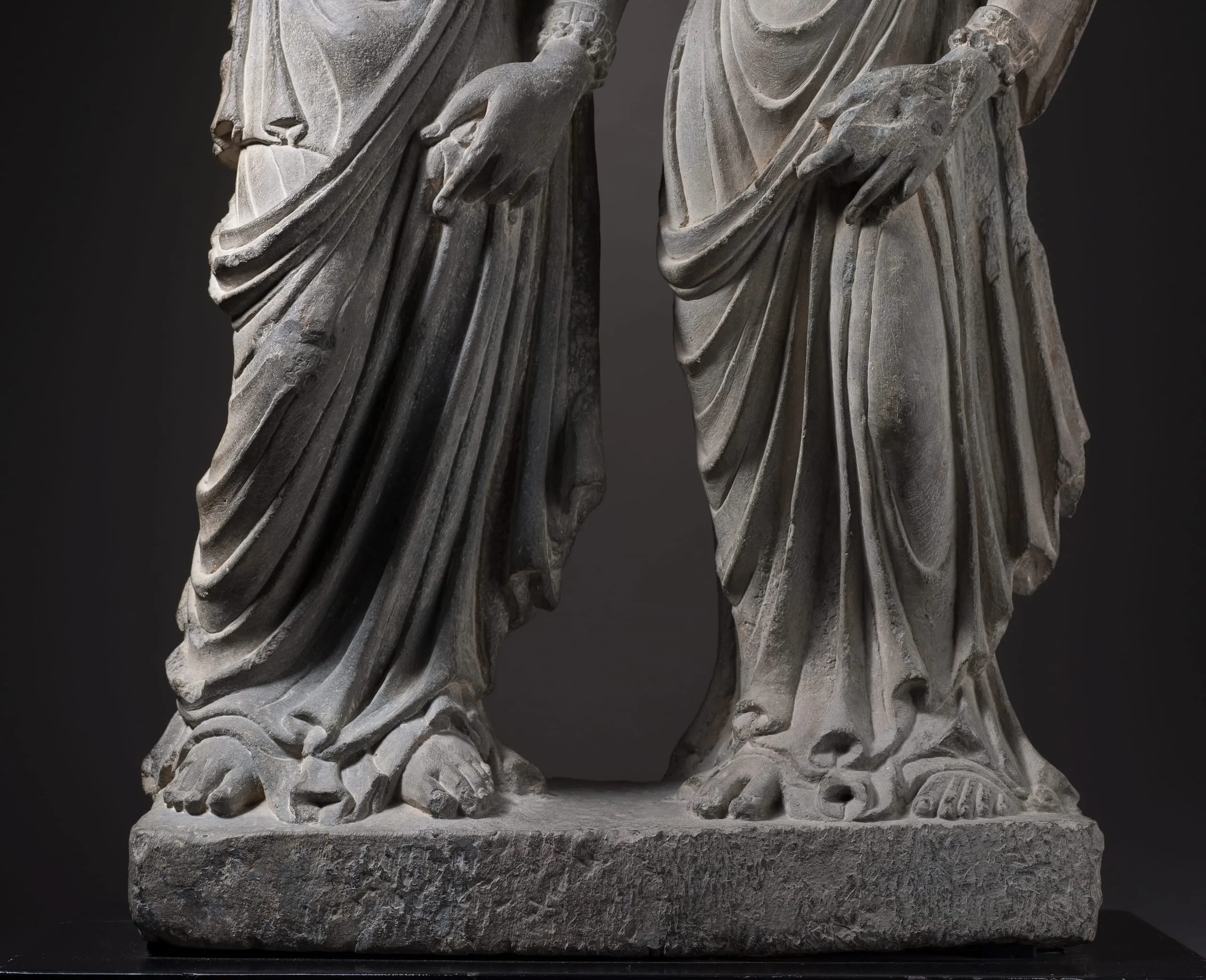
Stone sculpture fragment showing two standing figures from mid-torso to base, draped in deeply carved flowing robes with bare feet visible at a rectangular plinth, weathered gray limestone surface.
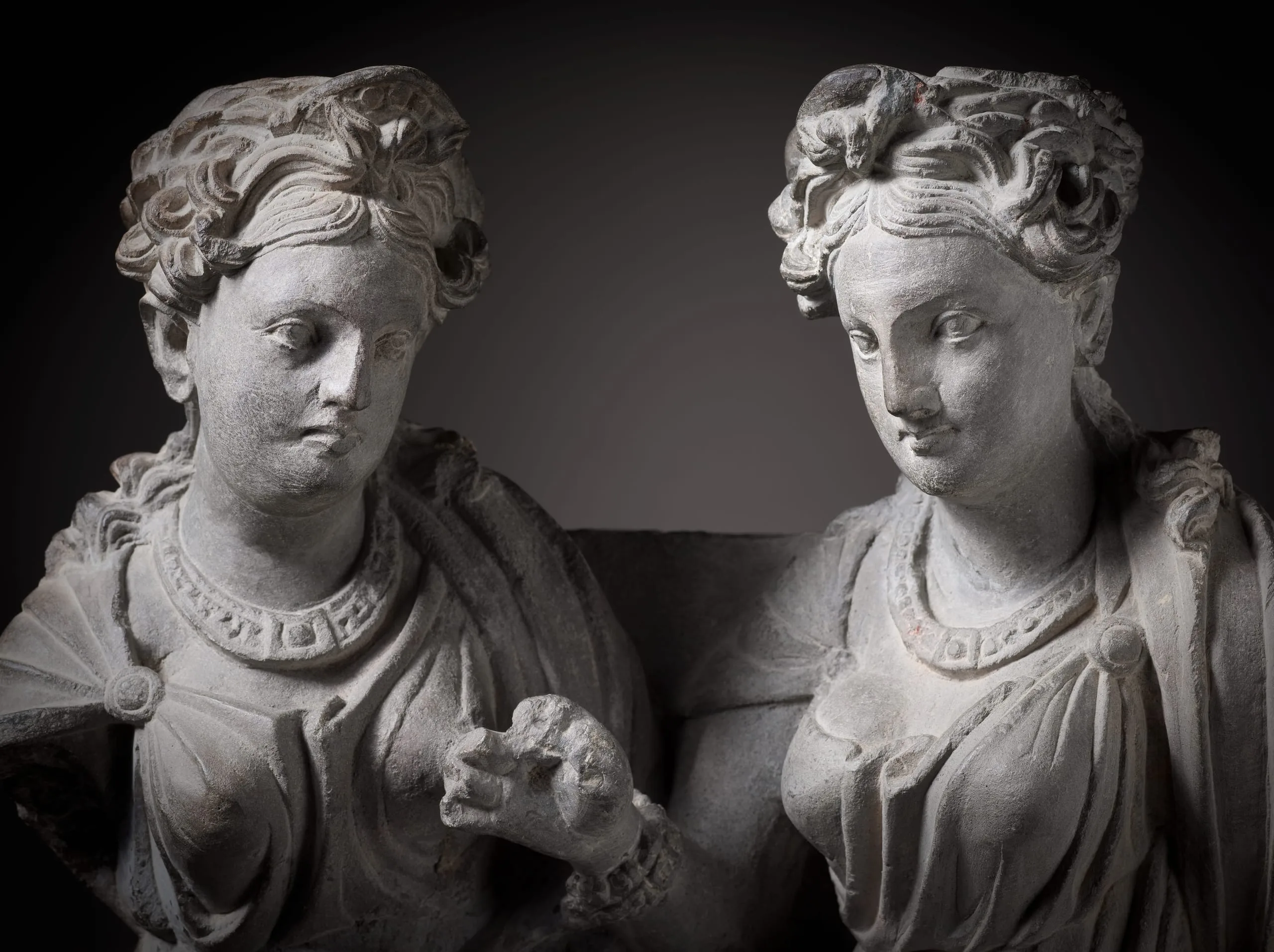
Marble relief sculpture, two female busts in three-quarter view facing each other, both with elaborately braided upswept hair, draped garments with decorative necklaces, one figure holding a small object; finely carved classical style with weathered stone surface.
Artist or Maker
Unknown
Title
The Aristocratic Women, Illustration of the tale of 'The Necklace of Thread', From the Maha-Ummagga Jataka (Story of the Great Tunnel) (?)
Place Made
Pakistan, Gandhara region
Date Made
2nd century
Medium
Gray schist
Dimensions
23 1/8 x 13 3/4 x 6 in. (58.73 x 34.92 x 15.24 cm)
Credit Line
Purchased with funds provided by Mrs. Harry Lenart, Robert and Mary Looker, Robert F. Maguire III, and The Hillcrest Foundation through the 1998 Collectors Committee, Stephen Markel in memory of Catherine W. Markel, the Southern Asian Art Council, and S. Sanford and Charlene S. Kornblum
Accession Number
AC1999.3.1
Classification
Sculpture
Collecting Area
South and Southeast Asian Art
Curatorial Notes
This sensitive double portrait of two aristocratic women was sculpted in schist in the 2nd century A.D. in ancient Gandhara, a region located in present-day northern Pakistan and eastern Afghanistan at the East-West juncture of the fabled Silk Route between Rome and China. Because of the large numbers of international traders and religious pilgrims passing through Gandhara, the artists and patrons of the region were exposed to a number of artistic styles. Consequently, the syncretic art of Gandhara merged Roman stylistic forms with Indian subject matter. The naturalistic figures are elegantly garbed in Classical garments and coiffures that would have been fashionable in 2nd-century Rome. The subject, however, may depict an incident from one of the Buddha's past lives. According to the legend as narrated in the Maha-Ummaga Jataka (The Story of the Great Tunnel), one day the future Buddha overheard two women quarreling over a necklace made of entwined brightly colored threads. In order to resolve the dispute, he asked each woman what perfume she had placed on the necklace, and the two named different scents. The Buddha-to-be then placed the necklace in a bowl of hot water and asked a perfume merchant to identify the scent released. He did so, and the legitimate owner was revealed. This identification of the sculpture is suggested by the unique gesture of the woman on the right, who holds her hand as if she were grasping the end of a dangling necklace. See also M.91.160.1.
Selected Bibliography
  • Gifts from Mary and Robert Looker, Los Angeles County Museum of Art, December 2017. Los Angeles: Los Angeles County Museum of Art, 2017.