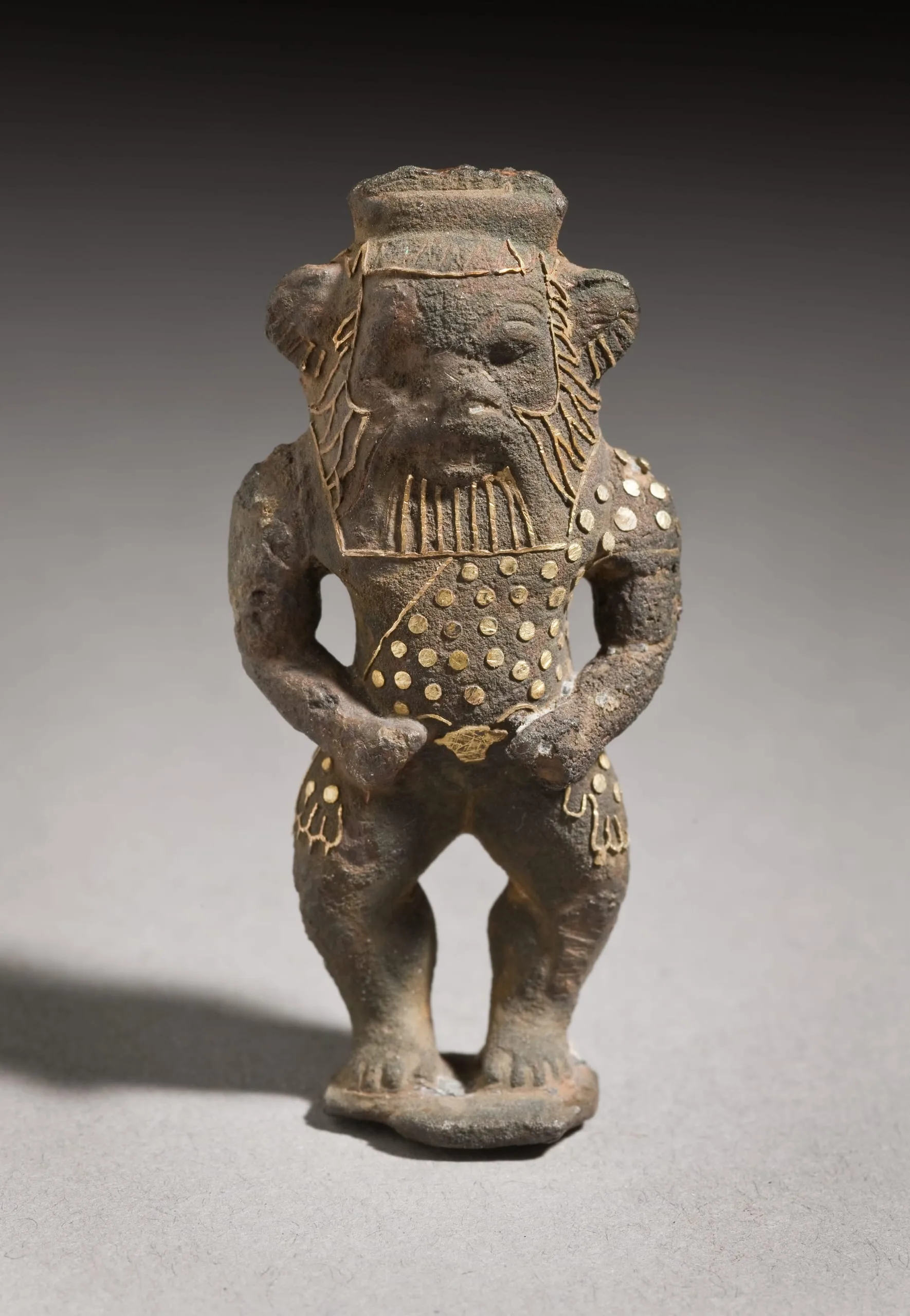
Egyptian metalworking traditions achieved an early sophistication, with the production of large-scale copper statues recorded in texts from the 2nd Dynasty (c. 2730−2590 BCE). A remarkable life-size copper portrait of the 6th Dynasty king Pepi I is preserved in the Cairo Museum. Increased production of metal artifacts in the Third Intermediate Period resulted in a wealth of objects that have been retrieved from tombs and temples. This figurine depicts the Egyptian god Bes, a bandy-legged dwarf with a leonine mane who served as guardian of the household. It is a rare Bes, manufactured in bronze and embellished with delicate inlays of gold. This technique was employed for a brief period during the 21st22nd Dynasties, and very few examples are known. The draped, spotted-panther cloak, with pendant head and paws, is detailed in gold, along with the striations and border of the lion beard. The squared beard indicates production in a royal workshop, as royal pieces seem to be the exception to the standardized depiction of Bes with a rounded mane during this period.
In partnership with the god Taweret, Bes was the protector of childbirth for both mortals and, as commemorated in Egyptian temple reliefs, the gods. Ancient Egyptian medical lore suggests a recitation of spells and the placement of a clay dwarf near the woman’s head during a difficult labor. Other secular depictions of Bes include painted dado decorations in New Kingdom palace bedrooms, on implement handles, and on wood headrests with Bes images in relief. This inlaid bronze figurine may have served the royal household as a mirror handle, a furniture finial, or a stand-alone protective image.