- Title
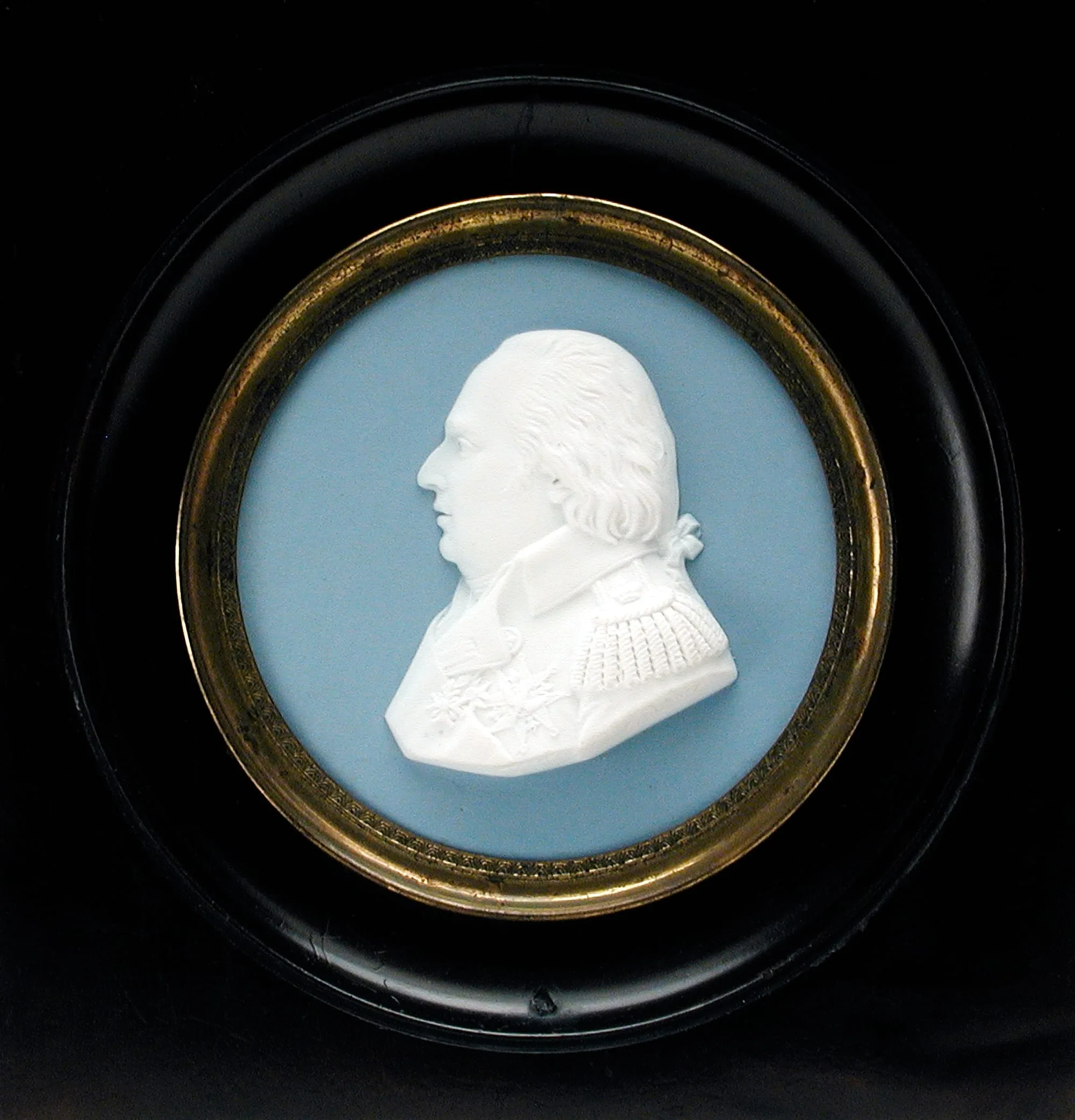
- Plaque with Portrait of Louis XVIII of France (reigned 1814-1824)
- Date Made
- circa 1815-1820
- Medium
- Biscuit porcelain, wood, gilt metal
- Dimensions
- Frame: 6 x 6 in. (15.2 x 15.2 cm); Plaque: Diameter: 3 1/4 in. (8.3 cm)
- Accession Number
- AC1997.109.2
- Curatorial Notes
This portrait plaque depicts Louis XVIII, king of France (r. 1814–24), following Napoleon’s defeat. The royal Sèvres Porcelain Manufactory began producing medallions of Louis XVIII in the latter half of 1814, shortly after he was crowned king. The Star of the Order of Saint-Esprit, a French order of chivalry of which the king was the grand master, is prominently displayed on his chest. Such portrait plaques depicting the sitter in carved relief profile were modeled after ancient cameo jewelry, which had become increasingly fashionable with a renewed interest in classical Greek and Roman culture in the late eighteenth century. While the English ceramics manufacturer Wedgwood is now more recognized for producing ceramics in the style of cameos, Sèvres developed their own methods for making portrait medallions concurrently. However, they likely turned to backgrounds of solid blue paste only after Wedgwood popularized the aesthetic. The white relief, called a sprig, is a separately molded low-relief decoration applied to the background before firing. Sculptor Jean-Nicolas-Alexandre Brachard, as well as his father and brother, all modeled portrait medallions for Sèvres.
Cynthia Kok
2025