- Title
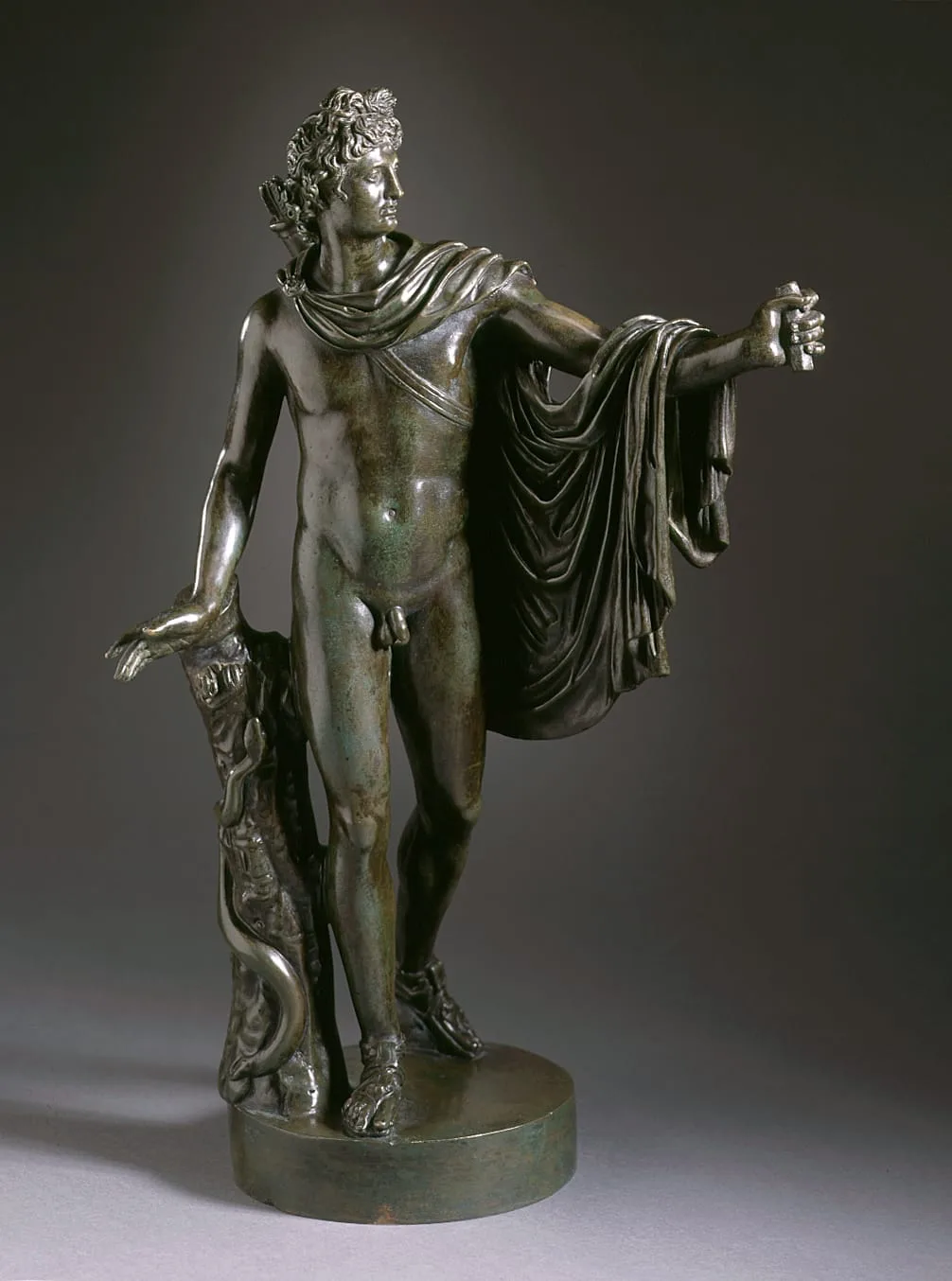
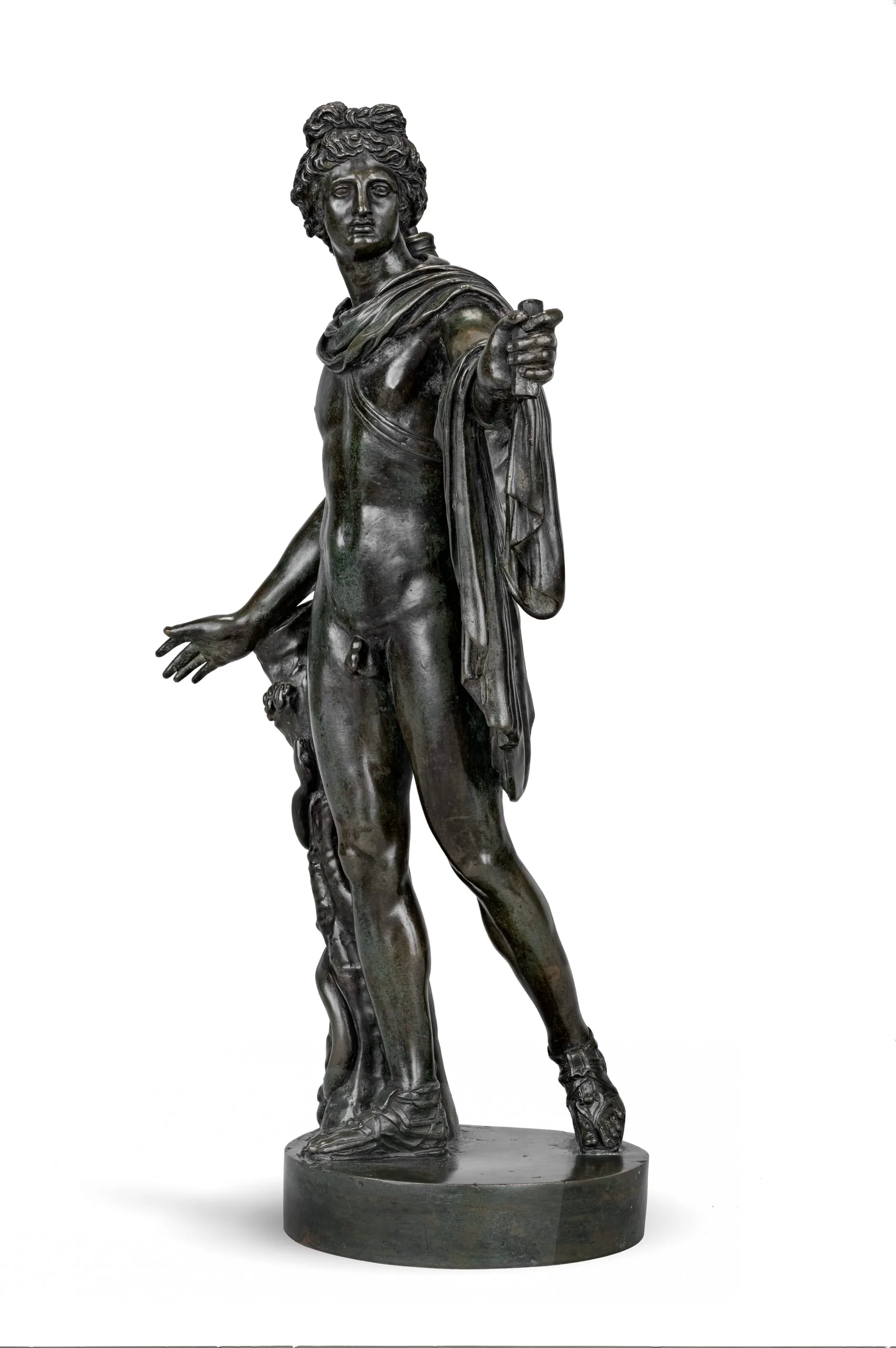
- The 'Apollo Belvedere'
- Date Made
- after 1763-before 1805
- Medium
- Bronze
- Dimensions
- 13 1/2 x 8 1/2 x 7 in. (34.29 x 21.59 x 17.78 cm)
- Accession Number
- AC1997.54.1
- Curatorial Notes
One of the most celebrated classical Roman sculptures, the grand marble Apollo (mid-2nd century CE) was unearthed in 1509 and displayed shortly thereafter in the Belvedere Courtyard, a semipublic space in the Vatican, where it has been on view nearly continuously ever since (see M.79.49 for the reasons for the interruption). This massive standing figure with left arm aloft became one of the most frequently copied European works of art. Artists used its distinct pose over and again in an effort to signal antiquity, beginning with Leonardo da Vinci, Raphael, and Michelangelo and countless numbers that followed (AC1994.128.1).
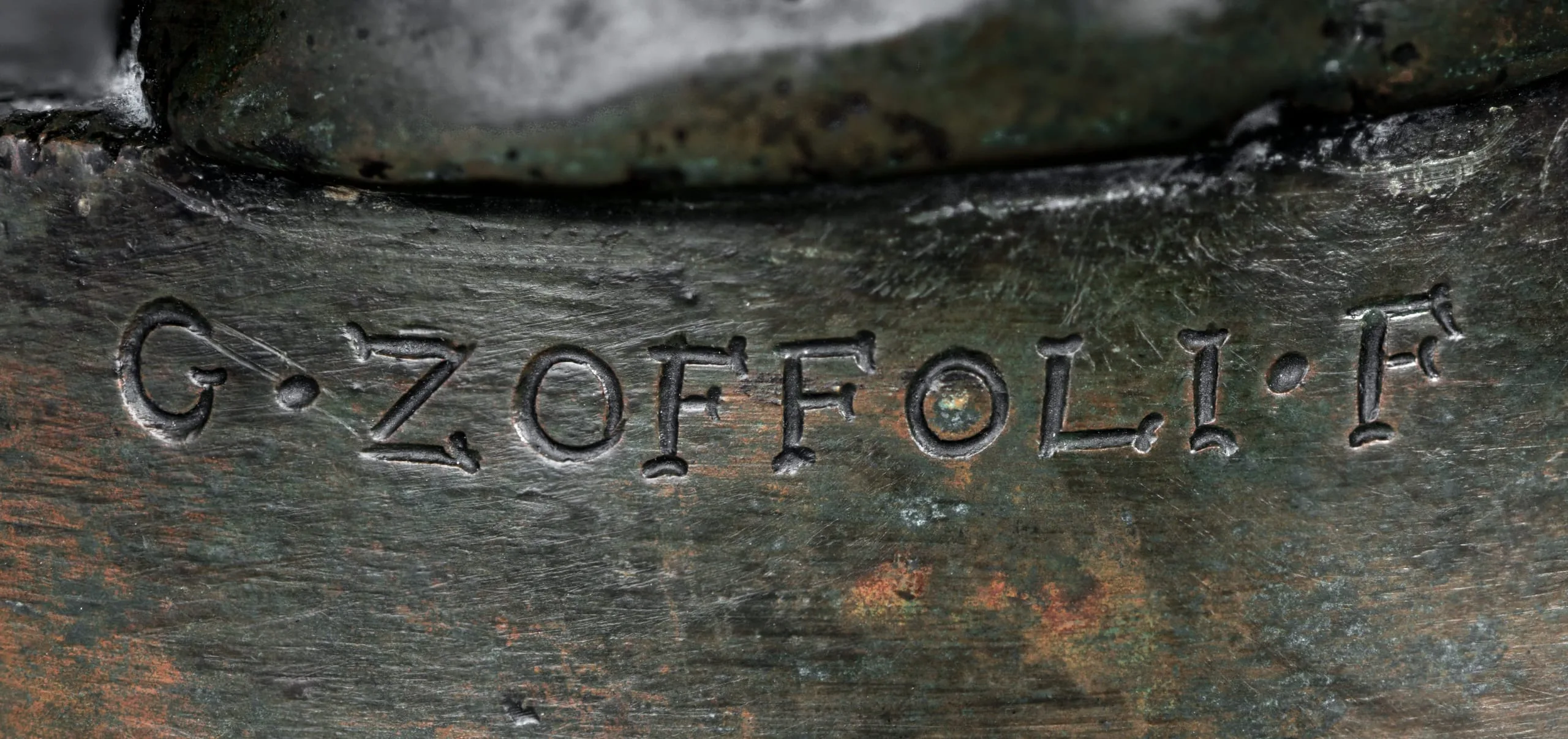
It was only toward the end of the seventeenth century that accurate sculptural replicas of the large work began to be produced for visitors to Rome on the Grand Tour. During the second half of the eighteenth century, the market for such high-end souvenirs in bronze was dominated by the foundry of the Italian brothers Giacomo and Giovanni Zoffoli. This cast is rich in detail, and the bronze has a green patina reminiscent of ancient bronzes. Given that the large Roman marble was understood to have been modeled after a Greek bronze original from some 300 years earlier, the medium of bronze would have been a suitable iteration for such a reduction.
2025