- Title
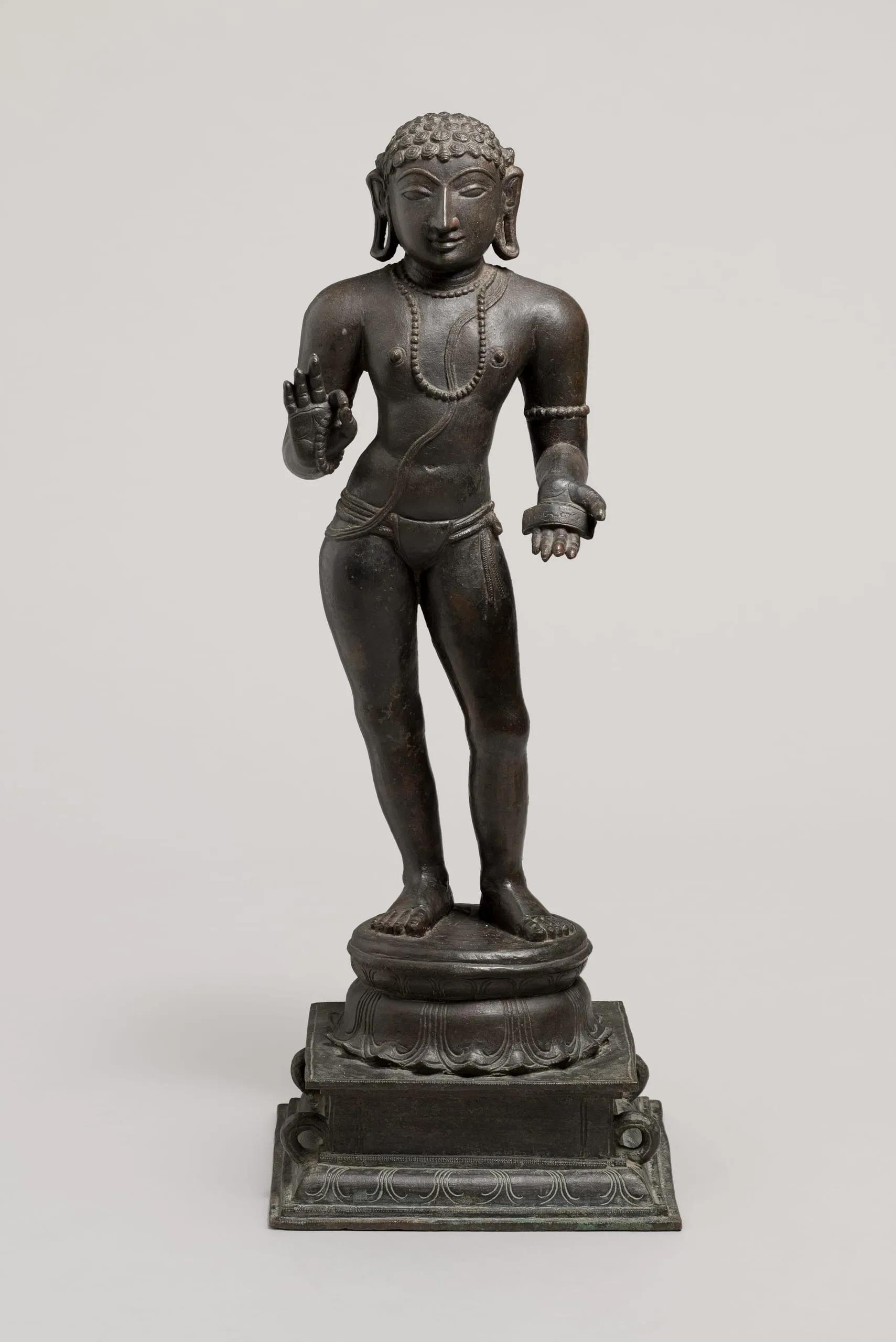
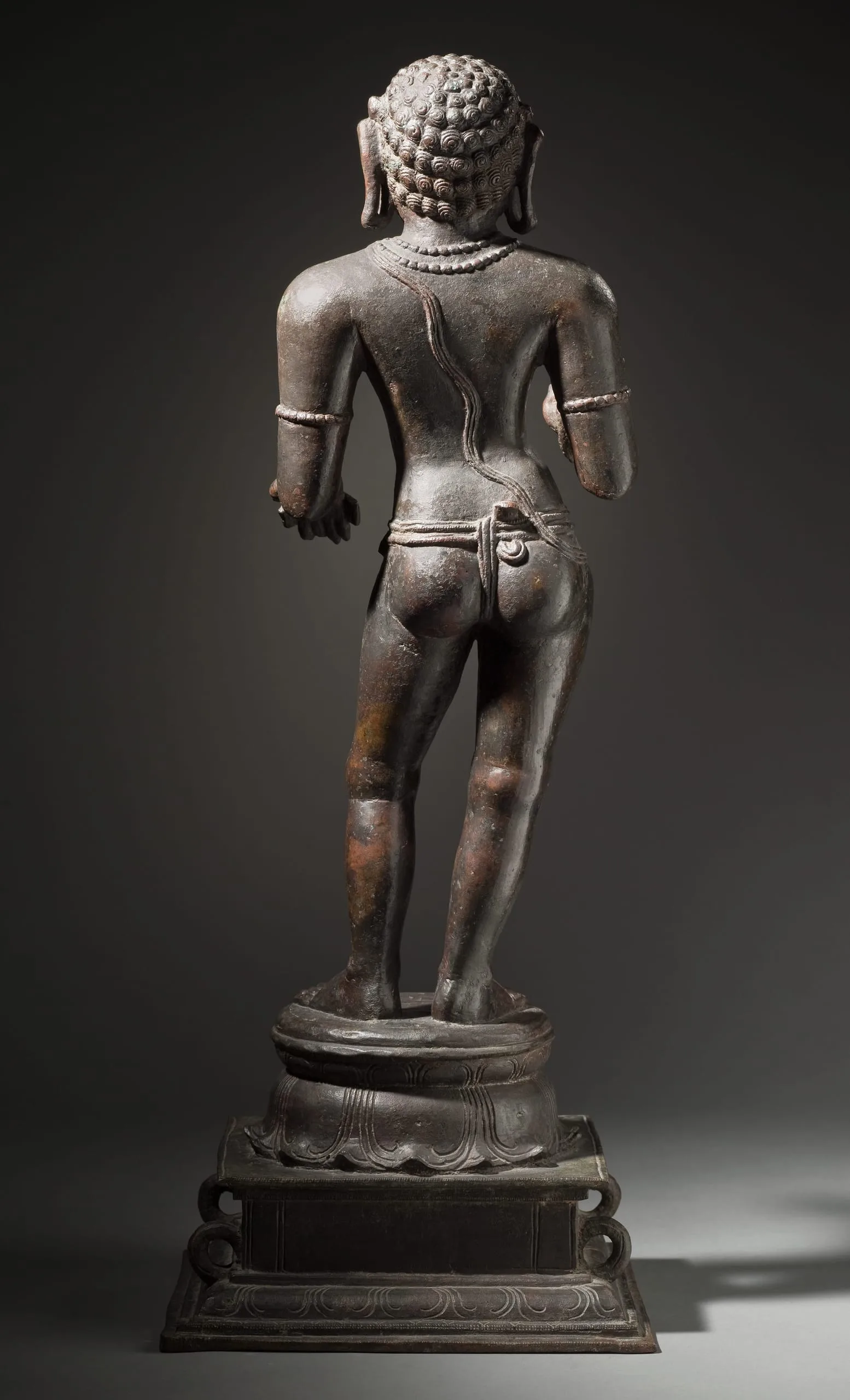
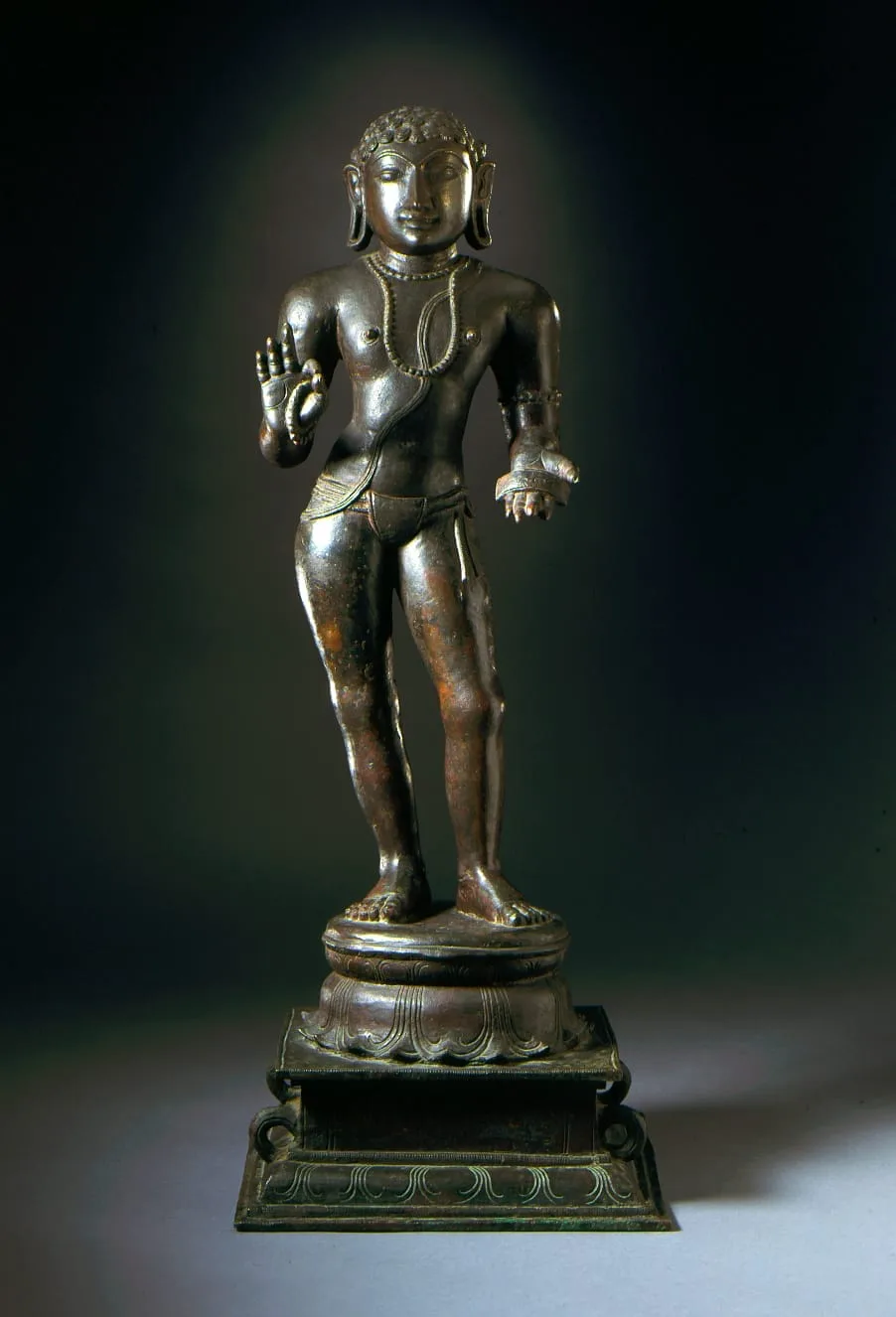
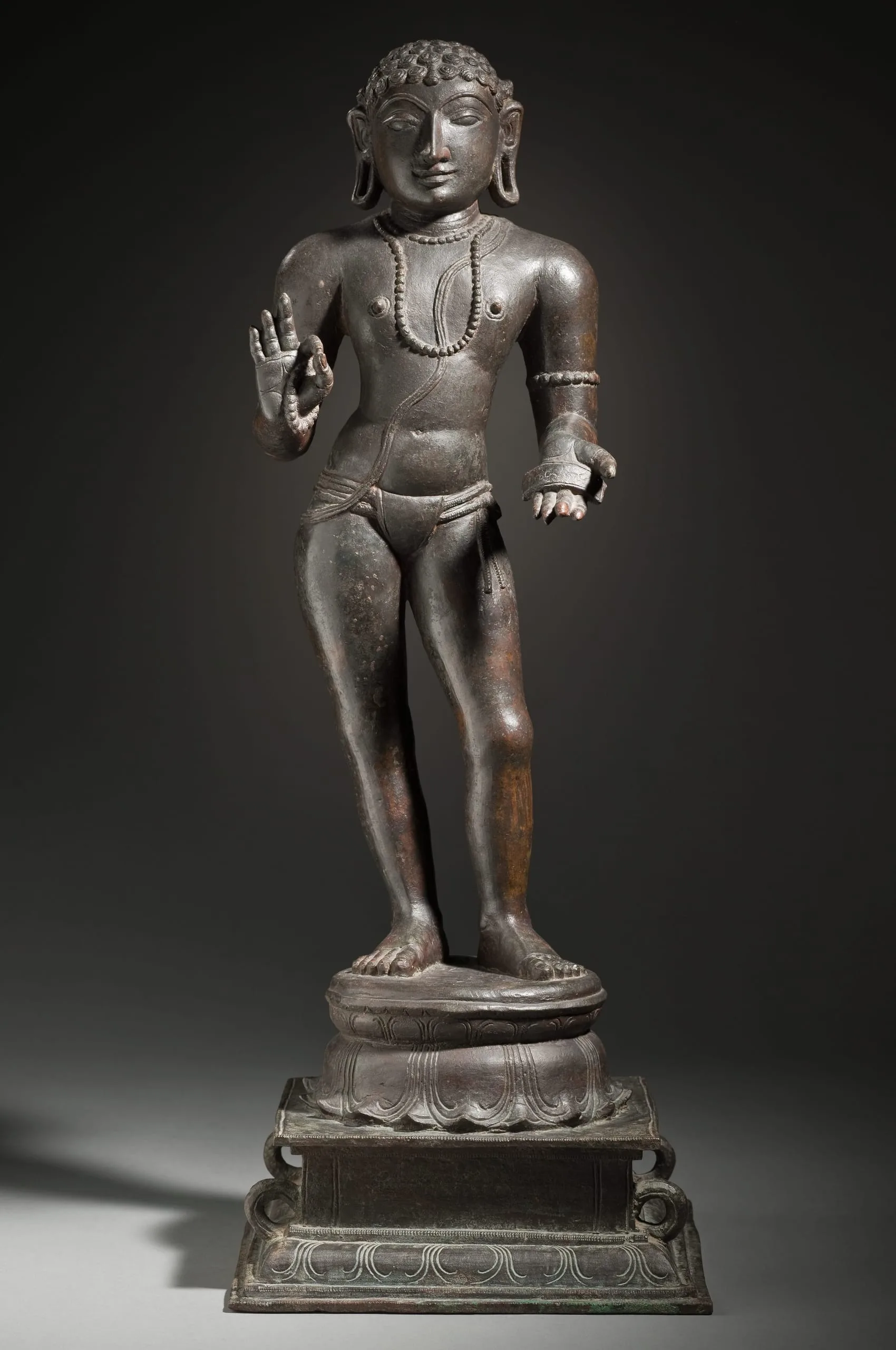
- The Hindu Saint Manikkavacakar
- Date Made
- early 12th century
- Medium
- Copper alloy
- Dimensions
- 25 x 9 1/2 x 8 5/8 in. (63.5 x 24.13 x 21.91 cm)
- Accession Number
- AC1997.16.1
- Curatorial Notes
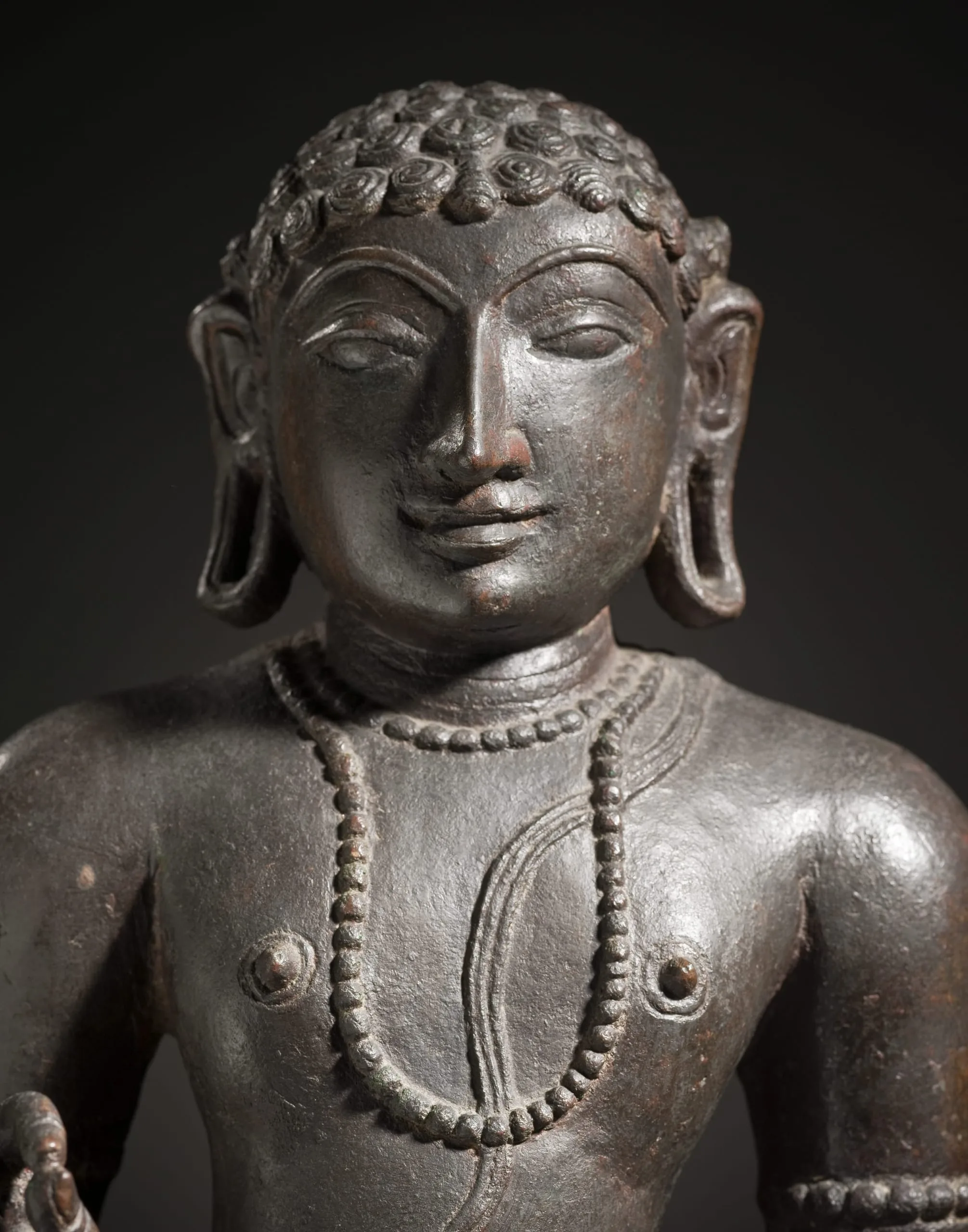
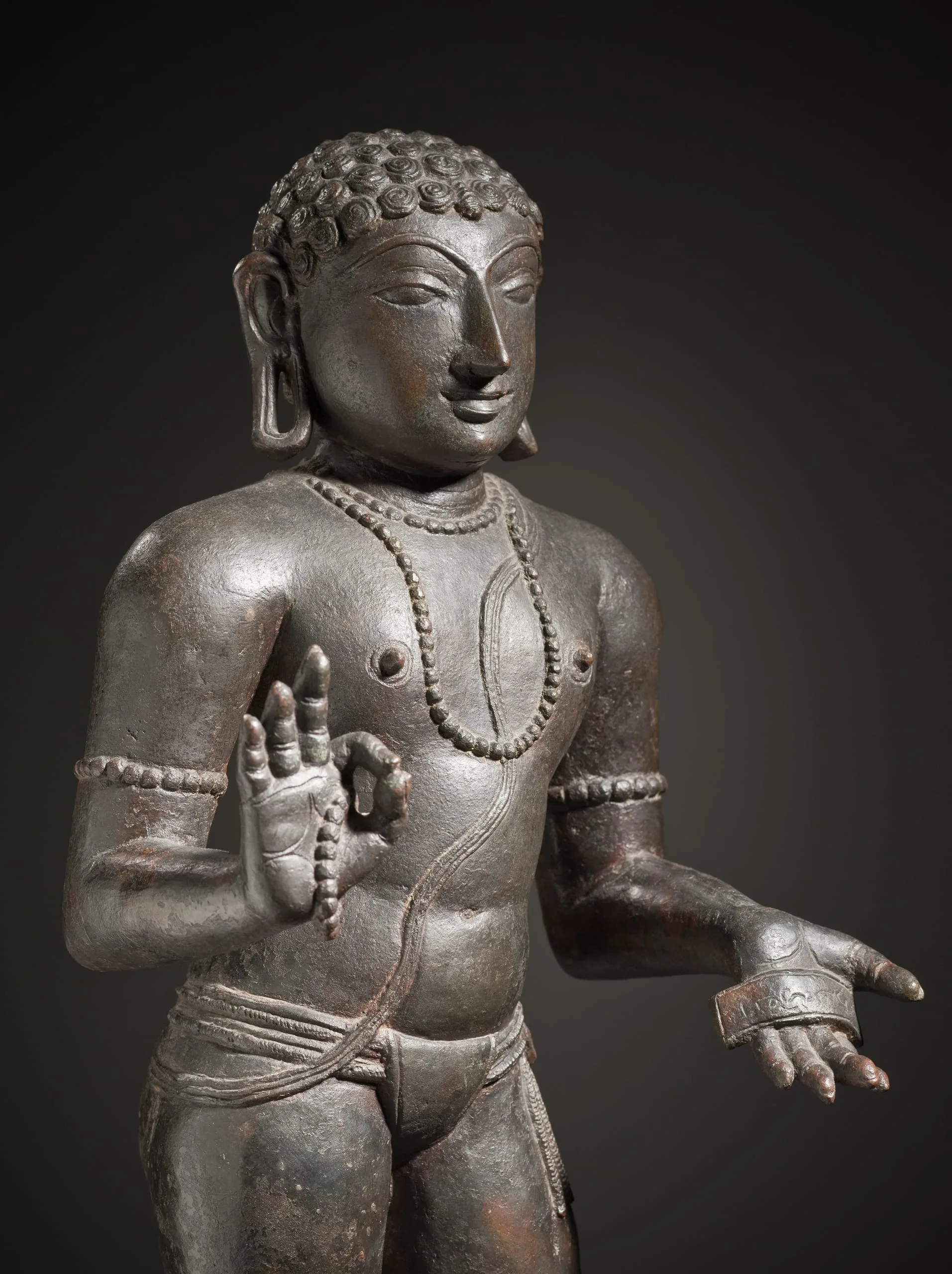
The poet-saint Manikkavacakar (He whose utterances are rubies) is generally regarded as the most important south Indian saint devoted to the Hindu god Siva. He was born in the mid-9th century near Madurai in Tamil Nadu, served briefly as the prime minister of the Madurai king, Varaguna II (r. 862–80), and lived the remainder of his life at the holy temple-city of Chidambaram. His birth name was Tennavan Brahmarayan, but he is today known only as Manikkavacakar, an honorific name that was given to him by another saint who was in awe of the beauty of his poetry. His most significant poems and hymns were codified as the Tiruvacakam (Sacred Utterances), which forms the eighth book of the south Indian religious canon.
Manikkavacakar is portrayed here with his left hand holding a rectangular palm leaf manuscript inscribed with the sacred mantra, nama-siv [ya] (I bow to Siva). His right hand is shown in the teaching gesture and holds a bead rosary. His empty elongated earlobes symbolize his renunciation of the material world through his casting off of the heavy gold earrings he wore in his secular life. This processional image was most likely made during the prosperous reign of Emperor Vikrama Chola (r. 1118–35), an enlightened and generous patron of the arts who revered Manikkavacakar's poetry. It was during this era that increased emphasis was granted to the festivals of the saints, in which images of deities and saints such as this are paraded before the Hindu faithful.