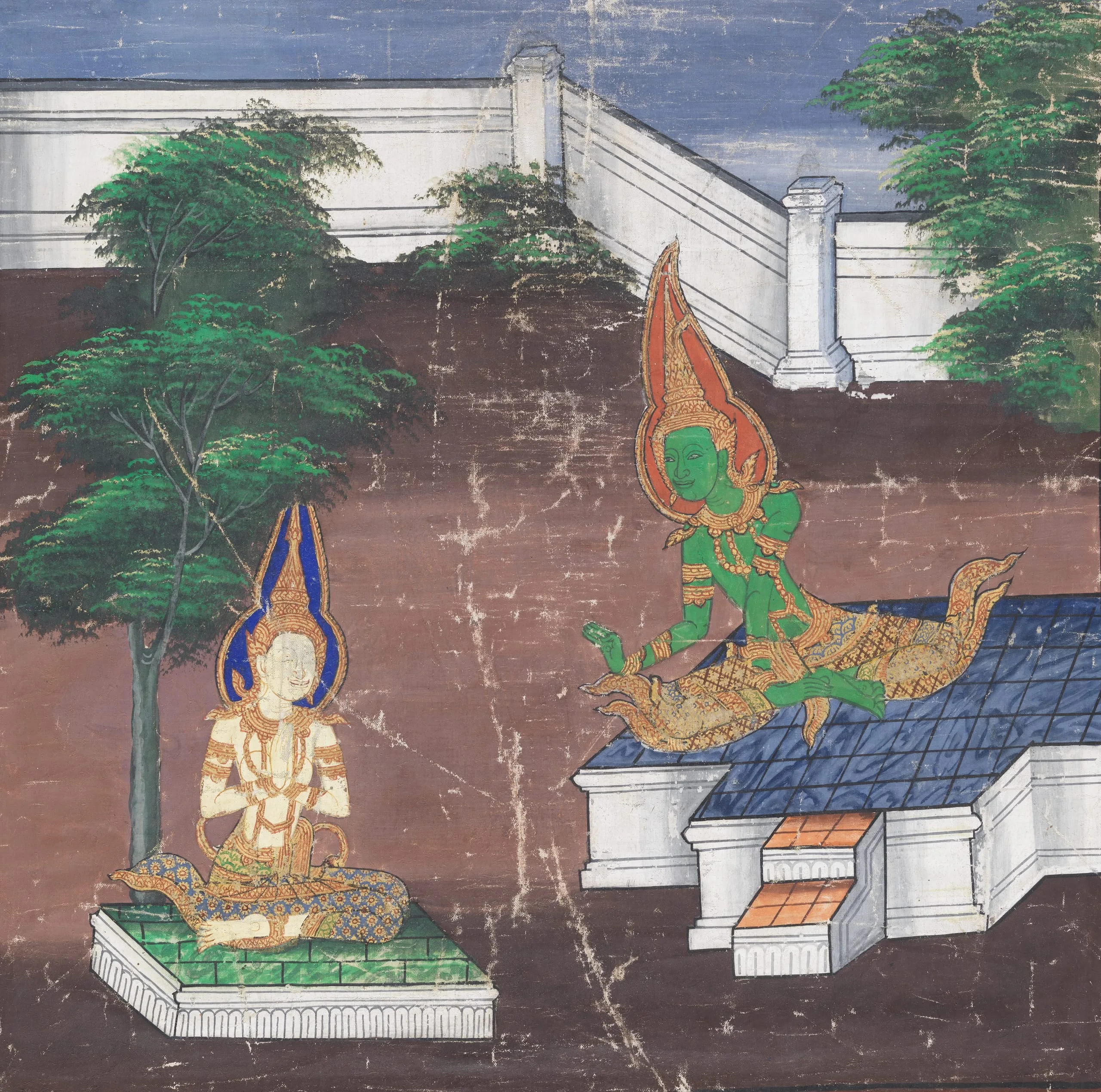
The Vessantara Jataka, also known as the Great Birth Sermon, is the last and most popular Jataka (birth story) in Theravada Buddhism. Dating from the 2nd century BCE, it tells the story of the historical Buddha Shakyamuni’s past life as Prince Vessantara (Vishvantara) of the ancient Sivi Kingdom in western Rajasthan, India. Vessantara is renowned for giving away all his possessions, including his wife, children, and wealth, to display the virtue of perfect generosity.
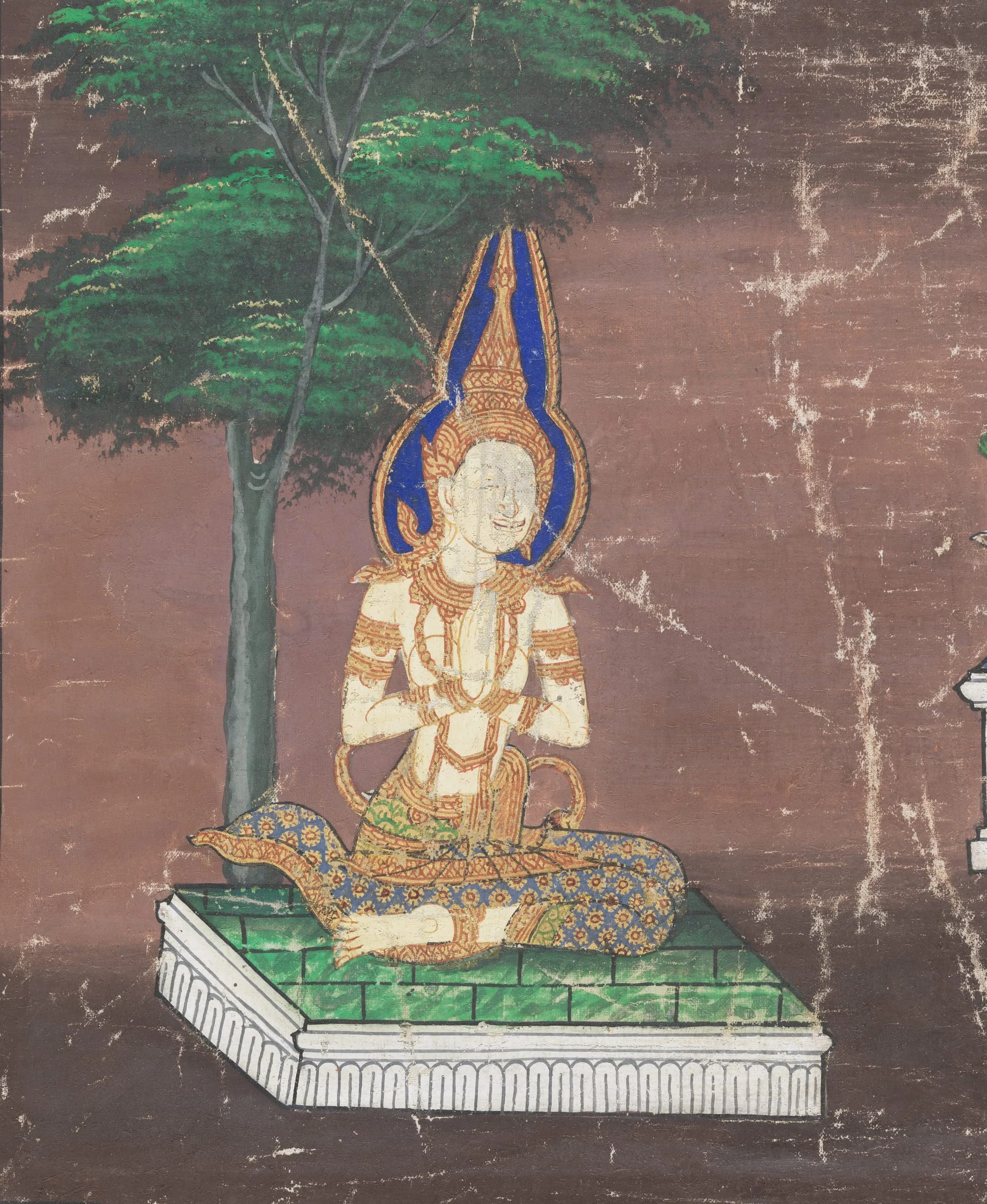
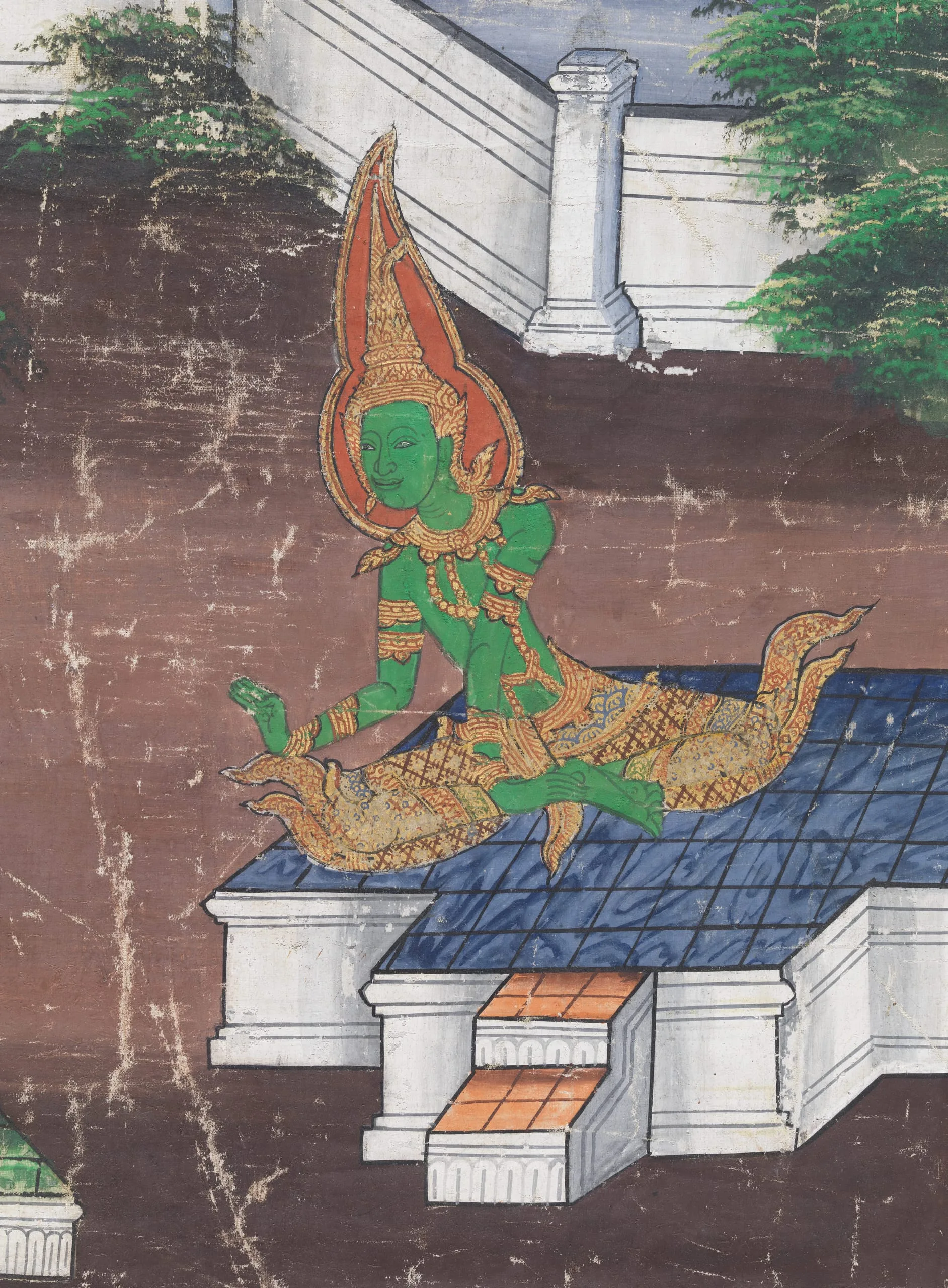
In this scene occurring in a palace compound, Sakka (or Sakra/Indra), the king of the gods, reveals himself to Maddi (Madri), Vessantara's wife who was then given to Sakka. Vessantara's daughter and son, Princess Kanhajina (Krishnajina) and Prince Jali, were given to a forest Brahmin Jujaka as servants for his wife Amittada. Sakka is represented here with green skin and holds his right hand in the gesture of reassurance (abhaya mudra). Maddi has white skin and hold her hands together in the gesture of adoration (anjali mudra). She sits on a lotus pedestal, while Sakka hovers above a platform in a flying posture (langalaka). Both characters are crowned and nimbate.