- Title
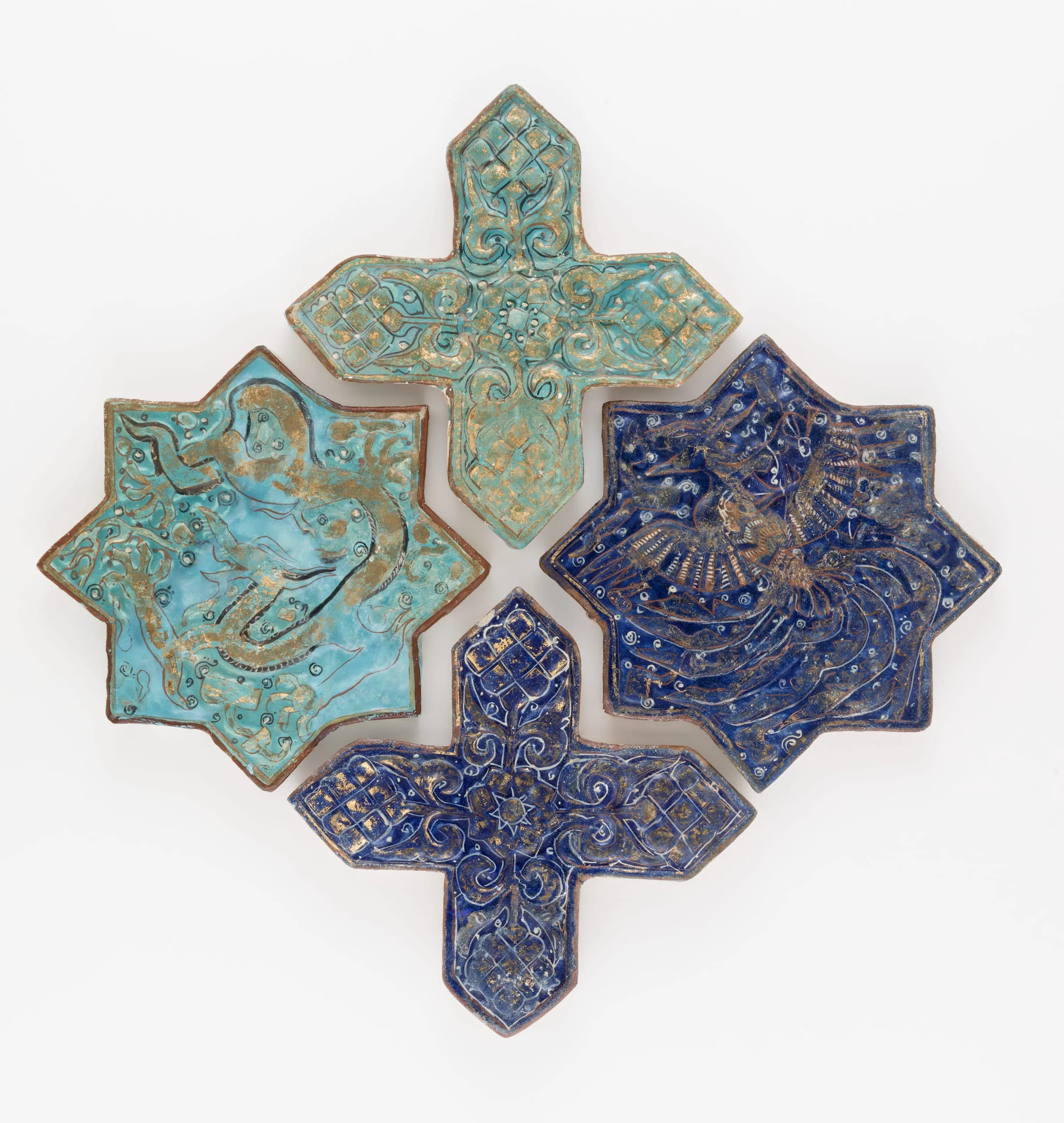
- Star and Cross Tiles
- Date Made
- circa 1270-1280
- Medium
- Fritware, overglaze painted with colors and gold (lajvardina)
- Dimensions
- Height: 9 3/4 in. (24.8 cm)
- Accession Number
- AC1996.115.1-.5
- Curatorial Notes
As a result of the Mongol invasion of western Asia in the early thirteenth century, Greater Iran came to be ruled by the Ilkhanid dynasty (1256-1353), descendants of Genghis Khan. In keeping with their migratory forebears, the Ilkhanids established seasonal camps as administrative centers and royal residences, which nonetheless might include permanent structures. One such seasonal palace was excavated at Takht-i Sulaiman, a summer camp, in Northwestern Iran. The palace complex was adorned with a wealth of tiles, mainly decorated in the costly overglaze painting techniques of luster and lajvardina.
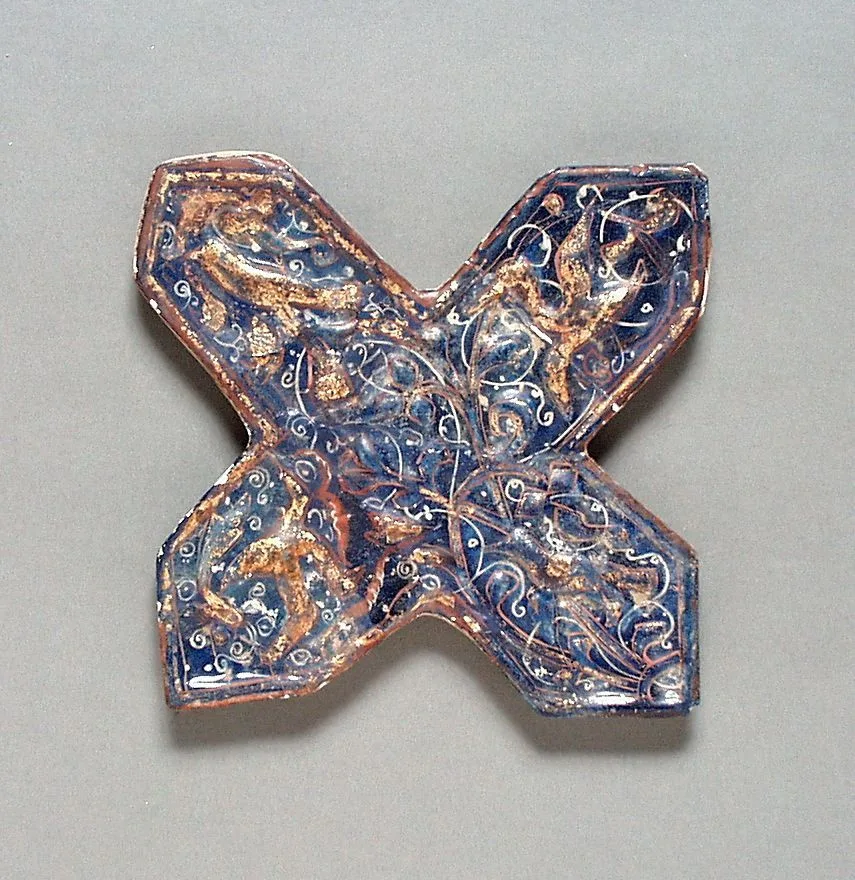
Star and cross tiles as here were produced in molds, which allowed for the repetition and duplication of compositions. The method of manufacture also allows for these nonexcavated tiles, which evidently shared the same molds with tiles uncovered at Takht-i Sulaiman, to be linked to the site (also see https://collections.lacma.org/node/239608" >M.73.5.222). The star tiles are decorated with a dragon and a phoenix, Chinese-inspired motifs that were introduced in Iranian lands under the Ilkhanids, perhaps via imported textiles.
- Selected Bibliography
- The Legacy of Genghis Khan: Courtly Art and Culture and Western Asia, 1256-1353. New York: The Metropolitan Museum of Art, 2002
- Komaroff, Linda. Islamic Art at the Los Angeles County Museum of Art. Los Angeles: Museum Associates, 2005.