- Title
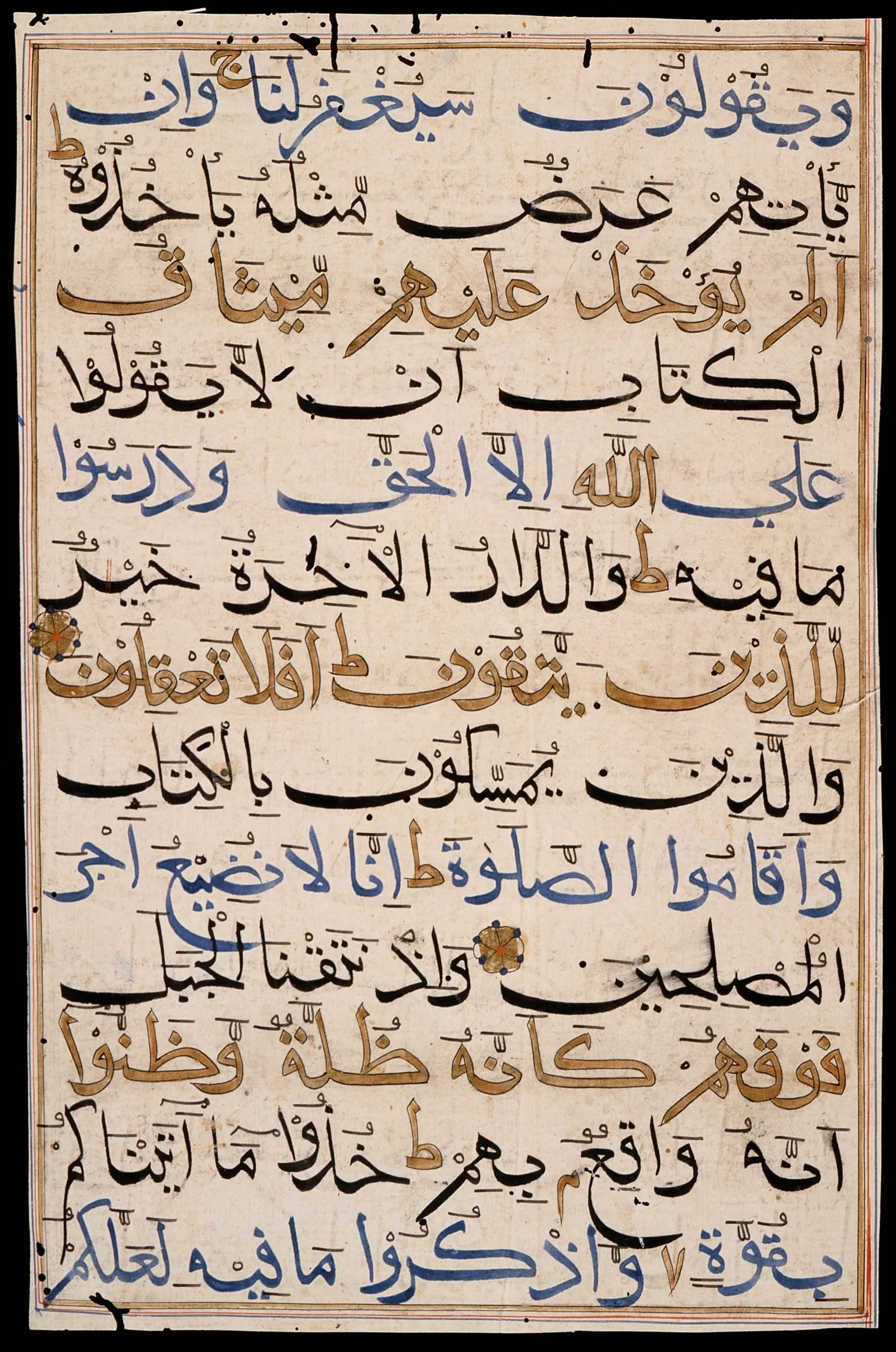
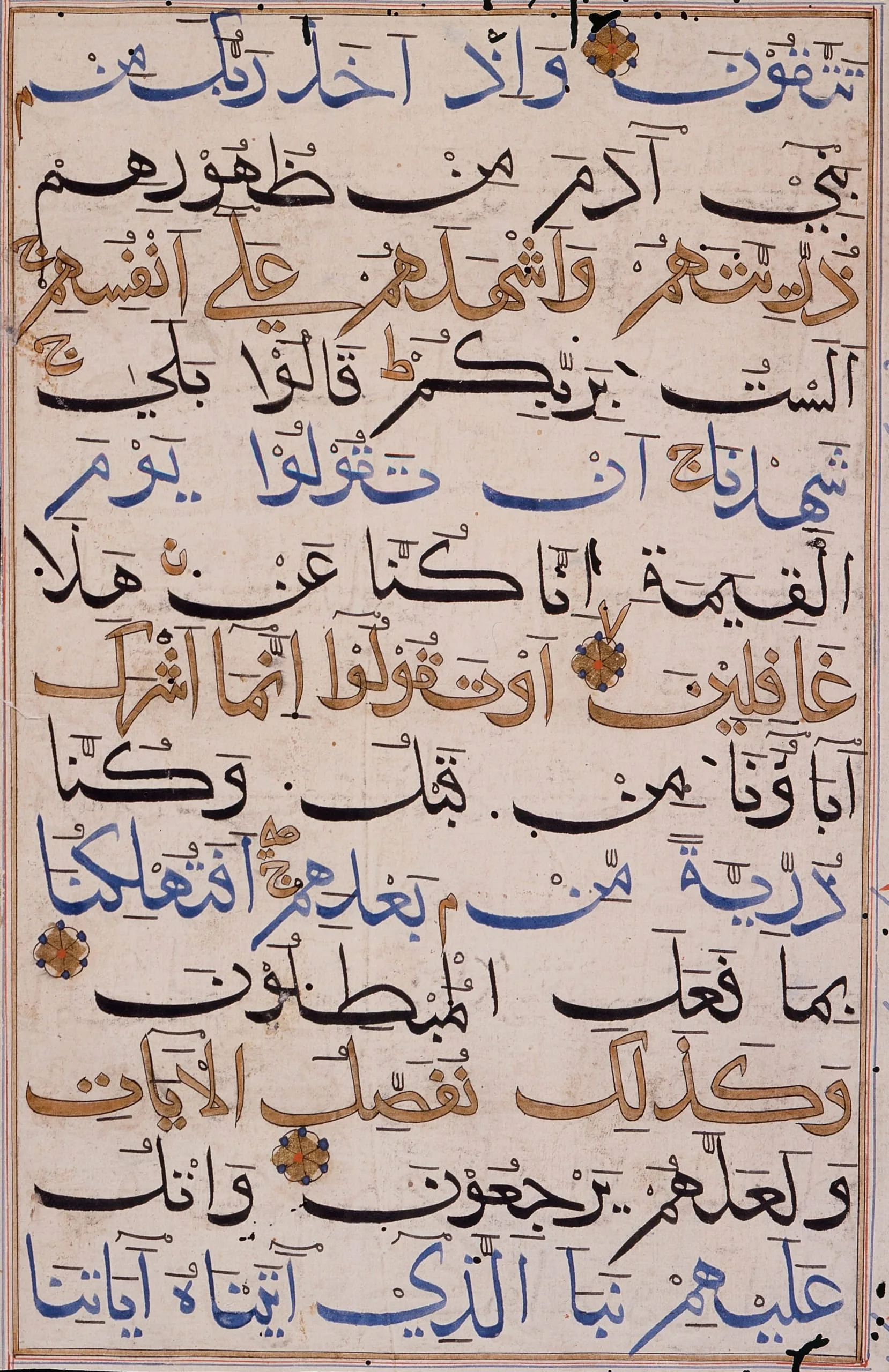
- Folio from a Qur'an (7:169-175)
- Date Made
- 1400-1450
- Medium
- Ink, opaque watercolor, and gold on paper
- Dimensions
- 9 1/8 x 6 in. (23.18 x 15.24 cm)
- Accession Number
- M.90.37a-b
- Curatorial Notes
In Muslim cultures, words are used not only to communicate but to decorate. Because it is through writing that the Qur’an is transmitted, scripts in the Arabic alphabet were devised and perfected to be worthy of divine revelation. This folio from a dispersed manuscript of the Qur’an is written in the distinctive bihari script, used exclusively in northern India from the late fourteenth to the early sixteenth century. The script is notable for its leftward-slanting vertical letters and curvaceous horizontals. Here, the thirteen lines of text alternate between blue, black, and gold ink, with the word Allah also picked out in gold; the verse markers are in the form of golden rosettes. The number of surviving bihari Qur’ans highlights the significance of this script in the Arabic calligraphic tradition of India, while these manuscripts were also exported to and appreciated in the Arabian Peninsula.
2024
- Selected Bibliography
- Pal, Pratapaditya. Indian Painting, vol.1. Los Angeles: Los Angeles County Museum of Art, 1993.