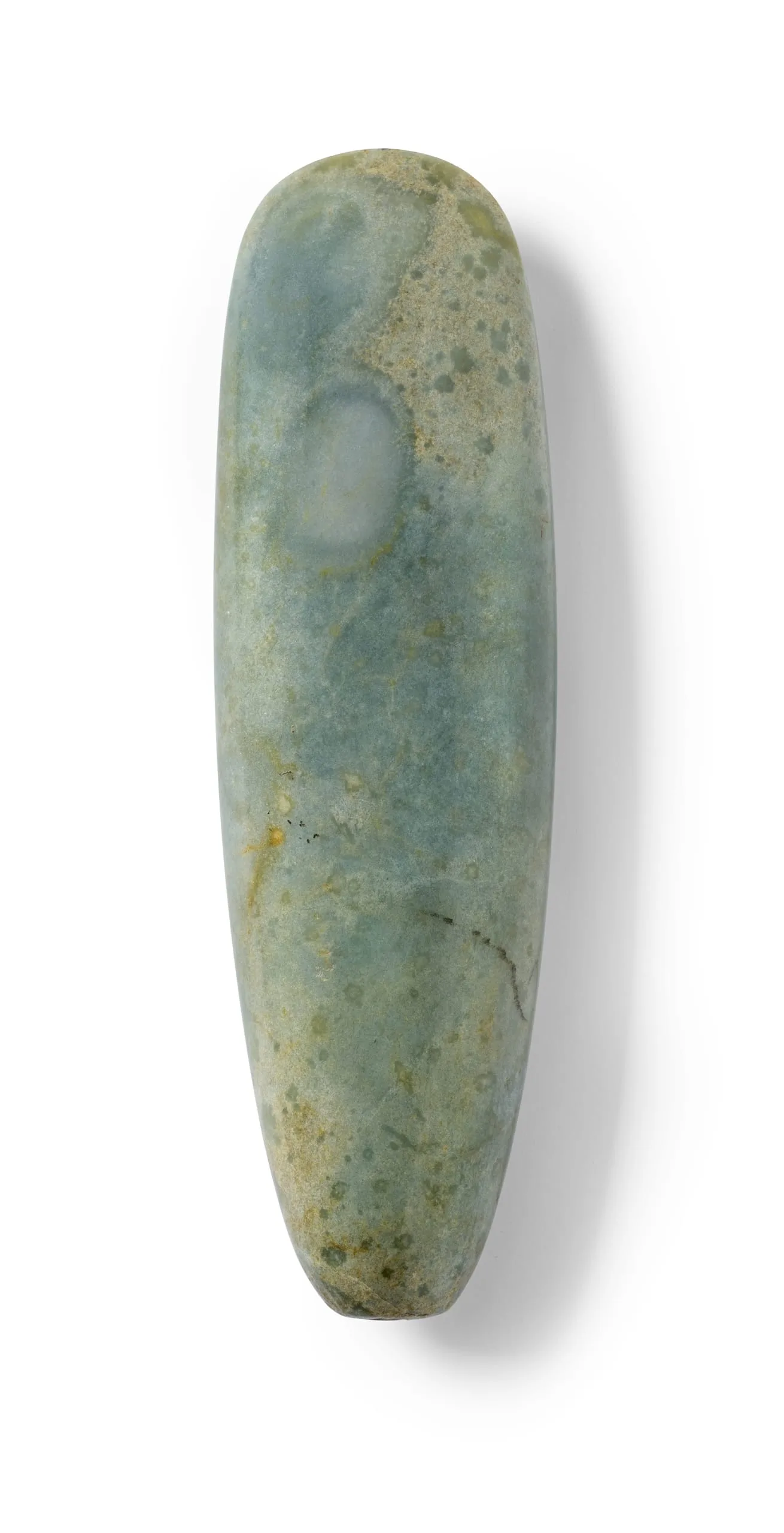
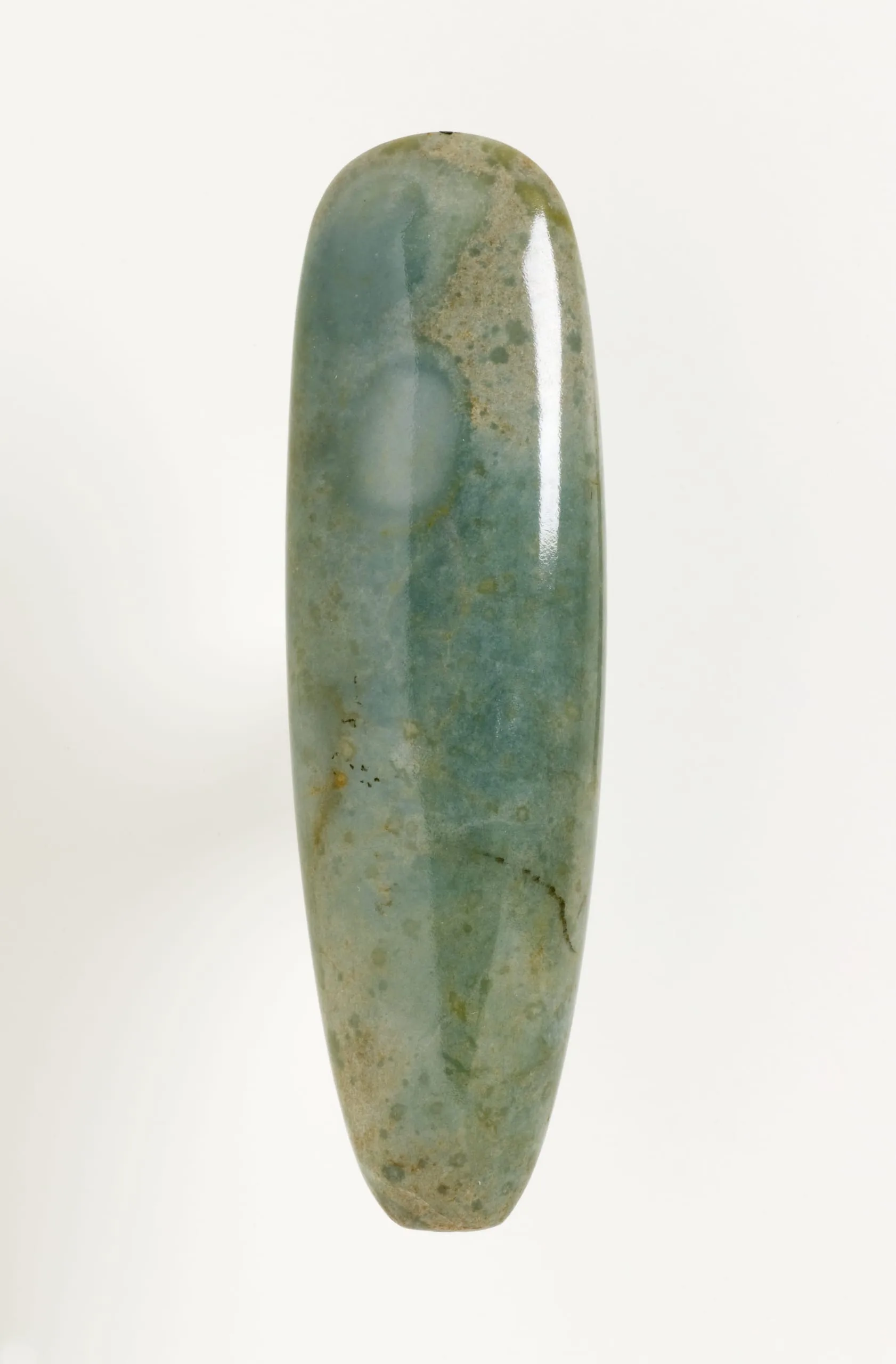
From the earliest Mesoamerican societies, jade served as an enduring symbol of maize, the region’s staple crop. The natural variety in jade’s spectrum of colors, ranging from dewey blues to yellowed greens, emulates the agricultural cycle, from new growth to maturity and dormancy. Ceremonial caches of kernel-shaped jade axes, or celts, such as the one seen here, have been found at Olmec and Formative Maya sites, where they were deposited as dedicatory offerings in public plazas. The arrangement of such caches in quadripartite patterns replicates the shape of both the Mesoamerican cosmos and the milpa, or maize field, conferring eternal abundance upon the spaces where they lie.
Alyce de Carteret
2024