LACMA

ShopMembershipMyLACMATickets
LACMA
Los Angeles County Museum of Art
5905 Wilshire Blvd.
Los Angeles, CA 90036
info@lacma.org
(323) 857-6000
Sign up to receive emails
Subscribe
© Museum Associates 2025

Museum Hours

Monday

11 am–6 pm

Tuesday

11 am–6 pm

Wednesday

Closed

Thursday

11 am–6 pm

Friday

11 am–8 pm

Saturday

10 am–7 pm

Sunday

10 am–7 pm


  • About LACMA
  • Jobs
  • Building LACMA
  • Host An Event
  • Unframed
  • Press
  • FAQs
  • Log in to MyLACMA
  • Privacy Policy
© Museum Associates 2025
Collections

Unknown
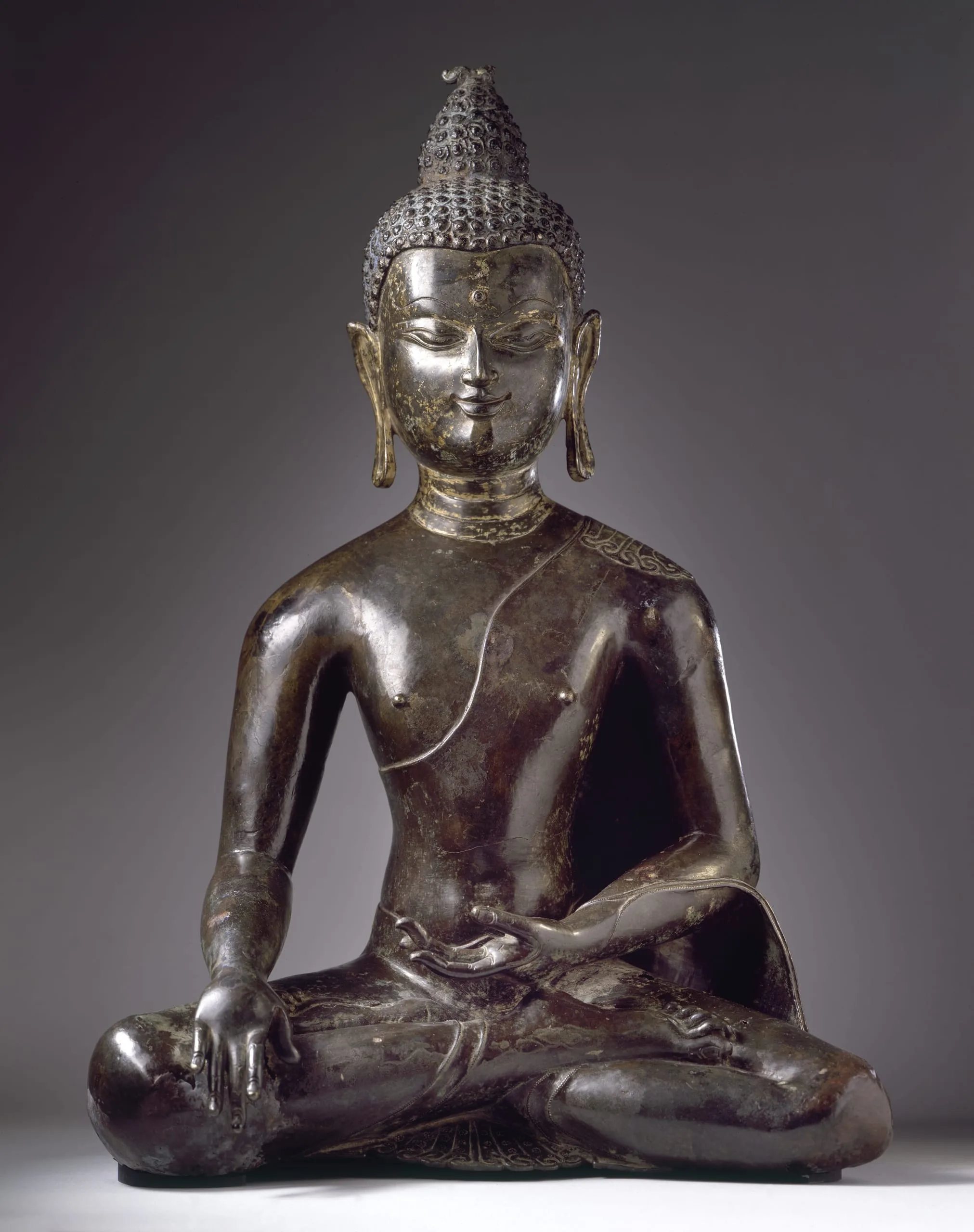
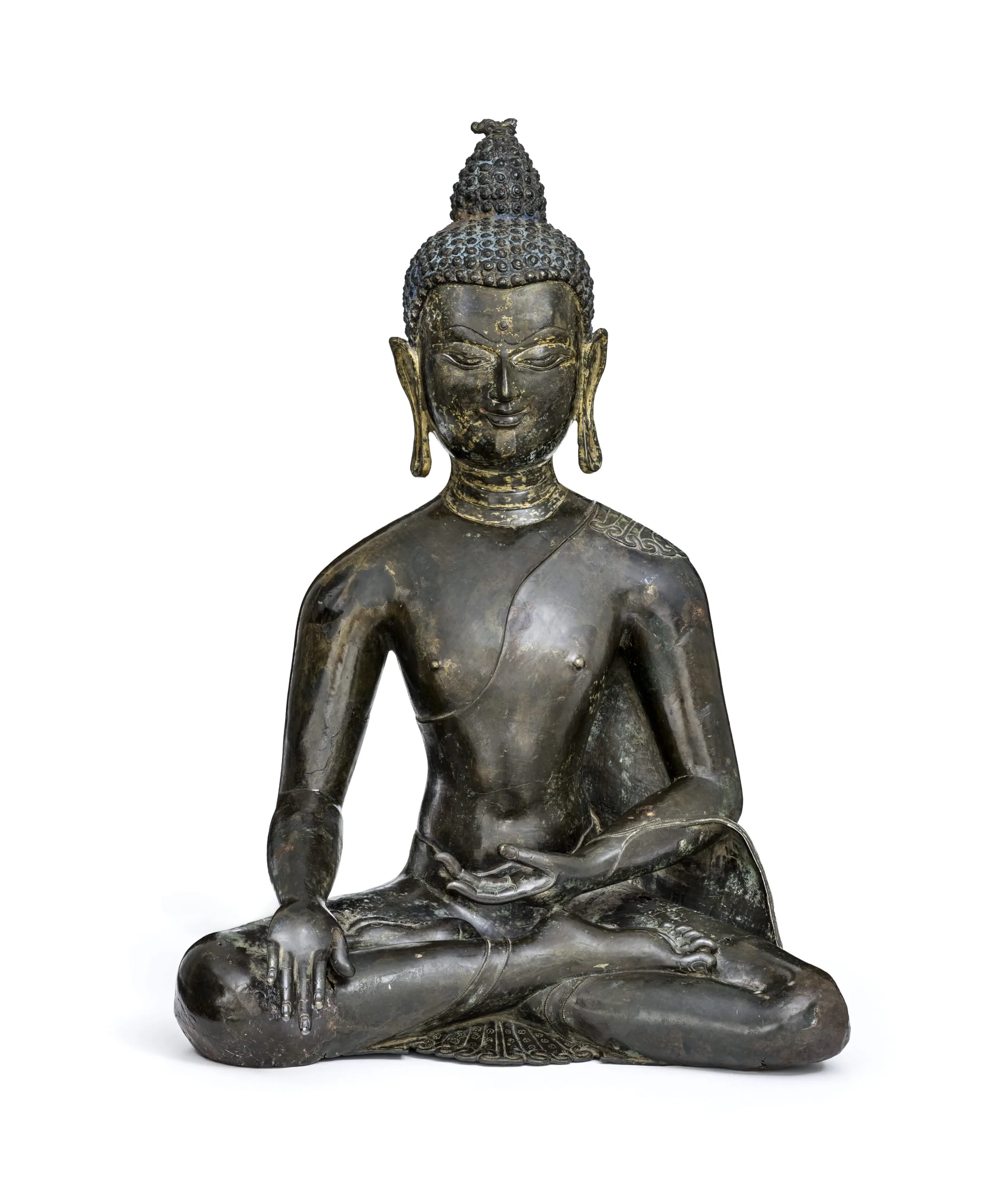
Buddha Shakyamunicirca 11th century

On view:
Resnick Pavilion, floor 1
Dark bronze sculpture of a seated figure in cross-legged position, with textured coiled hair rising to a topknot, one hand resting in the lap and the other extended downward toward the base
Bronze sculpture of a seated Buddha in lotus position, right hand extended downward in bhumisparsha mudra, draped in a monastic robe with silver inlay detailing; ushnisha with coiled curls, elongated earlobes, and gilt facial features on a dark patinated surface.
Artist or Maker
Unknown
Title
Buddha Shakyamuni
Place Made
Central Tibet
Date Made
circa 11th century
Medium
Copper alloy with traces of paint and gilding
Dimensions
18 1/4 x 13 1/4 x 10 3/4 in. (46.36 x 33.66 x 27.31 cm)
Credit Line
Gift of the 1996 Collectors Committee
Accession Number
AC1996.26.1
Classification
Sculpture
Collecting Area
South and Southeast Asian Art
Curatorial Notes
This is one of the earliest and largest sculpted representations of Buddha Shakyamuni (563-483 BCE) that survives from Central Tibet. It was created during a resurgence of Buddhism in Tibet during the 10th–12th centuries, known as the Second Propagation of Buddhism in Tibet, which flourished in the Tibetan heartland following the arrival in 1045 of the Indian Buddhist master, Atisha (982-1054). Stylistically, the image was influenced by artistic and religious contact with the illustrious Pala dynasty of northeast India (750-1162). It is well-modeled and has a classic early central Tibetan face, with serene features and a radiant smile that aptly conveys the Buddha’s transcendent insight and compassion. His hands and feet are dynamically animated with lyrical movement and fine detailing of the fingernails and joints. They are also appropriately graced with the sacred markings (lakshanas) symbolic of a spiritually superior being. He has lotus blossoms on his palms and soles, as well as unusually prominent lifelines that refer to the Buddha's many lives prior to his enlightenment. Iconographically, the image depicts the defining event in the life of the Buddha, when his worthiness to attain liberation was challenged by Mara, the god of sensual desire. By extending his right hand down to touch the earth, his only witness to the immense spiritual merit he had achieved in his numerous past lives, he caused it to thunder out its support and thereby affirm his right of enlightenment.
Selected Bibliography
  • Little, Stephen, Tushara Bindu Gude, Karina Romero Blanco, Silvia Seligson, Marco Antonio Karam. Las Huellas de Buda. Ciudad de México : Instituto Nacional de Antropología e Historia, 2018.
  • Little, Stephen, and Tushara Bindu Gude. Realms of the Dharma: Buddhist Art across Asia. Los Angeles: Los Angeles County Museum of Art, 2025.