- Title
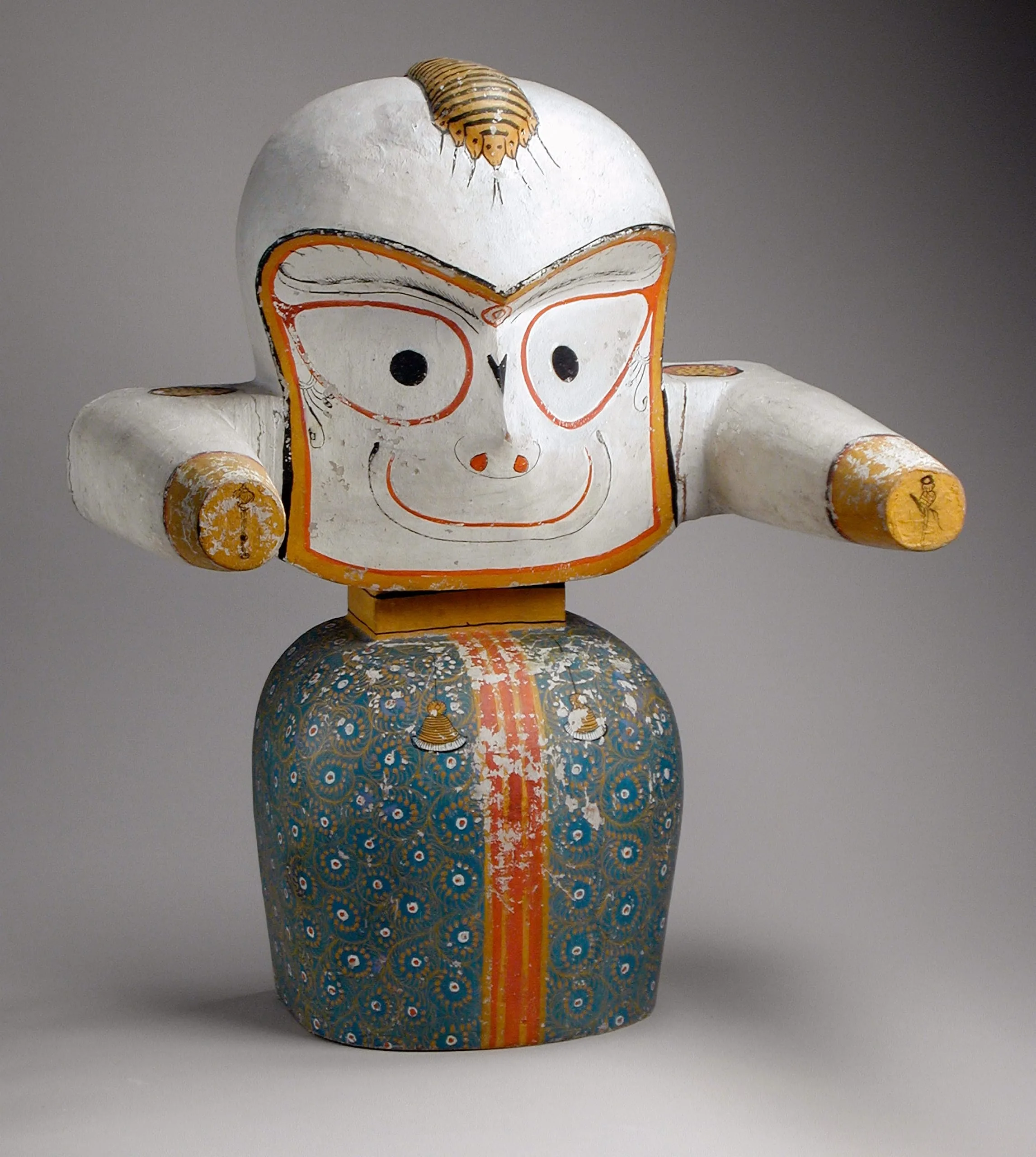
- Balabhadra (Balarama, Krishna's Brother)
- Date Made
- circa 1950
- Medium
- Wood with opaque watercolor
- Dimensions
- 20 3/4 x 15 3/4 x 12 5/8 in. (52.71 x 40.01 x 32.07 cm)
- Accession Number
- AC1995.139.1
- Curatorial Notes
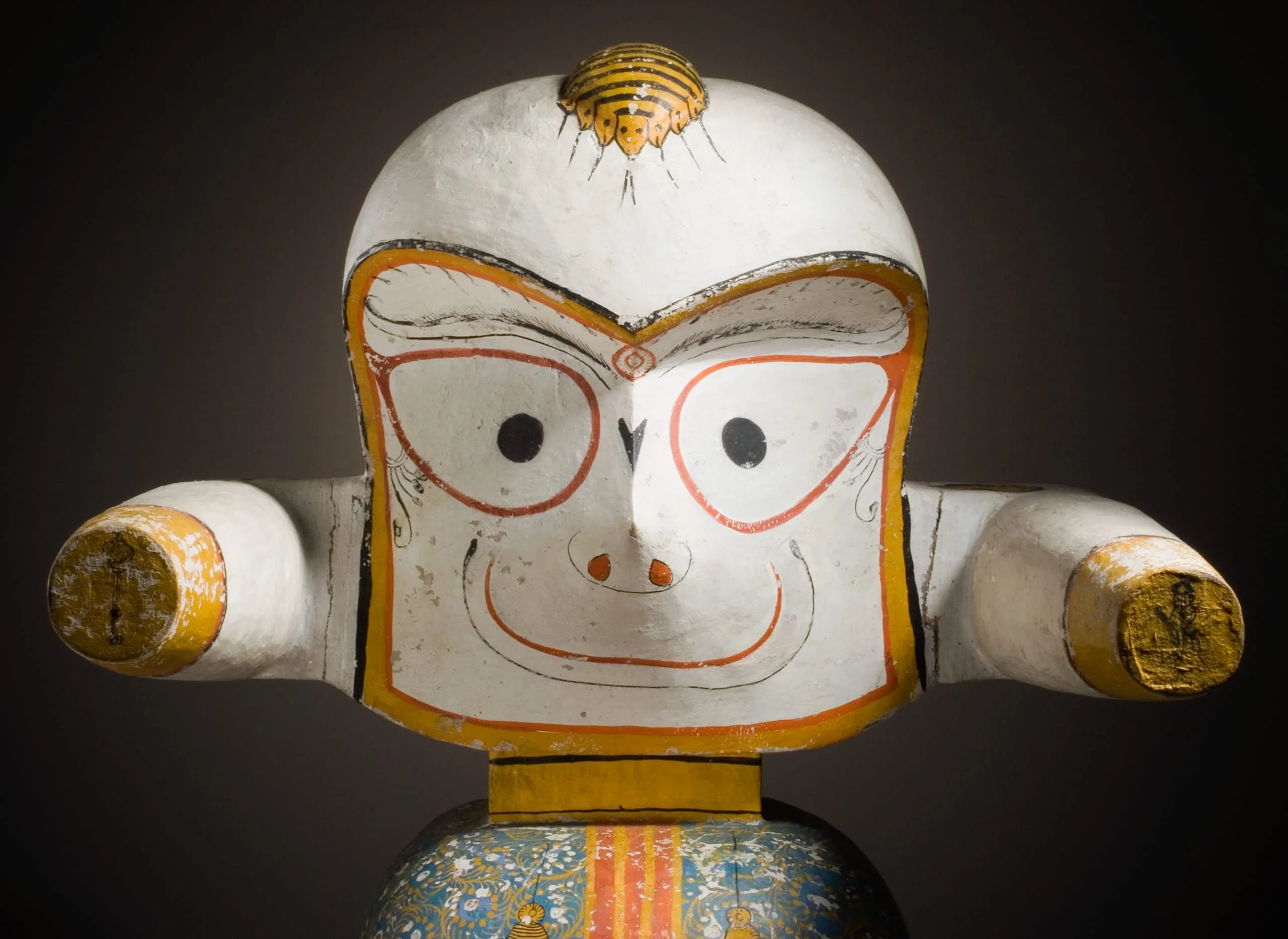
This painted wood representation of Krishna's brother, Balabhadra (Balarama’s name in Odisha) was made for use in the Odia (Orissan) pilgrimage center of Puri’s religious festivals and shrines or as a souvenir for worshippers returning home from Puri. The sculpture was originally part of a triad with similar images of the blue-skinned Krishna as Jagannatha and their sister Subhadra. According to the legend narrated in the Mahabharata (1.189.31–32) and Vishnu Purana (5:1:59), the Hindu god Vishnu plucked two hairs from his head—one white and one dark—which entered the wombs of Rohini and Devaki to be born as Balarama and Krishna respectively.
The stylized portrayal of the white-skinned Balabhadra features oversized eyes and wears a seven-headed cobra crown. His arms are outstretched and, when in worship, were draped with floral garlands (see M.82.107 and M.2003.215). The rationale for his unusual physical form resembling a tree stump without legs or hands is narrated in the Skanda Purana (28:39-41) when King Indradyumna of Avanti (in present-day Madhya Pradesh) asked the divine architect and master sculptor Vishvakarma to carve images of Krishna, Balarama, and Subhadra from a large drift log of neem wood that was naturally marked with Vishnu's emblems the conch and disc. Vishvakarma agreed to carve the images on the condition that he remain completely undisturbed for twenty-one days inside a sealed temple pavilion. However, anxious after fifteen days of absolute silence, King Indradyumna opened the doors prematurely. The divine carpenter instantly vanished, leaving behind the abstract, unfinished wooden forms of Jagannath, Balabhadra, and Subhadra without defined hands or feet.