LACMA

ShopMembershipMyLACMATickets
LACMA
Los Angeles County Museum of Art
5905 Wilshire Blvd.
Los Angeles, CA 90036
info@lacma.org
(323) 857-6000
Sign up to receive emails
Subscribe
© Museum Associates 2026
  • About LACMA
  • Jobs
  • Building LACMA
  • Host An Event
  • Unframed
  • Press
  • FAQs
  • Log in to MyLACMA
  • Privacy Policy
© Museum Associates 2026
Collections

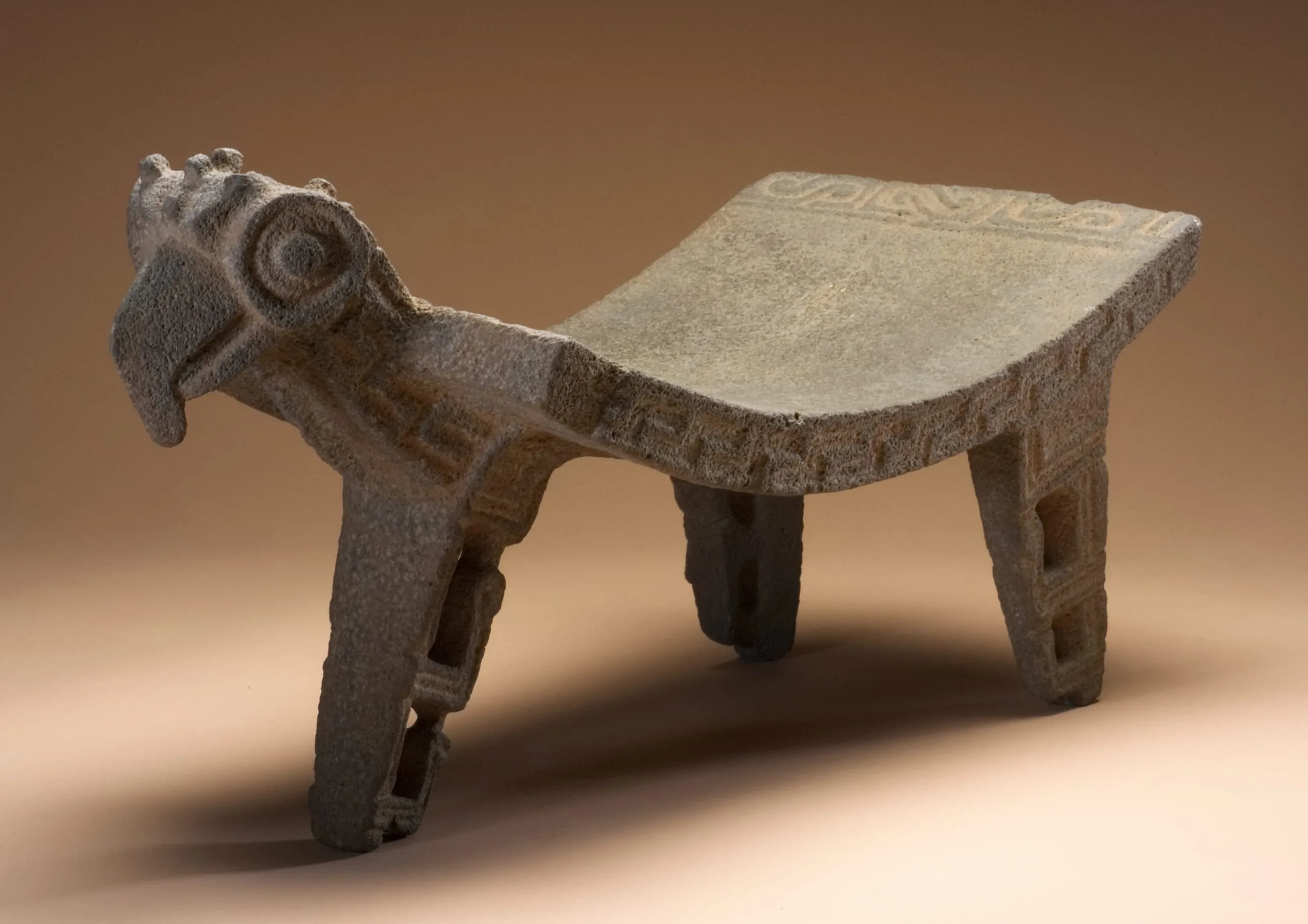
Metate with Bird Head300–700 CE

On view:
Geffen Galleries
Stone seat or throne carved in the form of a four-legged creature with a bird-like head, concave seat surface with incised geometric patterns, slate gray with coarse texture

Unknown, Metate with Bird Head, 300–700 CE, Los Angeles County Museum of Art, Gift of the Art Museum Council in honor of the museum's twenty-fifth anniversary, photo © Museum Associates/LACMA

Title
Metate with Bird Head
Culture
Greater Nicoya
Place Made
Costa Rica, Nicoya Peninsula
Date Made
300–700 CE
Medium
Basalt
Dimensions
11 × 21 × 8 in. (27.94 × 53.34 × 20.32 cm)
Credit Line
Gift of the Art Museum Council in honor of the museum's twenty-fifth anniversary
Accession Number
M.90.168.43
Classification
Stone
Collecting Area
Art of the Ancient Americas
Curatorial Notes

Metates, or grinding stones, were an important tool of everyday life in Mesoamerican society. Primarily associated with maize, metates were also used to grind other foods or materials, such as pigments like cochineal and indigo. Given their importance in transforming hard maize kernels into flour for staples like tortillas and tamales, thereby sustaining the life of the community, metates took on symbolic connotations. The prevalence of highly decorated examples, such as this one, is a testament to that. Here, the embellished legs, ornamental bird head, and decorative border on the grinding surface signal a ceremonial rather than practical function. Scholars have suggested that these items may also have served as ritual tables or stools, that is, thrones for elite persons to sit on during ceremonies.

Julia Burtenshaw

2024