- Title
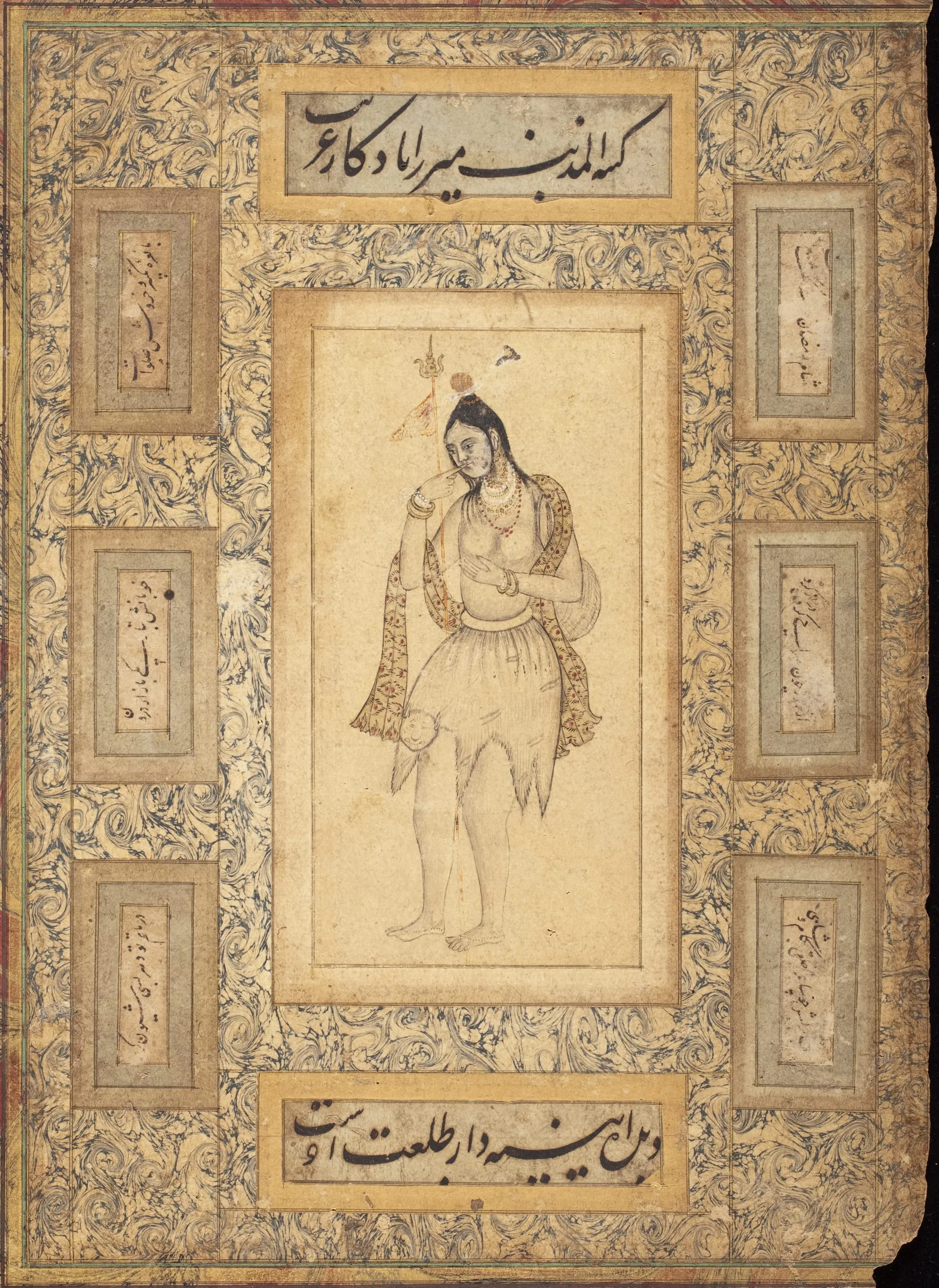
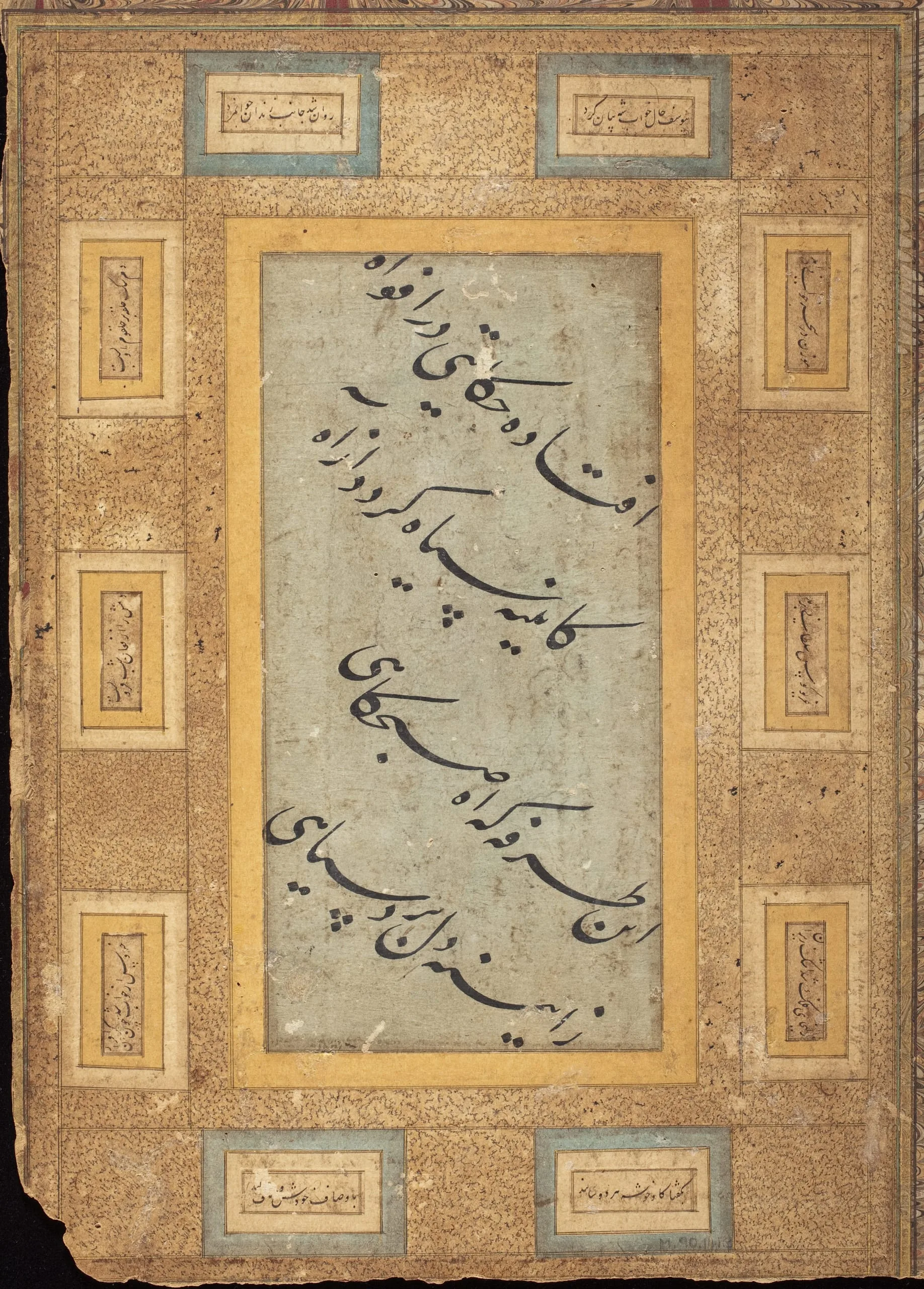
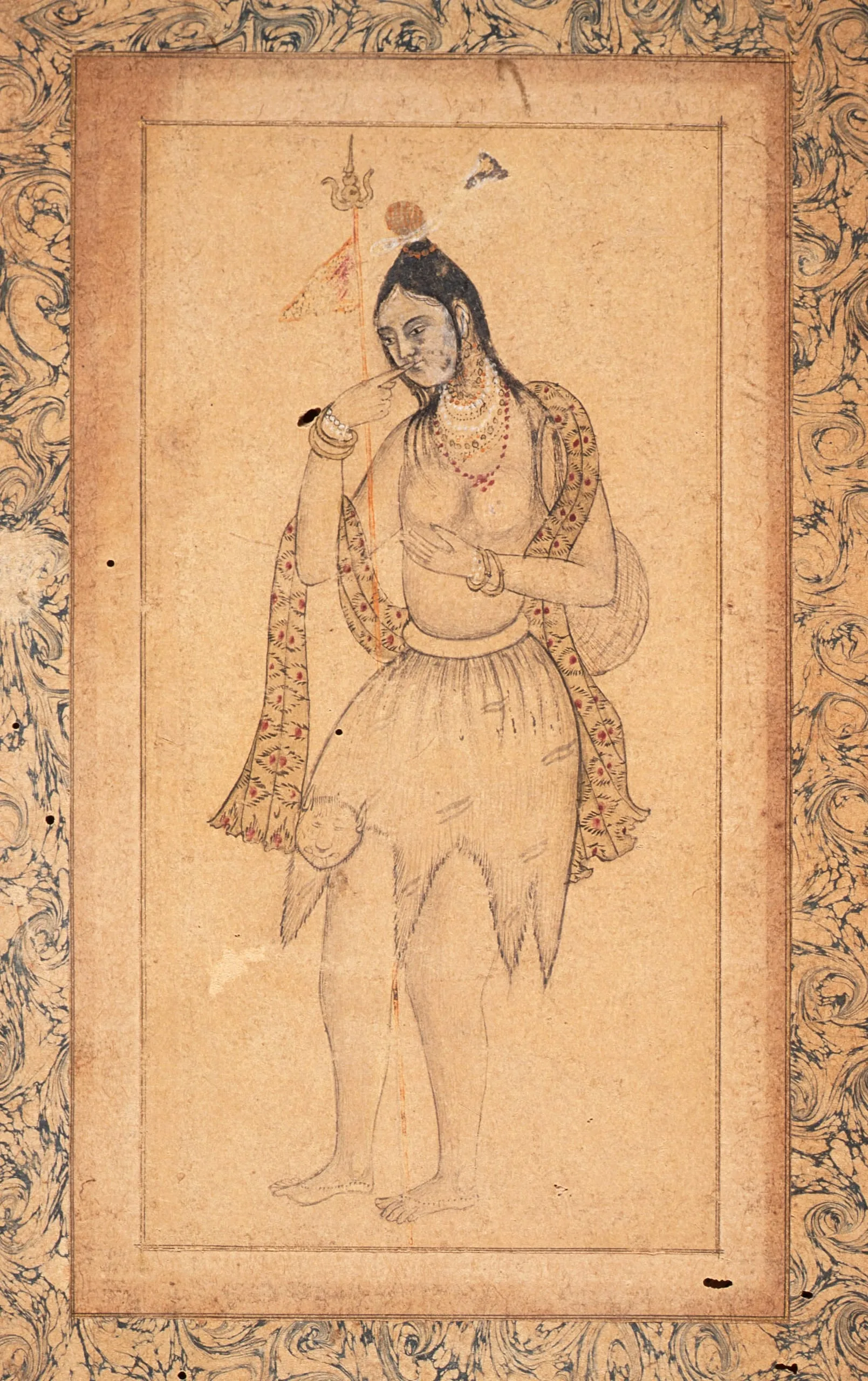
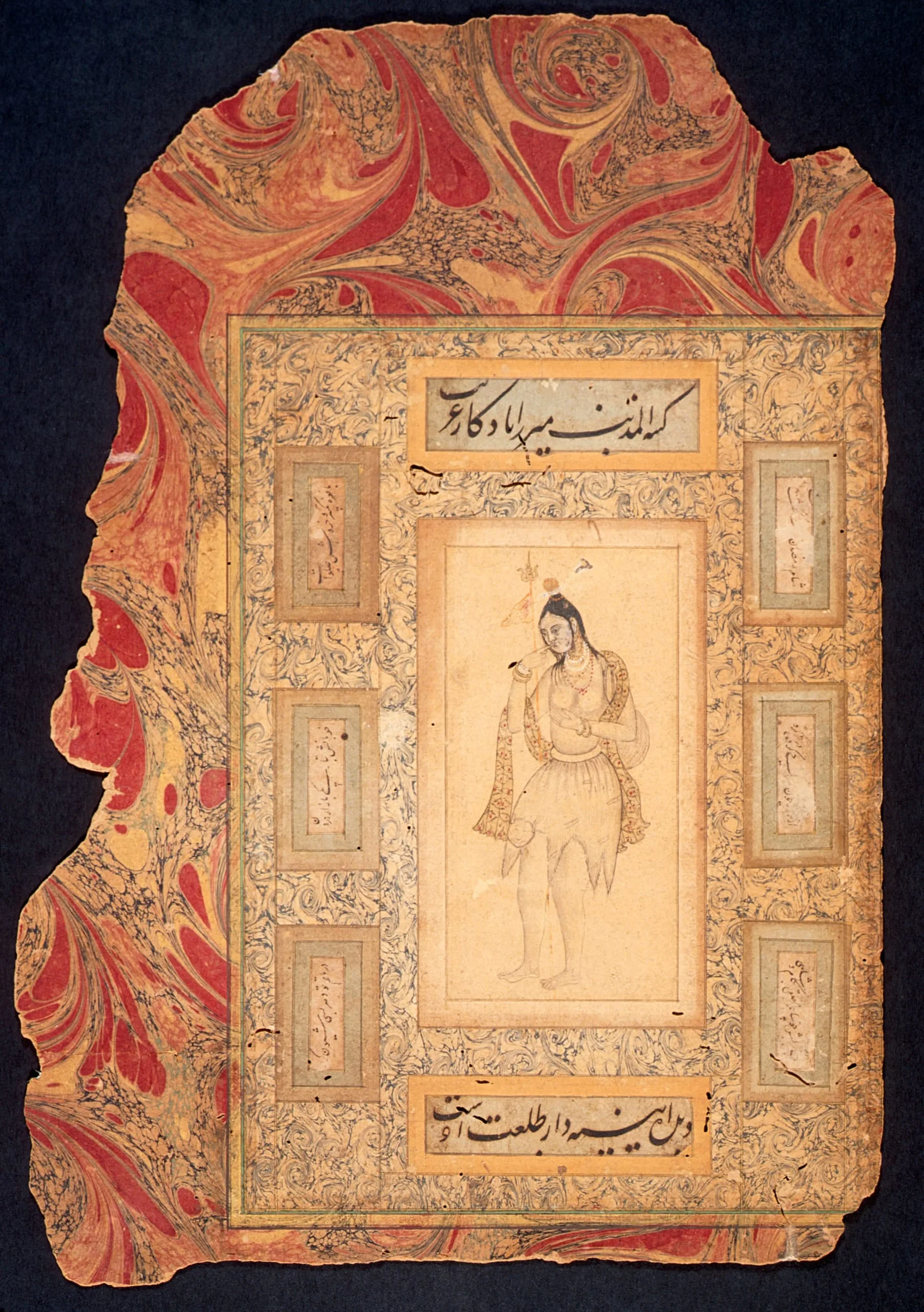
- Female Ascetic (recto), Calligraphy (verso), Page from an Album
- Date Made
- circa 1605-1640 (recto); 17th century (verso)
- Medium
- Opaque watercolor, gold, and ink on paper; Borders: marbled paper
- Dimensions
- Sheet: 14 1/2 x 10 1/8 in. (36.83 x 25.72 cm); Image (recto): 5 1/4 x 2 3/4 in. (13.34 x 6.99 cm); Image (verso): 7 x 3 1/2 in. (17.78 x 8.89 cm)
- Accession Number
- M.90.141.3
- Curatorial Notes
The Persian album, or muraqq‘a, which flourished from the fifteenth to the seventeenth century in Iranian lands, was adopted in Mughal India by the early seventeenth century. The muraqq‘a is generally a compendium of calligraphy and paintings bound in a booklike format, with facing pages of each medium arranged in alternate fashion. A form of collecting, it is an idiosyncratic gathering of diverse materials organized by the compiler to reflect multilayered meanings that would have resonated with the elite, erudite audience for which it was intended. Like many illustrated manuscripts, albums were frequently dispersed. Such is likely the case with this folio.
The lightly colored drawing on the recto depicts a female ascetic, a yogini or mendicant, as indicated by her animal-skin skirt, string of beads, hairstyle, and trident held in her right hand. This type of depiction was relatively common in seventeenth- and eighteenth-century Bijapur, where the drawing was probably made. Surrounding the image are Persian calligraphic panels, rendered in nasta‘liq; the panels and drawing were pasted onto the background. The text at the top provides the name of the calligrapher: “Written by the sinful Mirza Yadigar-i Gharib.” On the verso, the calligraphy is written in chalipa style, comprising four diagonal lines of poetry in the center surrounded by a border of additional verses. Both recto and verso were given borders of colorful marbled paper probably in accord with the other folios of the album into which this page was bound. The combination of a Hindu ascetic with Persian poetry would have been in keeping with the diverse nature of many albums. Here, the yogini may have been understood as a symbol of spiritual love, within the context of Sufi Islam.
Linda Komaroff
2025
- Selected Bibliography
- Pal, Pratapaditya. Indian Painting, vol.1. Los Angeles: Los Angeles County Museum of Art, 1993.
- Los Angeles County Museum of Art Members' Calendar 1991. vol. 28-29, no. 12-1 (December, 1990-January, 1992).