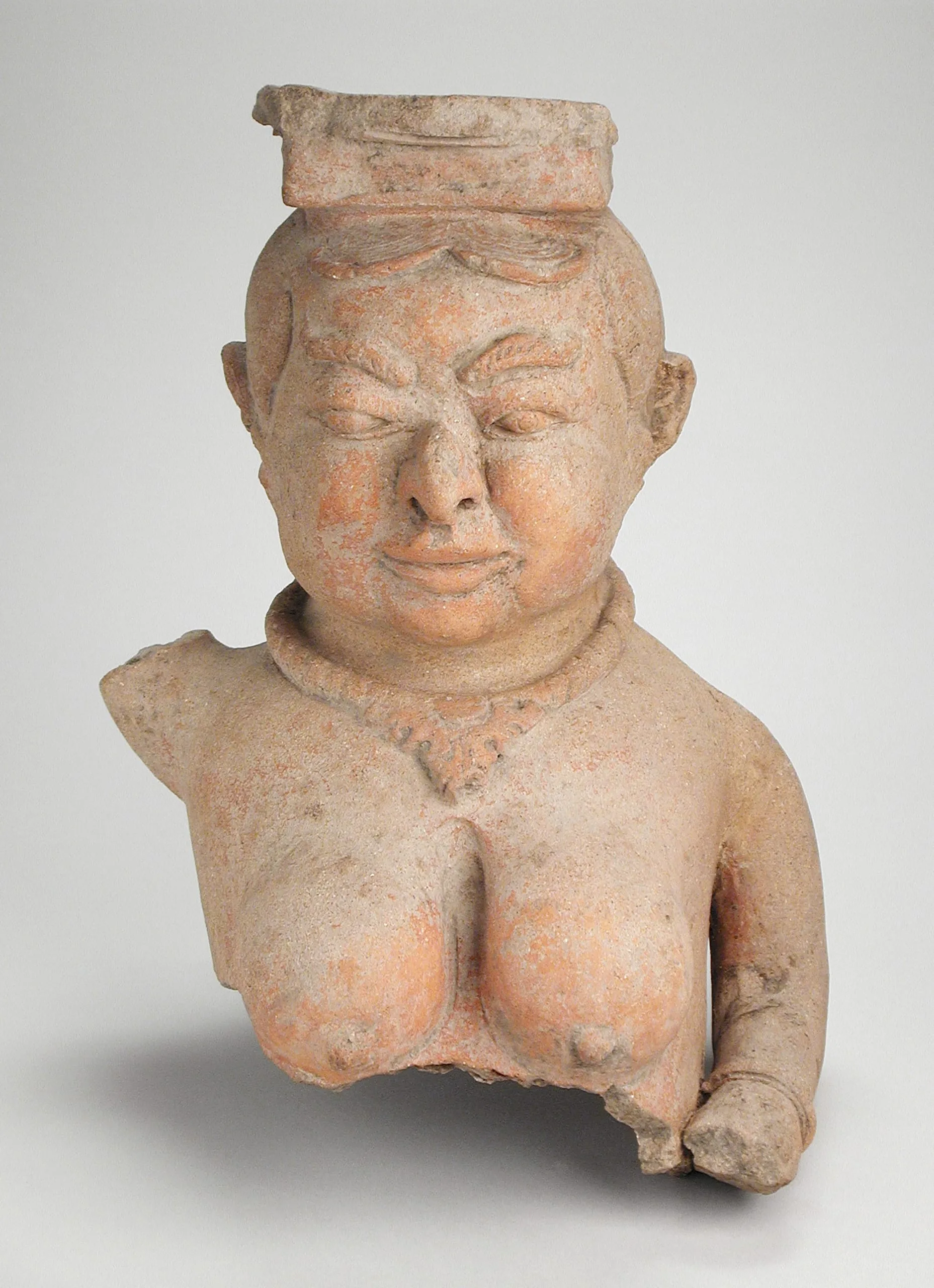
Numerous earthenware sculptures and decorative objects modeled by hand or made with molds have been unearthed in the environs of Trowulan (or Trawulan), the former capital of the Majapahit Empire (1292–1527) in Eastern Java. A substantial quantity of the surviving corpus consists of sculptures of various figural types, including caricatures, servants, ascetics, as well as numerous animals. Many of the larger human figures originally had offering vessels attached to their heads and, hence, were likely offering stands for fruits and flowers. See H. R. A. Muller, Javanese Terracottas: Terra Incognita (Lochem, The Netherlands: Tijdstroom, 1978), pp. 17-41, pls 10-75; and John N. Miksic, ed. The Legacy of Majapahit (Singapore: National Heritage Board, 1995), pp. 164-166, nos. 77-80. See also M.83.117.1, M.85.279.2, M.86.345.17, and AC1993.239.3.
This bust of an older woman may have been a caricature, as suggested by her pendulous breasts, hooked nose, and bushy eyebrows. She has a square vessel support atop her head. She wears a necklace and bracelets. See also M.78.10.3.