LACMA

ShopMembershipMyLACMATickets
LACMA
Los Angeles County Museum of Art
5905 Wilshire Blvd.
Los Angeles, CA 90036
info@lacma.org
(323) 857-6000
Sign up to receive emails
Subscribe
© Museum Associates 2026
  • About LACMA
  • Jobs
  • Building LACMA
  • Host An Event
  • Unframed
  • Press
  • FAQs
  • Log in to MyLACMA
  • Privacy Policy
© Museum Associates 2026
Collections

Unknown
Scepter19th-20th century

On view:
Geffen Galleries
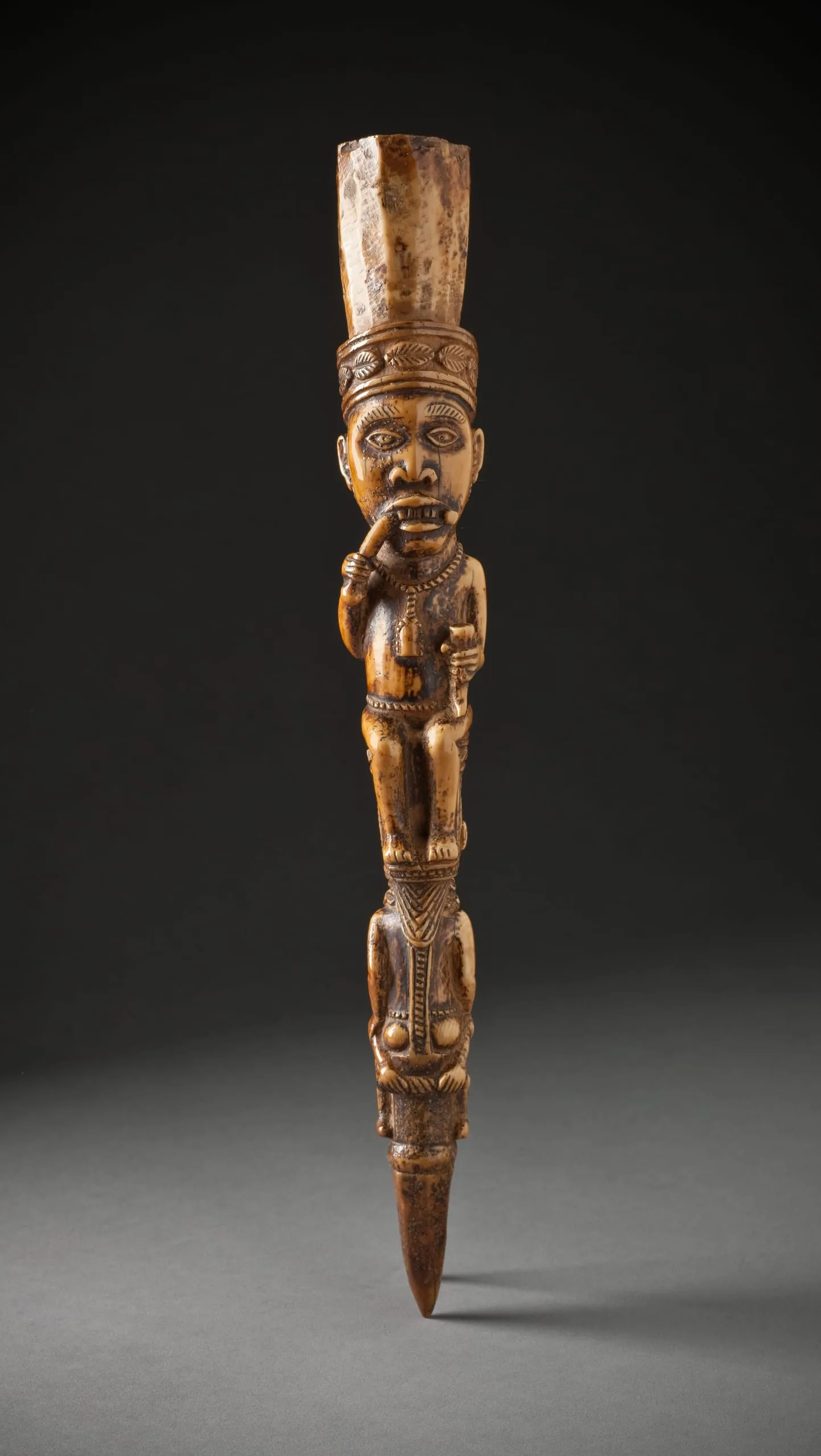
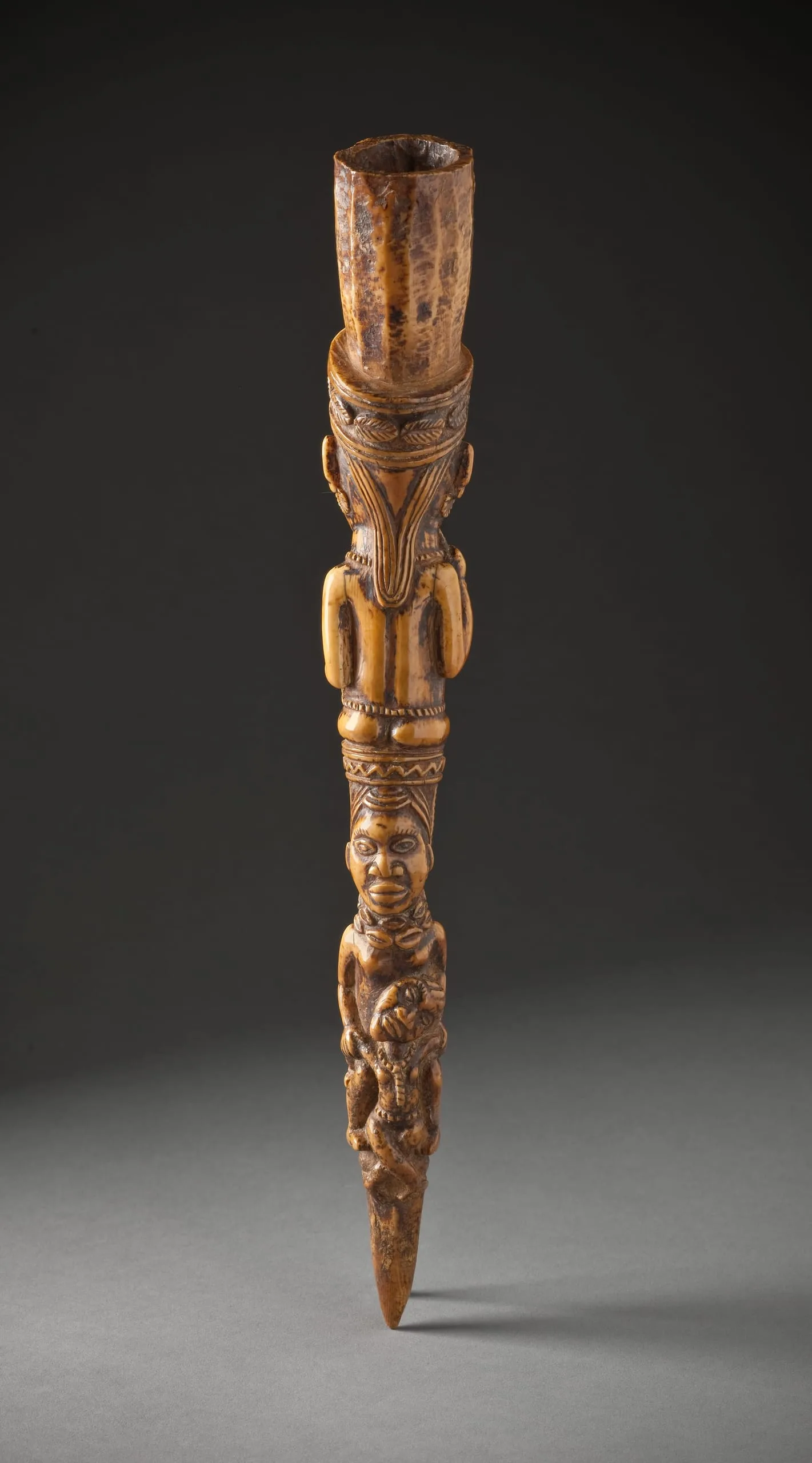
Carved ivory or bone sculpture, vertical and tapering to a point, with a stacked human figure and smaller crouching figure in high relief, decorated with incised geometric patterns
Carved ivory or bone staff or pipe, elongated and tapered to a point, with two human figures in relief stacked vertically, decorated with geometric bands and beaded collar details, warm honey-brown patina.

Unknown, Scepter, 19th-20th century, Los Angeles County Museum of Art, Gift of Lee and Bob Bronson

Maker
Unknown
Title
Scepter
Culture
Yombe artist
Place Made
Africa, Democratic Republic of the Congo
Date Made
19th-20th century
Medium
Ivory
Dimensions
Height: 11 1/2 in. (29 cm)
Credit Line
Gift of Lee and Bob Bronson
Accession Number
AC1994.203.2
Classification
Jewelry and Adornments
Collecting Area
African Art
Curatorial Notes

A scepter is part of the customary regalia used by powerful Kongo chiefs. The chief’s staff is considered to be an nkisi, a vessel for supernatural power and force derived from ancestral spirits who legitimize his rule. It is reputed to cure sterility with its touch and protect the chief from malignant forces. This staff depicts a chief seated on a throne and chewing a bitter root that is believed to ward off danger and, at the same time, embody his soul. Carrying an elephant trumpet, he wears a tall cap, earrings, and a bell pendant on a braided neck cord. The artist’s masterful design fits the curved shape of the elephant tusk and leaves the top undecorated to receive a medicinal bundle, now lost. Scepters of this type include a secondary form on the lower portion, often a bound captive male figure. Here, it is rendered as a female and child, representing the frequent Yombe theme of maternity.
Related Unframed

Kindling the Heart in 18th-Century Mexican Painting
  • March 14, 2018
  • Ilona Katzew
New Acquisition: Baratta’s Wealth and Prudence
  • December 1, 2011