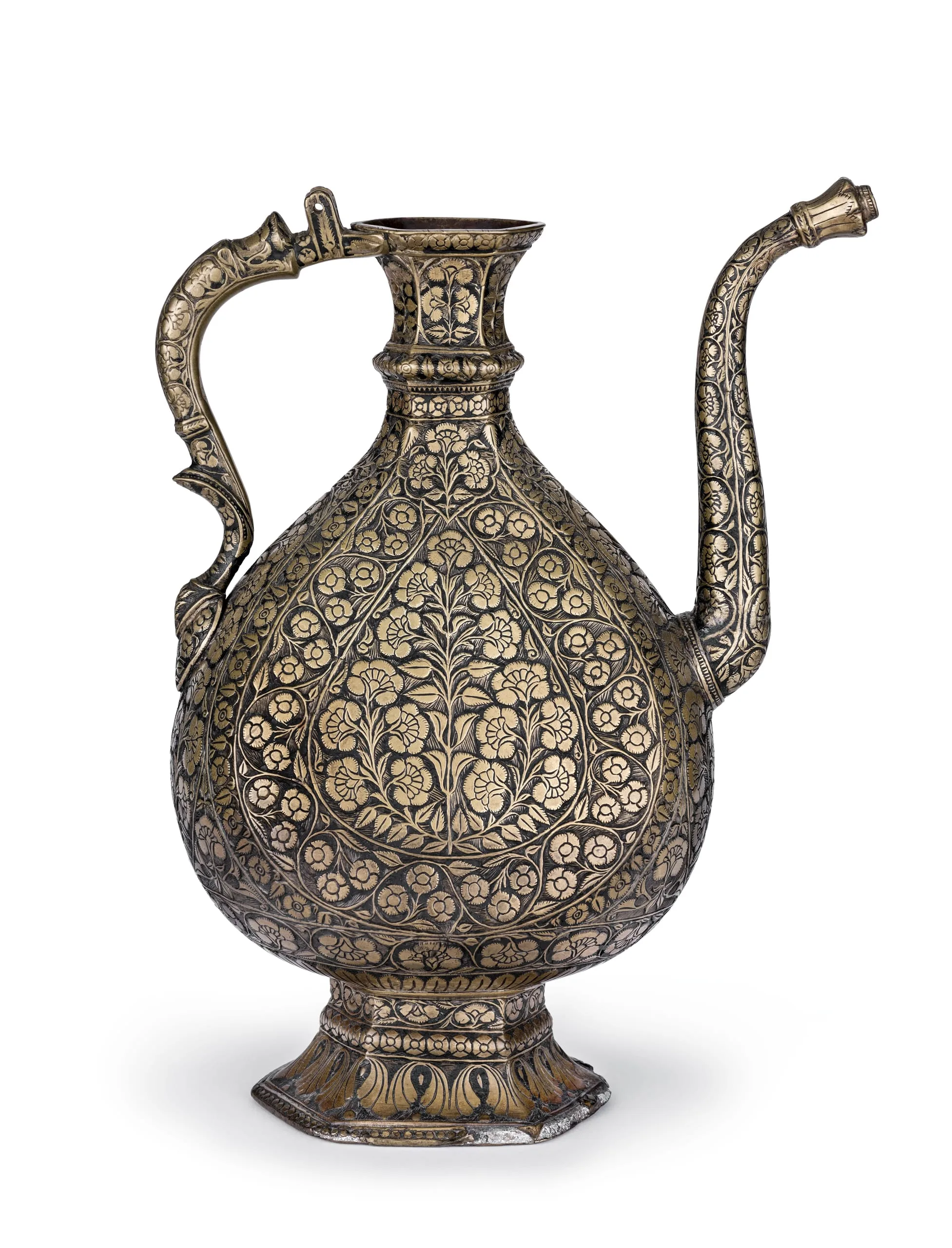
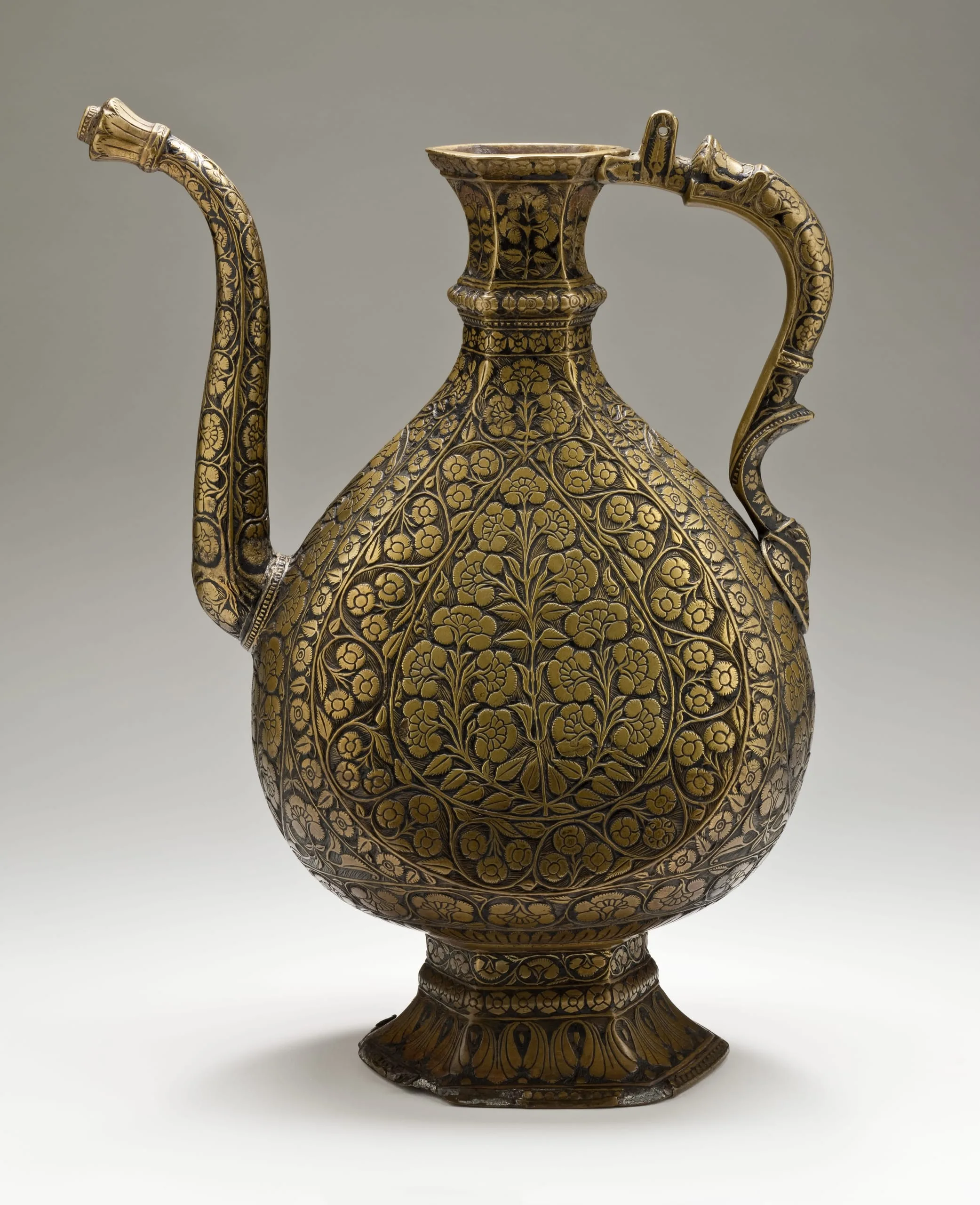
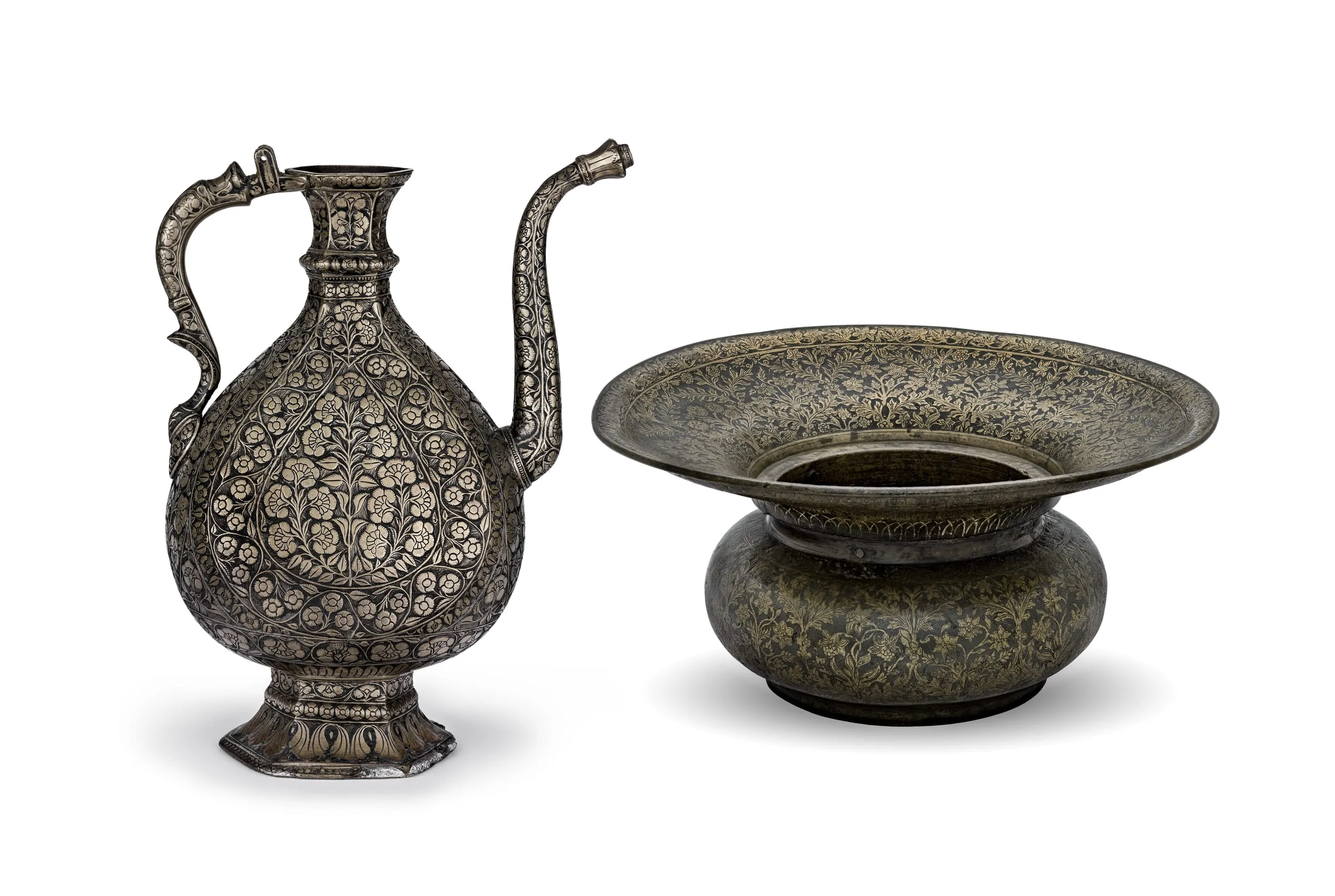
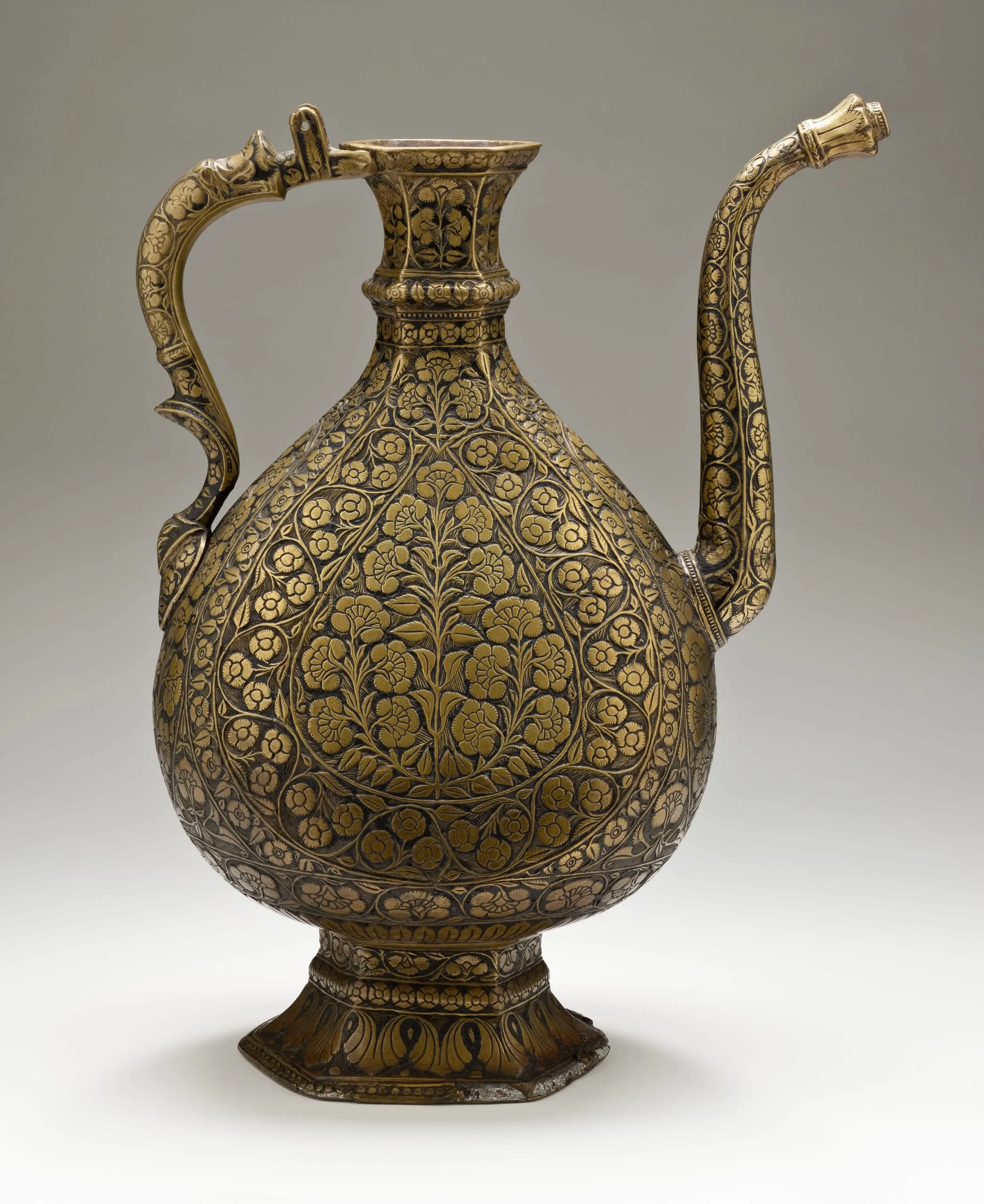
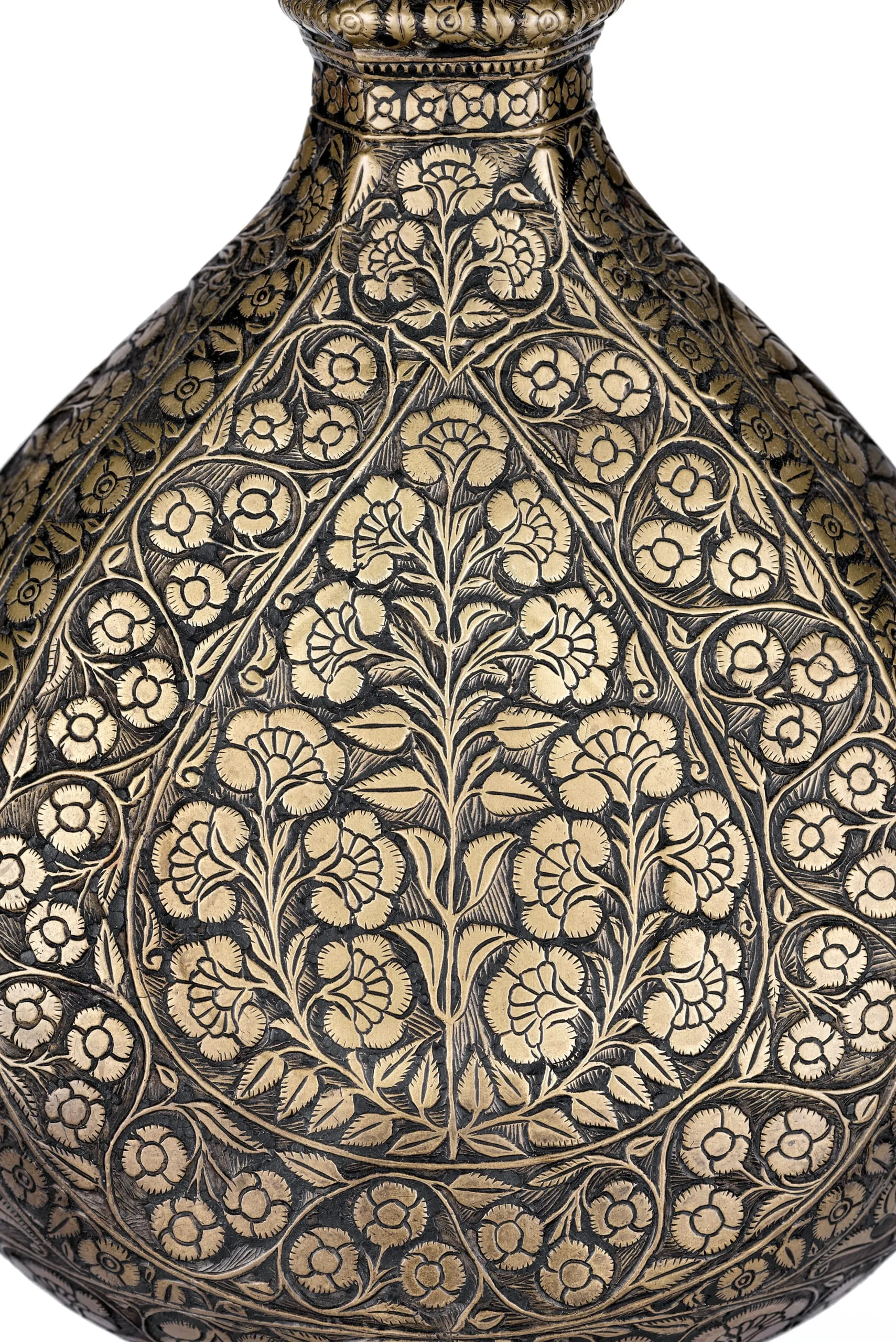
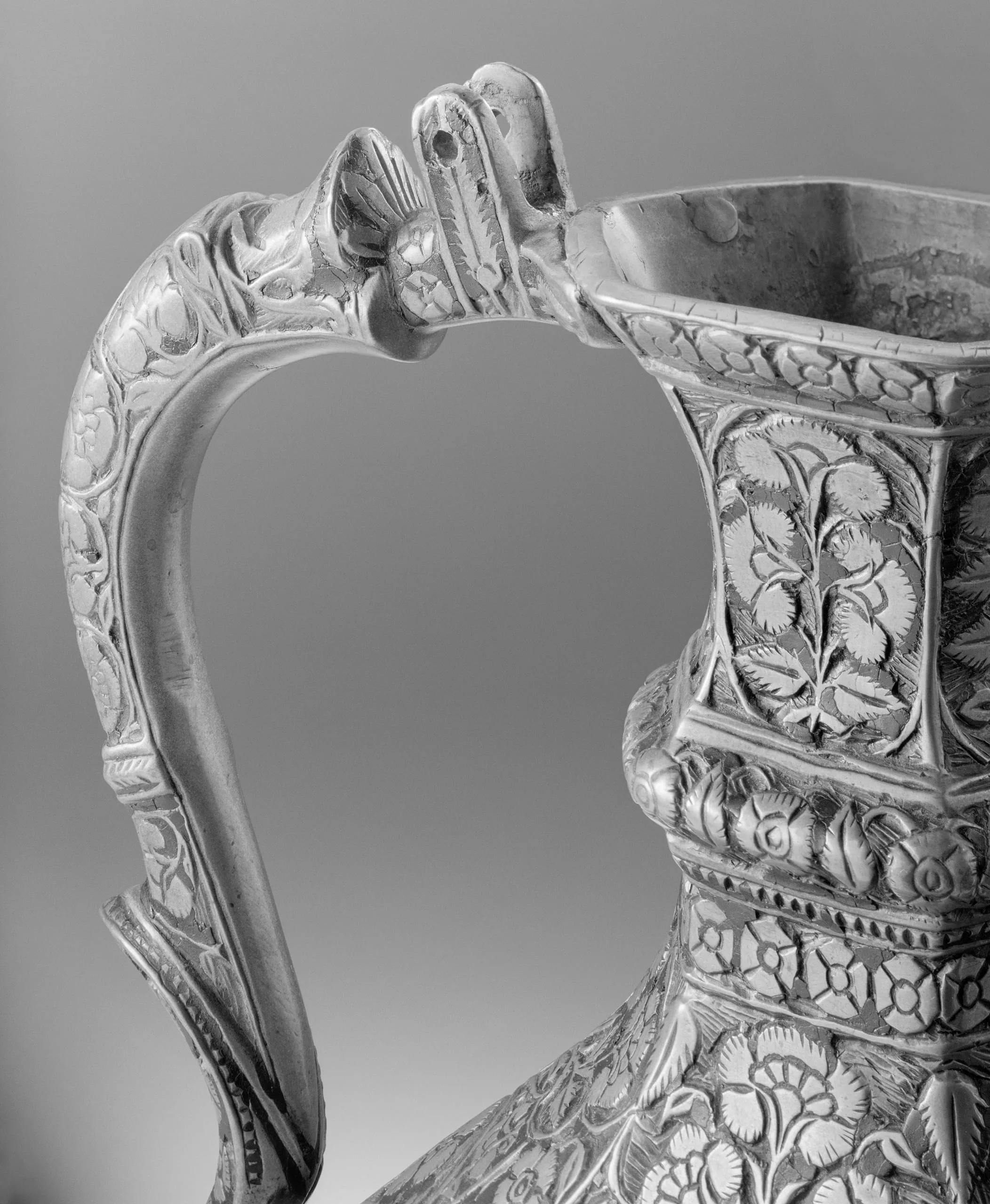
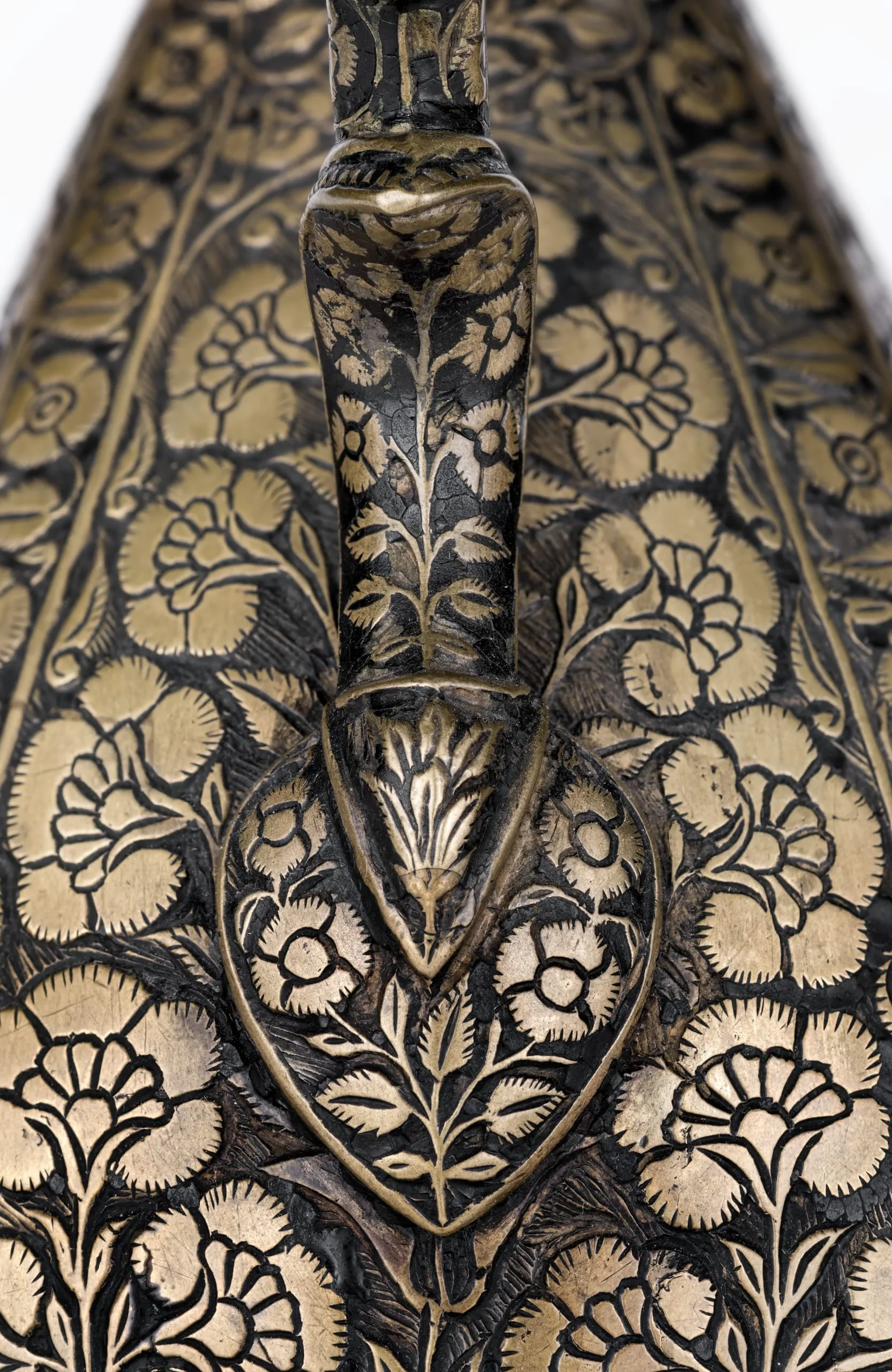
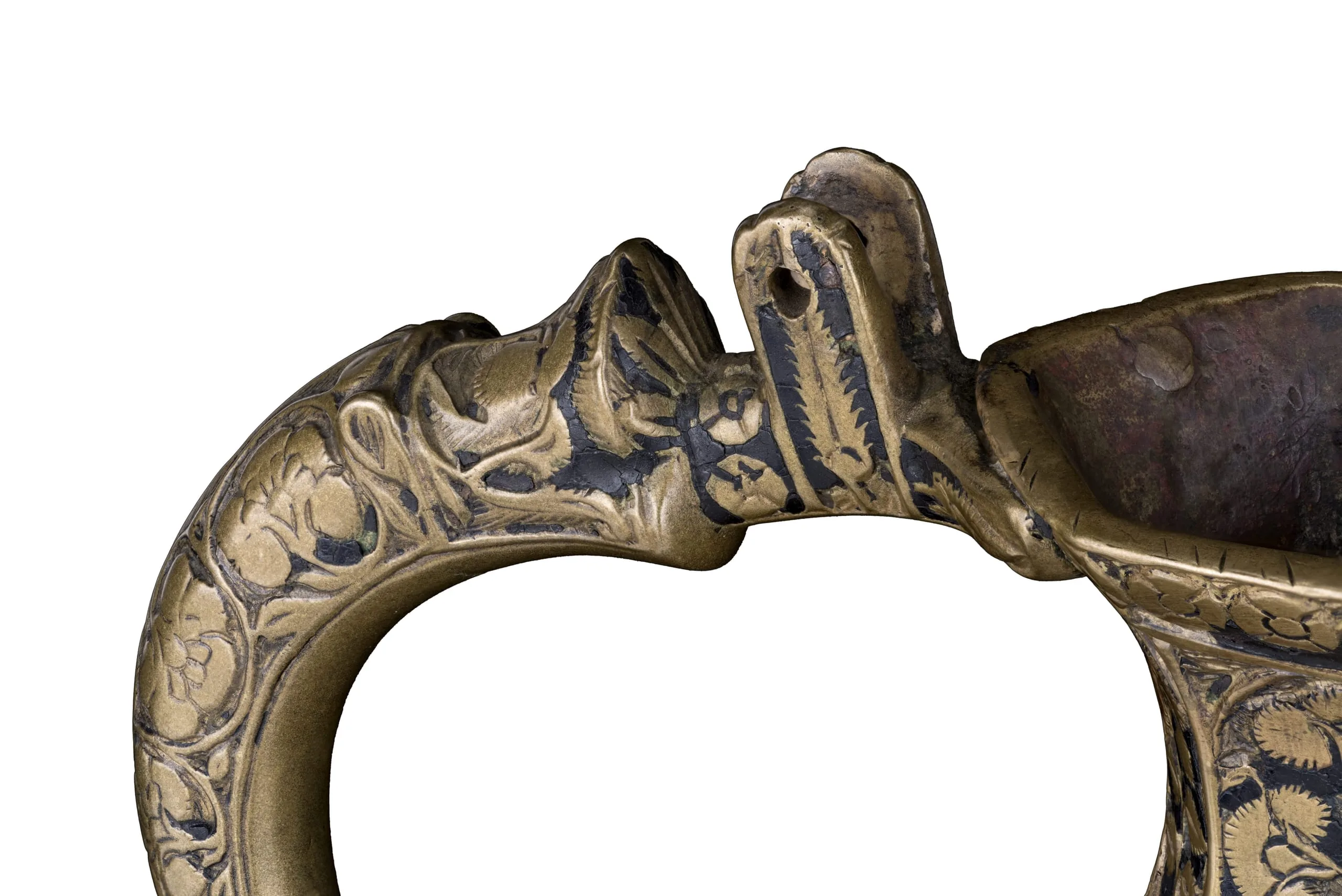
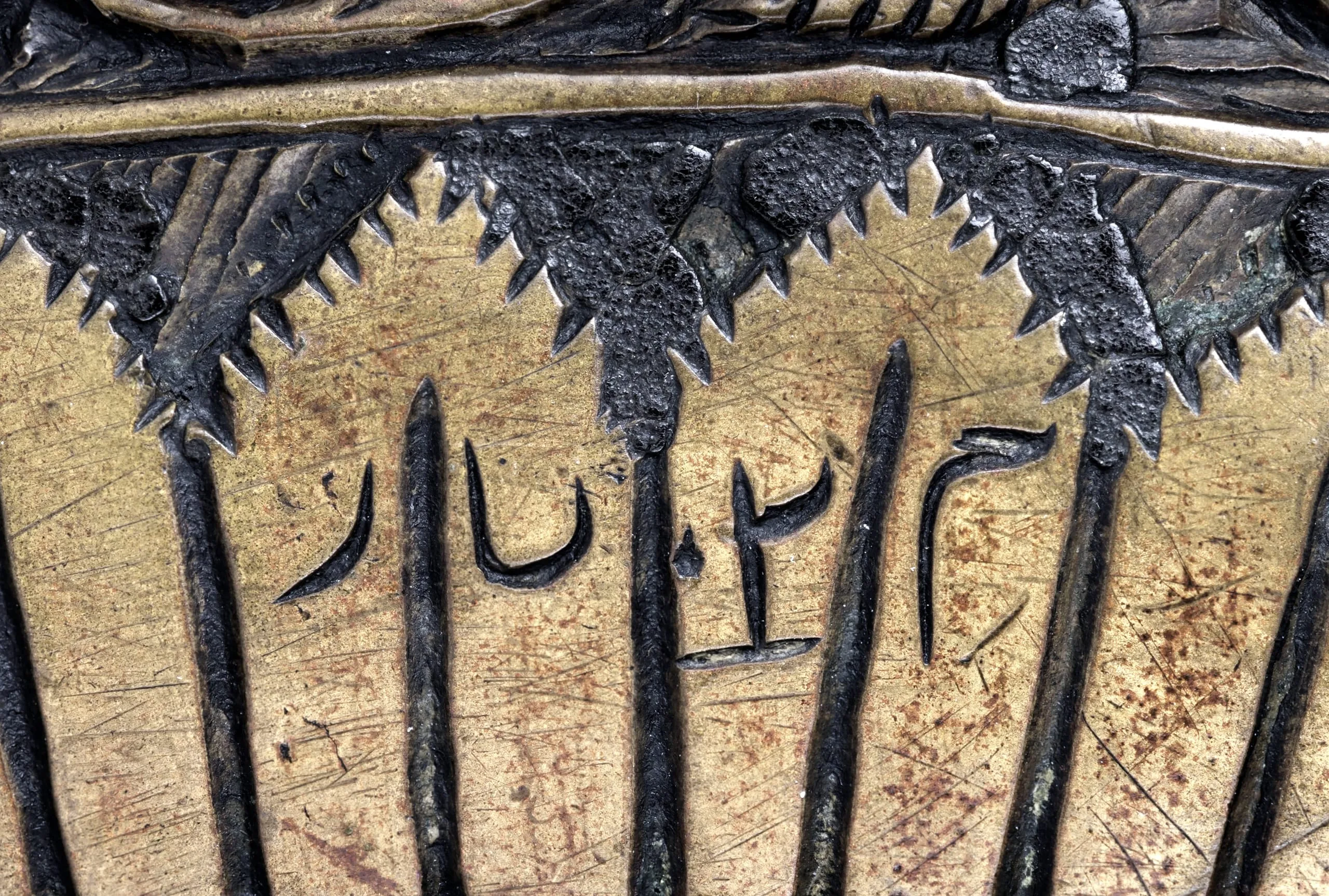
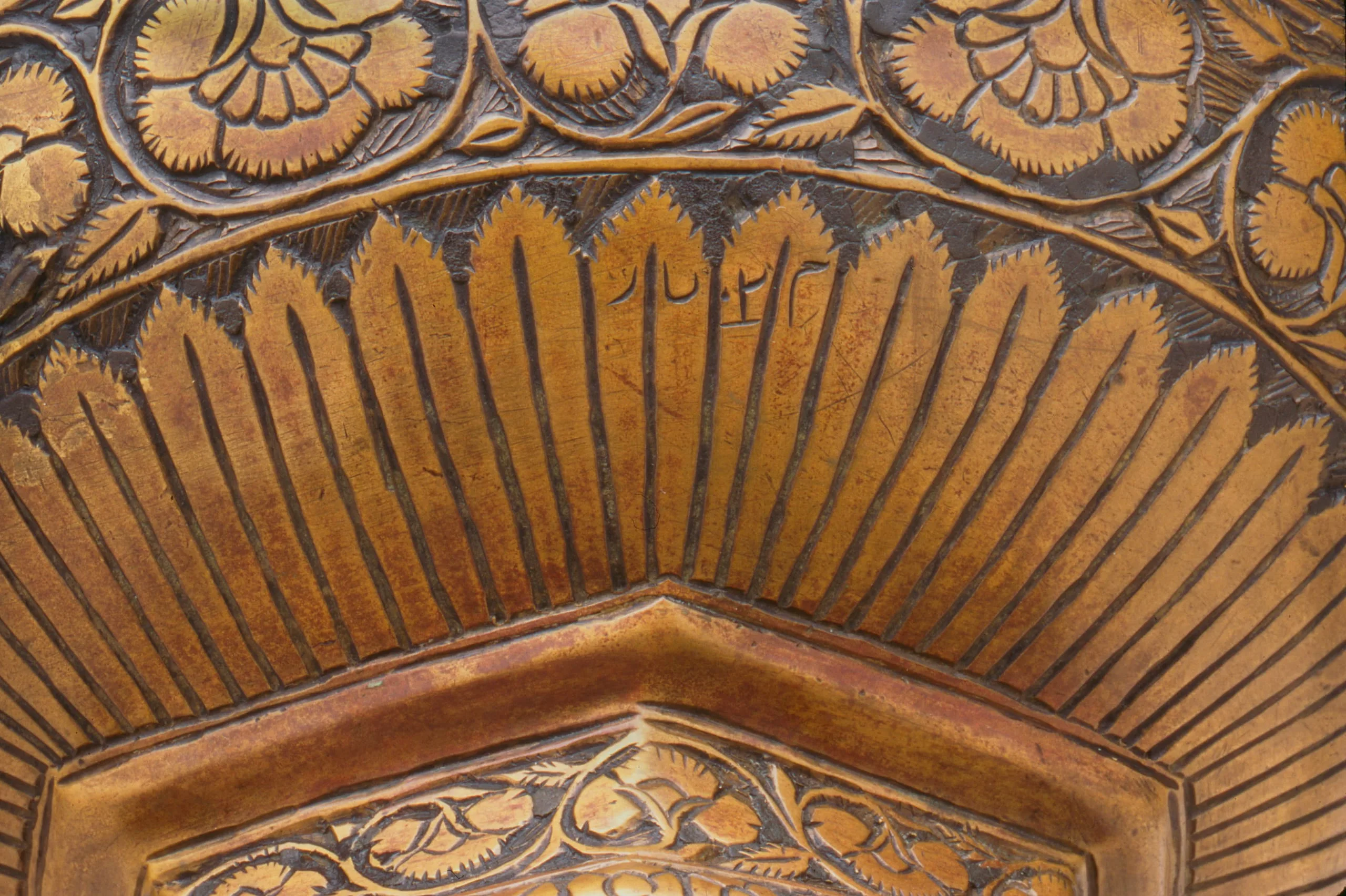
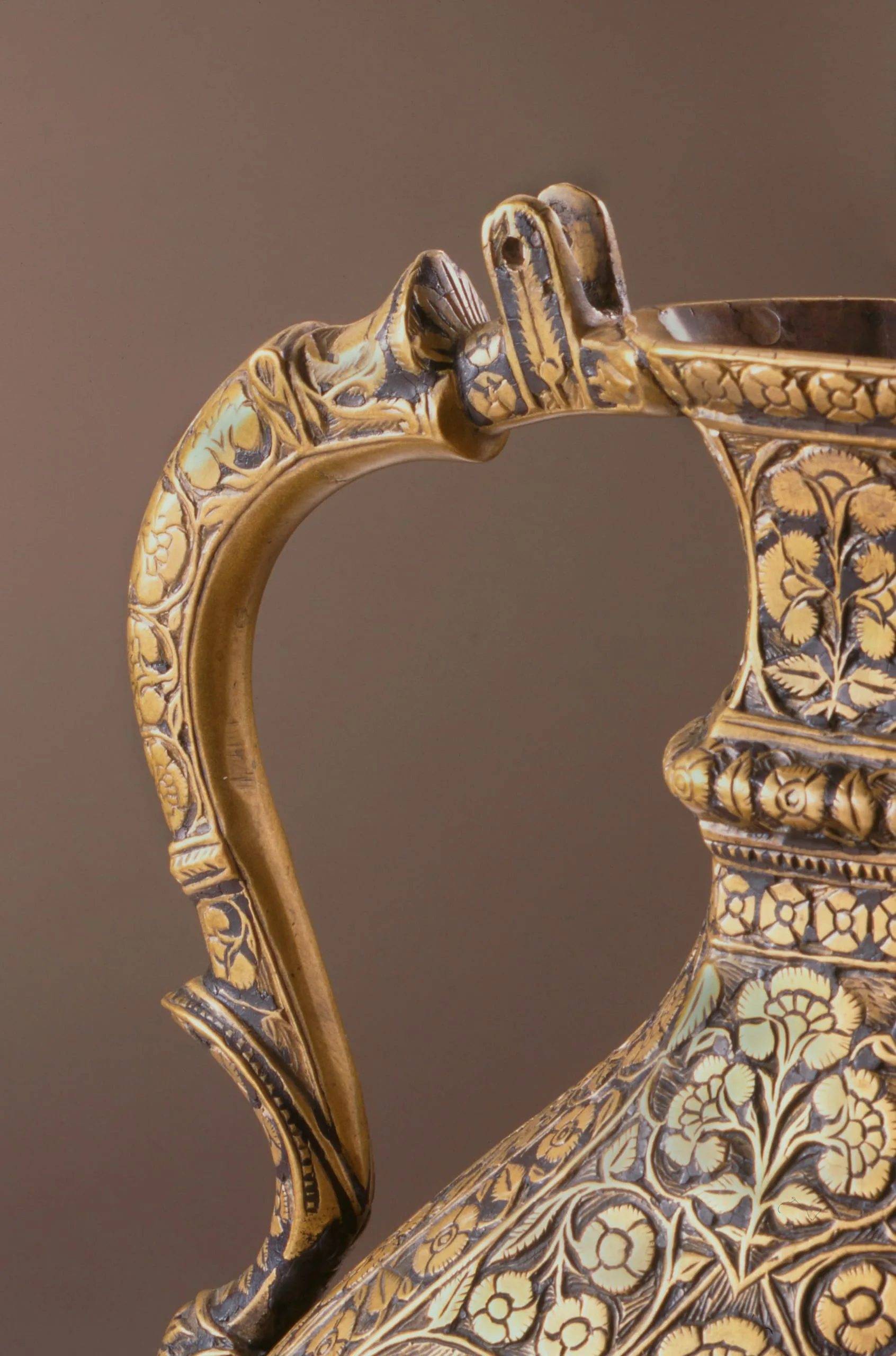
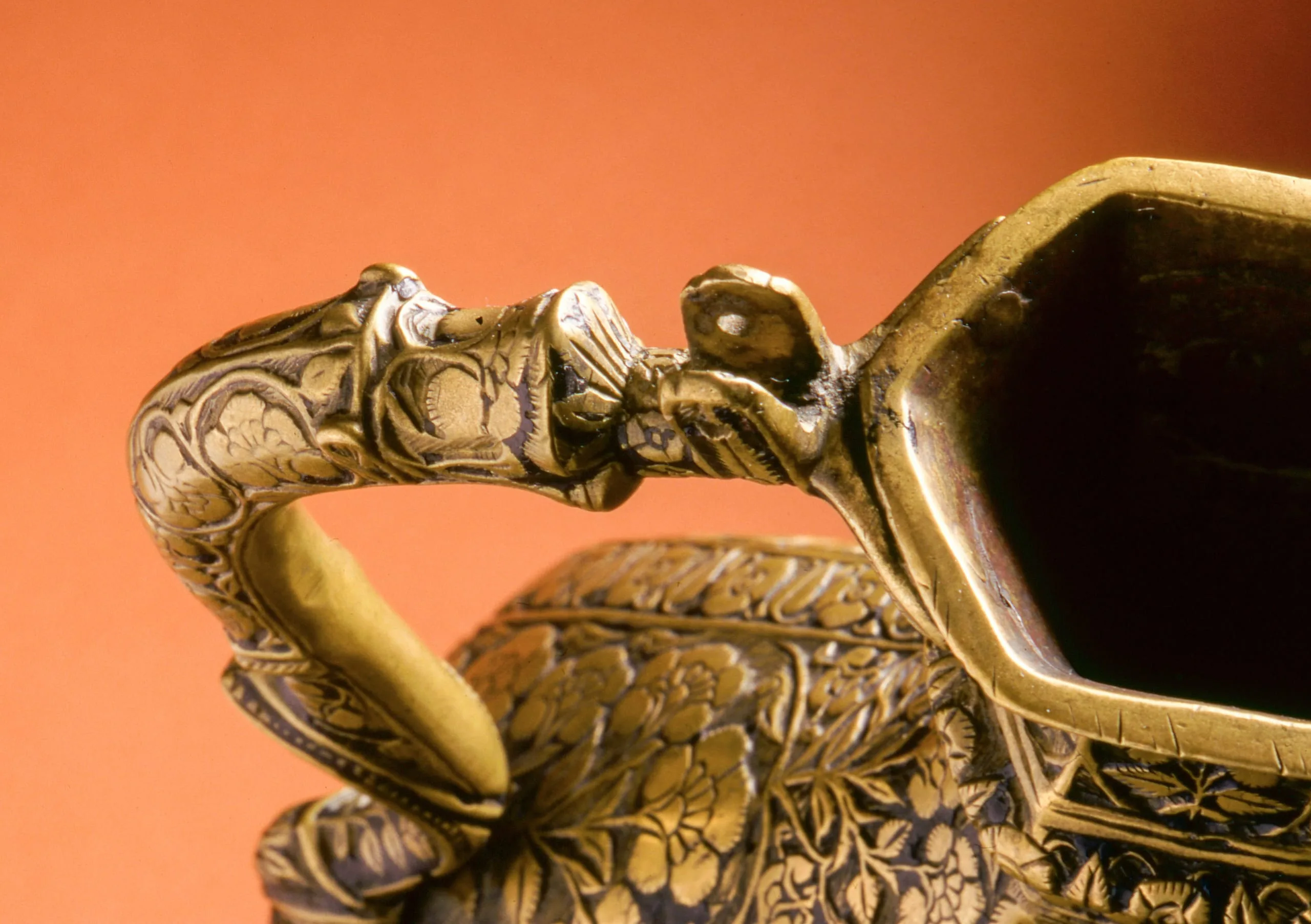
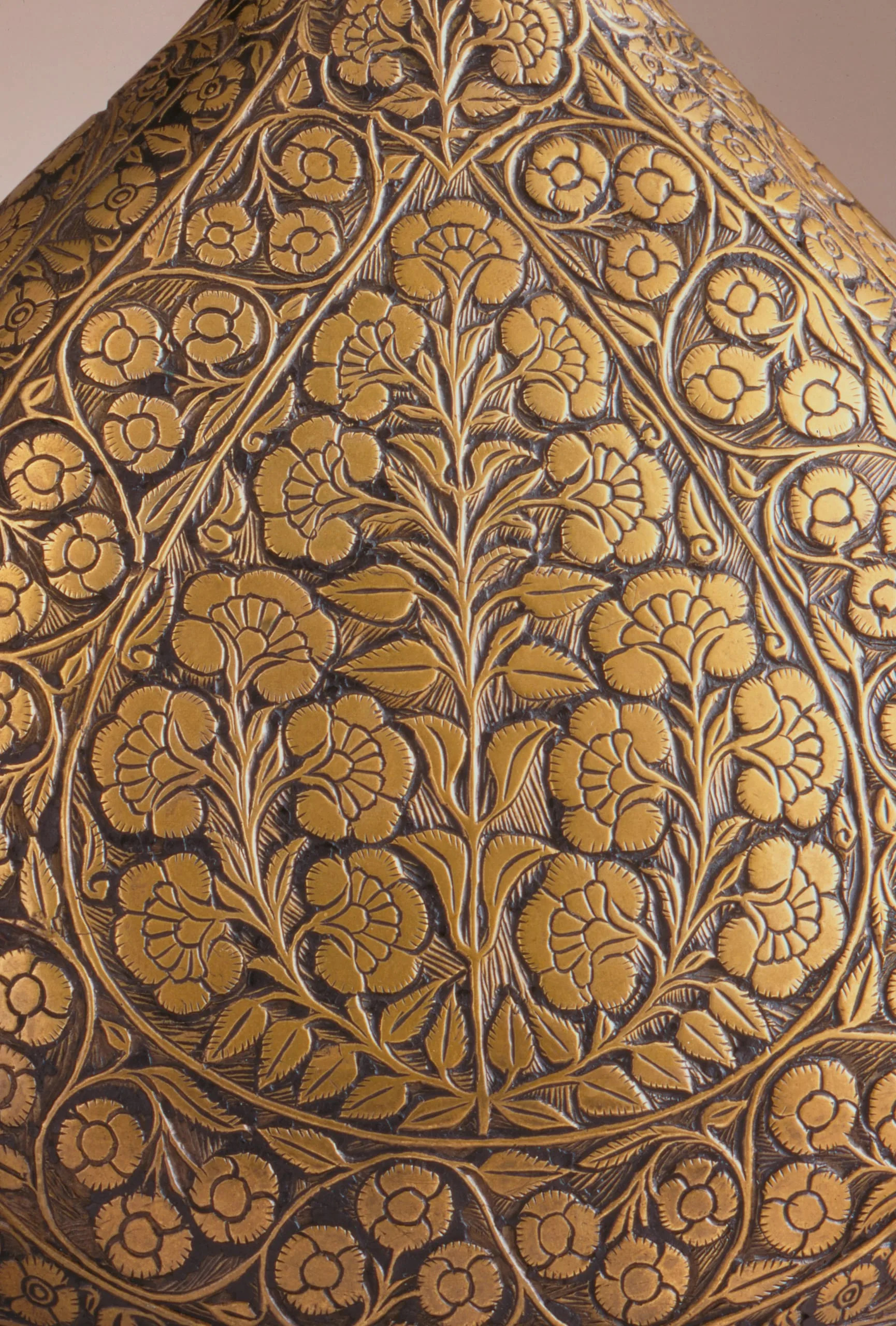
The ewer has a pear-shaped body with chamfered sides supported by a flared hexagonal pedestal foot. The hexagonal neck has an everted rim and six arcade panels, with a band of ring molding at the junction to the body. A particularly intriguing design feature of the ewer is the "Mughalized" or "floralized" dragon head at the upper terminal of the handle adjacent to the hinge flanges for the now missing lid. This iconographic element is traditionally found on Middle Eastern Islamic water ewers, but it has been transformed on this Mughal masterpiece into a subtle floriated form, with flowers used for its bulging eyes, leaves for its pointed ears, and forking branches for its gaping mouth. The ewer’s cast and engraved decoration was once highlighted by a dark resin or lac ground (now mostly missing except for the handle); it consists principally of a stylized flowering plant, most likely a rose shrub in two central teardrop-shaped panels on the vessel’s sides. Two concentric borders of floral scrolls surround the central panels.
Water ewers are among the primary material objects in Islamic art and culture. Ewers and their matching basins are used principally for the washing of hands during the traditional cultural practice of ceremonial and mundane ablutions. The earliest Islamic water ewers date from the advent of the religion in the 7th century. By the Mughal era (1526–1858), water ewers were produced throughout the Islamic world, and in China as export ware, in a variety of media and vessel forms. Water ewers were also manufactured in South Asia for ritual use and cleansing by Hindus and Sikhs. Fashioned in Lahore, which was the northern capital of the Mughal dynasty in the 16th through mid-19th century, the ewer epitomizes the fine brassware created in the Panjab, the border region shared today by Pakistan and India.
See Stephen Markel, Mughal and Early Modern Metalware from South Asia at LACMA: An Online Scholarly Catalogue (2020), pp. 46-61, 76, no. 1. https://archive.org/details/mughal-metalware