LACMA

ShopMembershipMyLACMATickets
LACMA
Los Angeles County Museum of Art
5905 Wilshire Blvd.
Los Angeles, CA 90036
info@lacma.org
(323) 857-6000
Sign up to receive emails
Subscribe
© Museum Associates 2025

Museum Hours

Monday

11 am–6 pm

Tuesday

11 am–6 pm

Wednesday

Closed

Thursday

11 am–6 pm

Friday

11 am–8 pm

Saturday

10 am–7 pm

Sunday

10 am–7 pm


  • About LACMA
  • Jobs
  • Building LACMA
  • Host An Event
  • Unframed
  • Press
  • FAQs
  • Log in to MyLACMA
  • Privacy Policy
© Museum Associates 2025
Collections

Unknown
Pensive Bodhisattvacirca 200-300

On view:
Resnick Pavilion, floor 1
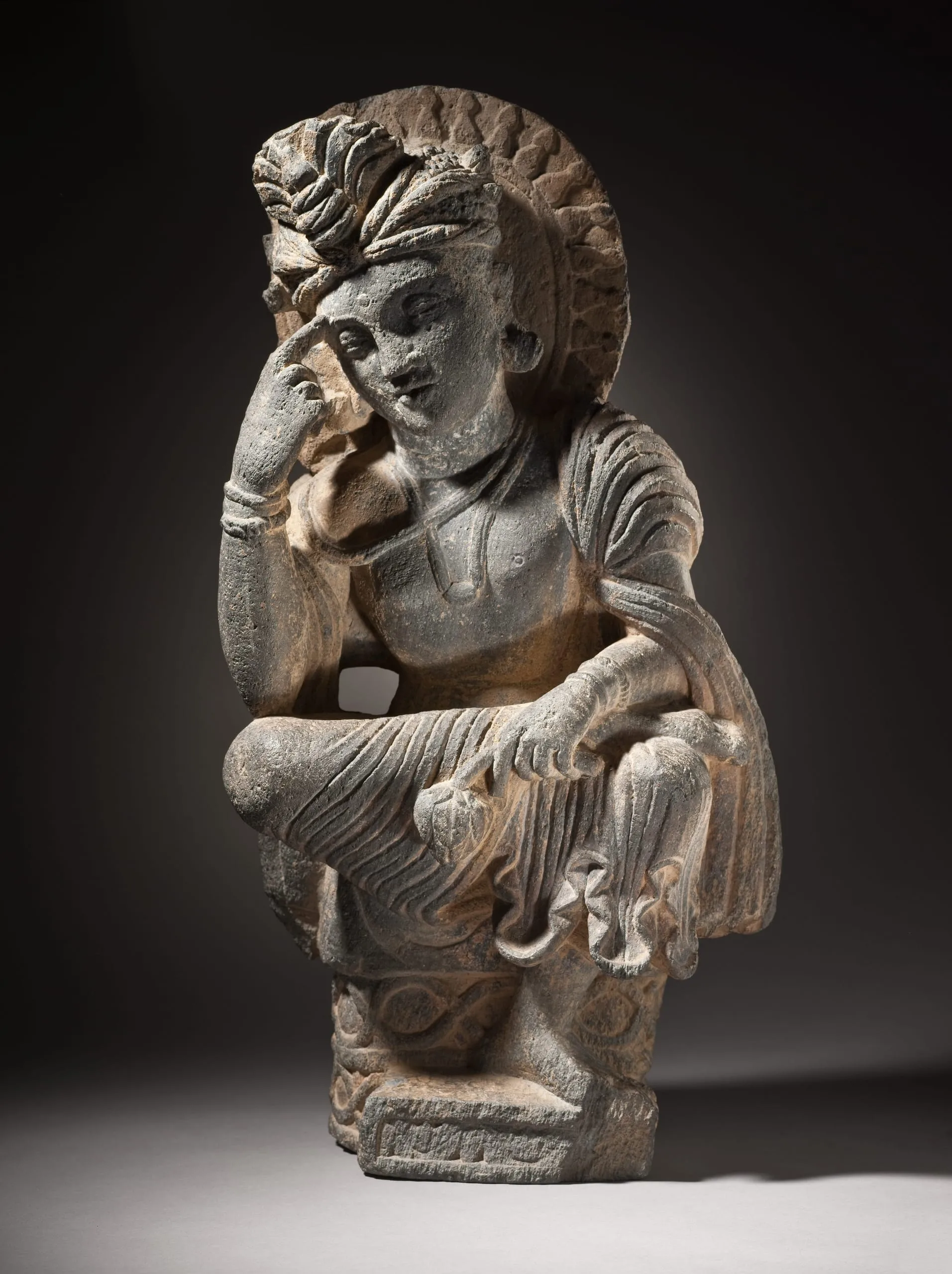
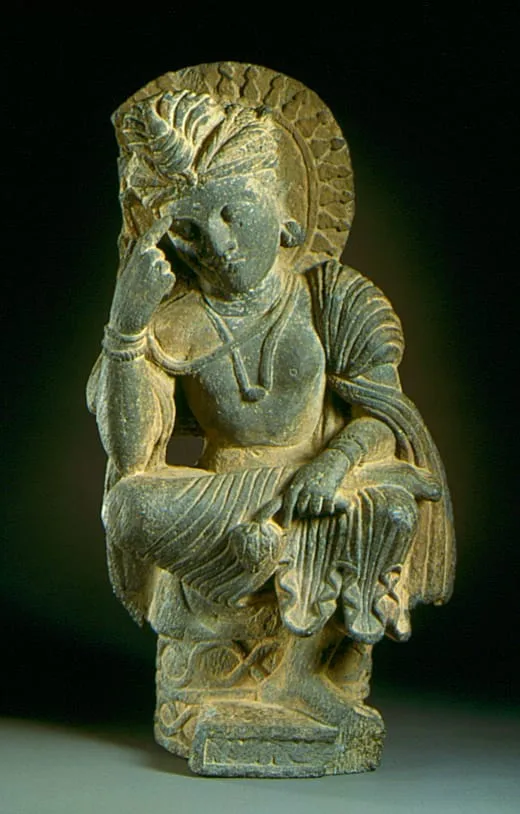
Gray stone sculpture of a seated figure with raised halo, elaborate topknot, and one hand resting against the cheek, draped garment with carved folds
Small gray stone sculpture of a seated bodhisattva figure with one hand raised to the face, wearing draped robes, jewelry, and an elaborately carved halo; Gandharan style with weathered surface detail.
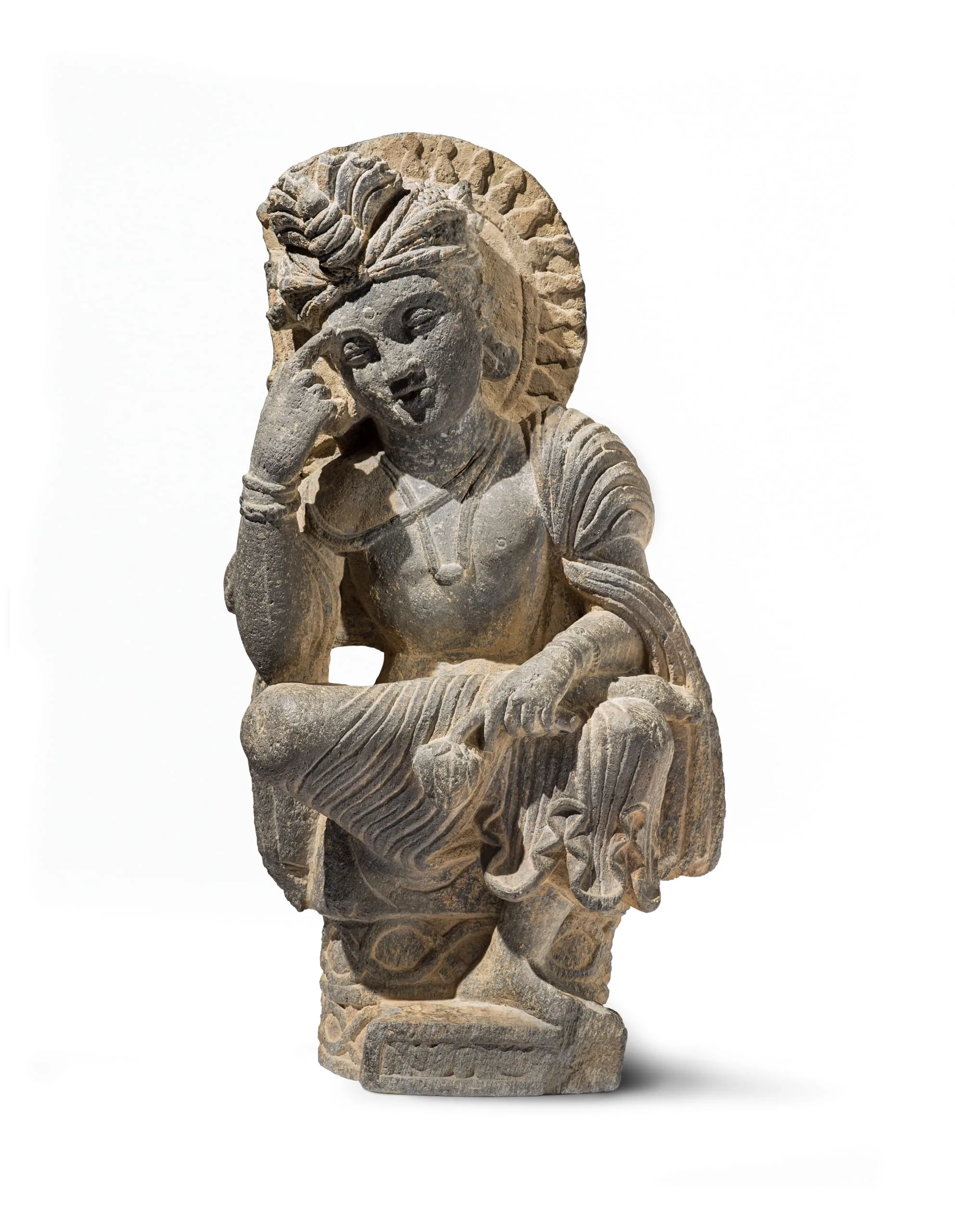
Gray schist sculpture of a seated bodhisattva in pensive pose, one hand raised to the cheek, with elaborately carved turban, halo, and draped robes with incised folds, in the Gandharan style.
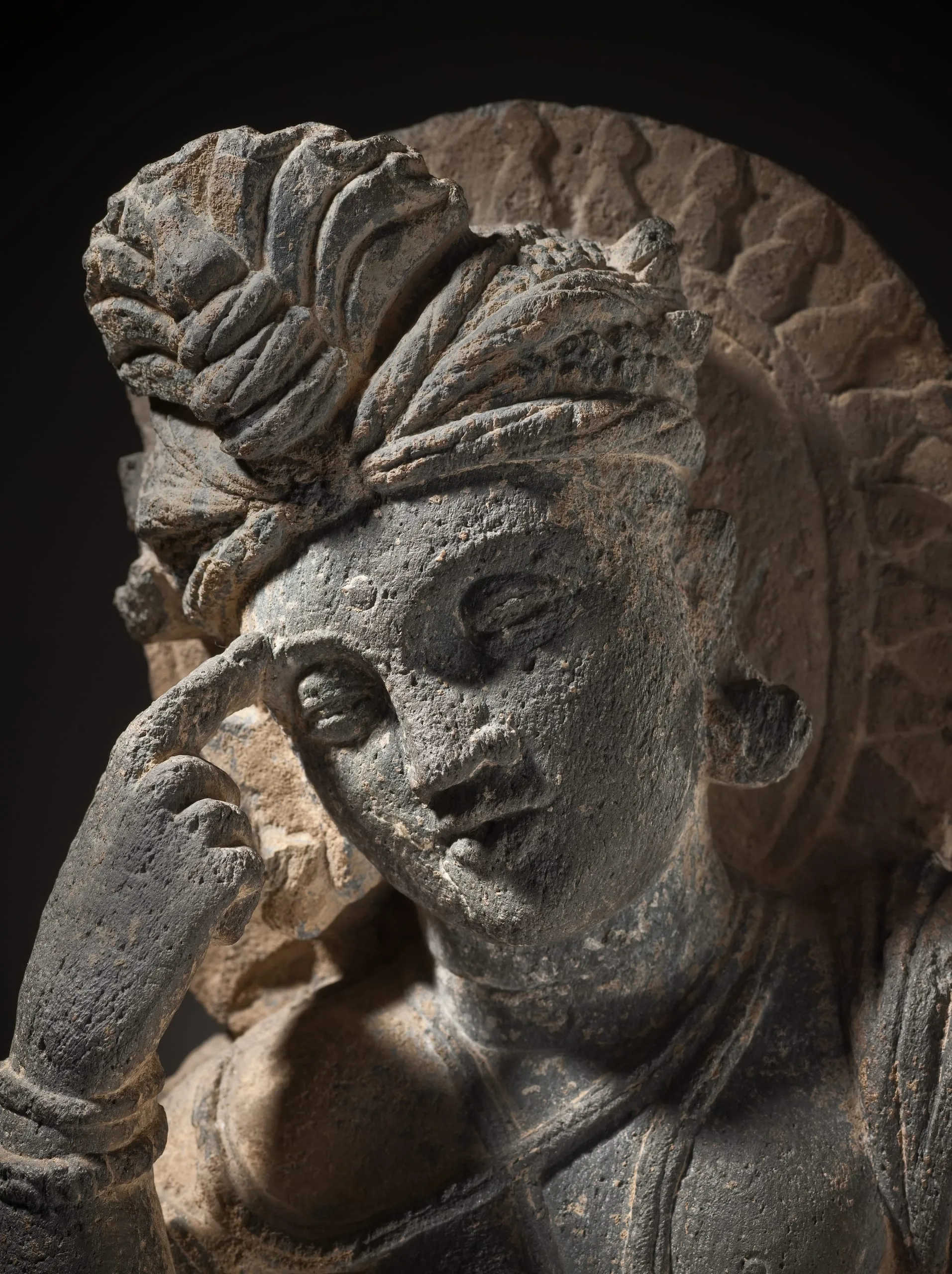
Gray schist relief sculpture, close-up of a bodhisattva figure with an elaborate floral crown and circular halo, one hand raised near the face, with finely carved facial features and weathered surface.
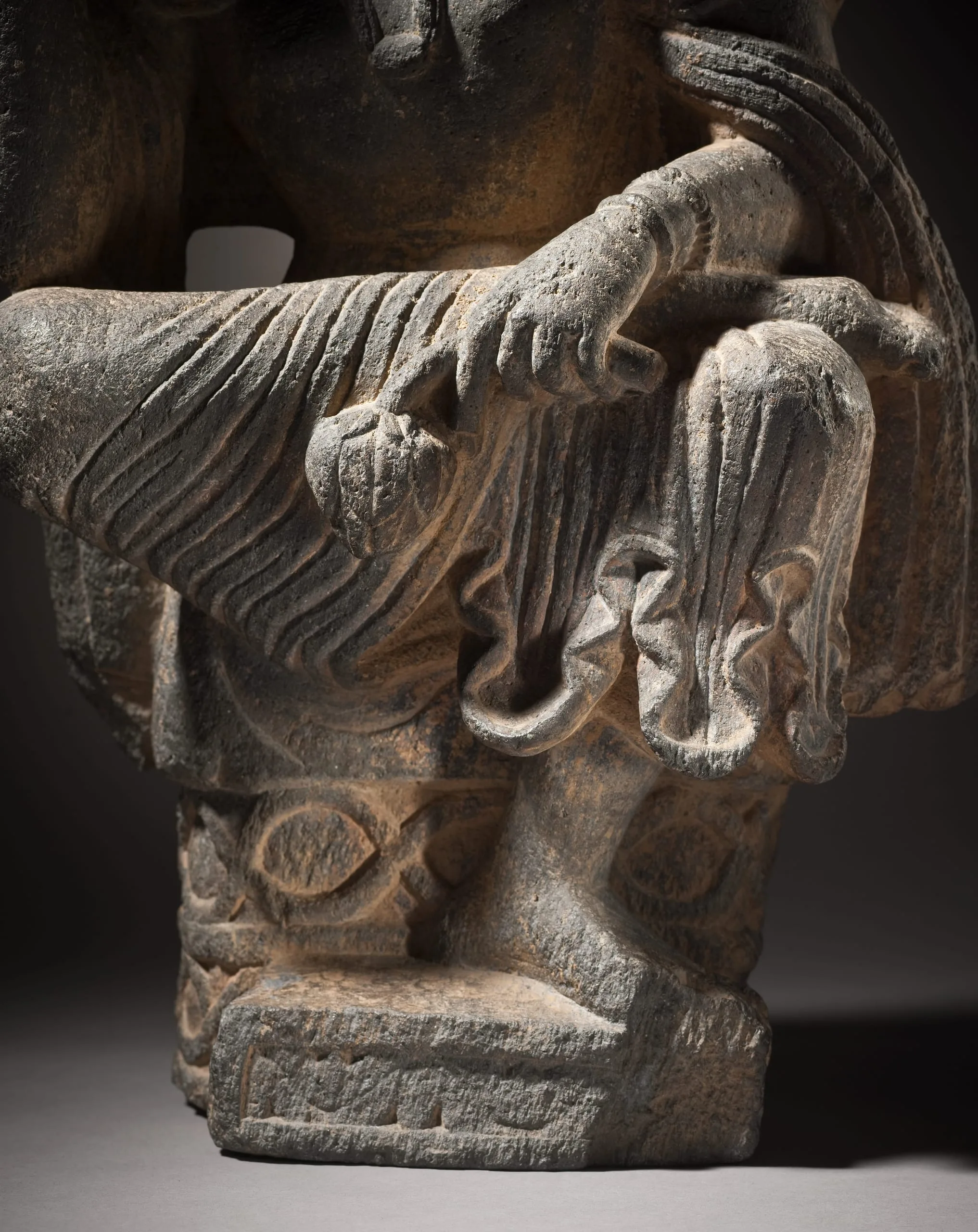
Stone sculpture fragment, close-up of lower torso and crossed legs of a seated figure, with deeply carved drapery folds, decorative base with circular relief motifs, and a rectangular plinth below; gray weathered stone surface.
Artist or Maker
Unknown
Title
Pensive Bodhisattva
Place Made
Pakistan, Gandhara region
Date Made
circa 200-300
Medium
Gray schist
Dimensions
22 x 11 x 6 1/4 in. (55.88 x 27.94 x 15.88 cm)
Credit Line
Gift of Henry and Ruth Trubner in honor of the museum's twenty-fifth anniversary and to honor Dr. Pratapaditya Pal
Accession Number
AC1994.8.1
Classification
Sculpture
Collecting Area
South and Southeast Asian Art
Curatorial Notes

Images of a pensive bodhisattva first appear in the 2nd-3rd century during the Kushan Dynasty (1st-3rd century) in ancient Gandhara (an important nexus of the Silk Routes and the transmission of Buddhism in present-day northwestern Pakistan and northeastern Afghanistan).

The bodhisattva is represented with his right hand raised to the temple of his head that is tilted to the side in deep contemplation. He is seated on a wicker stool with his left leg pendant and the right leg raised to a horizontal position so that his foot rests on the opposite knee. He holds a lotus bud in his left hand. His dhoti and shawl worn around his shoulders are depicted with heavy drapery folds derived from Greco-Roman clothing conventions. He is nimbate and wears a turban with an indeterminate crest. See also M.85.9.

Gandharan sculptures of a pensive bodhisattva portray Prince Siddhartha Gautama in his First Meditation on the causes of life’s suffering before he achieved enlightenment and became the historical Buddha Shakyamuni (traditionally dated to 563–483 BCE). Images of a pensive bodhisattva spread to China by the 5th century, and by the 6th century to Korea and Japan where they are typically identified as the future Buddha, Maitreya. For example, see a Korean pensive bodhisattva attributed to the late 6th-century in the National Museum of Korea, Seoul (Bongwan 2789).
Selected Bibliography
  • Little, Stephen, Tushara Bindu Gude, Karina Romero Blanco, Silvia Seligson, Marco Antonio Karam. Las Huellas de Buda. Ciudad de México : Instituto Nacional de Antropología e Historia, 2018.
  • Little, Stephen, and Tushara Bindu Gude. Realms of the Dharma: Buddhist Art across Asia. Los Angeles: Los Angeles County Museum of Art, 2025.