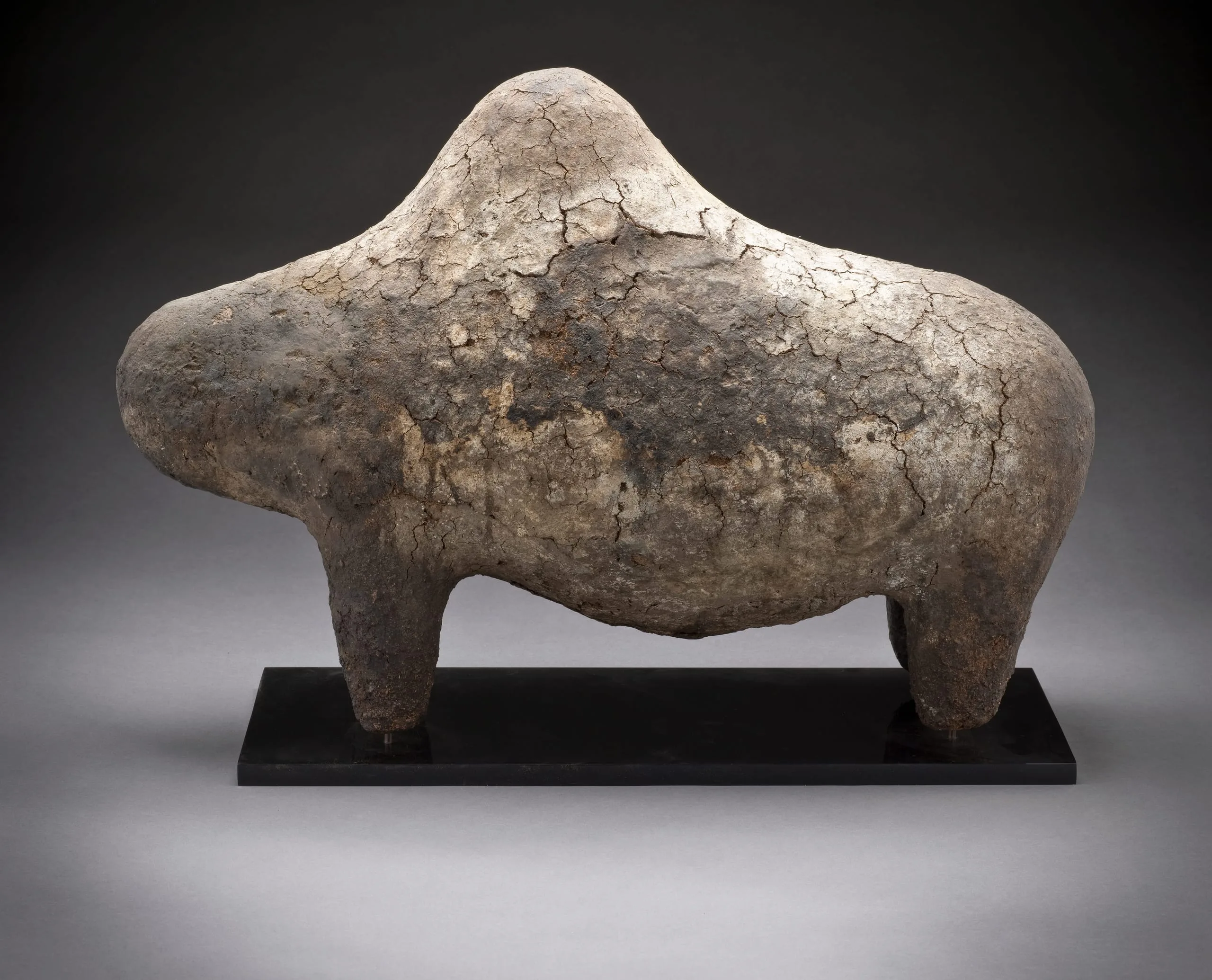
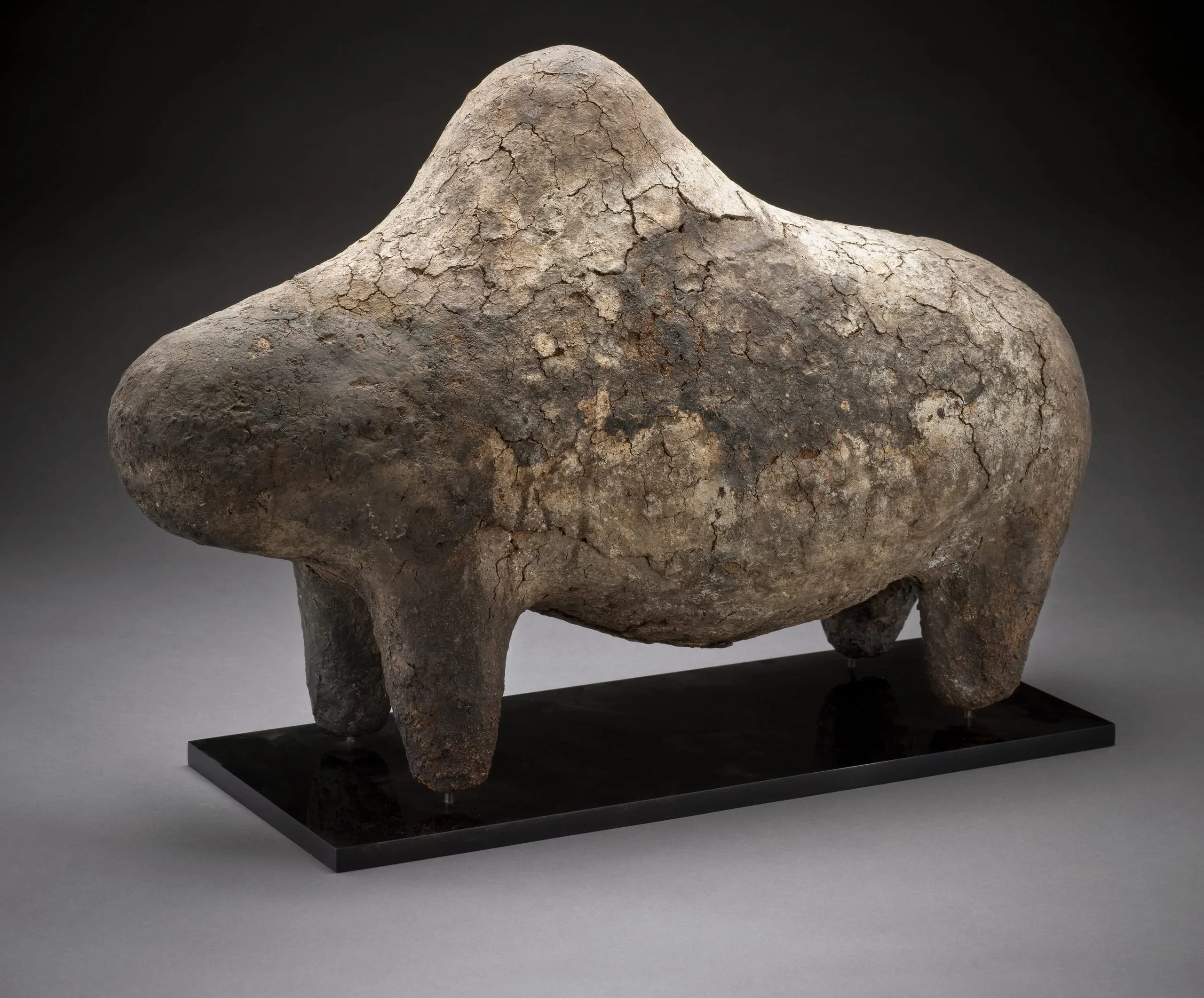
Portable altars (boli) such as this one are used by members of the Komo (or Kono) Society during rituals and ceremonies as a vehicle to contain the spiritual power needed to communicate with ancestors, spirits, and other supernatural forces. Members of the Komo Society are primarily high-ranking male priests, elders, and blacksmiths. Such rituals are performed to preserve traditional knowledge and social order and to encourage plentiful crops and future protection of the community. Additive materials such as mud or clay, blood and urine, alcohol, eggs, honey, or feathers are built up in layers forming the shrine over a wood core. The influence of the Komo Society in Mali has diminished due to the conversion of most Bamana communities to Islam.
Provenance: De Monbrison, Paris 1983; Merton D. Simpson (1928−2013), New York City, 1984; Gerard Junior Foundation; gift to LACMA, 1990.