- Title
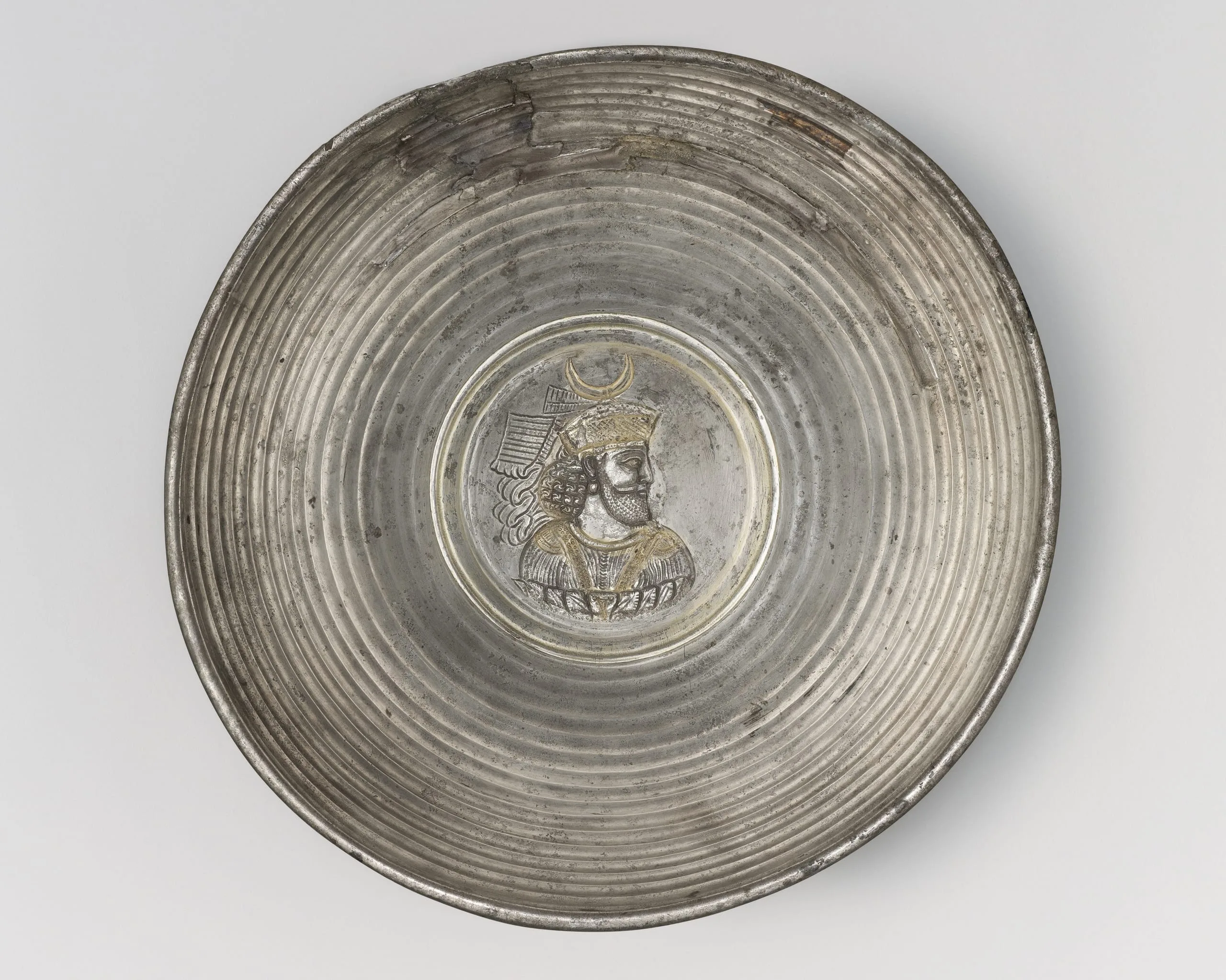
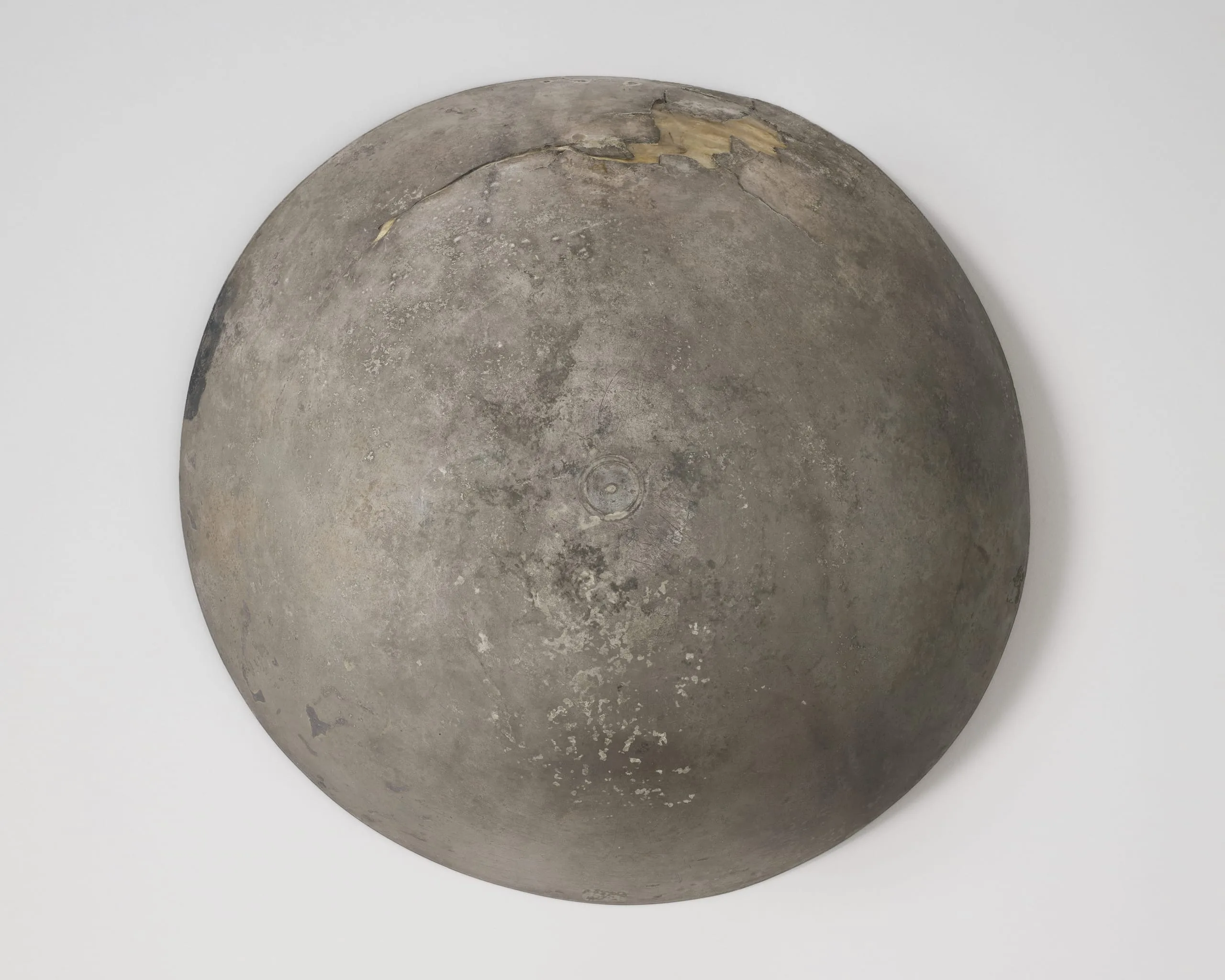
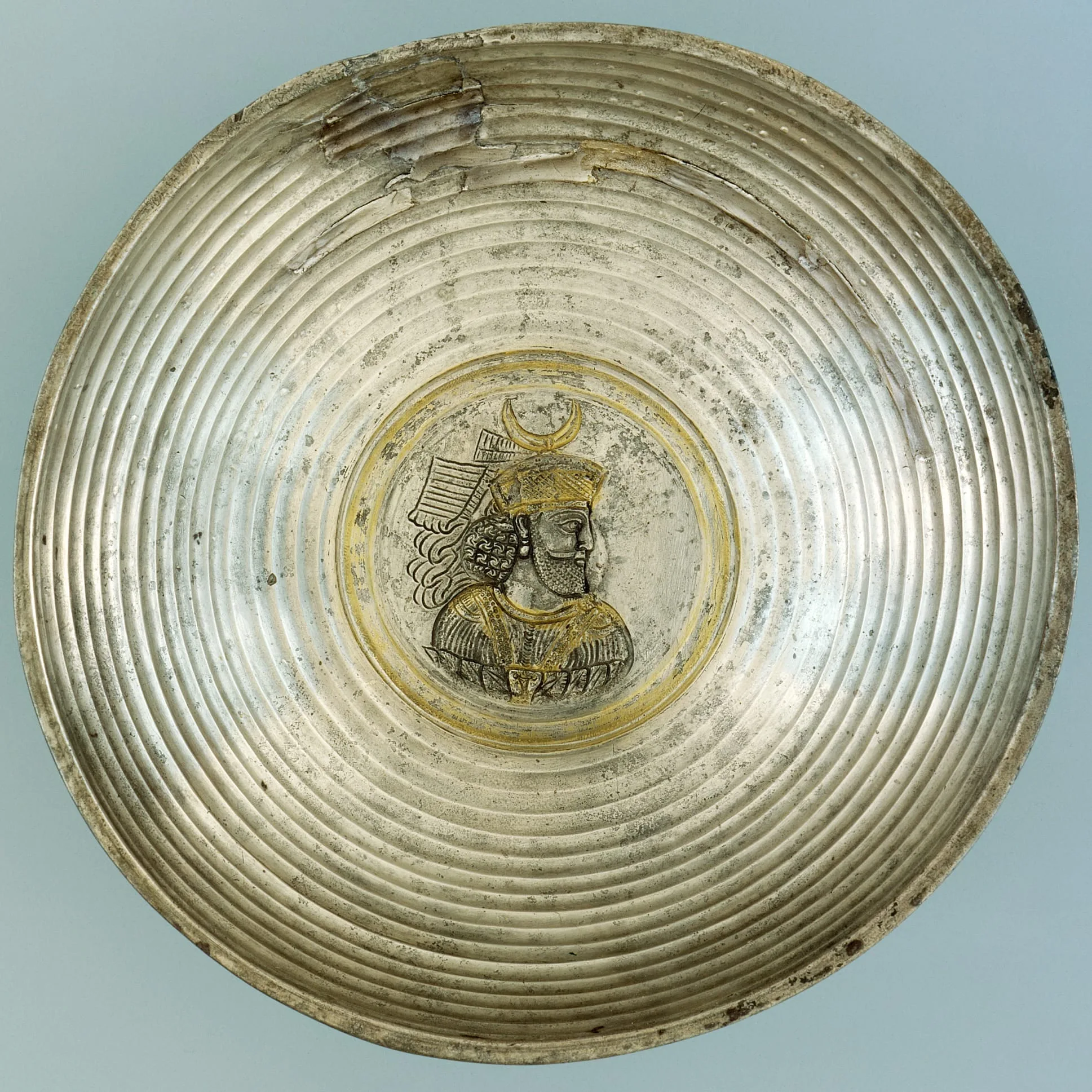
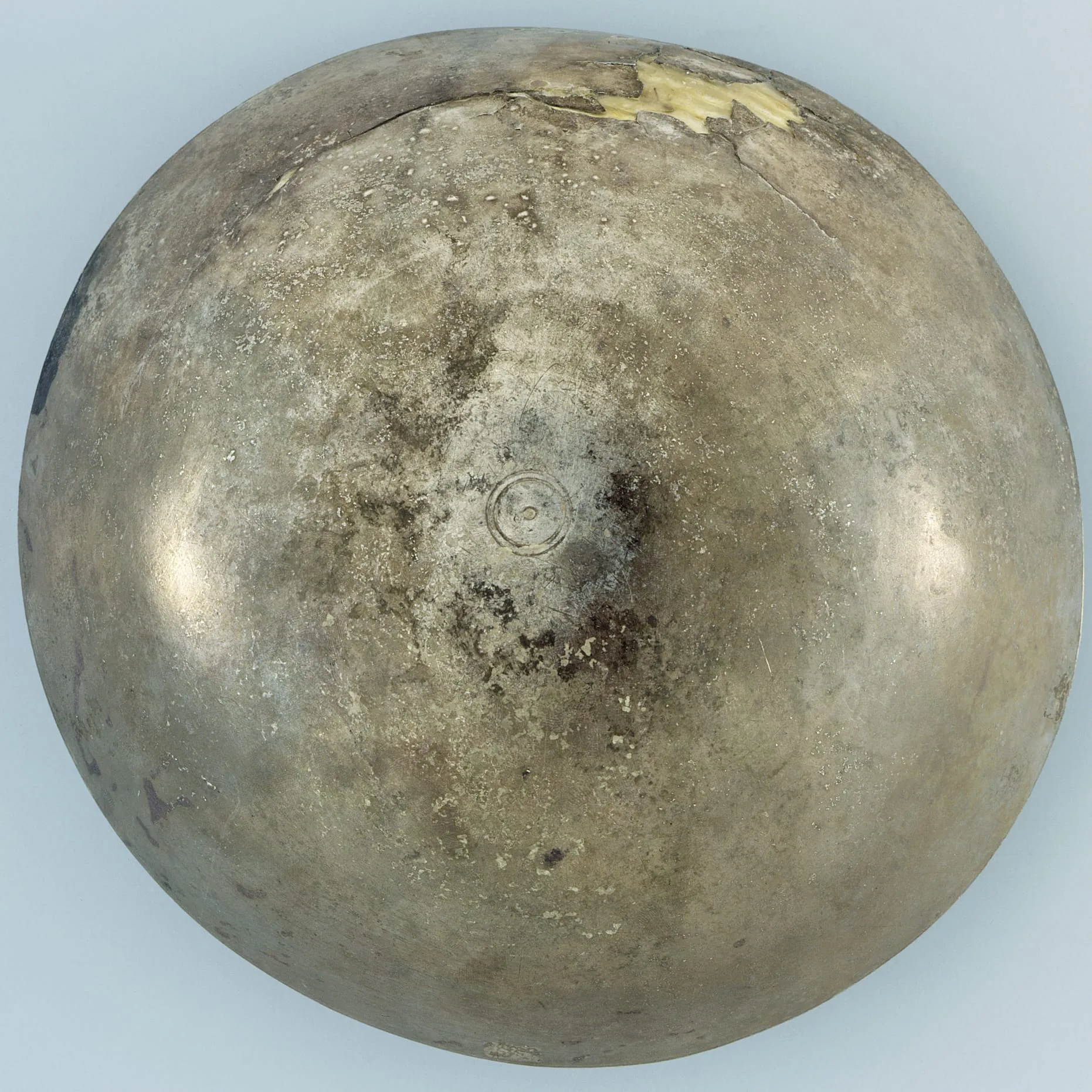
- Plate with a Portrait Medallion of a King
- Date Made
- 224-651
- Medium
- Gilded silver
- Dimensions
- Diameter: 8 in. (20.32 cm)
Height: 4 3/4 in. (12.07 cm)
- Accession Number
- AC1993.140.1
- Curatorial Notes
The best-known works of art from the Sasanian period (224−651) are silver vessels, especially gilt-embellished plates depicting a variety of royal figural compositions, most notably the image of the king, as here. It is generally believed that the court monopolized the production of silver plates and controlled their distribution, offering them mainly as gifts or rewards to client kings and prized subjects.
At the center of this plate, the raised portrait bust of the king is set in a medallion within a series of concentric circles running outward to the rim. As is typical, the king’s hair is coiffed with tight curls bound at the neck and a full beard knotted below the chin. Shown frontally, he wears a beaded halter, a feature of Sasanian royal dress. The figure is perhaps identifiable as Khusraw II (r. 590−628) based on the crown’s design, which is known from contemporaneous coins bearing his name and likeness (see M.2002.1.448). Sasanian silver plates were usually hammered into shape and decorated with a variety of complex techniques. Nearly the entire surface of this example is covered by gilding. The carved concentric circles and raised bust, the latter rendered with a piece of attached cast silver, give dimension to the decoration.
2024
- Selected Bibliography
- Mousavi, Ali. Ancient Near Eastern art at the Los Angeles County Museum of Art. Los Angeles: Los Angeles County Museum of Art, 2012.