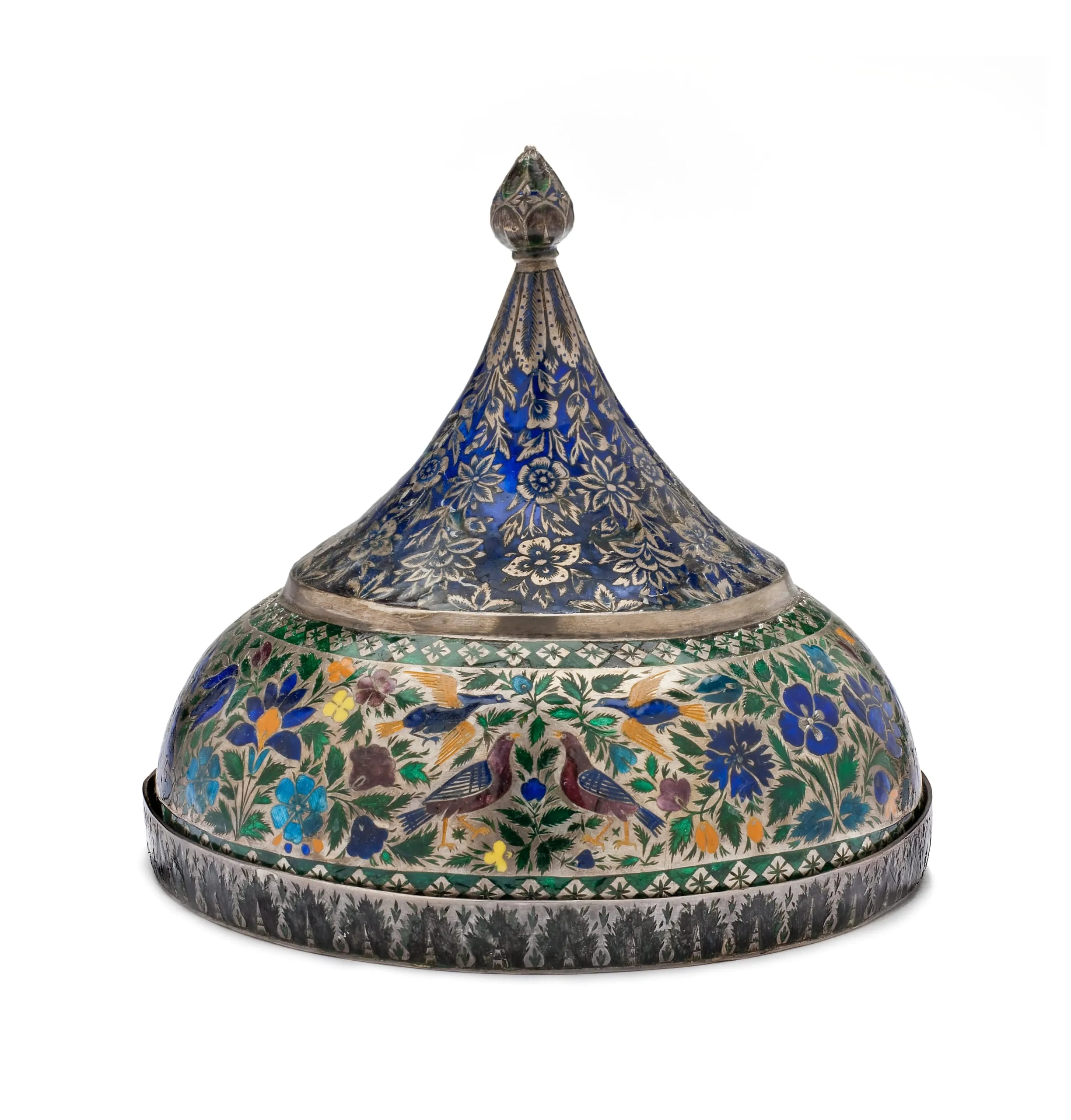
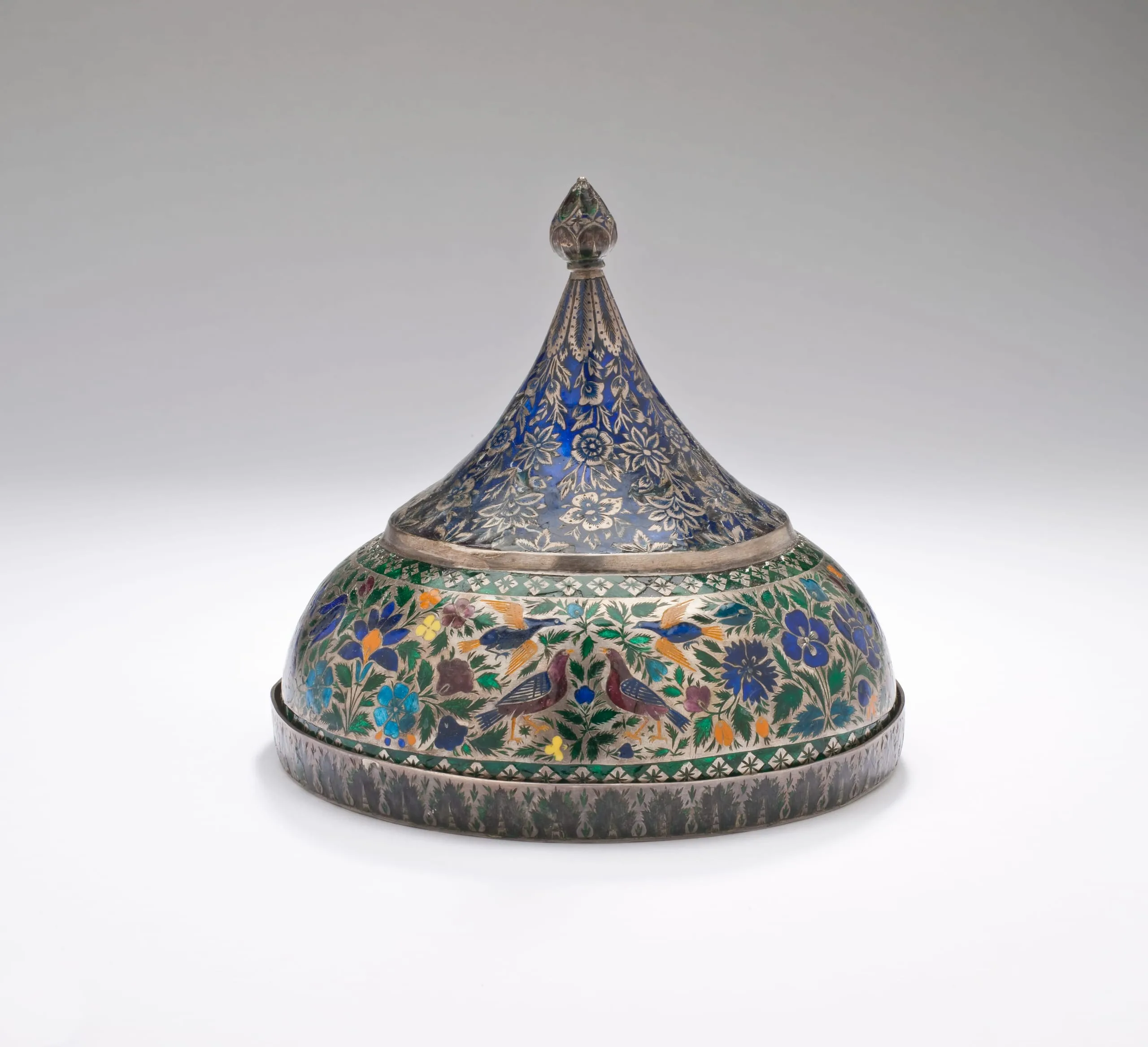
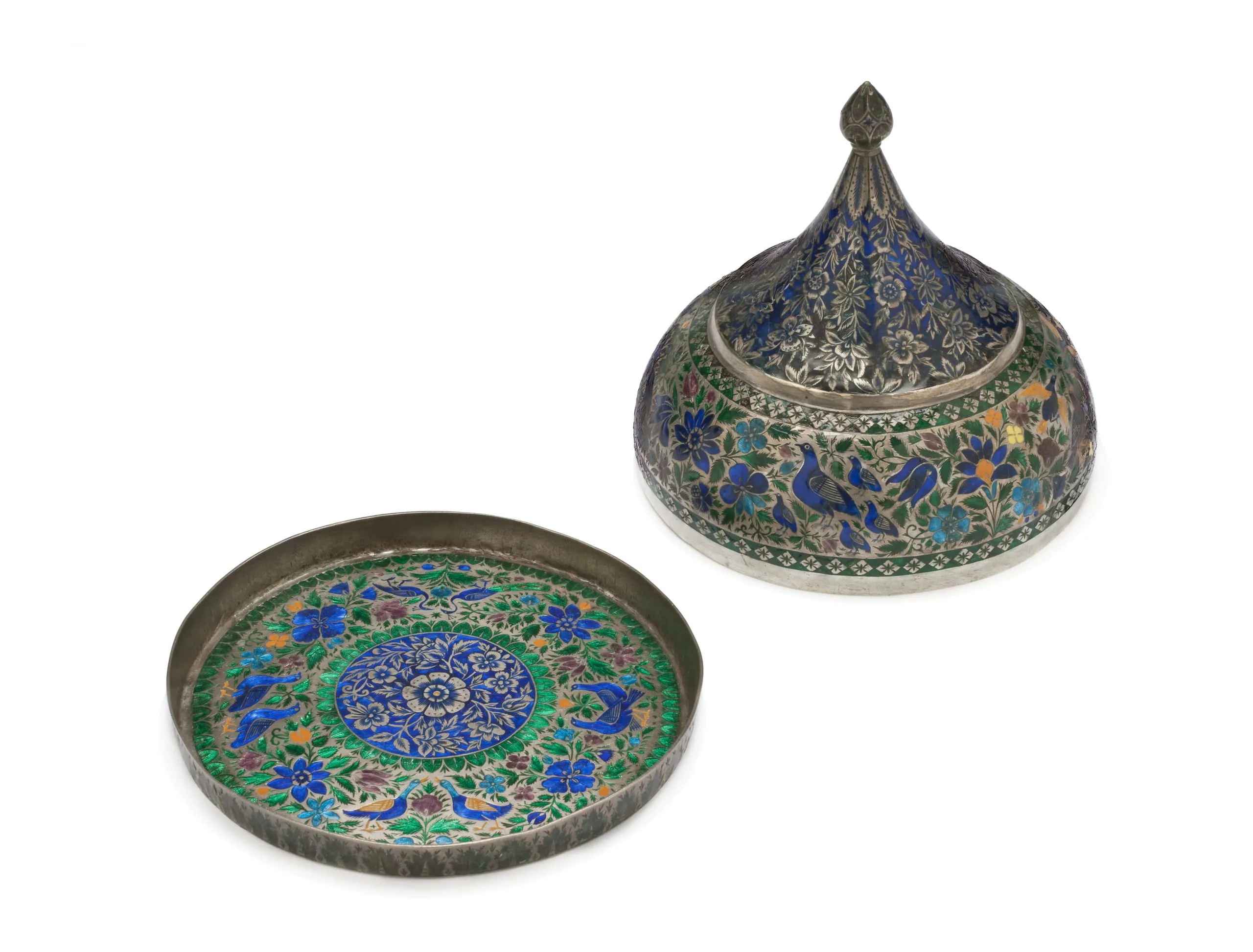
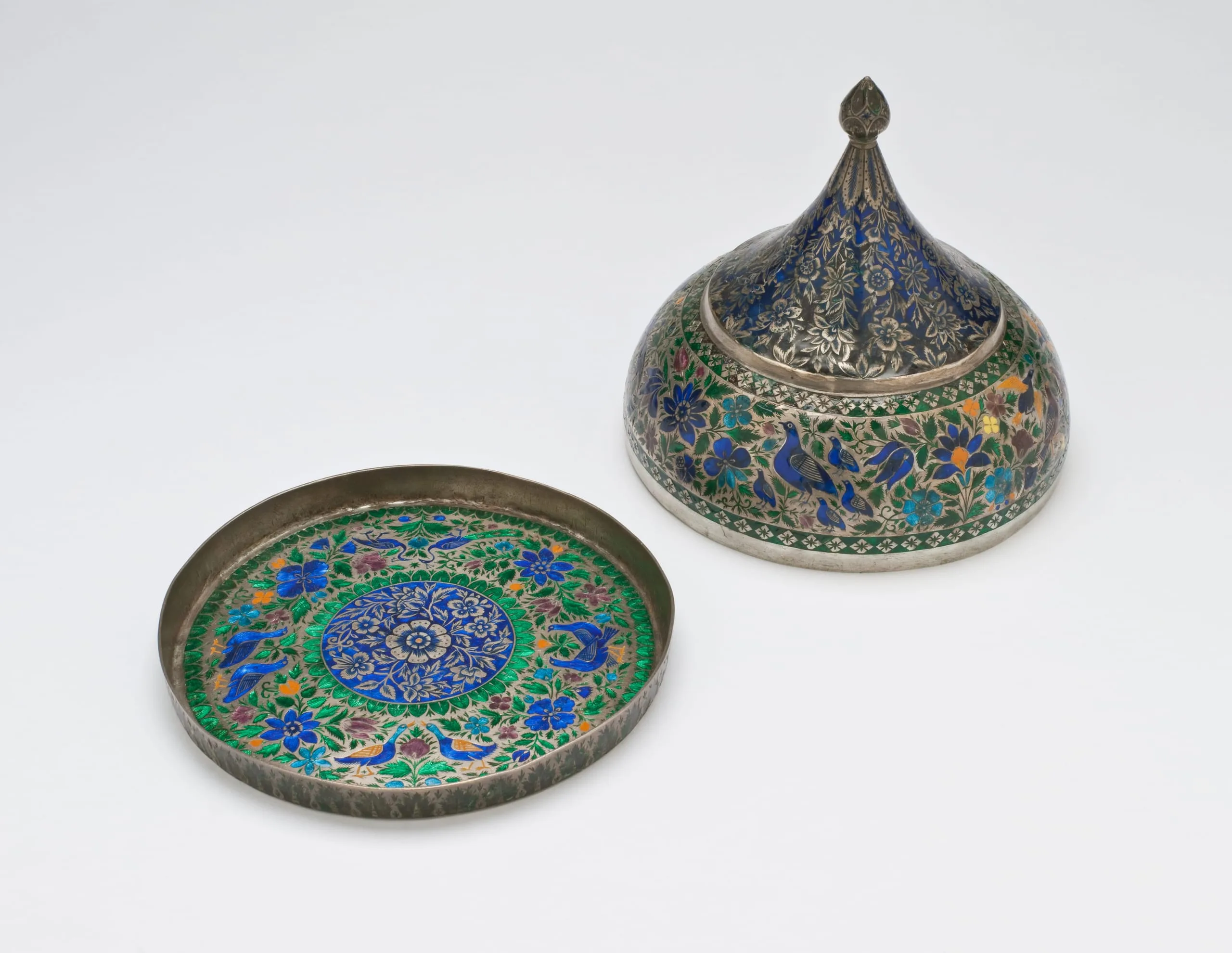
This distinctive Lucknow style of betel box in the form of an ogival dome was used for preparing and serving pan, a ceremonial amenity and digestif made of cut betel nut, mineral lime powder or paste, and various spices wrapped in a betel leaf (Piper betle).
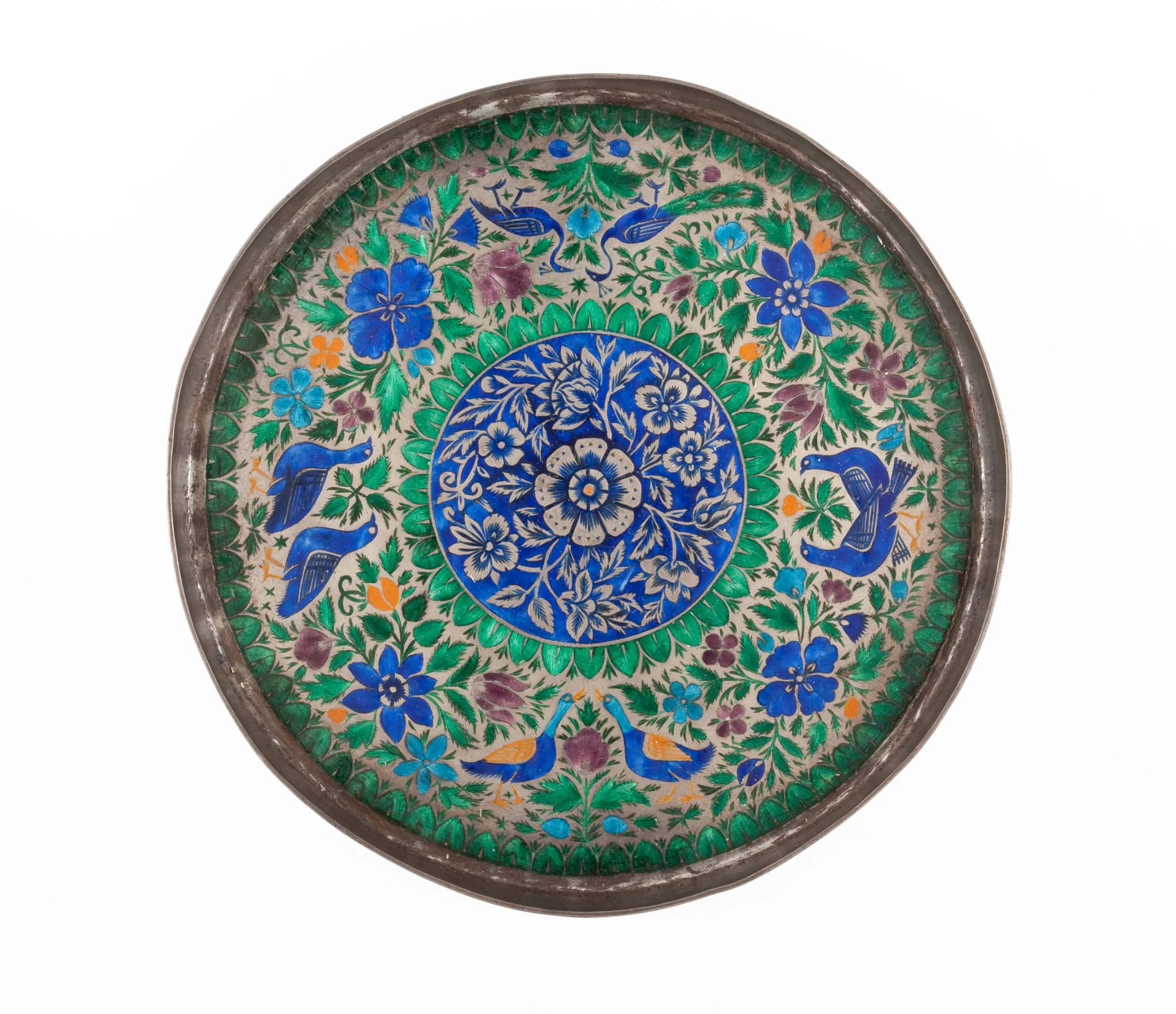
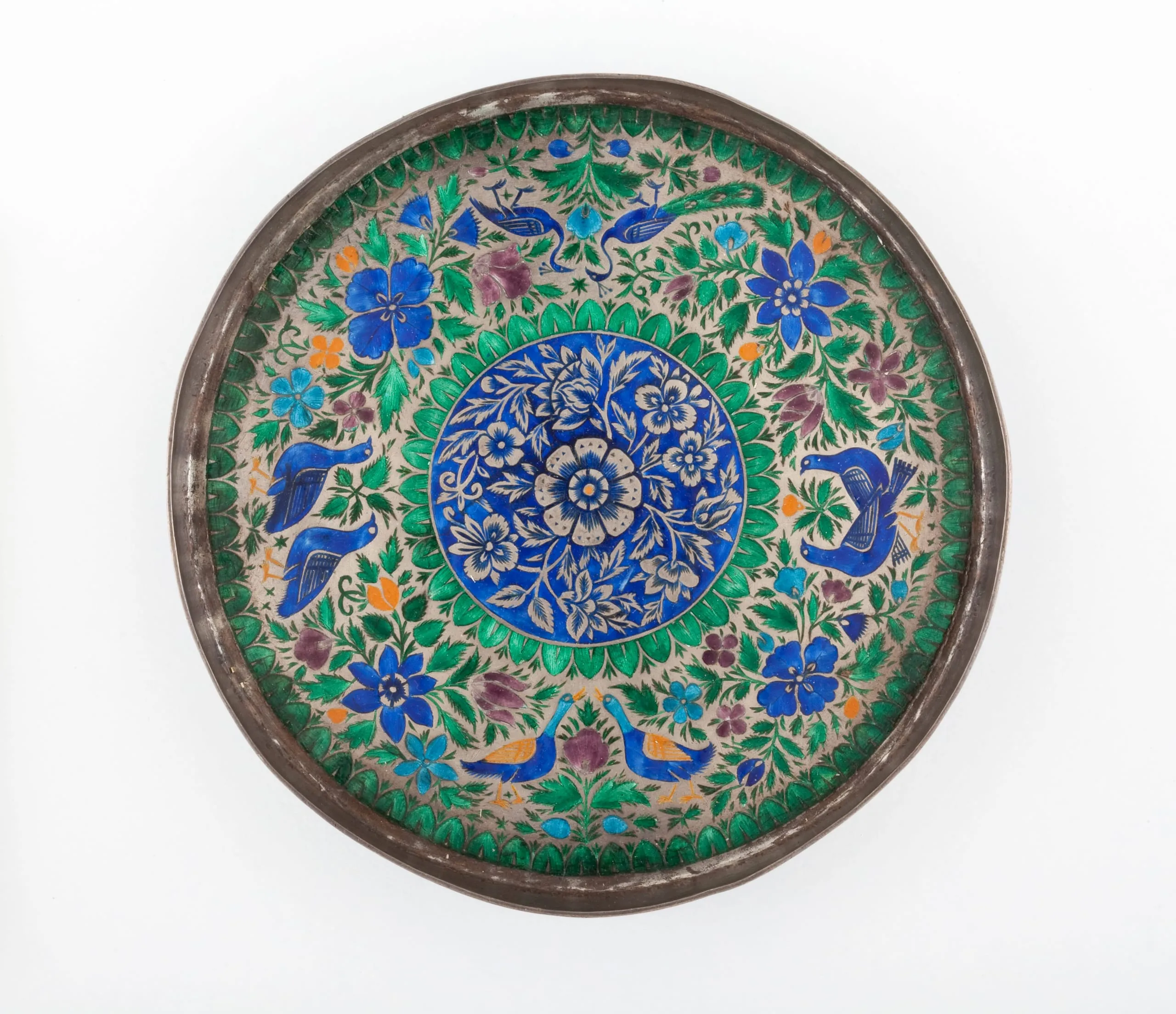
Beneath the lid’s pointed knob terminal, an exquisite field of translucent dark blue enameled and silver decoration cascades with sword-shaped leaves pointed downward and lush streamers of upside-down flowering plants with acanthus leaves and a hodgepodge of diverse blossoms. Encircling its bottom half, the principal decoration of the lid is a rich band of variegated enameled imagery of flora and fauna. At four cardinal points are diverse groups of fowl, primarily paired. A variety of flowering plants, including poppies, dianthus, and lilies, all graced with acanthus leaves of various sizes, are interspersed between these groups. There is a veritable rainbow of enamel colors, including translucent green, dark blue, light blue, and aubergine, and opaque orange, yellow, and light blue. The tray’s interior is centered with a rosette bordered by silver and translucent blue flowers. The primary adornment is a symmetrical decorative field similar to that on the lid, with paired birds—peafowl, geese, and two pairs of doves—at the cardinal points, and flowering plants.
The lid’s ogival dome evokes the architecture of its place of origin, the fabled court city of Lucknow. It compares closely in silhouette to the contemporaneous Asafi Masjid in the Bara Imambara complex, built in 1784–91 under Asaf al-Daula (r. 1775–97). The betel box is attributed to circa 1780, shortly after his accession as Nawab (Governor). Asaf al-Daula oversaw the advancement and expansion of Lucknow as Awadh’s official capital, and his extensive promotion of cultural achievements created a golden era for the arts, including enameling.