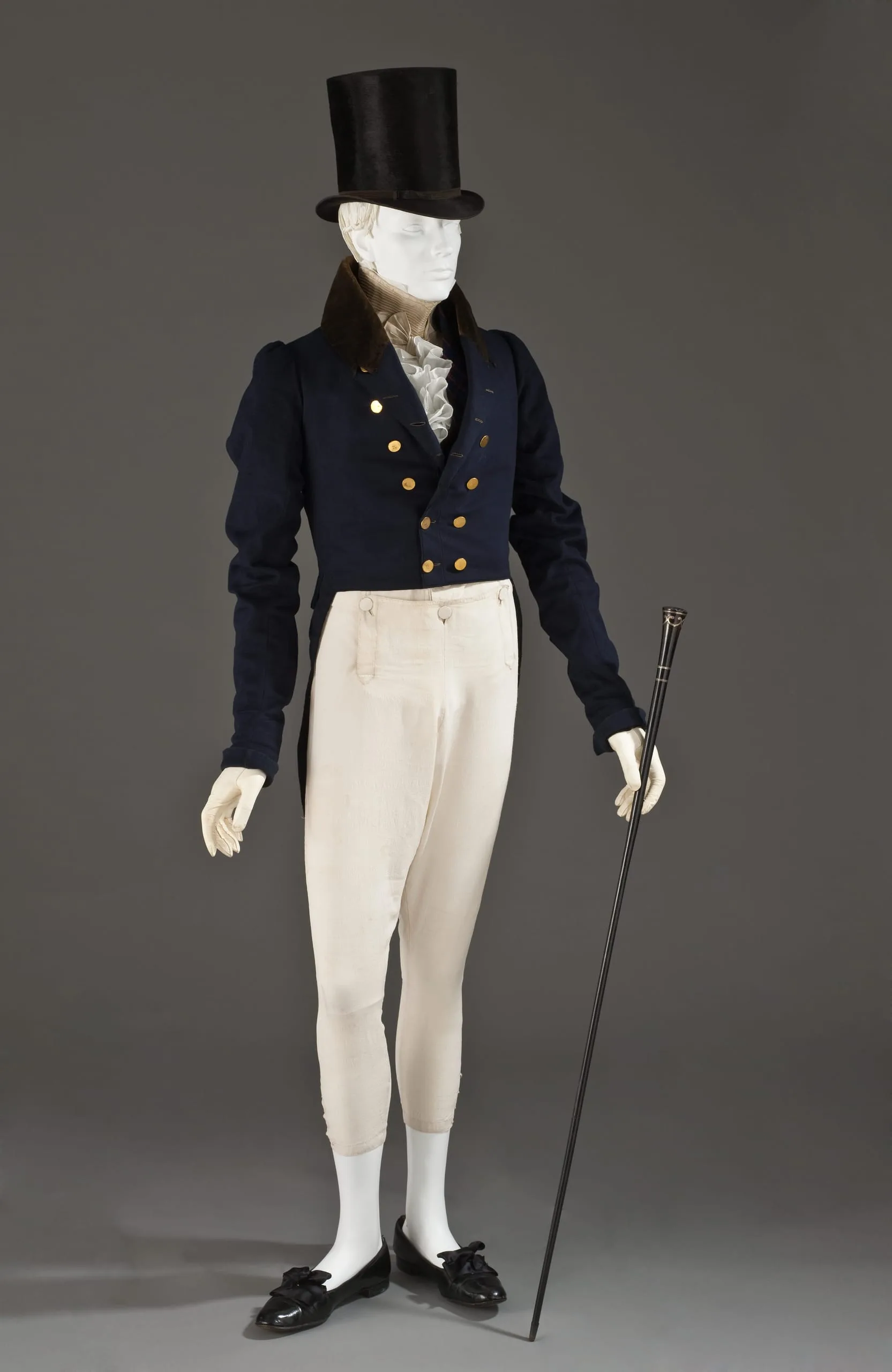
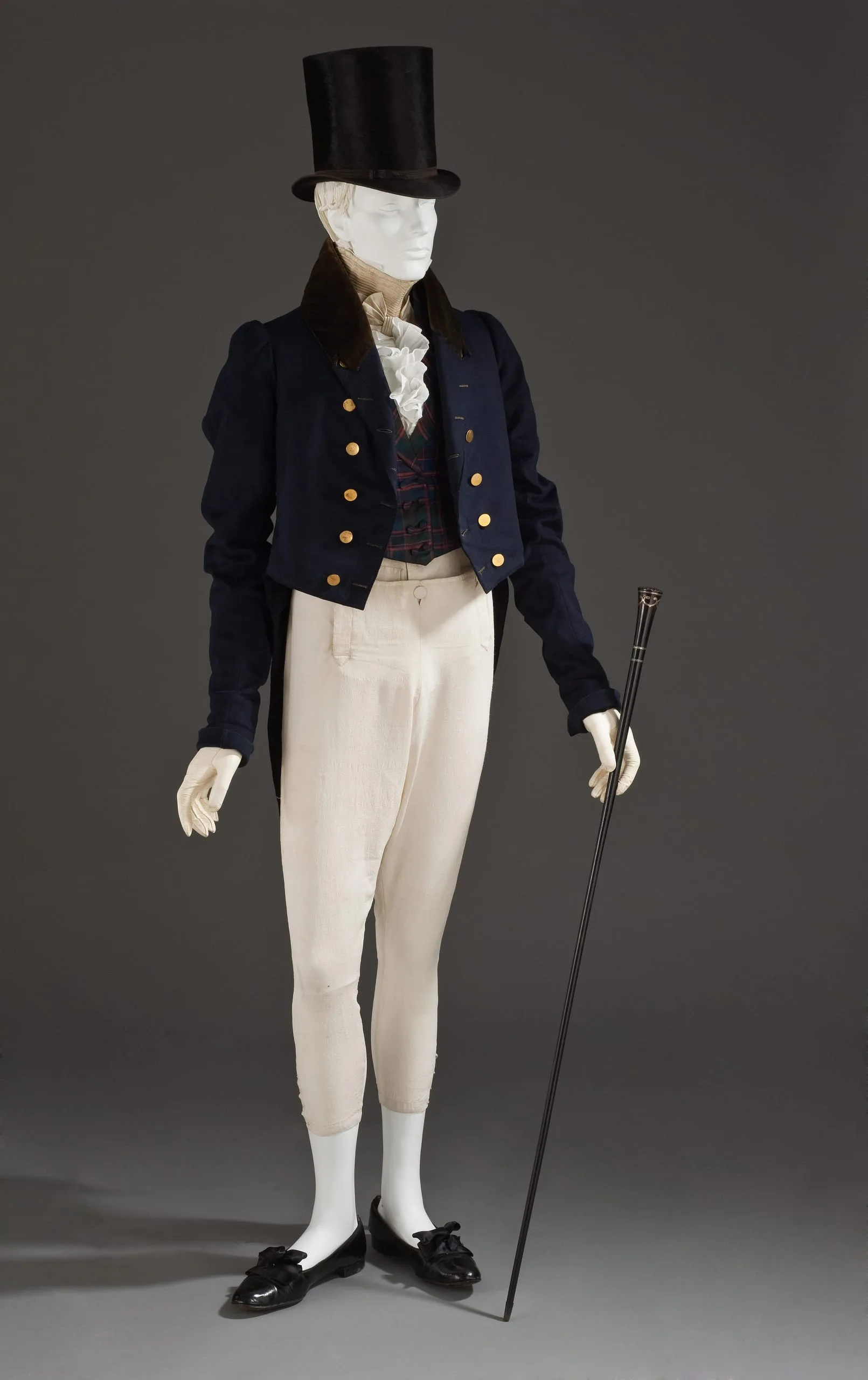
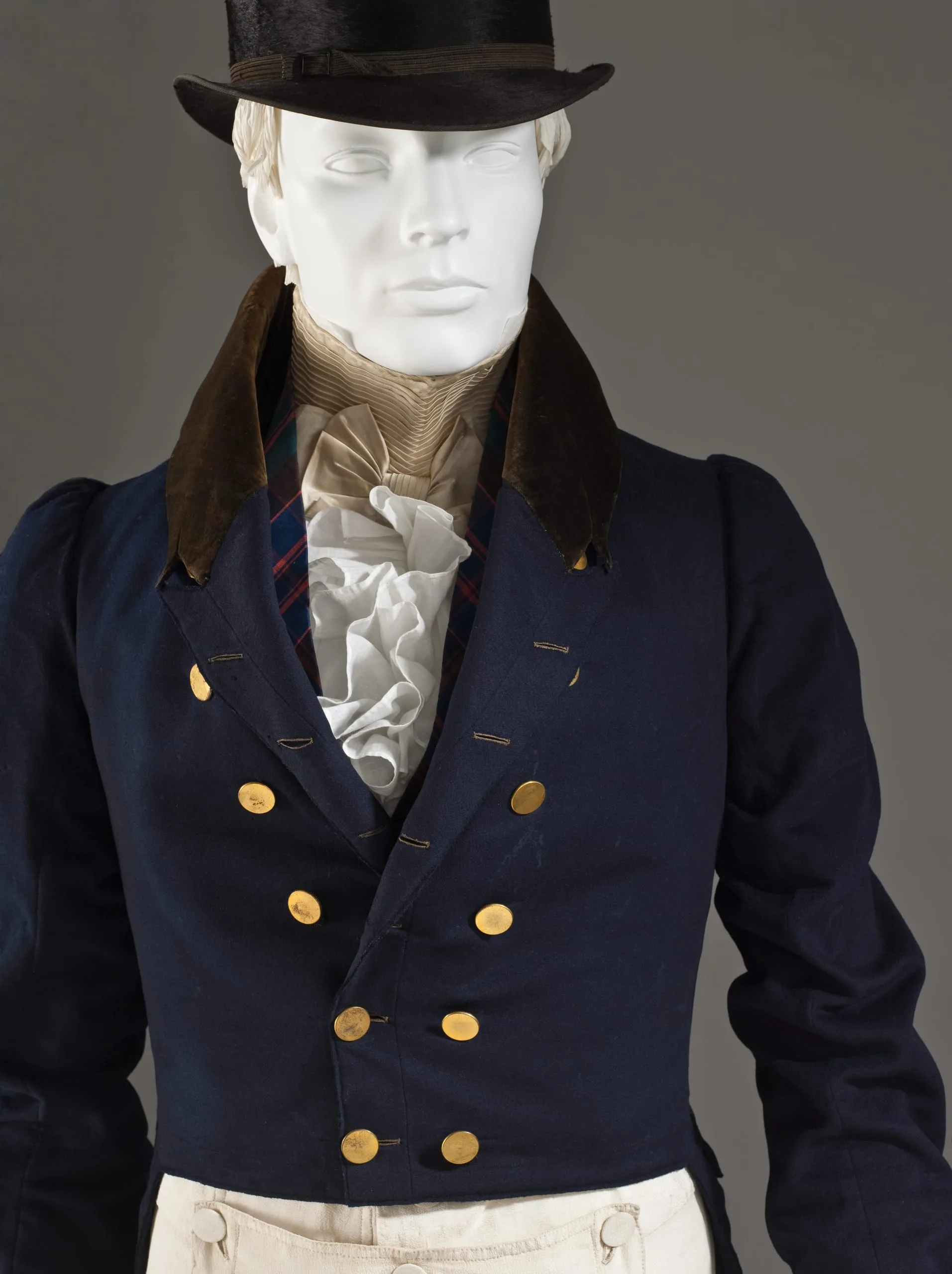
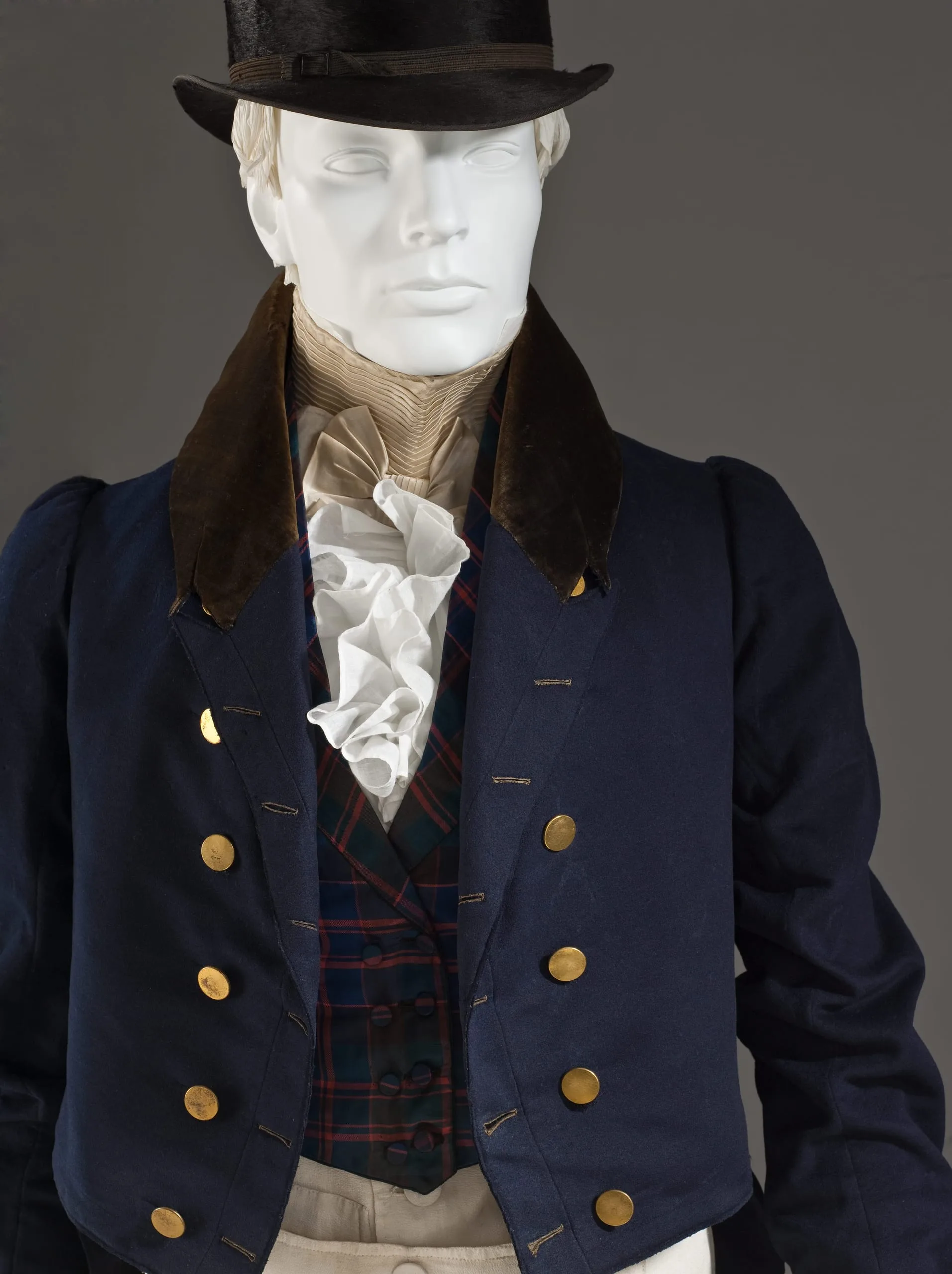
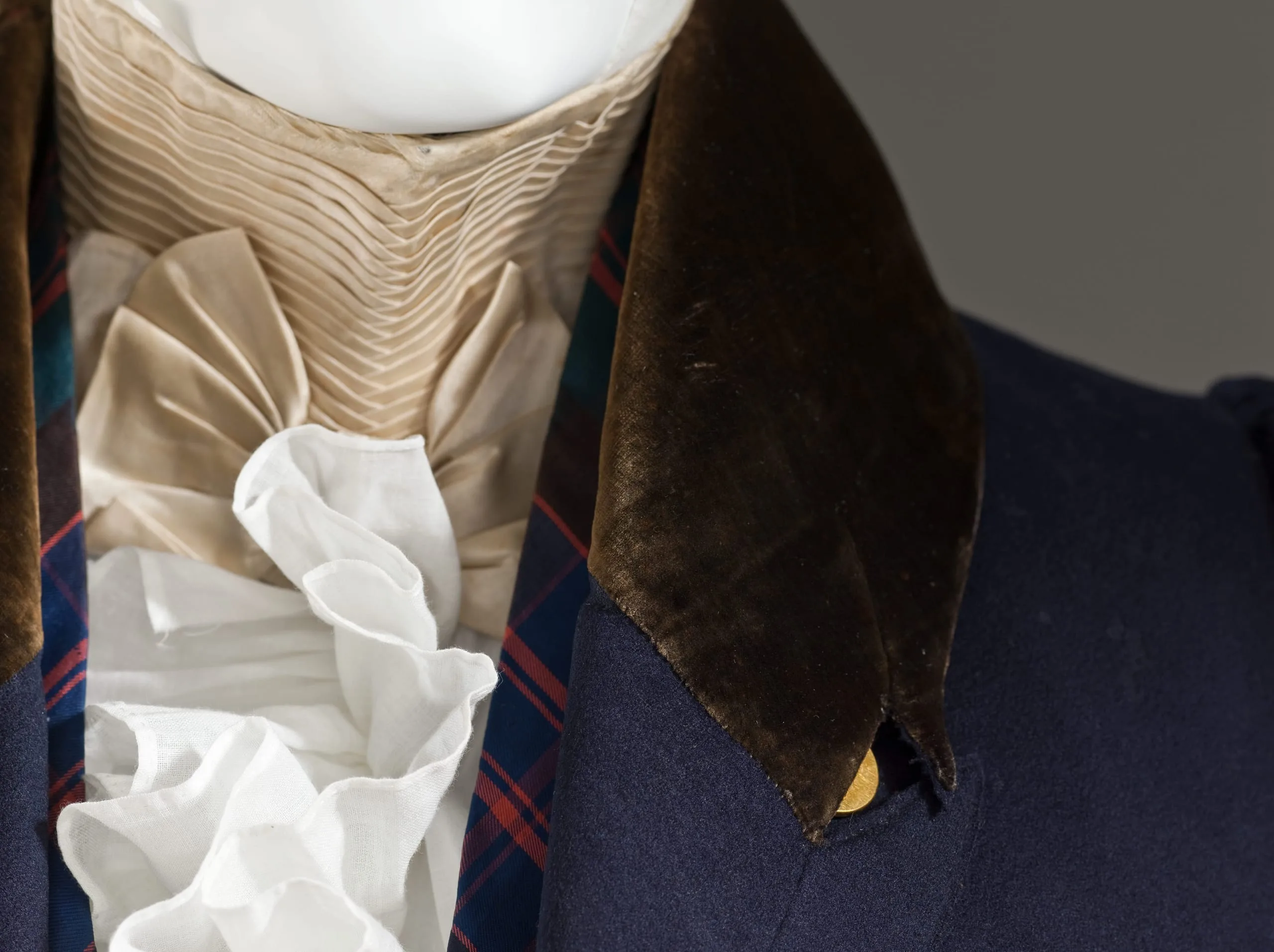
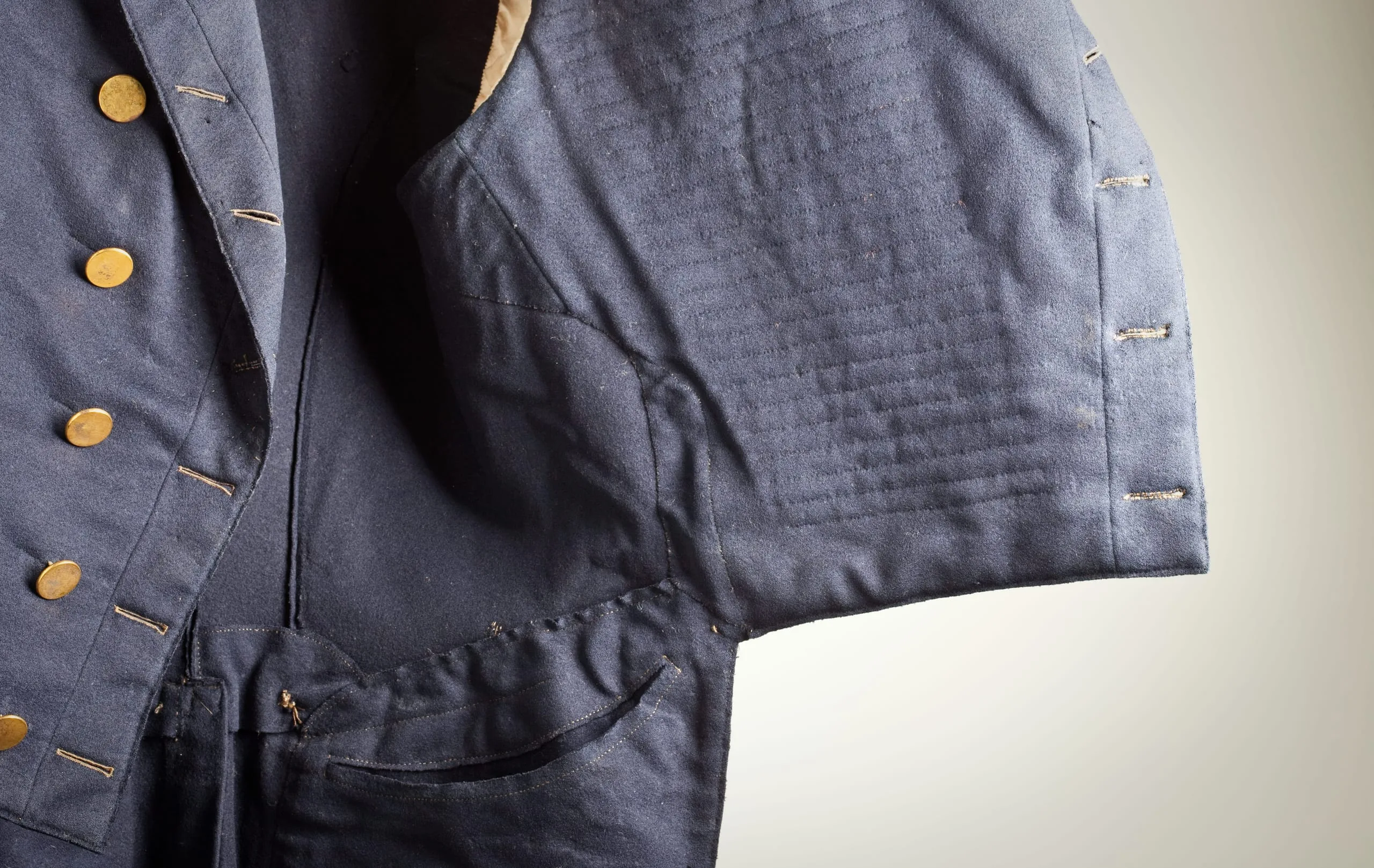
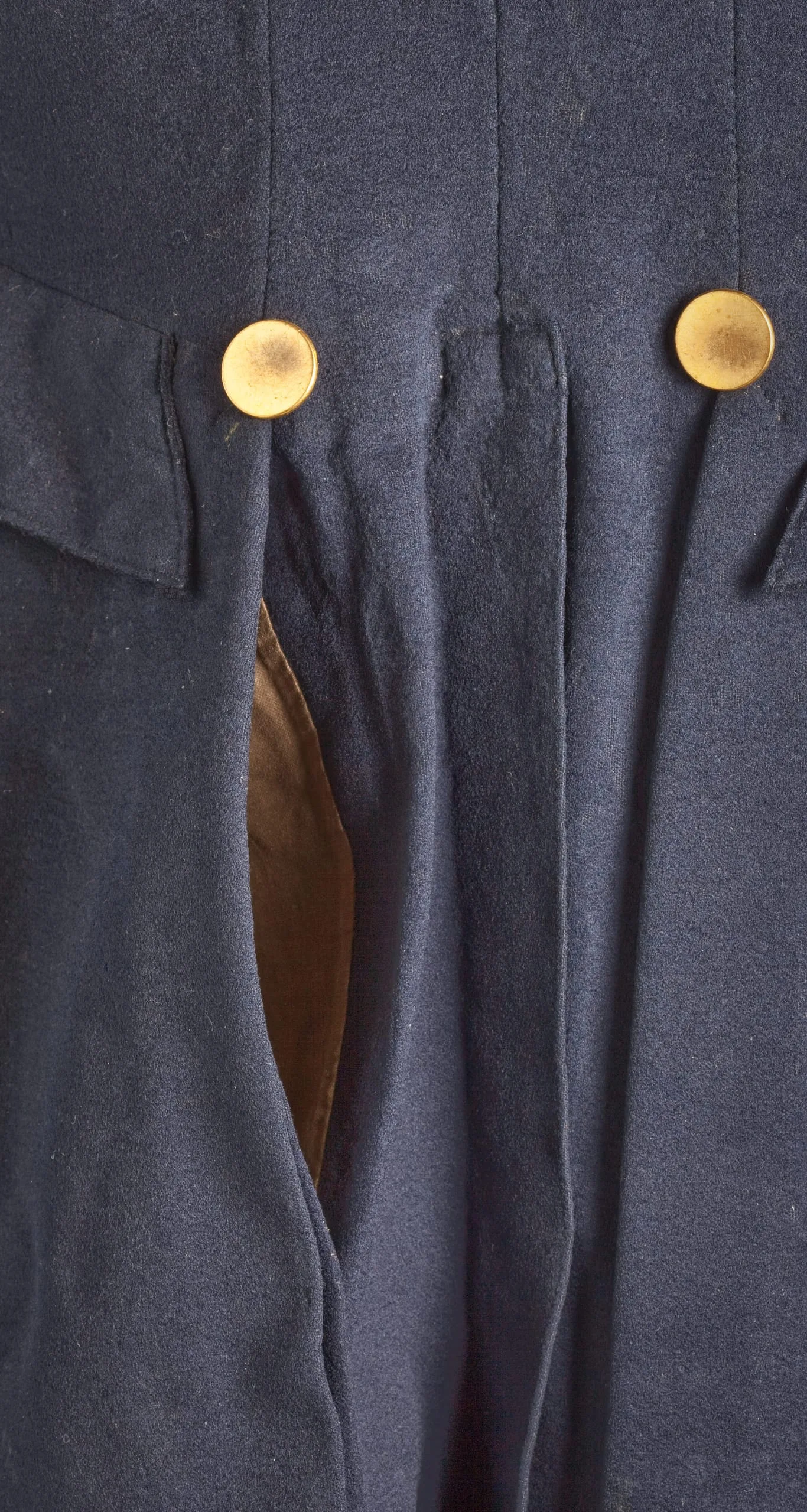
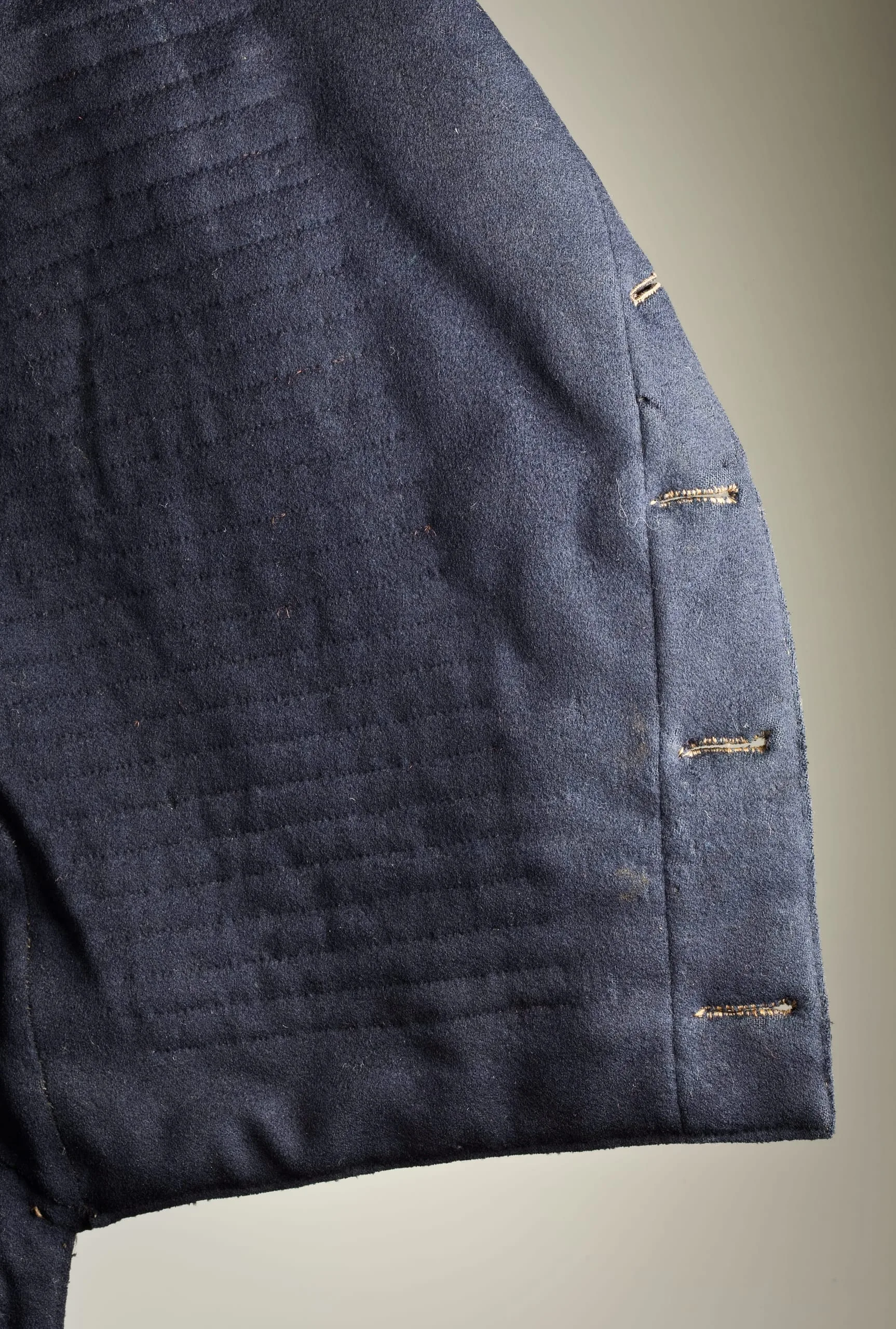
In the early nineteenth century, men’s fashions began to reflect a shift in values that favored hard work and practicality over the previous generations’ indulgence in leisure and conspicuousness. The pastel-colored silk ensembles of the eighteenth century gradually gave way to somber wool suits, most notably the tailcoat. Inspired by English country riding dress, it was cut short across the front waist with long tails at back for ease of horseback riding. Wool became the textile of choice, as it reinforced the ideals of utilitarianism and restraint in an era still coping with the aftermath of the American and French Revolutions. On a practical level, the use of wool had a significant impact on tailoring, as it allowed clothiers to pad, mold, and sculpt the tailcoat with greater ease. With a hot iron, a tailor could disguise bodily shortcomings to achieve an ideal figure for the customer. New tailoring elements assisted in constructing the desired coat silhouette: an hourglass shape with strong shoulders and chest, narrow waist, and shaped hips, as seen in this tailcoat ensemble.
The tailcoat was commonly paired with fitted silk pantaloons or wool trousers, depending on the occasion. A vest was also worn, usually made of a nonreflective woven silk or velvet and sometimes also padded to further emphasize the chest, along with a pressed linen shirt and a cravat or stock at the neck. Such an ensemble became the marker of highly prized gentility in a newly democratic period. As evidenced by the infamous dandy Beau Brummell, himself born a commoner who rose to high society, men no longer had to rely solely on title or fortune to ascend the social ladder, although they might require elegance and a good tailor.
Clarissa M. Esguerra
2024