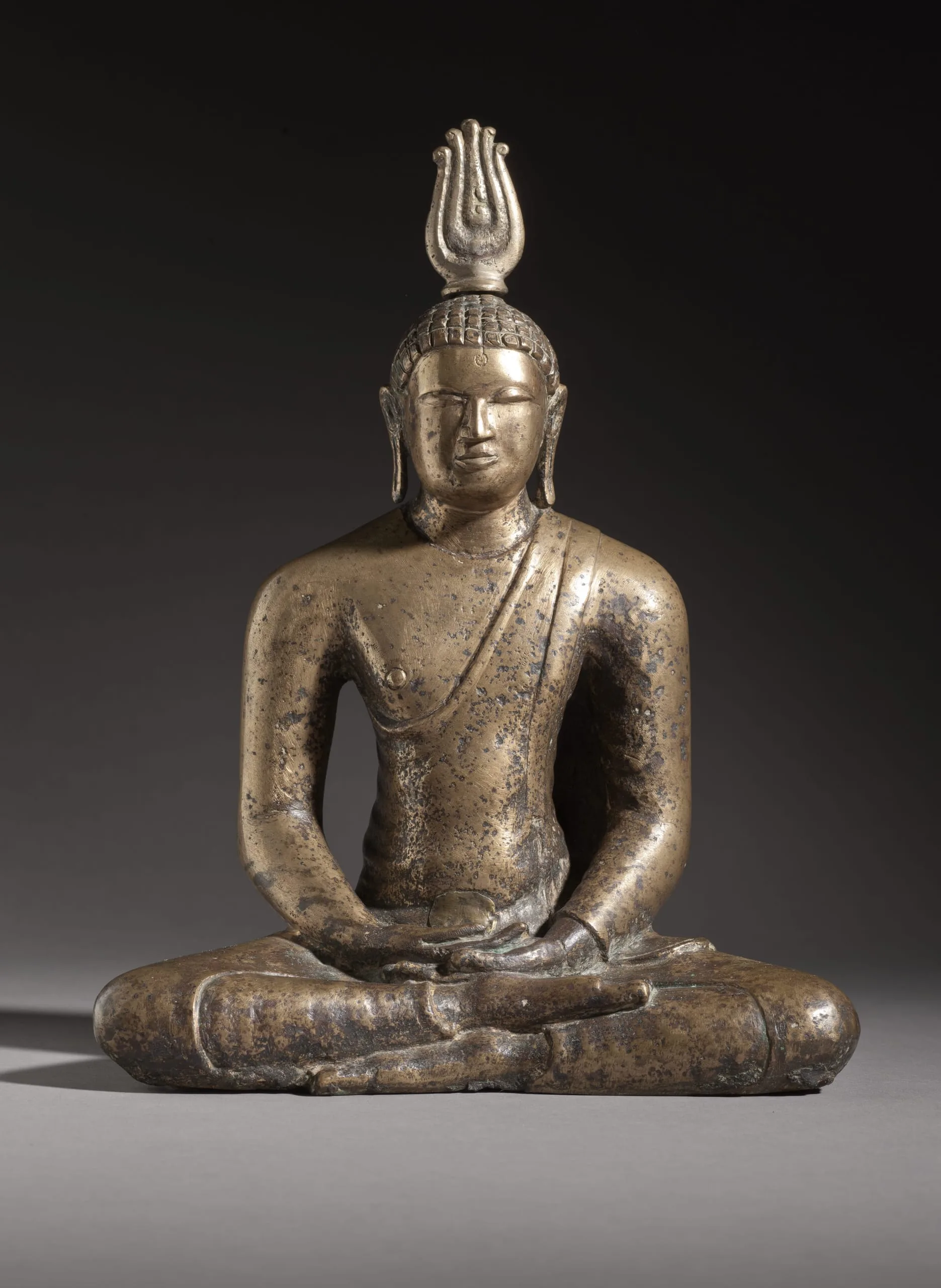
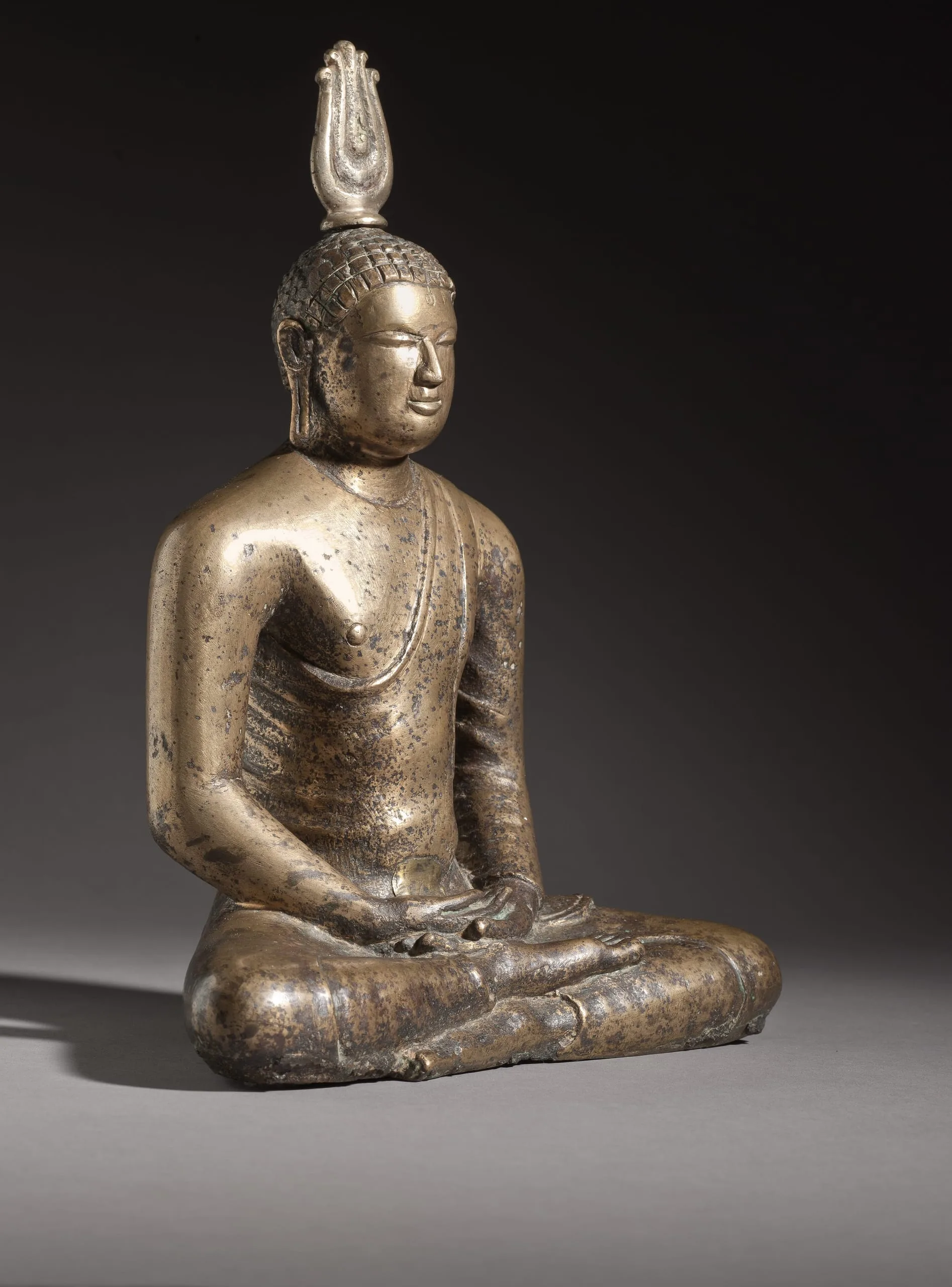
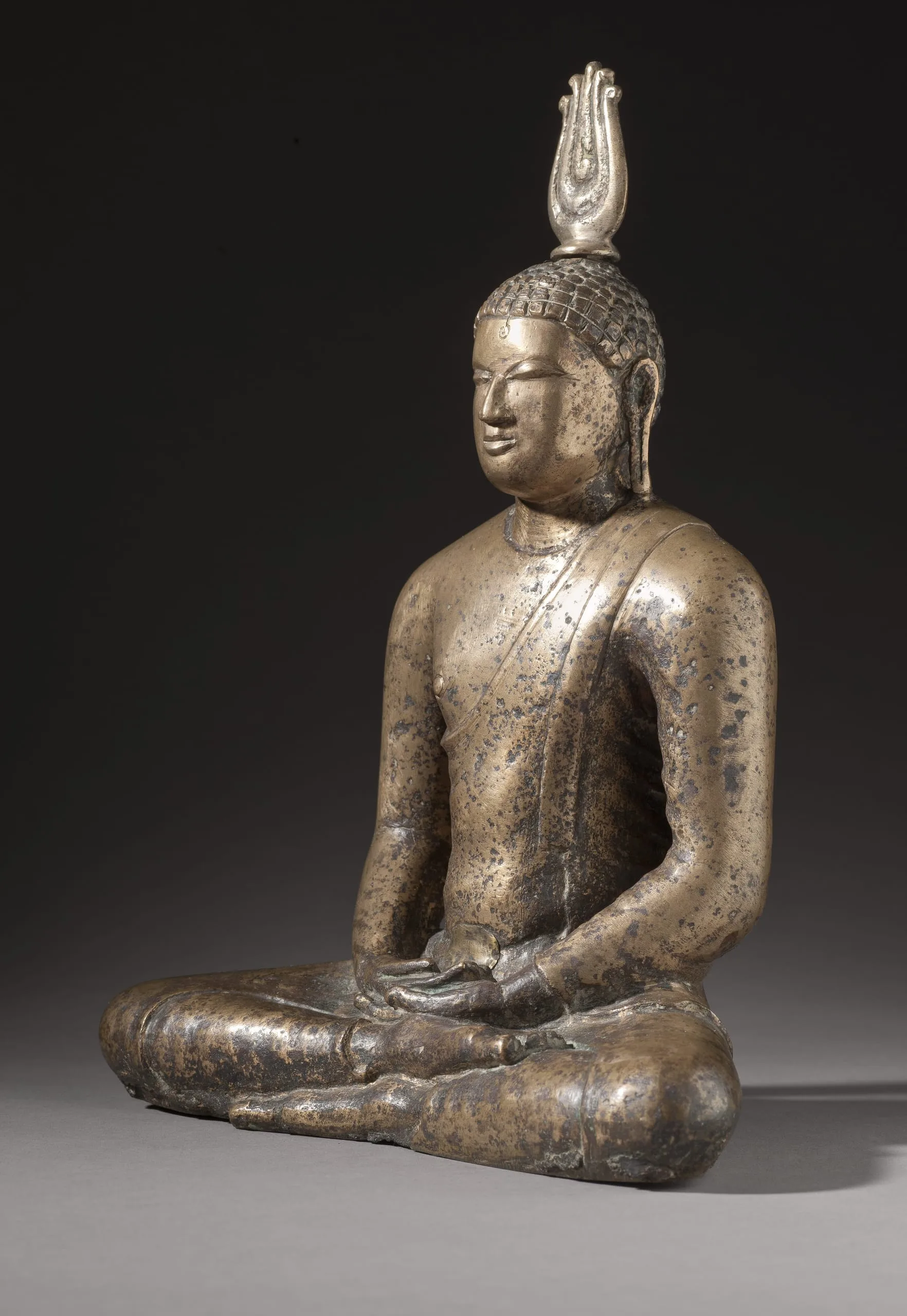
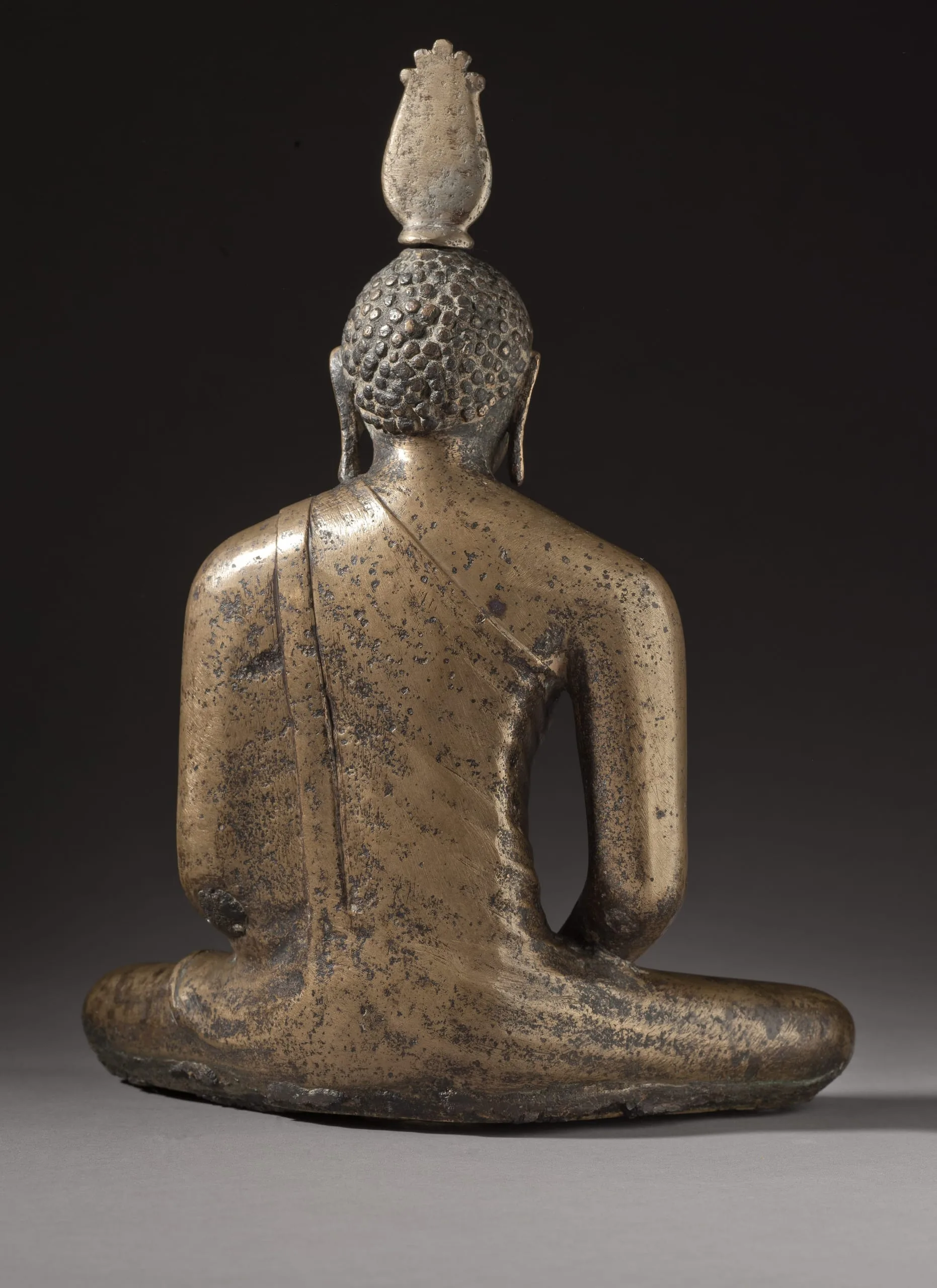
This representation of Buddha Shakyamuni epitomizes early Sri Lanka Buddha images made in the refined style associated with the Anuradhapura Kingdom (437 BCE-1017 CE) located in the north central province of modern Sri Lanka. Inspired by southern Indian Buddha images imported into Sri Lanka, stone Buddha images were made in Anuradhapura by the 4th century CE and bronze images by the 6th century CE.
The Buddha displays the standard iconographic features. He has snail-curl hair, the cranial protuberance (ushnisha) emblematic of his omniscience, elongated earlobes symbolizing his renunciation of the material world, and heavily-lidded pensive eyes conveying his compassion for all sentient beings. The incised sacred forehead marking (urna) may be a later addition done when the eyes and front hairline were re-cut due to extensive erosion caused by ritual worship with sandalwood paste and regular polishing with ash and powdered brick. (Brown 1984, p. 217, no. 101, and Dehejia 1985, p. 81, fig. 25) Another later addition is the oversize flame motif (ketumala), symbolic of the Buddha's knowledge (jñana), that forms a finial on top of the head. He sits in the meditation posture (padma asana). His two hands in his lap are in the gesture of meditation (dhyana mudra). His robe is almost transparent, marked only by the hems. The outer robe is worn over his left shoulder only.