LACMA

ShopMembershipMyLACMATickets
LACMA
Los Angeles County Museum of Art
5905 Wilshire Blvd.
Los Angeles, CA 90036
info@lacma.org
(323) 857-6000
Sign up to receive emails
Subscribe
© Museum Associates 2025

Museum Hours

Monday

11 am–6 pm

Tuesday

11 am–6 pm

Wednesday

Closed

Thursday

11 am–6 pm

Friday

11 am–8 pm

Saturday

10 am–7 pm

Sunday

10 am–7 pm


  • About LACMA
  • Jobs
  • Building LACMA
  • Host An Event
  • Unframed
  • Press
  • FAQs
  • Log in to MyLACMA
  • Privacy Policy
© Museum Associates 2025
Collections

Unknown
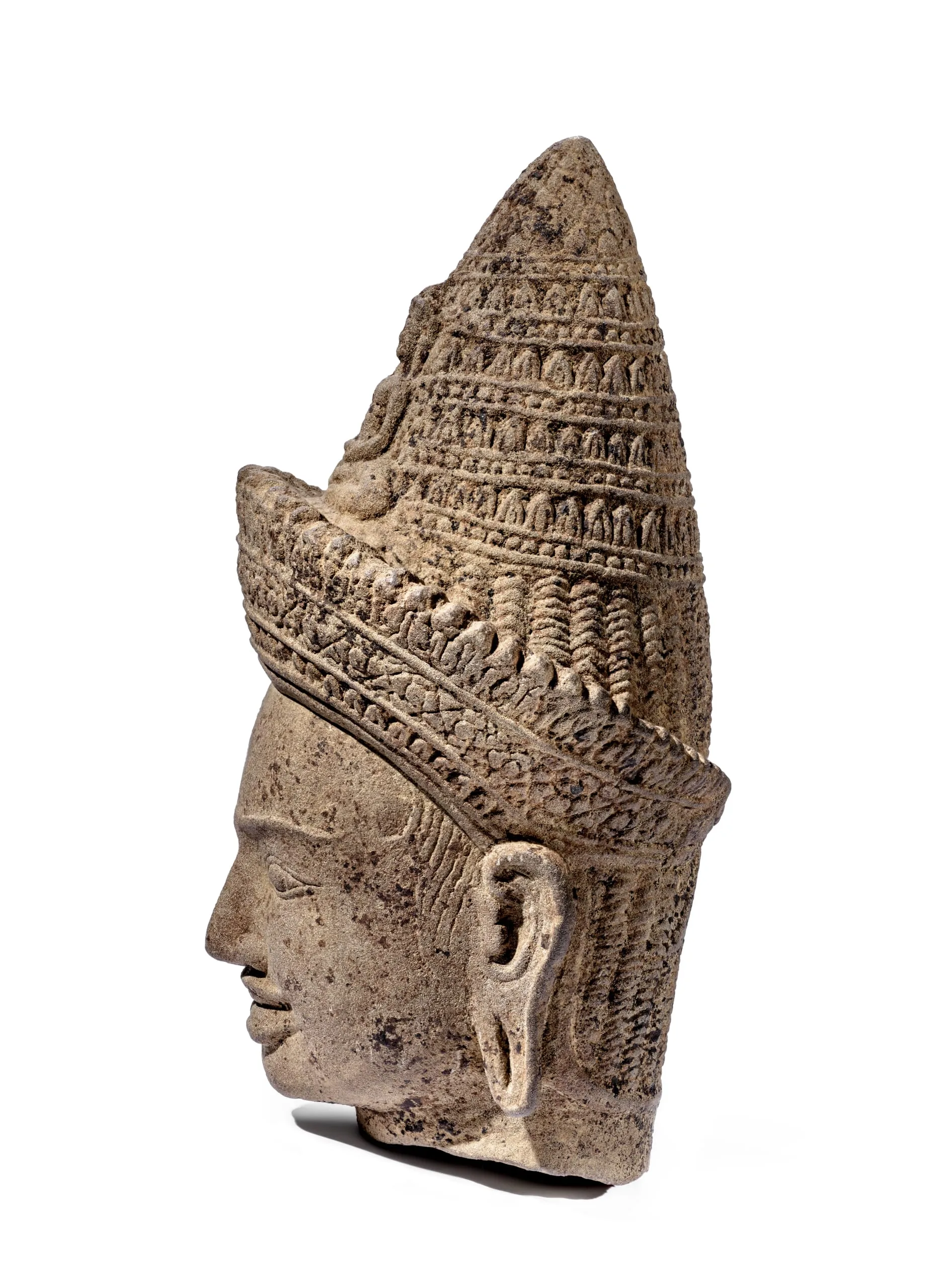
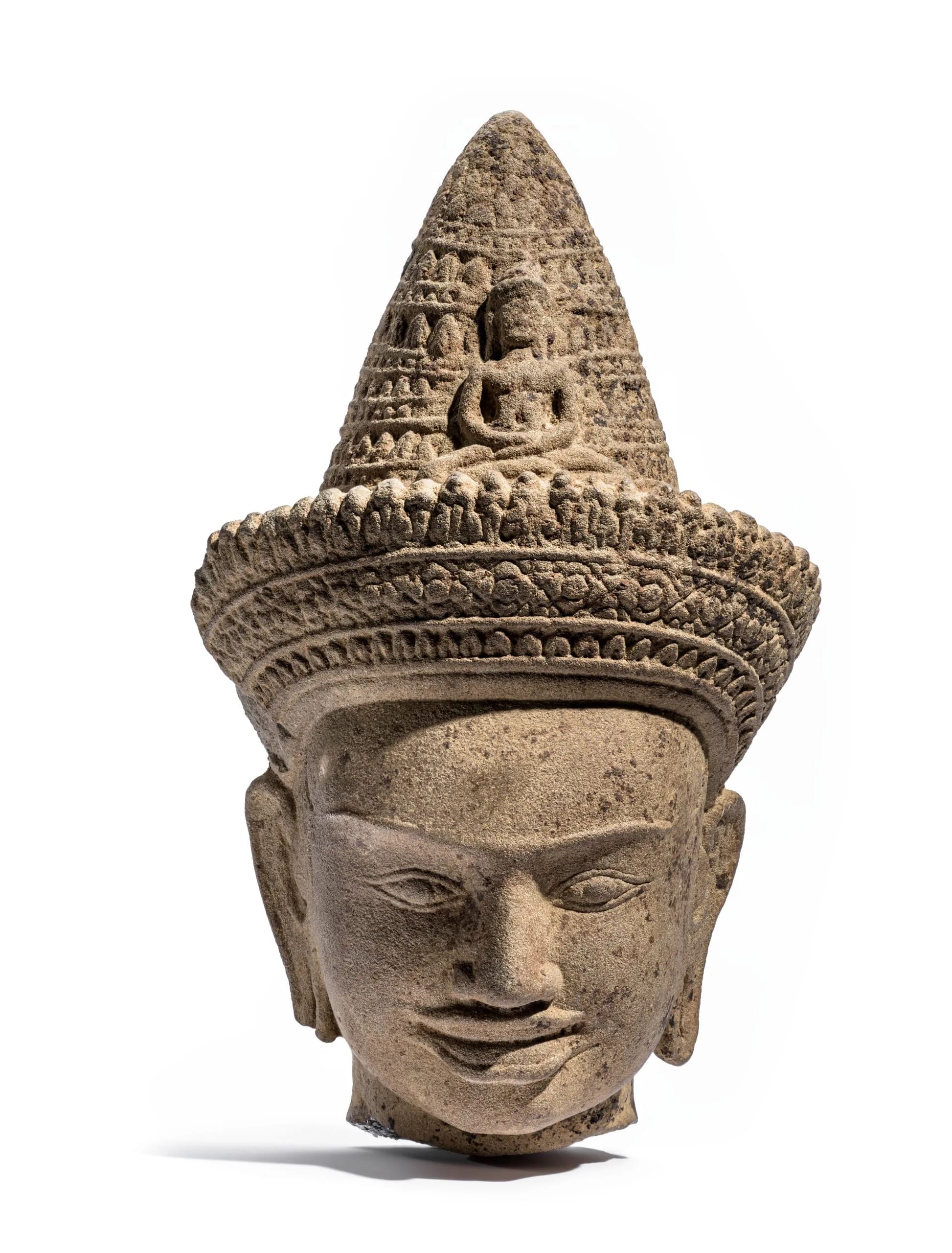
Head of Avalokiteshvara or Prajnaparamitamid-12th century or later

On view:
Resnick Pavilion, floor 1
Stone sculpture of a head with a tall, tiered conical headdress decorated with carved beads, petals, and a small seated figure in relief; sandy gray-brown stone with worn surface
Stone sculpture of a deity head in profile, wearing a tall conical mukuta crown with finely carved tiered registers of decorative motifs; smooth facial features with elongated ear, weathered gray sandstone surface.
Artist or Maker
Unknown
Title
Head of Avalokiteshvara or Prajnaparamita
Place Made
Cambodia
Date Made
mid-12th century or later
Medium
Sandstone
Dimensions
6 1/2 x 3 3/4 x 3 1/8 in. (16.51 x 9.52 x 8.04 cm)
Credit Line
Gift of Marion Hammer-Jacob
Accession Number
AC1992.282.1
Classification
Sculpture
Collecting Area
South and Southeast Asian Art
Curatorial Notes
This crisply carved sandstone head wears a diadem and has a conical headdress with an identifying small image (bimba) of the emanation source deity, which is here depicted as a Buddha seated in the meditation posture (padma asana) with his hands held in the gesture of meditation (dhyana mudra). Accordingly, this head could represent the Bodhisattva Avalokiteshvara with the Jina Buddha Amitabha in his crown, who is portrayed as here, or it could be the goddess Prajnaparamita with the Jina Buddha Akshobhya, who is sometimes represented with his hands held in the meditation gesture. Without the original body of the deity, it is difficult to ascertain who the head represents because the physiognomy of male and female deities in Cambodian sculpture of this period is virtually identical unless they are mustachioed. (Brown 2008, p. 85). This head has full lips, but no mustache.
Selected Bibliography
  • Little, Stephen, Tushara Bindu Gude, Karina Romero Blanco, Silvia Seligson, Marco Antonio Karam. Las Huellas de Buda. Ciudad de México : Instituto Nacional de Antropología e Historia, 2018.
  • Little, Stephen, and Tushara Bindu Gude. Realms of the Dharma: Buddhist Art across Asia. Los Angeles: Los Angeles County Museum of Art, 2025.