LACMA

ShopMembershipMyLACMATickets
LACMA
Los Angeles County Museum of Art
5905 Wilshire Blvd.
Los Angeles, CA 90036
info@lacma.org
(323) 857-6000
Sign up to receive emails
Subscribe
© Museum Associates 2025

Museum Hours

Monday

11 am–6 pm

Tuesday

11 am–6 pm

Wednesday

Closed

Thursday

11 am–6 pm

Friday

11 am–8 pm

Saturday

10 am–7 pm

Sunday

10 am–7 pm


  • About LACMA
  • Jobs
  • Building LACMA
  • Host An Event
  • Unframed
  • Press
  • FAQs
  • Log in to MyLACMA
  • Privacy Policy
© Museum Associates 2025
Collections

Unknown
Hookah Basecirca 1725-1775

Not on view
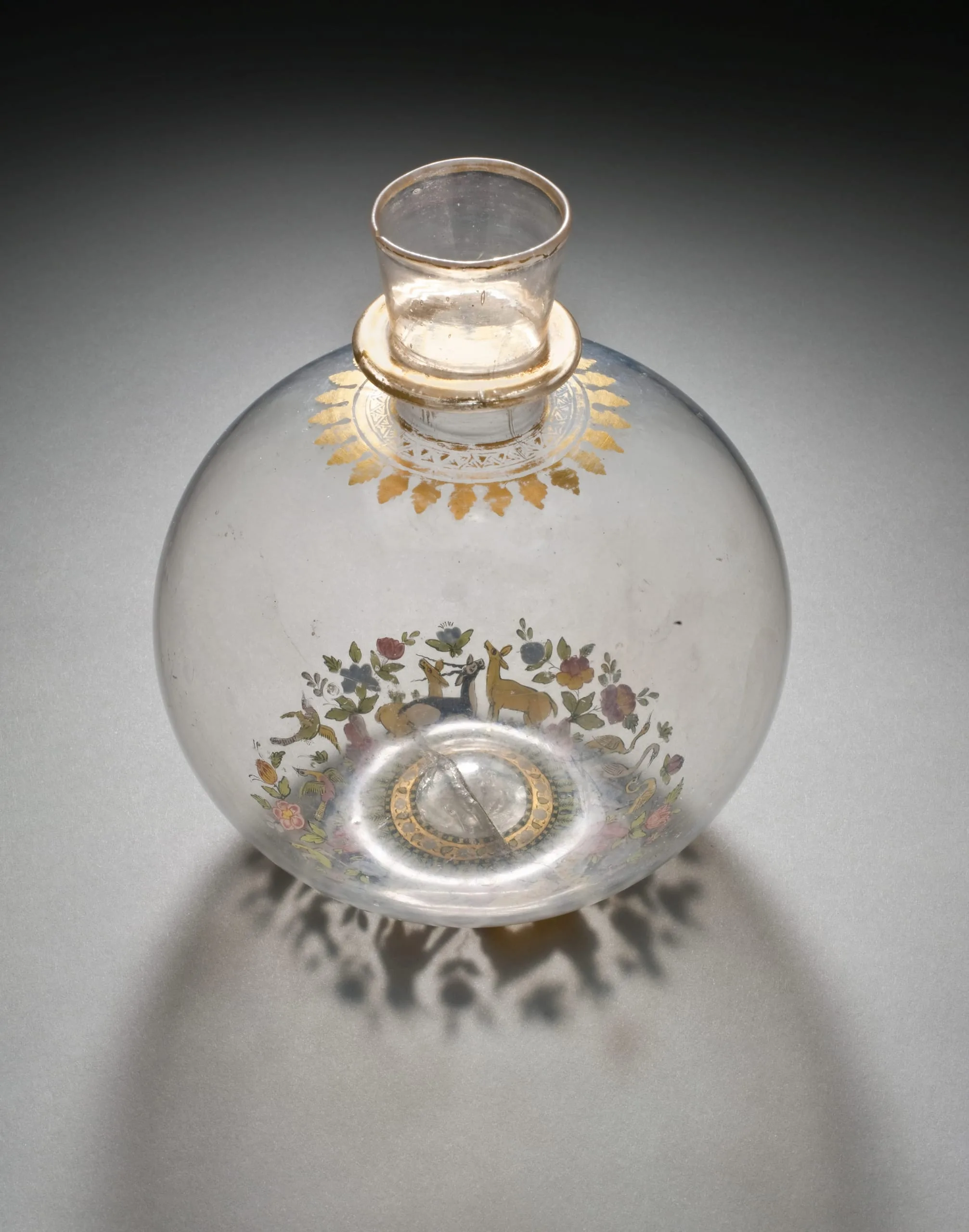
Clear glass spherical flask with a short cylindrical neck, decorated with gold leaf motifs at the collar and polychrome enamel flowers and deer around the body
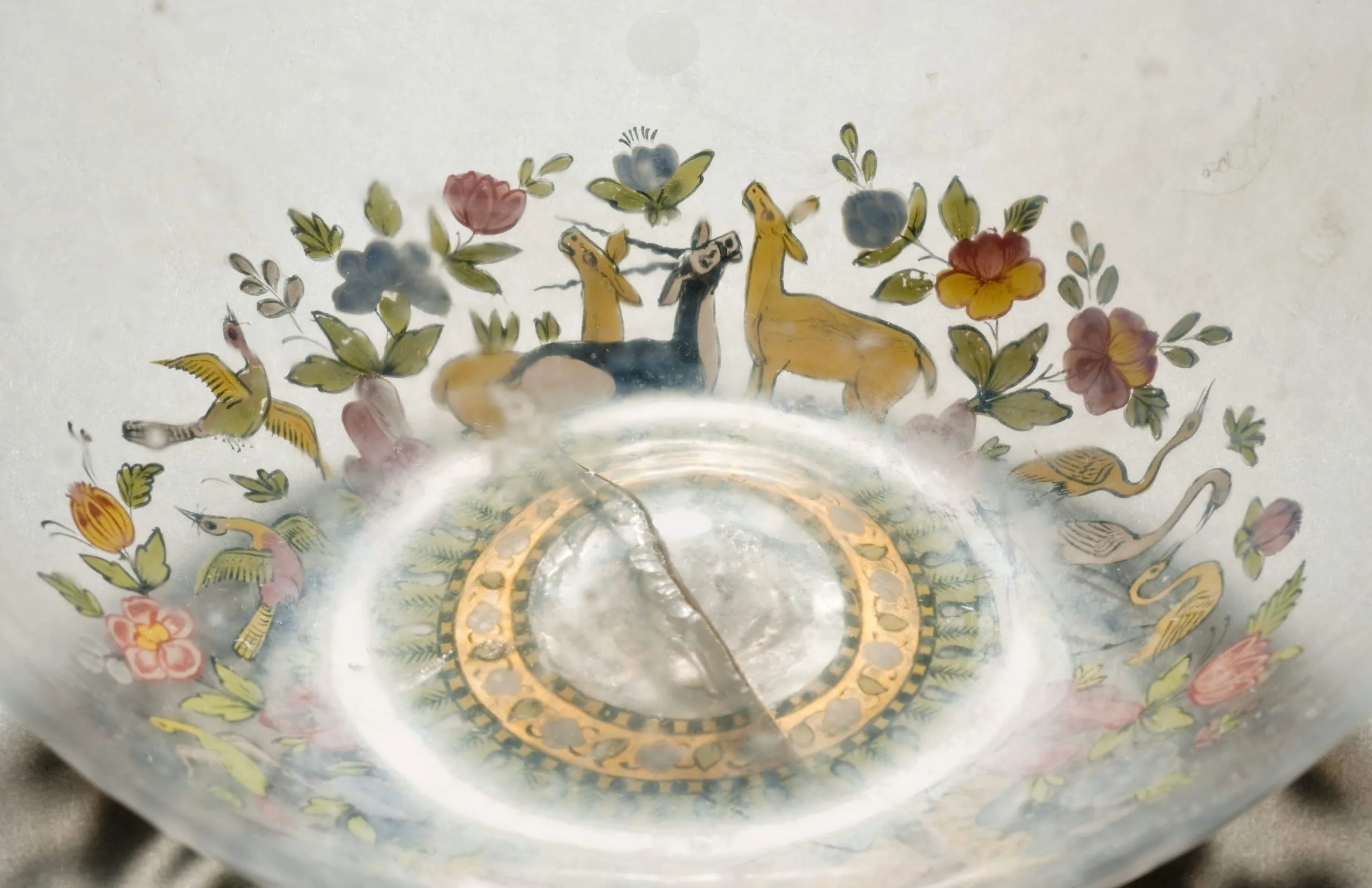
Glass bowl viewed from above, interior decorated with polychrome enamel painting of deer, cranes, and other birds among flowering branches in pink, green, and yellow; gilt concentric ring pattern at center with a small sculptural fish form.
Artist or Maker
Unknown
Title
Hookah Base
Place Made
India, Uttar Pradesh, Awadh, Lucknow or Bengal
Date Made
circa 1725-1775
Medium
Clear glass with polychrome enamel and gilding
Dimensions
7 1/8 x 6 1/4 in. (18.1 x 15.88 cm)
Credit Line
From the Nasli and Alice Heeramaneck Collection, Museum Associates Purchase
Accession Number
M.76.2.21
Classification
Tools and Equipment
Collecting Area
South and Southeast Asian Art
Curatorial Notes

This intricately decorated glass hookah base is an early example of Indian reverse painting on glass from Lucknow. The use of the distinctive technique was likely inspired by European and East Asian reverse painting on glass, which flourished from the mid-18th to the early 19th century and would have circulated in the cosmopolitan milieu of the Lucknow court and society. The heyday of the technique’s use in South Asia was in the mid-19th through the early 20th century in southern India.

The clear glass vessel is unadorned apart for two balancing areas of enameling and gilding that ring the exterior base and shoulder of the body respectively. The primary decoration, meant to be viewed from the inside, is an animated scene of antelopes, birds, swans, and a tiger seemingly cavorting around a forest pond (formed by the convex kick of the base). Disproportionately large lotus flowers growing out of rock formations are interspersed amidst the wildlife. The vignette’s groundline is formed by a decorative band of indeterminate foliage. A lotus scroll serves as the innermost border encircling the kick. The shoulder has a gilded band of interlocking triangular motifs and pendant acanthus leaves. The rim of the mouth is gilded.

The delicate flora and fauna decoration relate closely to the perching birds on flowering branches and meandering ground lines that is a frequent pictorial convention found in the borders of contemporaneous album paintings from Lucknow.
Selected Bibliography
  • Desjardins, Tara. Mughal Glass: a History of Glassmaking in India. New Delhi: Roli Books, 2024.