LACMA

ShopMembershipMyLACMATickets
LACMA
Los Angeles County Museum of Art
5905 Wilshire Blvd.
Los Angeles, CA 90036
info@lacma.org
(323) 857-6000
Sign up to receive emails
Subscribe
© Museum Associates 2025

Museum Hours

Monday

11 am–6 pm

Tuesday

11 am–6 pm

Wednesday

Closed

Thursday

11 am–6 pm

Friday

11 am–8 pm

Saturday

10 am–7 pm

Sunday

10 am–7 pm


  • About LACMA
  • Jobs
  • Building LACMA
  • Host An Event
  • Unframed
  • Press
  • FAQs
  • Log in to MyLACMA
  • Privacy Policy
© Museum Associates 2025
Collections

Unknown
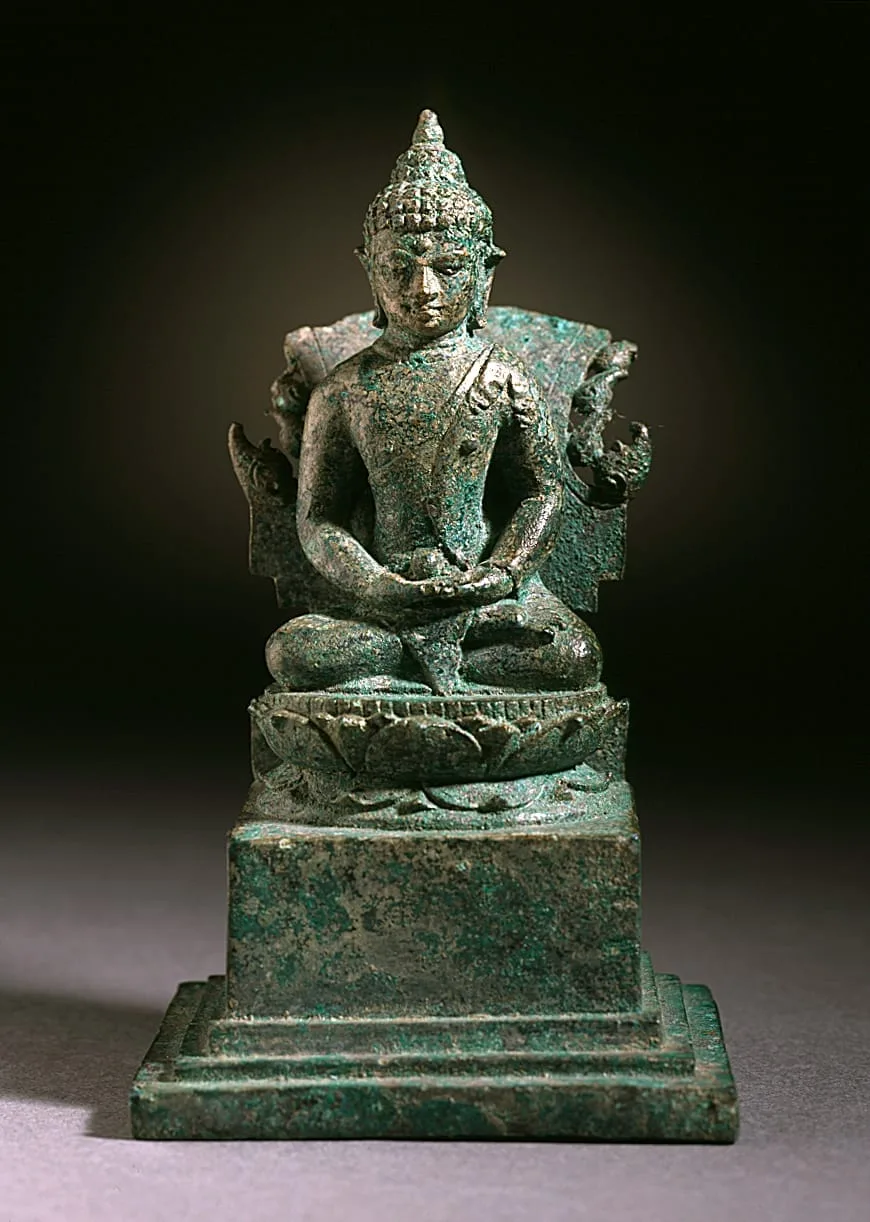
Amitabha, The Jina Buddha of Infinite Lightcirca 900-950

On view:
Resnick Pavilion, floor 1
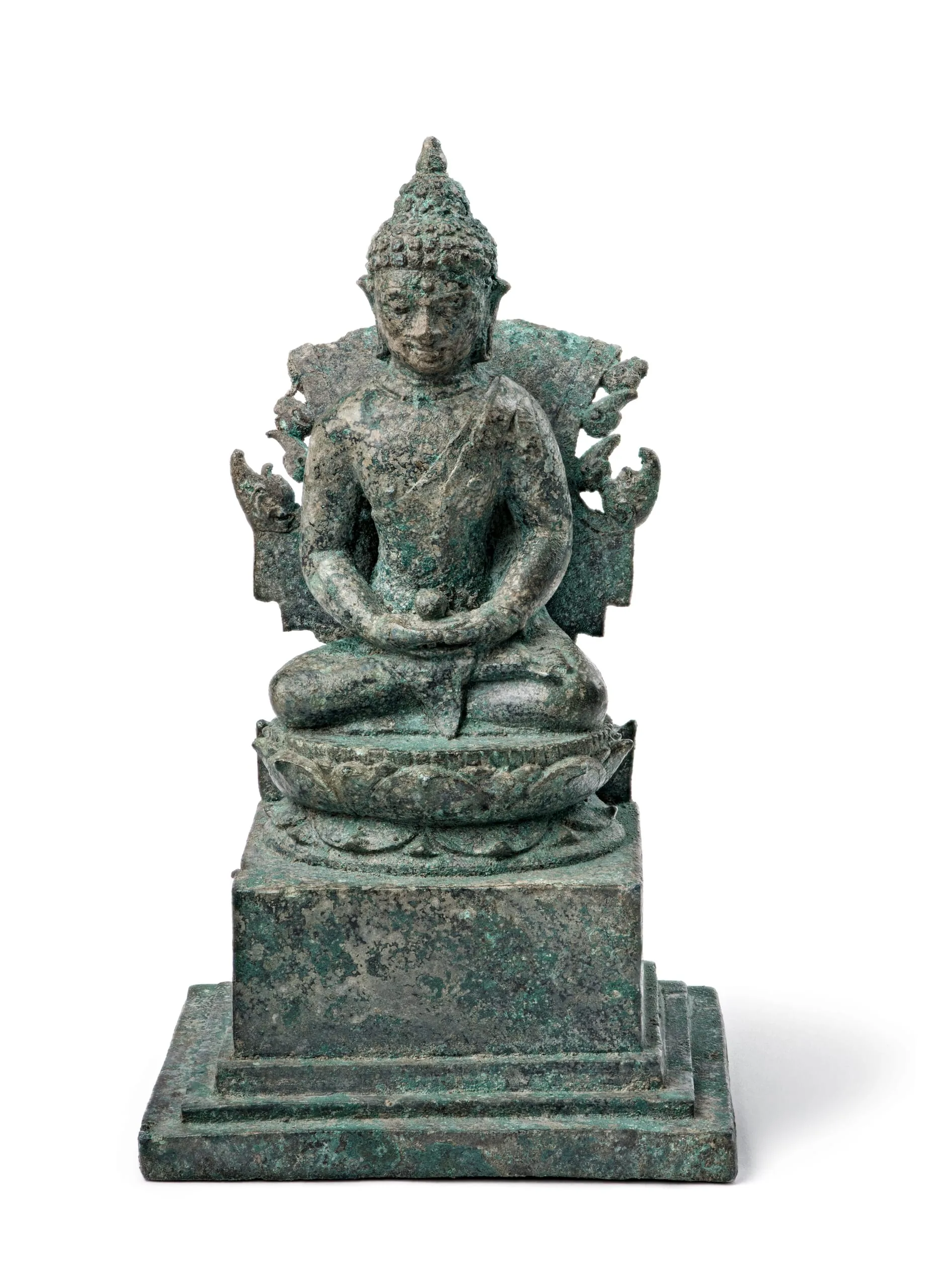
Small bronze sculpture of a seated cross-legged figure with a flame-shaped crown, on a tiered lotus and stepped rectangular pedestal, covered in green-teal patina
Small bronze sculpture of a seated Buddha figure in meditation posture on a tiered lotus throne and stepped pedestal, with a foliate backrest, conical ushnisha, and heavily patinated green surface.
Artist or Maker
Unknown
Title
Amitabha, The Jina Buddha of Infinite Light
Place Made
Indonesia, Central Java
Date Made
circa 900-950
Medium
Copper alloy
Dimensions
4 3/8 x 2 5/8 x 2 1/8 in. (11.1 x 6.7 x 5.4 cm)
Credit Line
Gift of Daniel Ostroff
Accession Number
AC1992.261.1
Classification
Sculpture
Collecting Area
South and Southeast Asian Art
Curatorial Notes
Although previously identified tentatively as the Medicine Buddha Bhaishajyaguru, this sculpture more likely represents Amitabha, the Jina Buddha of Infinite Light on the basis of its iconography. Both deities are frequently represented holding a bowl (patra) in their lap, with Amitabha’s vessel being a begging bowl and Bhaishajyaguru’s container being a medicine bowl.
Both deities display the gesture of meditation (dhyana mudra), but Amitabha has both hands in his lap holding the bowl, whereas Bhaishajyaguru has only his left hand in his lap holding the bowl and typically holds a myrobalan fruit in his right hand. Otherwise, this image has the standard iconographic features shared by both deities and often Buddha Shakyamuni: snail-curl hair, cranial protuberance (ushnisha) emblematic of his omniscience, elongated earlobes symbolizing his renunciation of the material world, sacred forehead marking (urna), and a monk’s robe (sanghati). He is seated on a lotus base in the meditation posture (padma asana) in front of a now-damaged throneback. See also M.77.19.12, M.77.19.13, M.80.228.3, and M.2005.108.1.
Selected Bibliography
  • Little, Stephen, Tushara Bindu Gude, Karina Romero Blanco, Silvia Seligson, Marco Antonio Karam. Las Huellas de Buda. Ciudad de México : Instituto Nacional de Antropología e Historia, 2018.
  • Little, Stephen, and Tushara Bindu Gude. Realms of the Dharma: Buddhist Art across Asia. Los Angeles: Los Angeles County Museum of Art, 2025.