LACMA

ShopMembershipMyLACMATickets
LACMA
Los Angeles County Museum of Art
5905 Wilshire Blvd.
Los Angeles, CA 90036
info@lacma.org
(323) 857-6000
Sign up to receive emails
Subscribe
© Museum Associates 2025

Museum Hours

Monday

11 am–6 pm

Tuesday

11 am–6 pm

Wednesday

Closed

Thursday

11 am–6 pm

Friday

11 am–8 pm

Saturday

10 am–7 pm

Sunday

10 am–7 pm


  • About LACMA
  • Jobs
  • Building LACMA
  • Host An Event
  • Unframed
  • Press
  • FAQs
  • Log in to MyLACMA
  • Privacy Policy
© Museum Associates 2025
Collections

Unknown
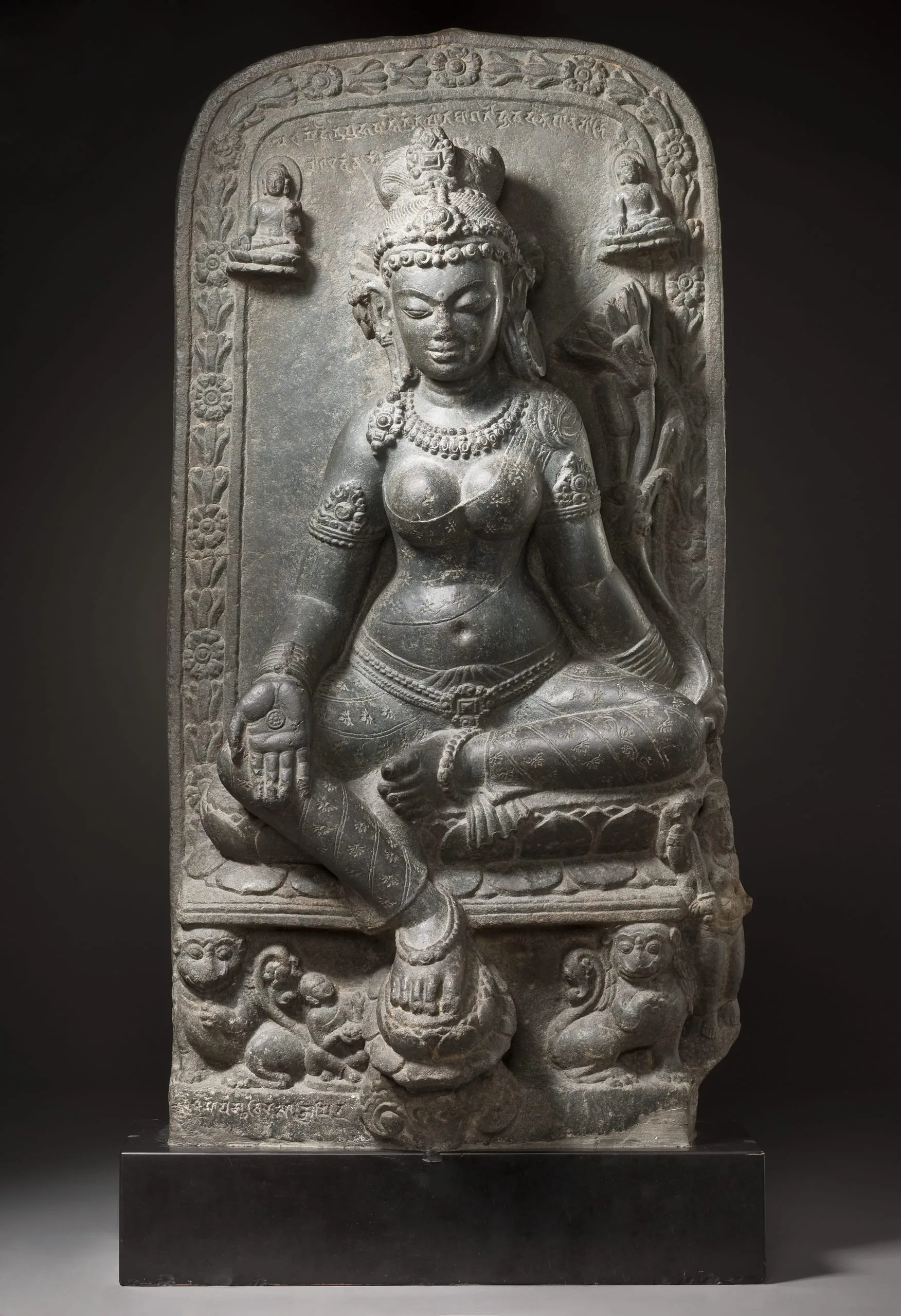
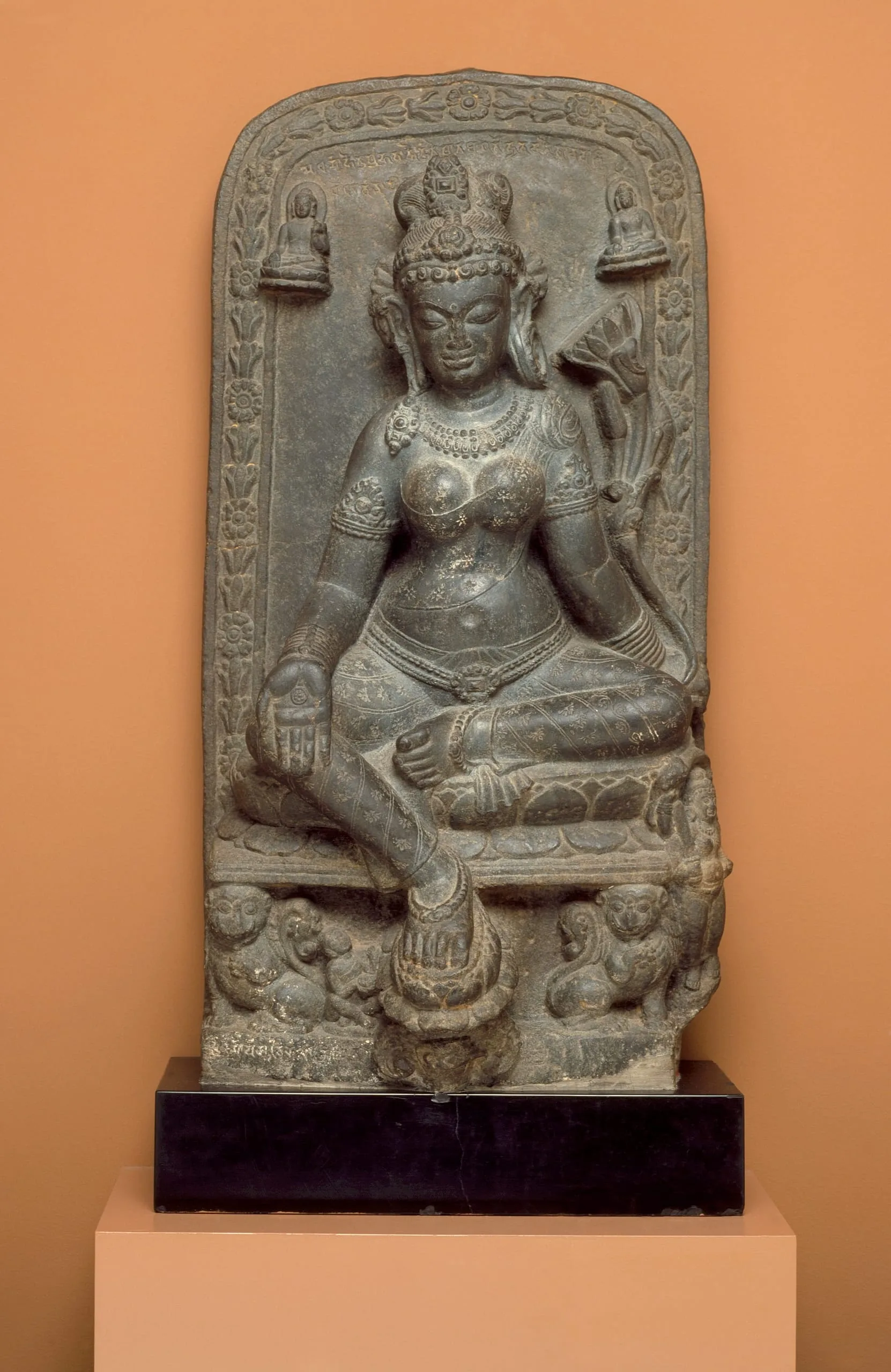
The Buddhist Goddess Green (Shyama) Tara9th century

Not on view
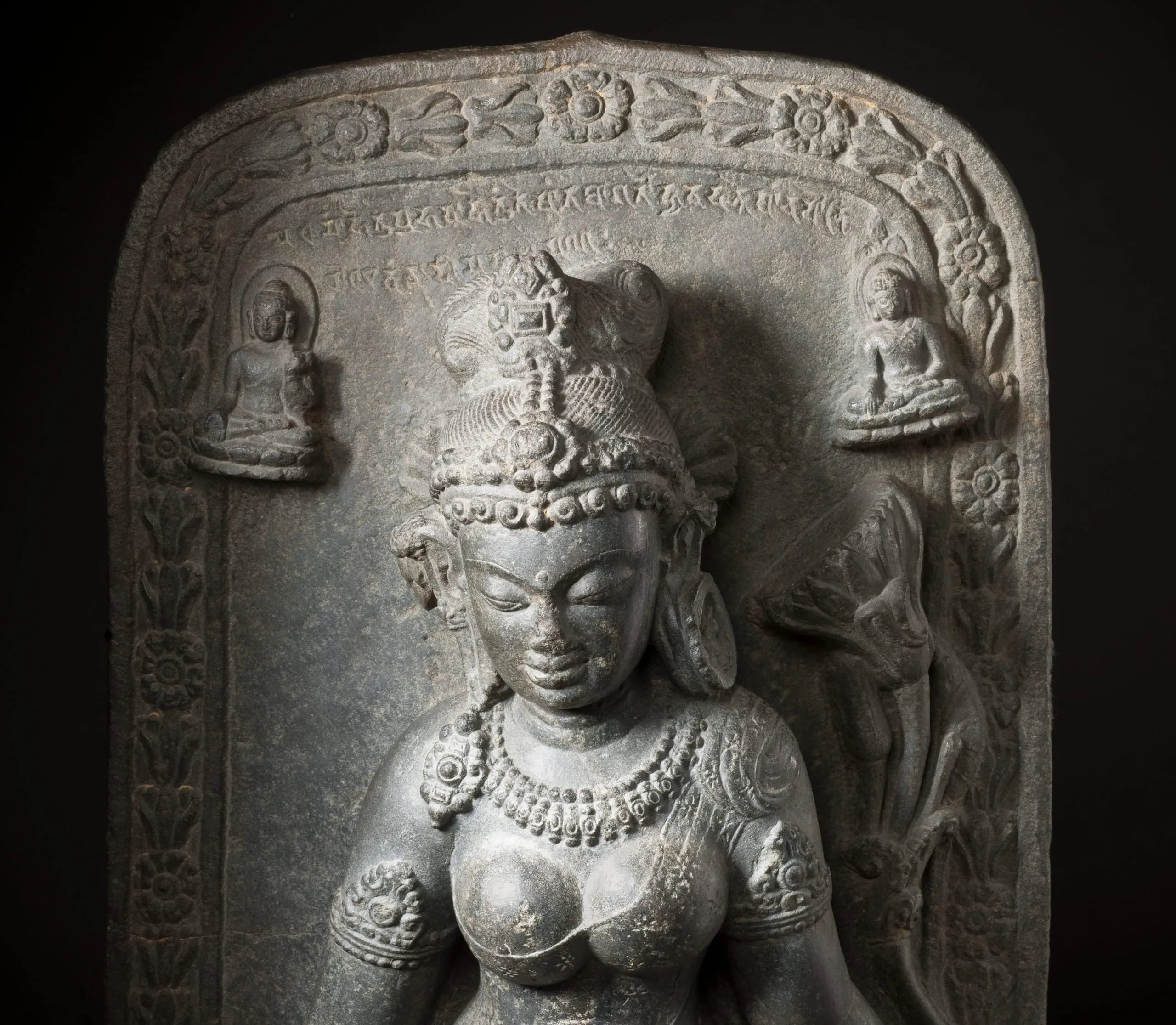
Dark gray stone relief sculpture of a seated female deity in lalitasana pose, wearing elaborate jewelry and crown, with carved arch border, small flanking figures, and inscribed text
Gray stone stele depicting a seated female deity in lalitasana pose, adorned with elaborate jewelry, crown, and draped garments. Flanking figures and a floral border frame the rounded arch above; smaller divine figures appear at upper corners and worshippers at the lotus-petal base.
Stone relief sculpture of a female deity with elaborate crown, beaded jewelry, and ornamental armlets, set against an arched slab carved with floral borders, two smaller seated figures in niches, and a horizontal band of Indic script.
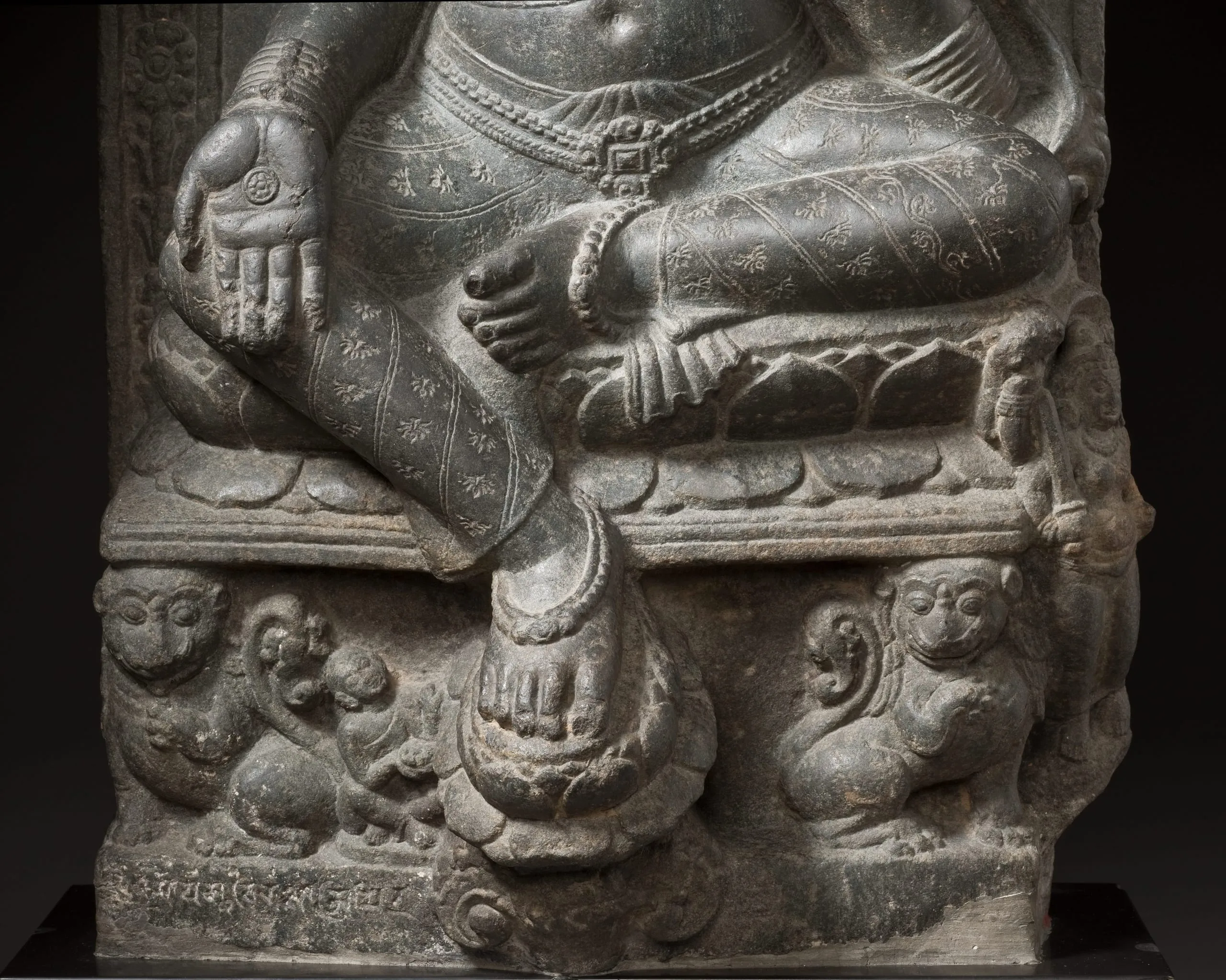
Stone relief sculpture, lower torso and legs of a deity seated in lalitasana on a lotus throne, wearing incised floral dhoti and beaded jewelry; small crouching figures flank the base; an inscription in Devanagari script runs along the bottom edge.
Artist or Maker
Unknown
Title
The Buddhist Goddess Green (Shyama) Tara
Place Made
India, Bihar, Patna District
Date Made
9th century
Medium
Biotite schist
Dimensions
34 x 17 3/4 x 9 in. (86.36 x 45.08 x 22.86 cm)
Credit Line
From the Nasli and Alice Heeramaneck Collection, Museum Associates Purchase
Accession Number
M.76.2.30
Classification
Sculpture
Collecting Area
South and Southeast Asian Art
Curatorial Notes

There are many forms of the Buddhist goddess Tara, all of whom help practitioners overcome hindrances and difficulties on the path to Enlightenment. Each Tara has a different symbolic character and associated color. Green Tara, one of the most popular Buddhist protective goddesses, is said to have been born from the Bodhisattva Avalokiteshvara’s tears of compassion. Green Tara is a gracious form regarded as the savior from all suffering and the symbol of Enlightenment in female form. She is often propitiated for longevity. Green Tara is also the wisdom component of Enlightenment (prajna) associated with the transcendental Jina Buddha Amoghasiddhi.

Here, Green Tara is enthroned on a lion throne sitting in the relaxed posture (lalita asana) with her right leg pendant and supported by the pericarp of a lotus flower (karnika). She wears copious jewelry and elegant textiles. Her right hand is held in the gesture of charity (varada mudra). Her left hand holds the stock of a blue lotus (Nymphaea nouchali). The transcendental Buddhas Akshobhya and Ratnasambhava flank her head on the left and right respectively. On the proper left front corner of the base is the four-armed wrathful goddess Ekajata holding her elephant skin attribute over her head.

The Sanskrit inscription above the goddess’s head is the Buddhist creed: The Buddha has explained the cause of all things that arise from a cause. He, the great monk, has also explained their cessation.

The dedicatory inscription on the base beneath the donor figure reads, This is the pious gift of the elder monk Shakyamitra. (Translation by Pratapaditya Pal.)
Selected Bibliography
  • Little, Stephen, Tushara Bindu Gude, Karina Romero Blanco, Silvia Seligson, Marco Antonio Karam. Las Huellas de Buda. Ciudad de México : Instituto Nacional de Antropología e Historia, 2018.
  • Little, Stephen, and Tushara Bindu Gude. Realms of the Dharma: Buddhist Art across Asia. Los Angeles: Los Angeles County Museum of Art, 2025.