- Title
- Hookah Base in the form of a Dancer
- Date Made
- circa 1750-1900
- Medium
- Parcel-gilt silver, chased; traces of paint
- Dimensions
- H: 6 in. (15.24 cm); DIAM: 6 1/2 in. (16.51 cm)
- Accession Number
- M.76.2.24
- Curatorial Notes
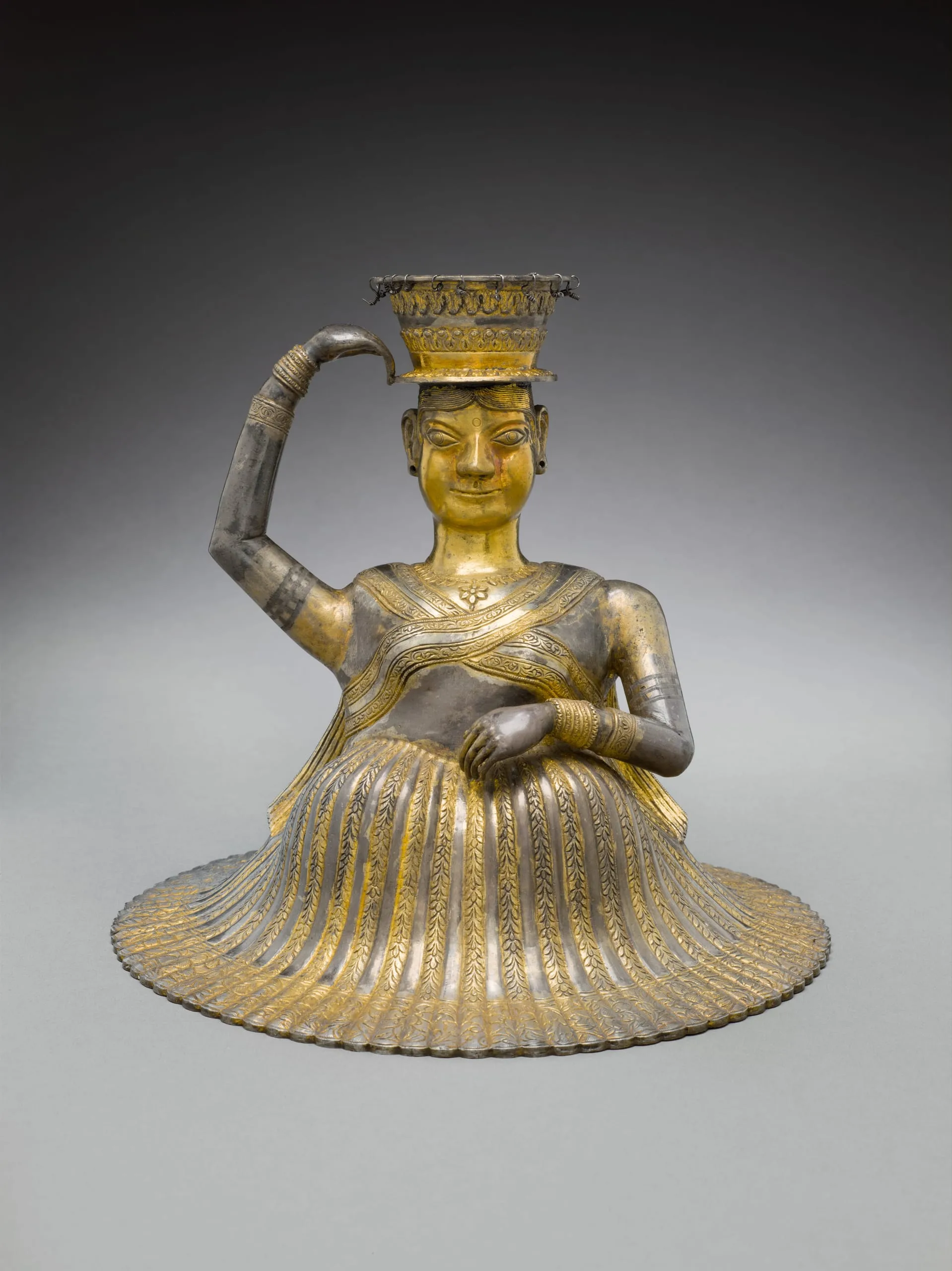
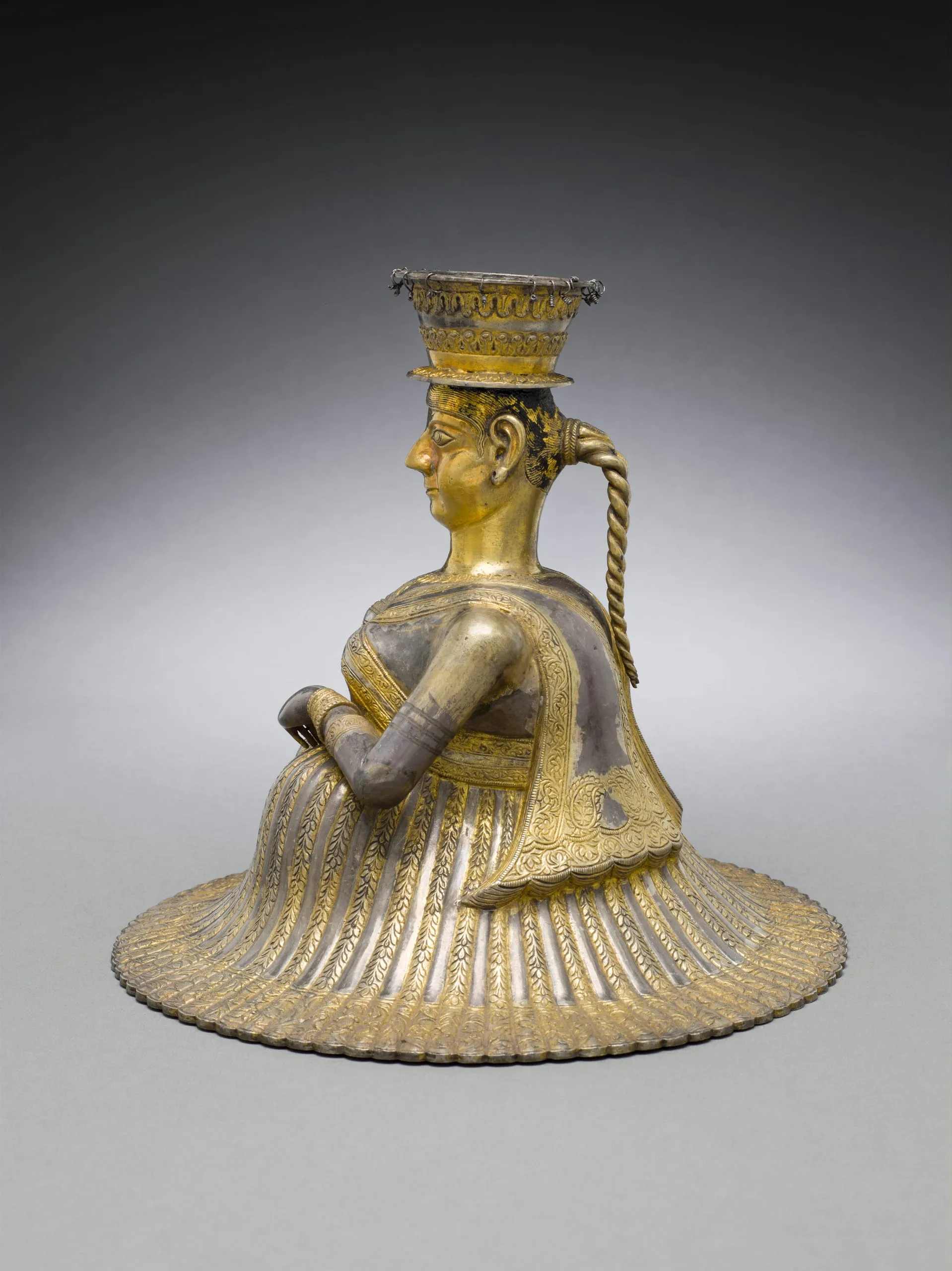
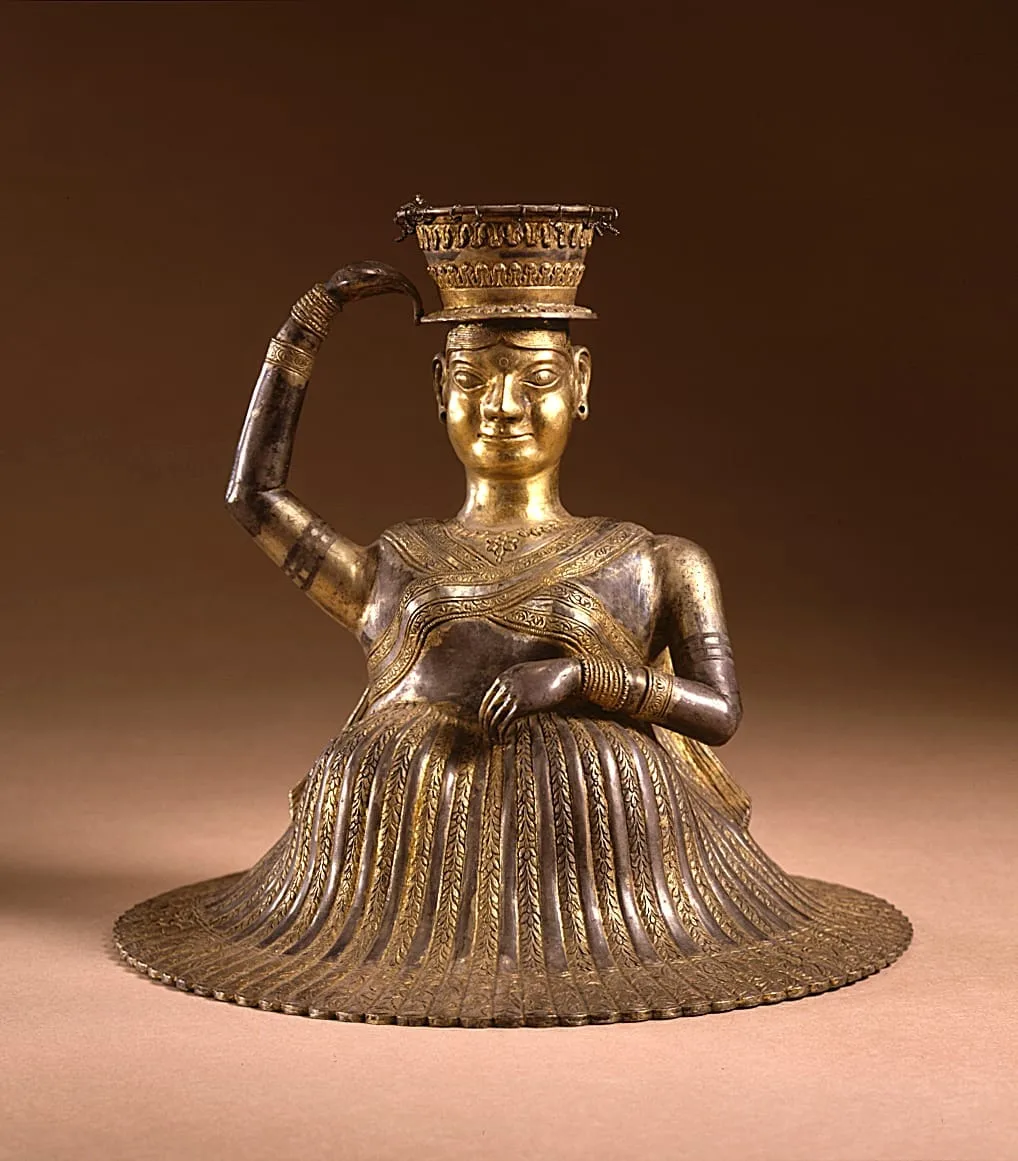
This hookah base represents a rare figural form of Indian water pipes. It is fashioned of partially gilded silver with finely incised floral and foliate motifs on the clothing. The figure most likely represents a court dancer. She is shown smiling with a bindu mark on her forehead and traces of black paint on her hair. She wears a necklace with a floral pendant, bangles, and armlets. Her original hanging earrings are now missing. Around her shoulders is a long scarf with paisley designs. The dancer is portrayed squatting with her striped lower garment flaring out to form the flat bottom of the hookah base. Her left hand rests by her stomach. Her right arm extends upwards with her fingers curled towards her head and the hookah’s combustion bowl, which is embellished with borders of acanthus leaves and wire dangles. Not only does this graceful arm position likely symbolize a dance mudra, but in a clever double entendre it also serves as the carrying handle for the hookah.
Figural hookah bases mainly appear in the contemporaneous artistic traditions of Rajasthan. A complete hookah with a similar dancer in a standing position is in the National Museum, New Delhi (61.907a-g). Paintings from the Mewar court of Maharana Jagat Singh II (r. 1734-73) occasionally depict small gilded figures beside the seated ruler that are the same approximate scale as the LACMA and New Delhi hookahs. Hence, they may represent similar figural water-pipes.