LACMA

ShopMembershipMyLACMATickets
LACMA
Los Angeles County Museum of Art
5905 Wilshire Blvd.
Los Angeles, CA 90036
info@lacma.org
(323) 857-6000
Sign up to receive emails
Subscribe
© Museum Associates 2025

Museum Hours

Monday

11 am–6 pm

Tuesday

11 am–6 pm

Wednesday

Closed

Thursday

11 am–6 pm

Friday

11 am–8 pm

Saturday

10 am–7 pm

Sunday

10 am–7 pm


  • About LACMA
  • Jobs
  • Building LACMA
  • Host An Event
  • Unframed
  • Press
  • FAQs
  • Log in to MyLACMA
  • Privacy Policy
© Museum Associates 2025
Collections

Unknown
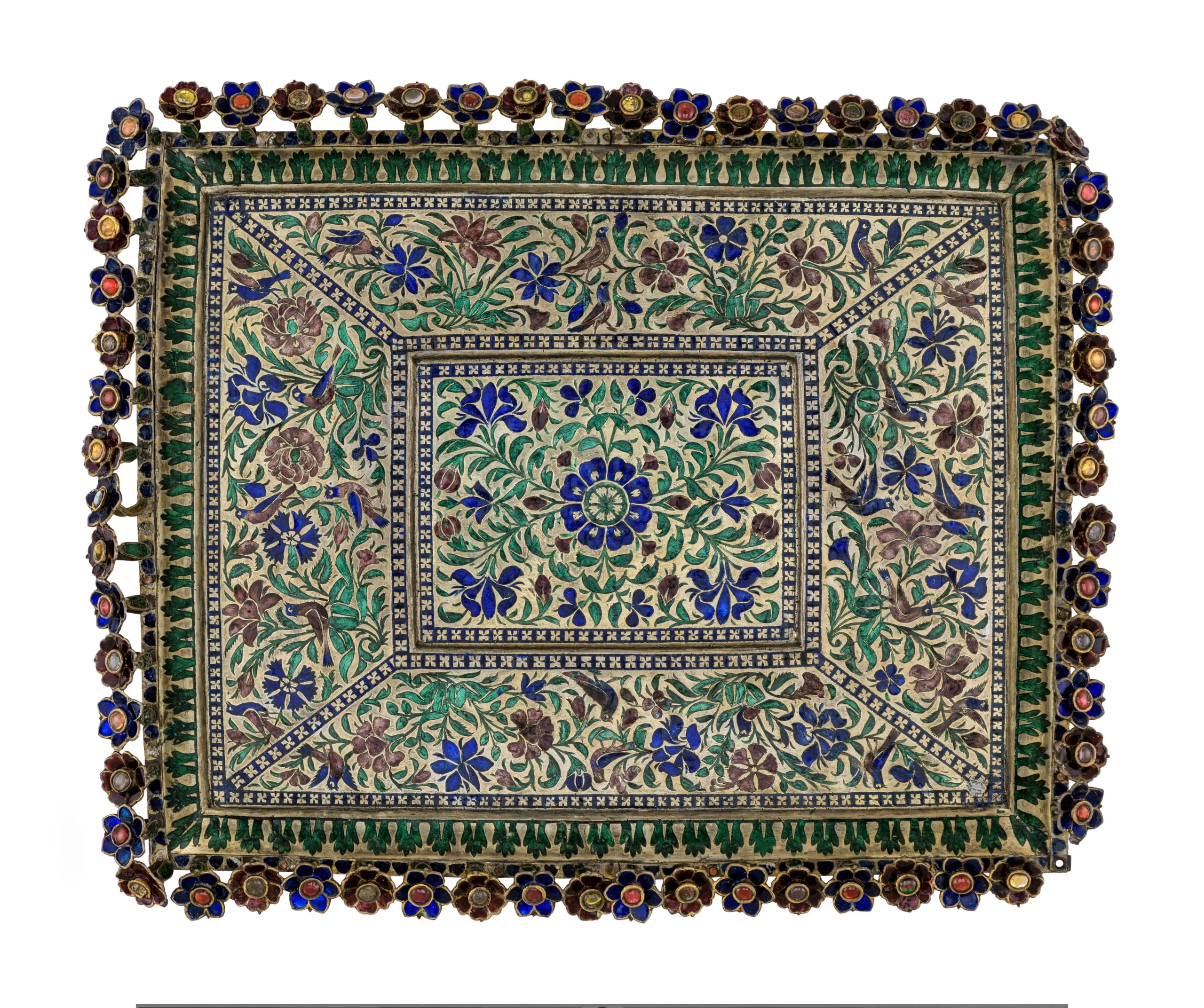
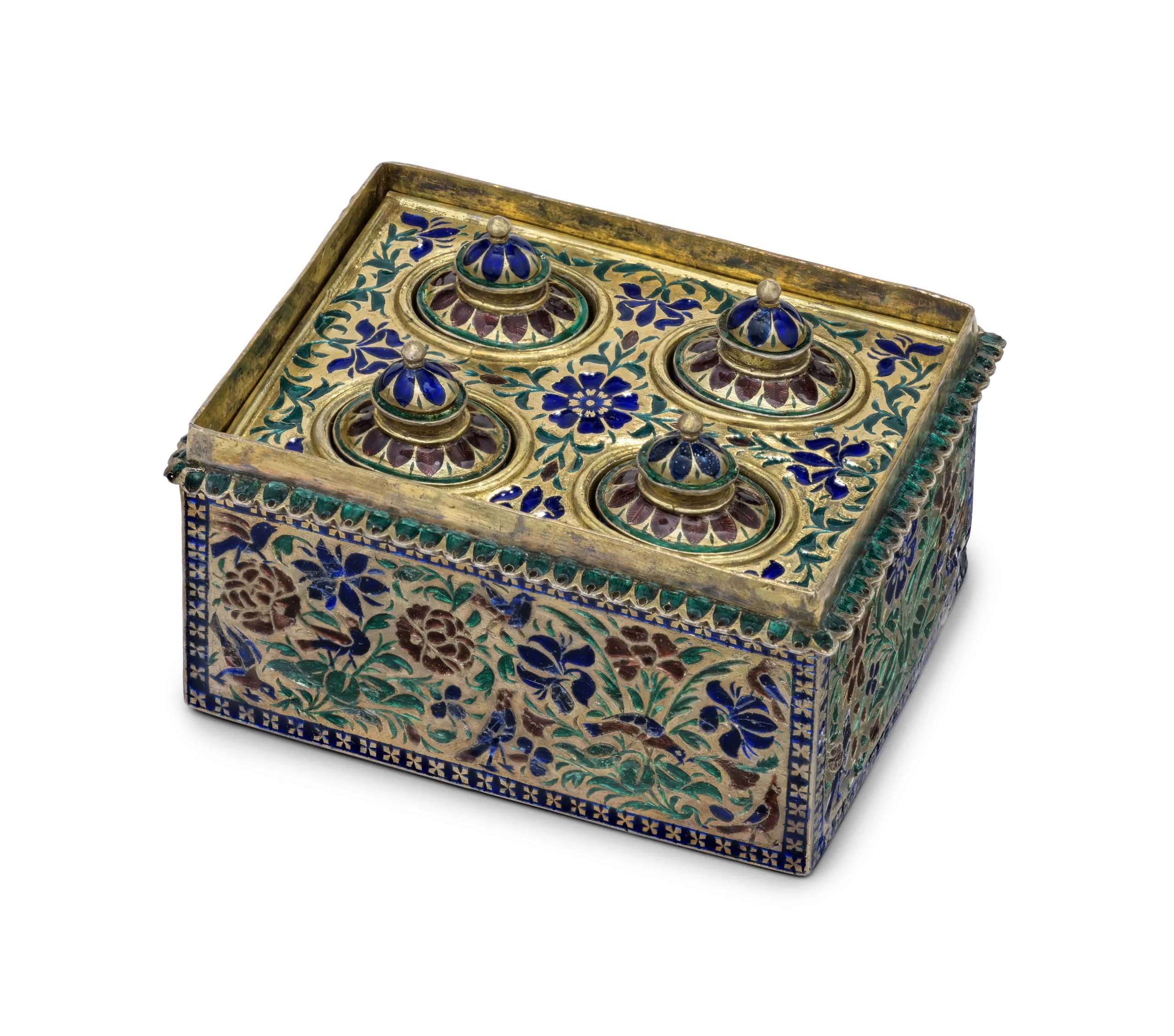
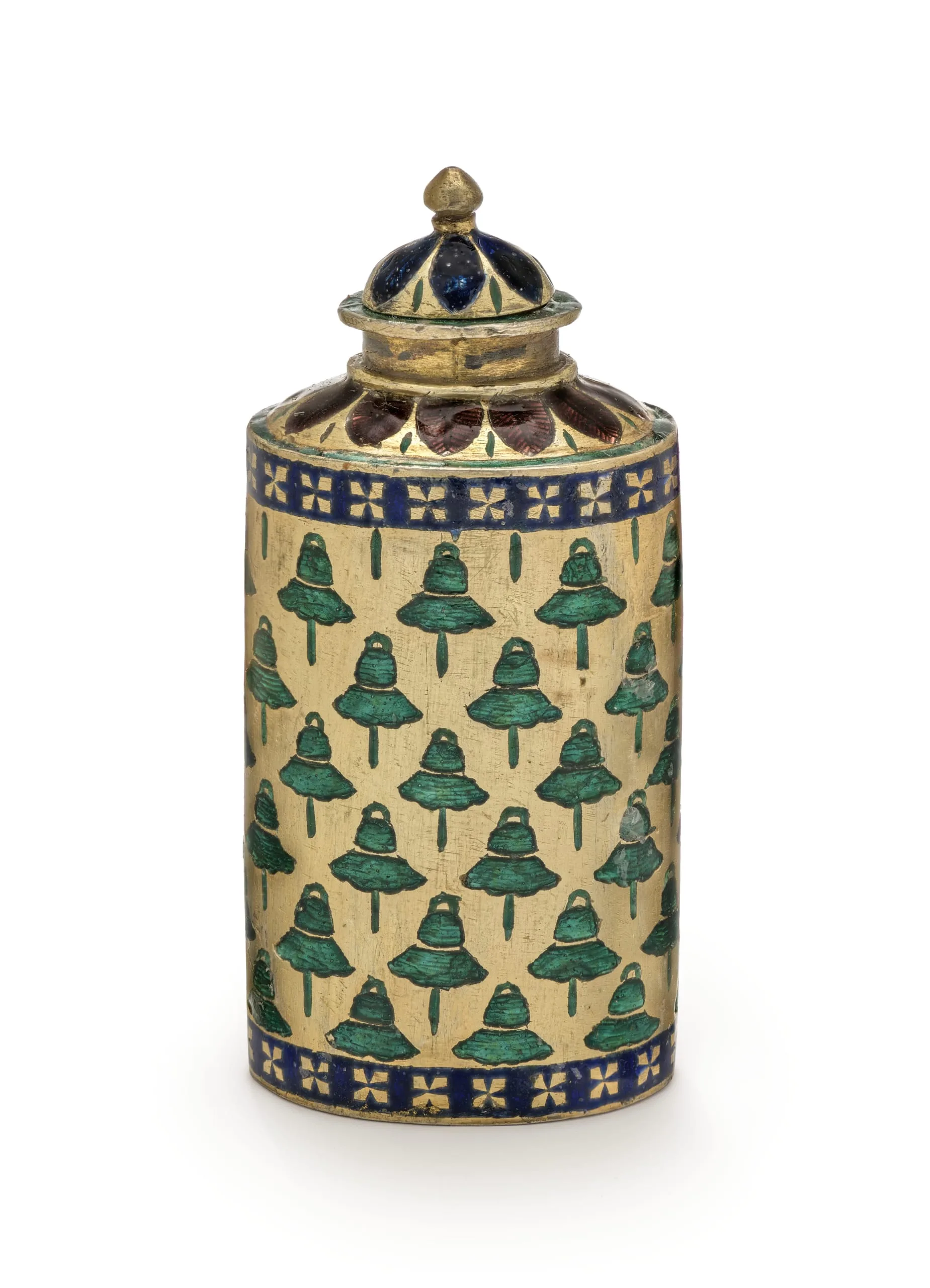
Tray and Matching Box with Four Scent Vialscirca 1800

Not on view
Horizontal decorative panel with an ivory ground densely embroidered or enameled with cobalt blue irises, green vines, and birds, framed by a jeweled border of gem-set floral rosettes
Gilt metal box with four domed, removable lidded compartments on top, decorated overall in polychrome enamel with scrolling floral and foliate motifs in cobalt blue, green, and brown on a cream ground; sides decorated with birds among flowering plants within blue geometric borders.
Cylindrical covered ceramic vessel with domed lid topped by a small finial; cream ground decorated with repeating green bell-shaped motifs, bordered by cobalt blue bands with small floral crosses; lid features dark blue and purple petal forms with gilt detailing.
Artist or Maker
Unknown
Title
Tray and Matching Box with Four Scent Vials
Place Made
India, Uttar Pradesh, Awadh, Lucknow
Date Made
circa 1800
Medium
Enameled silver inlaid with foil-backed gemstones and pastes; enameled gilded silver
Dimensions
4 7/8 x 10 1/8 x 8 in. (12.38 x 25.72 x 20.32 cm)
Credit Line
From the Nasli and Alice Heeramaneck Collection, Museum Associates Purchase
Accession Number
M.76.2.27a-L
Classification
Furnishings
Collecting Area
South and Southeast Asian Art
Curatorial Notes

This elaborate tray and matching box with four scent vials epitomize the refined material culture and exquisite enameling of Lucknow fashionable around the end of the 18th century. The tray and exterior of the box are enameled silver. Enticingly, the interior of the box and the exterior of its scent vials have been upgraded from a silver to a gilded silver ground, evoking a literally richer aesthetic experience when the box is opened. Upright floral sprays festooned around the edge of the tray follow an apparent metalware convention for symbolizing an object’s function as a container for rose water or other perfumes.

The Lucknow-style design program consists principally of translucent dark blue, aubergine, and green enamels depicting flowering vines and plants, especially rosettes and lilies, with perching birds interposed amongst the lush vegetation. More generic decorative elements include an trellis pattern on the lid and a diaper pattern of translucent green enameled lotus leaves on the scent vials.

Along with betel leaf quids, rose water and other fragrances have long been the customary amenity offered to honored guests in South Asia. Lucknow’s nobility, harem, and refined courtesans were especially renowned for their conspicuous use of myriad perfumes. This olfactory preference was frequently noted by European visitors to Lucknow, such as by Fanny Parks (1794–1875) when she roomed in the harem of King Nasir al-Din Haidar (r. 1827–37).

Lucknow was well-situated geographically and culturally to partake of both the Hindu and Islamic traditions of sophisticated perfumery. Located roughly between the ancient but continuous Hindu production center of Kannauj and the contemporaneous Muslim production center of Ghazipur, the Lucknow courts and elite community had ready access to the aromatics long described in various texts. By the turn of the 19th century, colonial European accounts documented the manufacturing techniques of rose water, attar of roses, and other perfumes.
Selected Bibliography
  • Markel, Stephen. Mughal and Early Modern Metalware from South Asia at LACMA: An Online Scholarly Catalogue. Los Angeles: Los Angeles County Museum of Art, 2020. https://archive.org/details/mughal-metalware (accessed September 7, 2021).