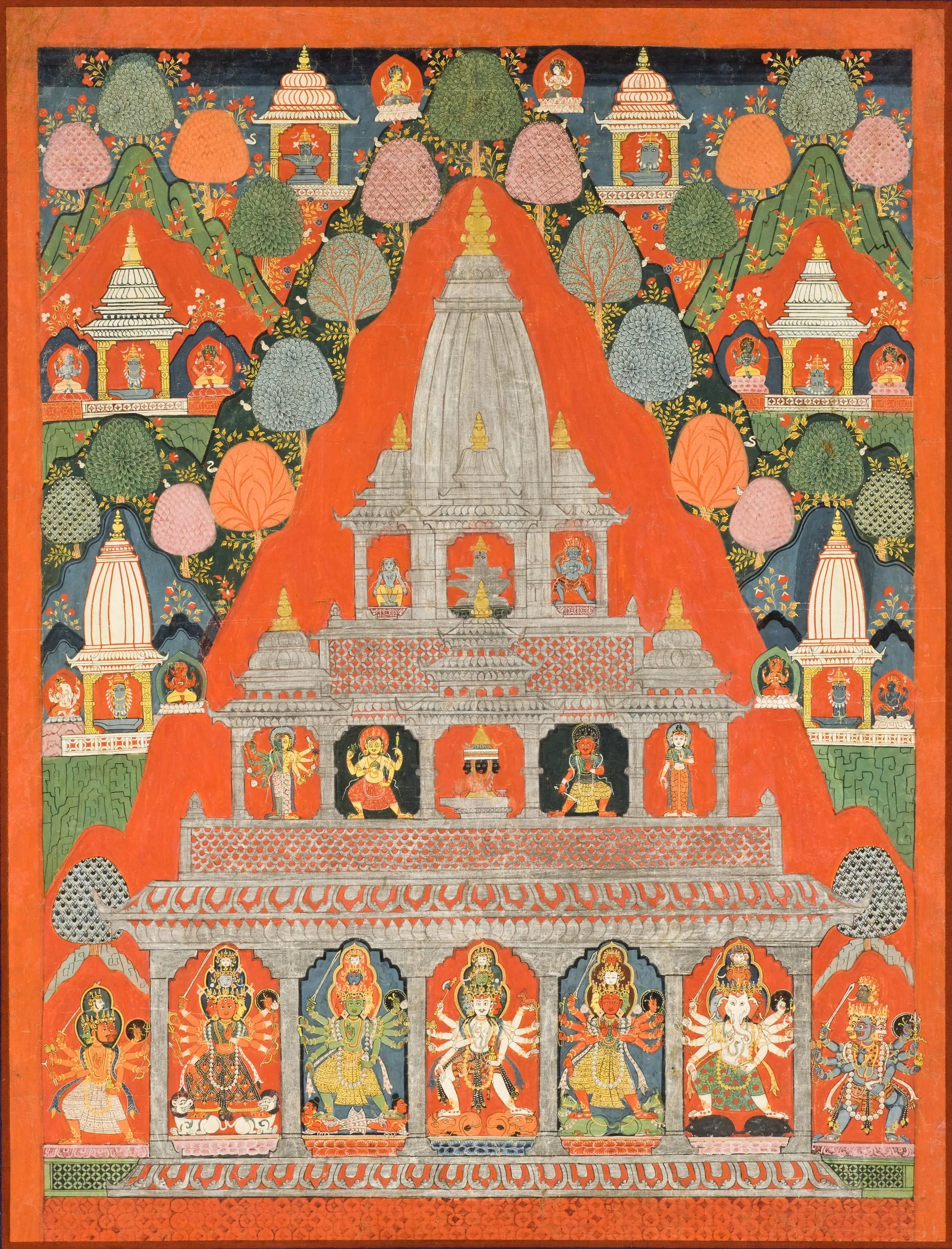
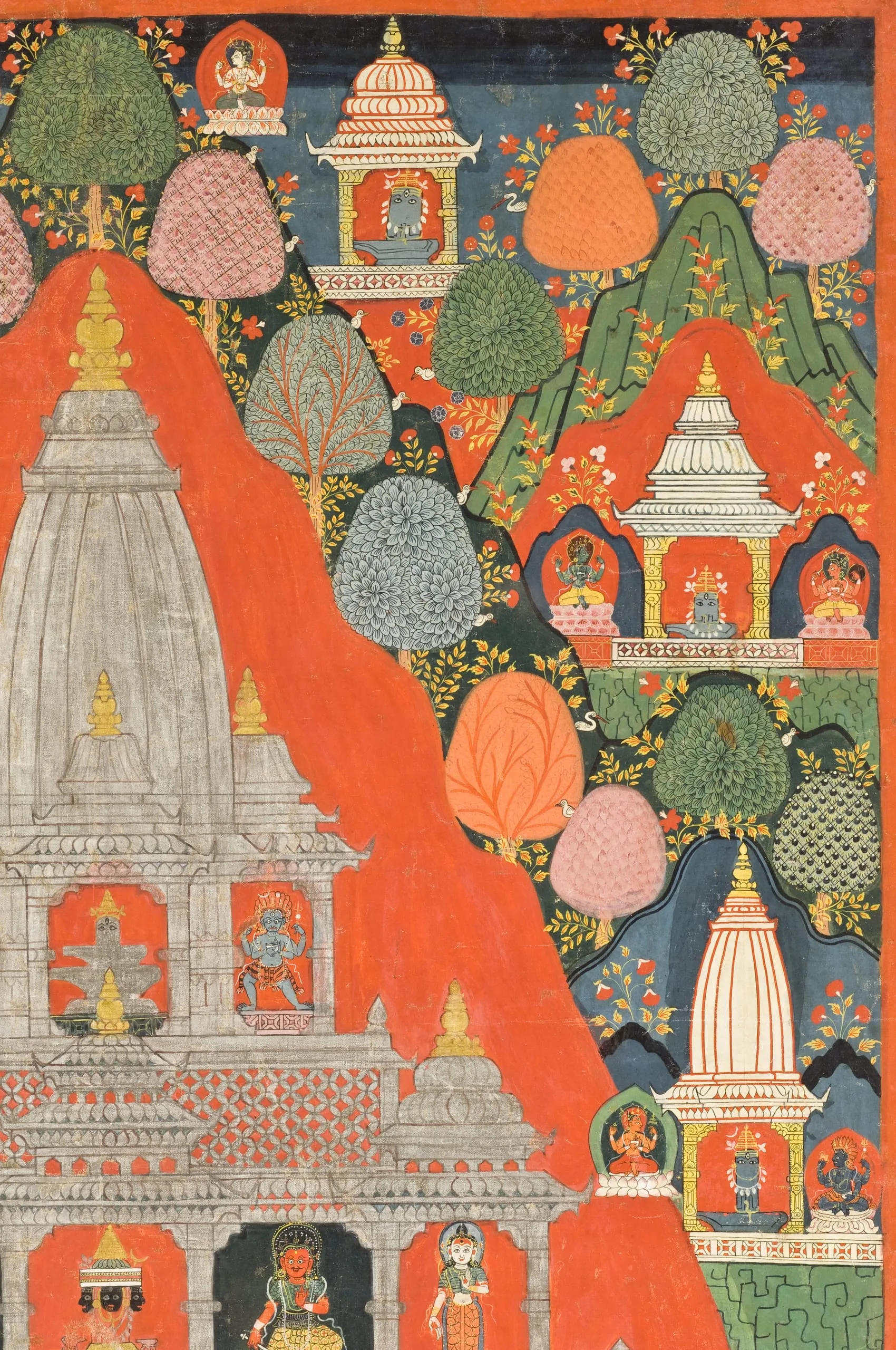
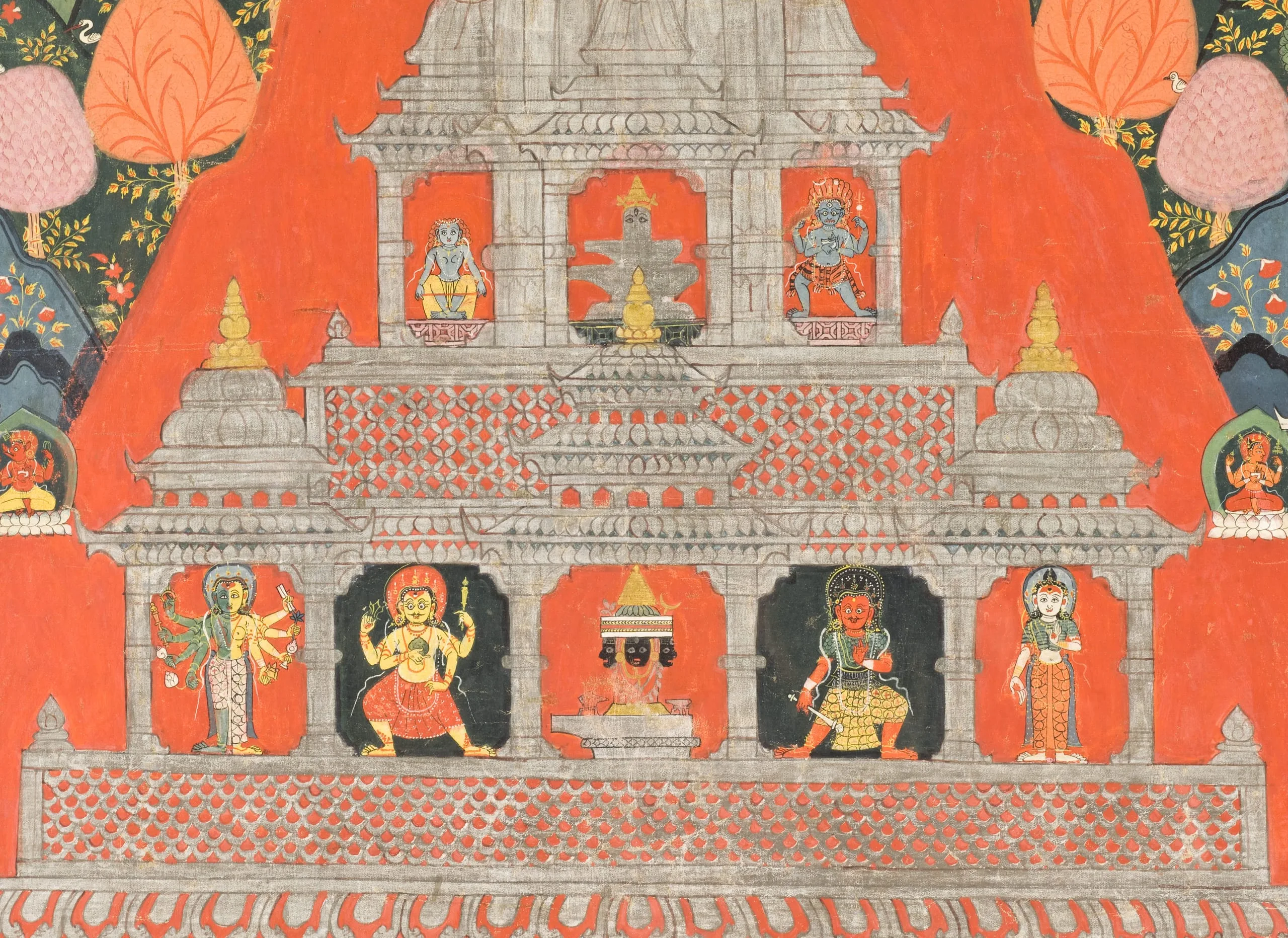
Dedicated to Shiva, a three-story silver temple rendered in an architectural style prevalent in the Kathmandu Valley in the 17th century is set in a wooded landscape surrounded by six subsidiary temples, each enshrining a Shivalinga (literally, the "sign" of Shiva). The ground floor of the main temple has five interior niches with deities flanked on the exterior by two divine guardians. From left to right, the interior deities are Durga, Vishnu, Shiva, Surya, and the elephant-headed Ganesha. The middle floor has the primary shrine, the sacred sanctum (Latin: sanctum sanctorum), with the devotional focus being an adorned Shivalinga with four black faces of Shiva (chatur mukhalinga) representing his different philosophical aspects (only three faces are represented, the fourth face is understood as being on the far side). The Shivalinga is in the central niche flanked by niches with guardians, probably two forms of Bhairava. In the far left niche is the half-female,alf-male Ardhanarishvara, while in the far right niche is a two-armed goddess. The top floor below the temple tower (shikhara) has a single-faced Shivalinga atop a multi-tiered pedestal (yoni pitha). It is flanked by a niche on the left with a meditating yogi and a niche on the right with a Bhairava. In the top center of the painting, two four-armed celestial divinities symbolize the cosmic auspiciousness of the temple. The yellow Sun God Surya is likely on the left. On the right is probably the white moon guide Chandra. They sit on double-lotus bases within red aureoles (prabhavali).