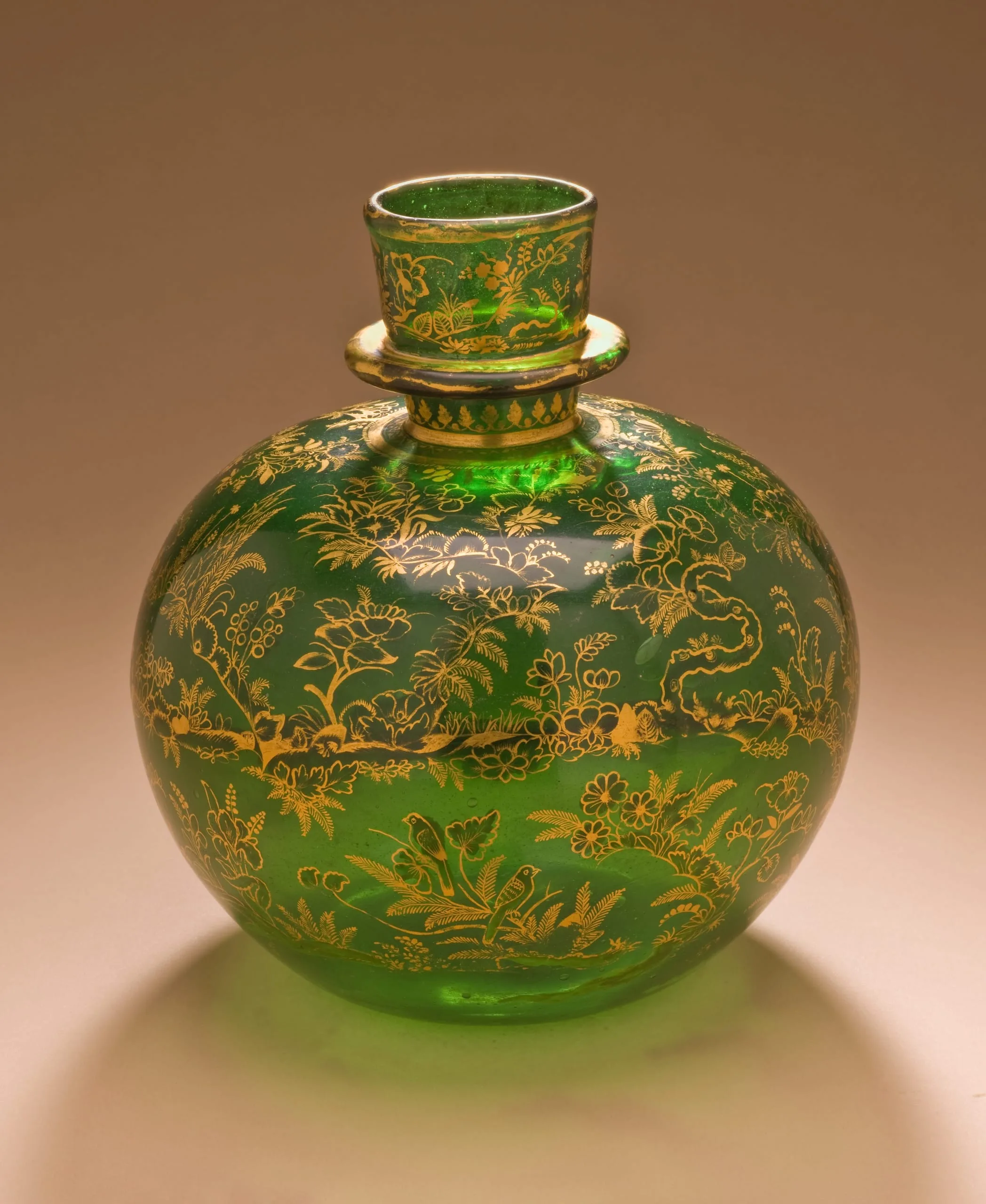
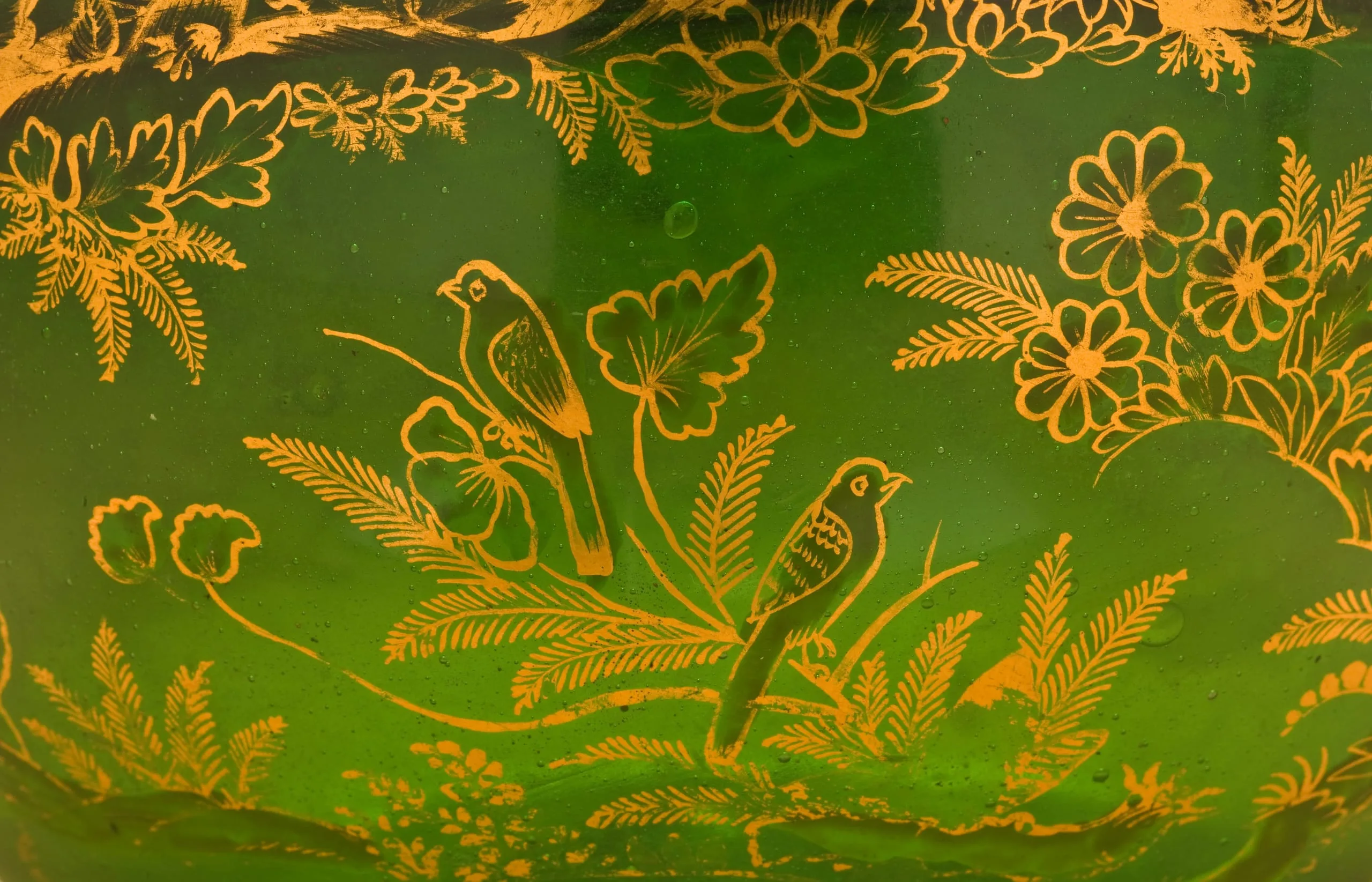
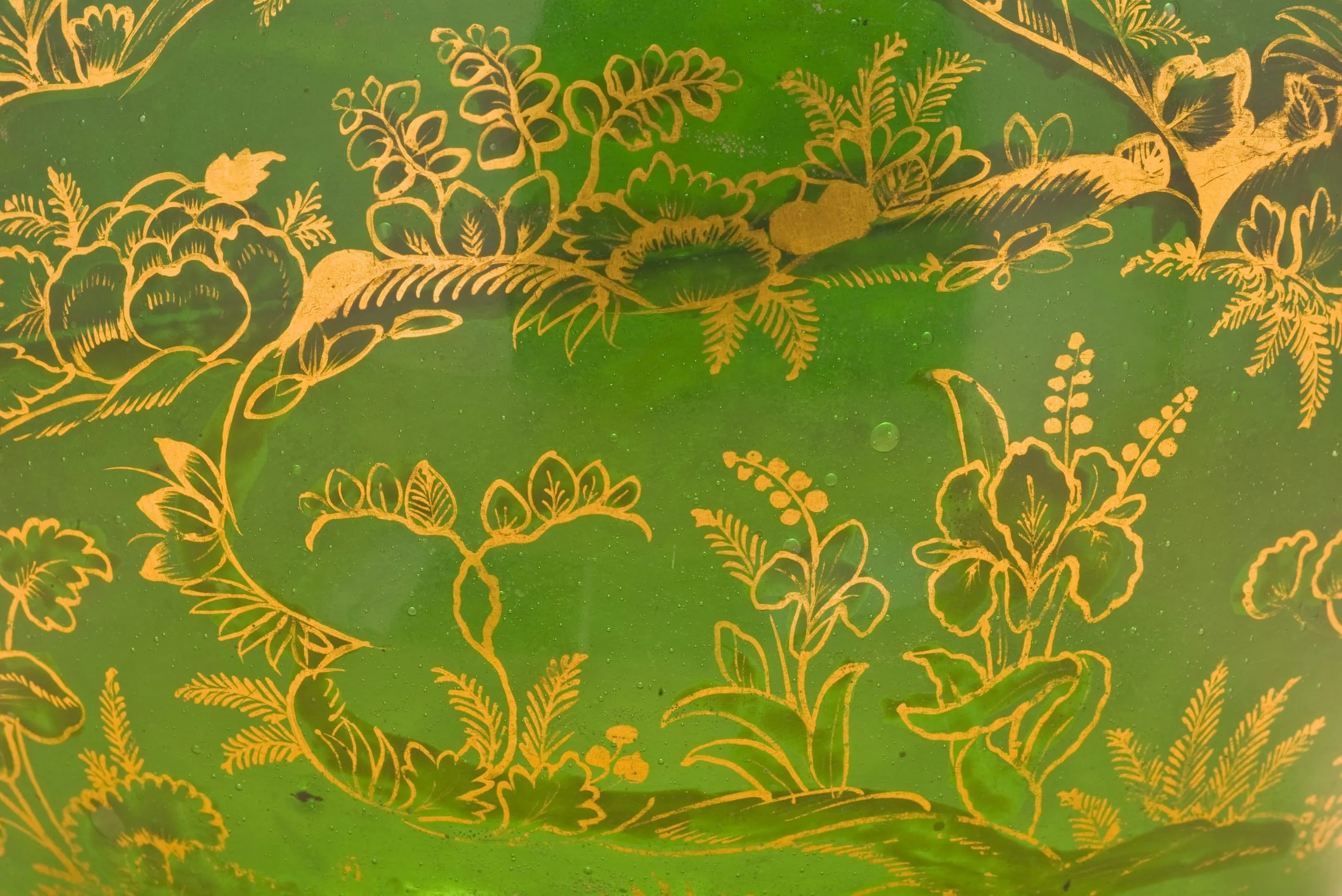
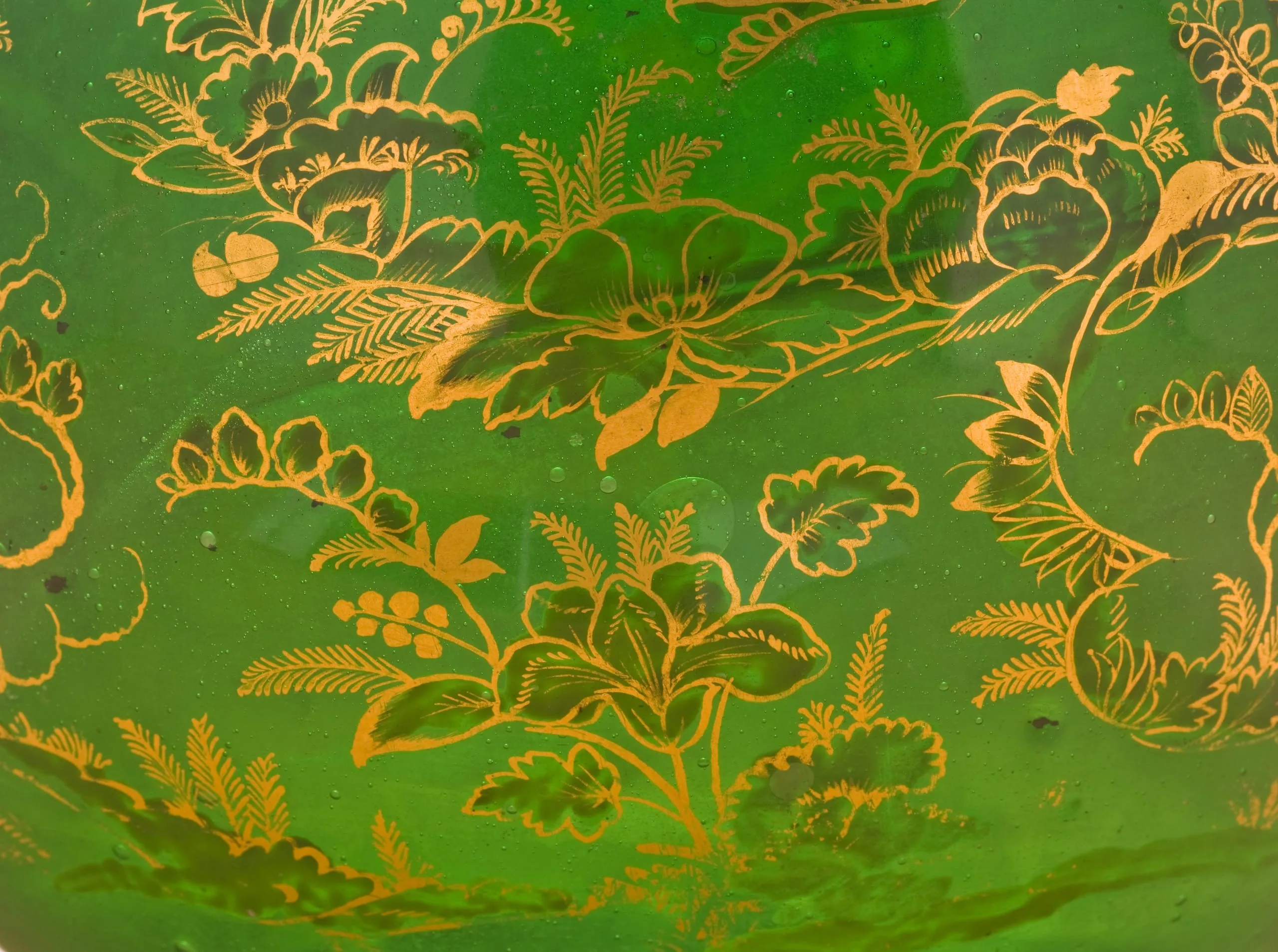
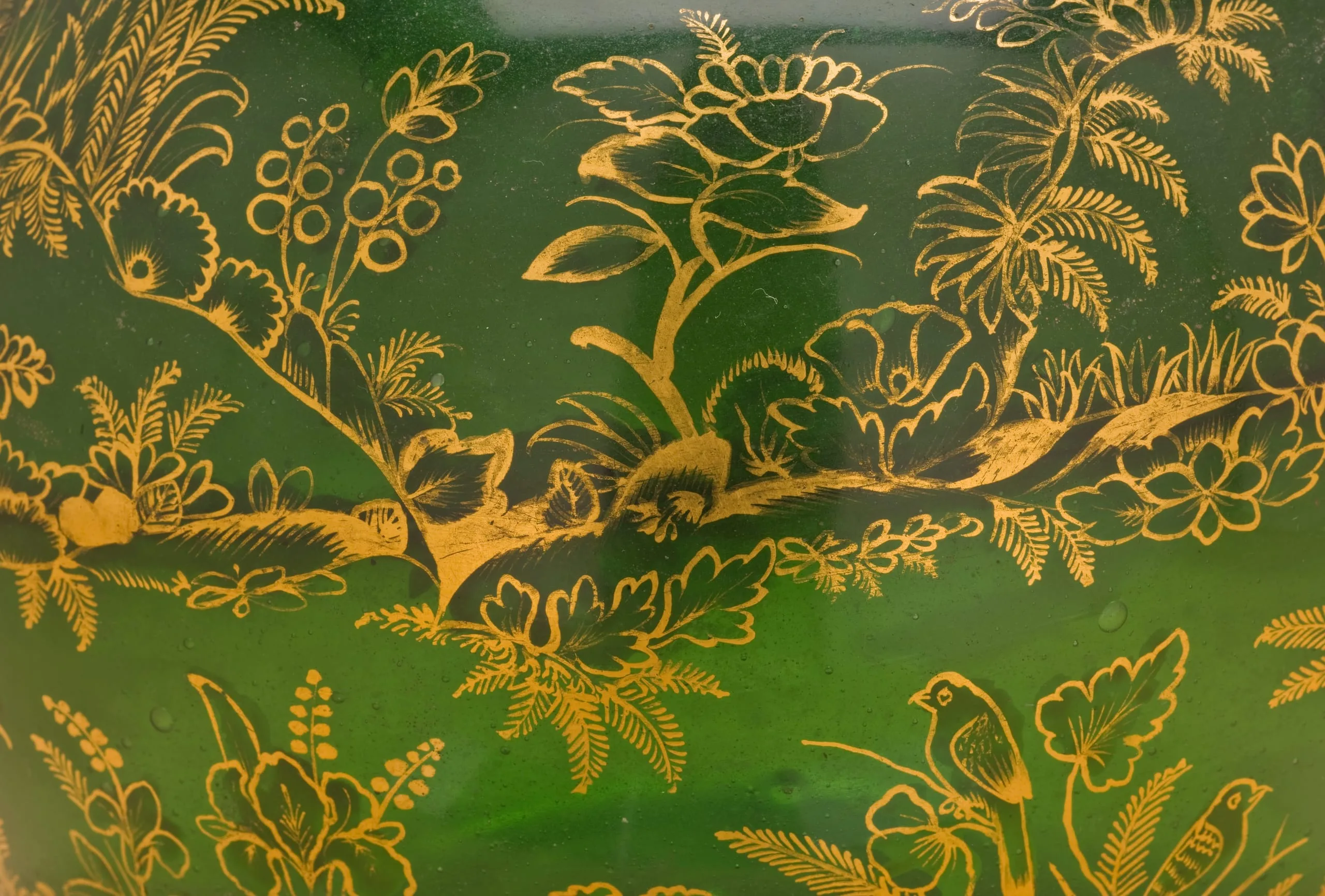
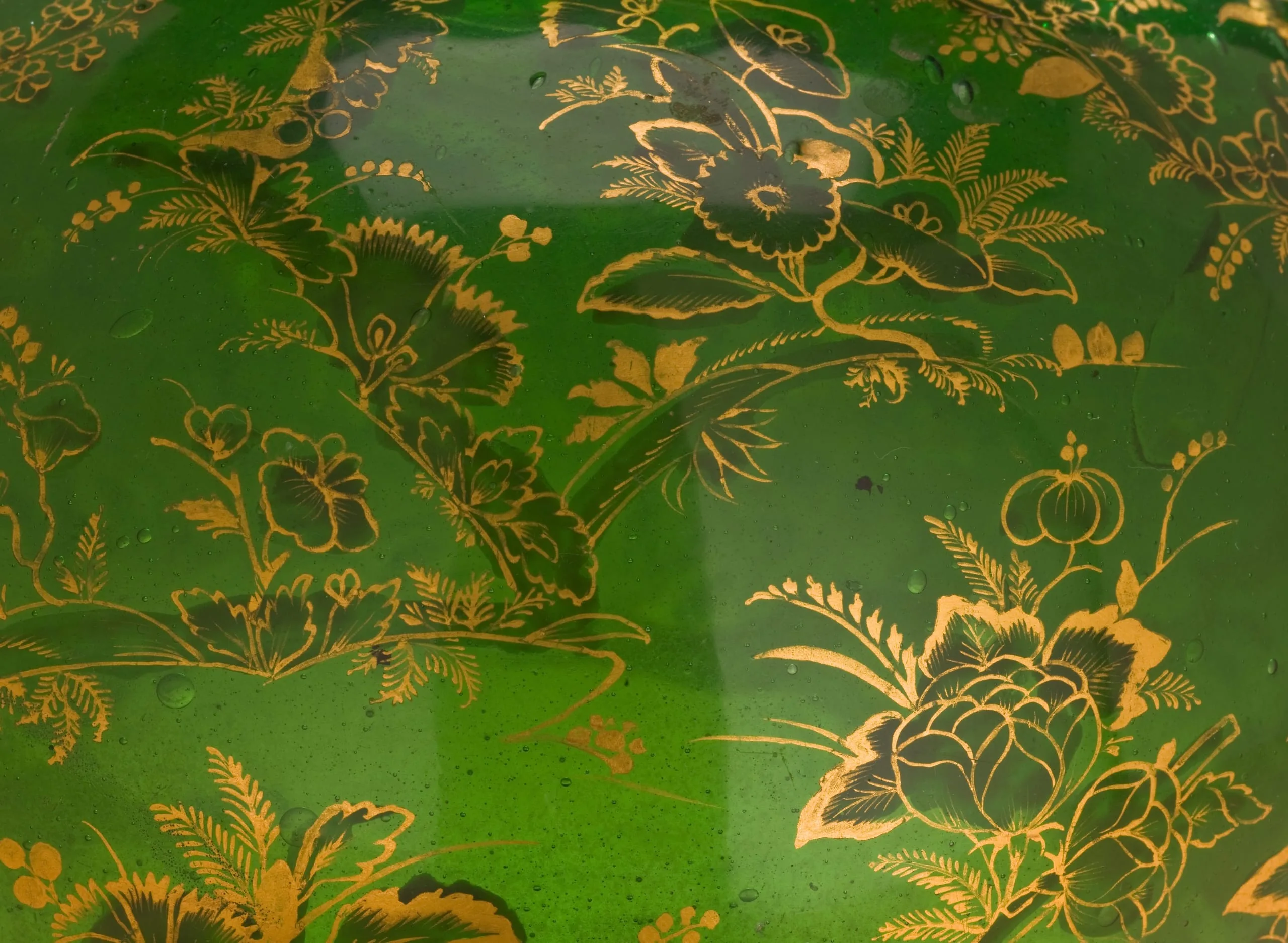
One of the museum’s most aesthetically accomplished hookah bases is a sophisticated artistic creation made of dark green glass with gilding. The exterior of its body and neck are embellished with lush bird-on-branch imagery executed in gilt outline, which is reminiscent of the contemporaneous chinoiserie designs popular in Europe. The interior of the vessel body has narrow swathes of bright green enamel intricately painted between the contours of the larger vegetal and floral forms. It provides a murky emphasis and an impression of depth to the ground lines and decorative motifs, and may have been inspired by the European and Chinese traditions of reverse painting on glass. The exuberance of the composition is balanced by the restraint and elegance of its limited palette, together making the LACMA hookah base a refined work of art.
Perching birds on flowering branches often rising from meandering ground lines is a pictorial convention frequently found in the borders of album paintings from Lucknow. Numerous representations appear in works by master painters such as Mir Kalan Khan (fl. c. 1734-70) and Mihr Chand (fl. c. 1759-86), formerly in the private collections of Lucknow’s leading art patrons Claude Martin (1735-1800) and Antoine-Louis Polier (1741-95), now principally in public collections in Berlin, Paris, and London.
The luxuriant floral patterns favored by the Lucknow connoisseurs are less formalized and more energetic than the earlier Mughal predilection for a single flowering plant or a series of floral sprays arranged against a plain, solid background. Lucknow’s floral imagery transmutes the severity of the Mughal forms by incorporating the organic patterns and refined joie de vivre popular in the pictorial arts of Iran in the late Safavid period during the 17th and early 18th centuries. The visual result is a lightness and vitality of spirit far removed from the more somber products of the Mughal ateliers.