- Title
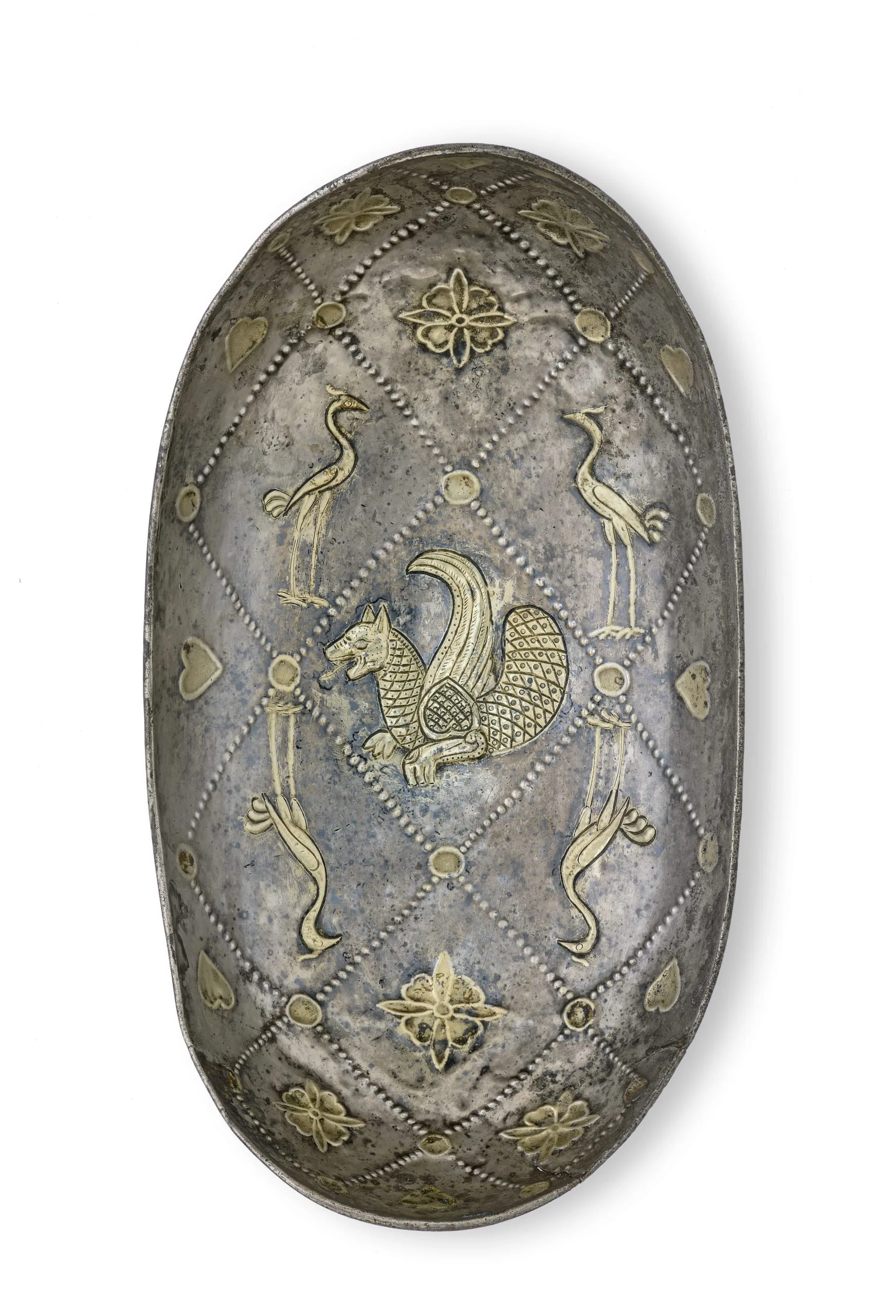
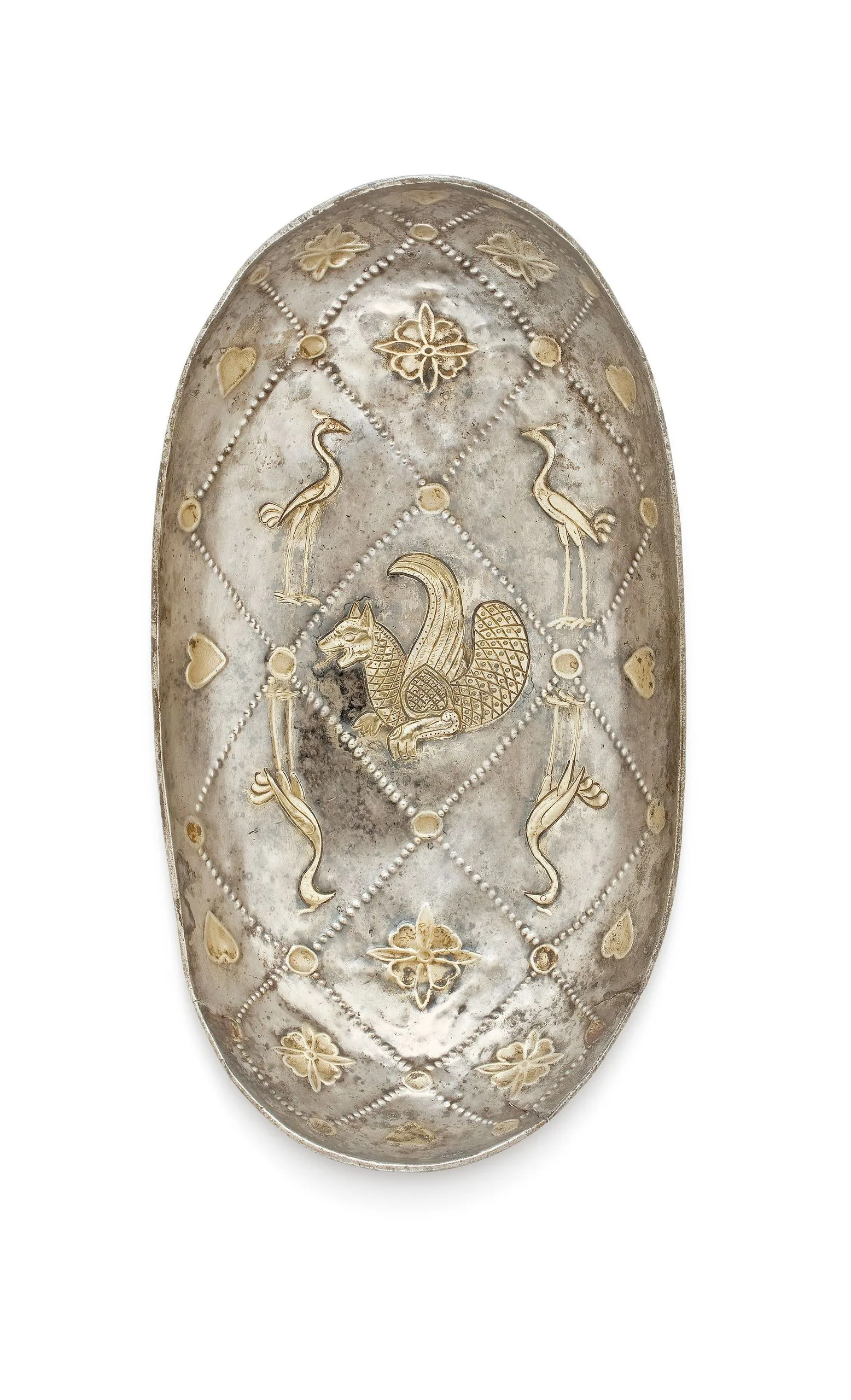
- Boat-Shaped Dish
- Date Made
- Sasanian period, 225-650 A.D.
- Medium
- Gilded silver
- Dimensions
- Length: 7 3/4 in. (19.69 cm)
- Accession Number
- M.76.174.8
- Curatorial Notes
Gold and especially silver plates seem to have been the tableware of choice for elite feasting in Sasanian Iran, based on surviving objects such as this sumptuous vessel as well as textual accounts, mainly from the early Islamic period. The majority of extant Sasanian silver wares in public and private collections were not discovered through scientific excavations, so it is often difficult to establish date and provenance; however, their metallurgy has been and continues to be carefully studied and helps establish authenticity and dating. The gilding evident on most of the vessels, including LACMA’s dish, was generally applied with a mercury amalgam, after the piece had been hammered into shape. Elliptical-shaped vessels like this one, thought to have been used for wine drinking, are sometimes referred to as “wine boats.” Here, the decoration of long-necked birds and a senmurv (a mythical Iranian hybrid creature) at center, and the compartmentalized disposition of these motifs, all suggest a relationship to Sasanian stucco wall decoration and Sasanian and early Islamic textiles (see M.2002.1.686, .689, .690, and .699).
2025
- Selected Bibliography
- Komaroff, Linda, editor. Dining with the Sultan: The Fine Art of Feasting. Los Angeles: Los Angeles County Museum of Art; New York: DelMonico Books, 2023.