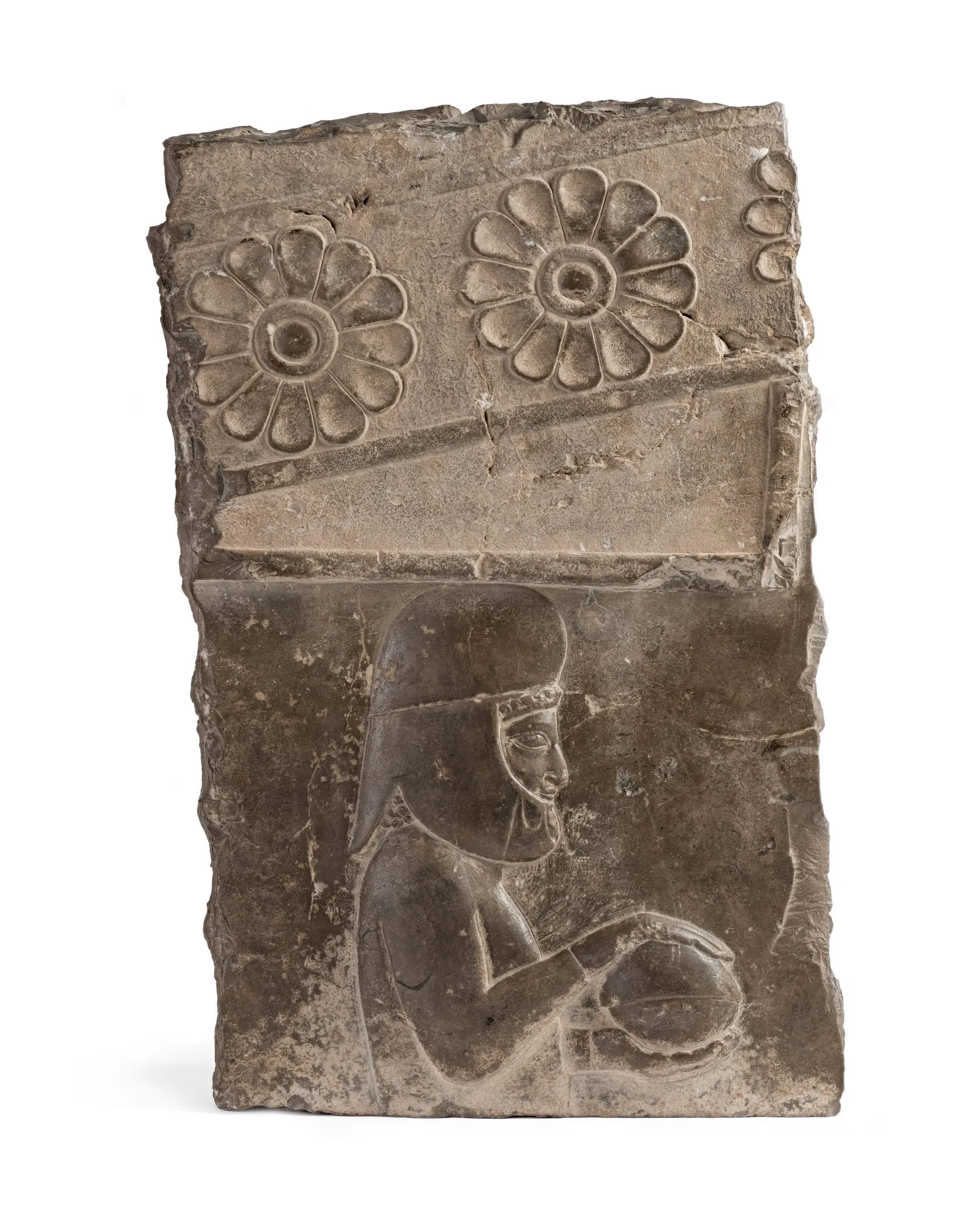
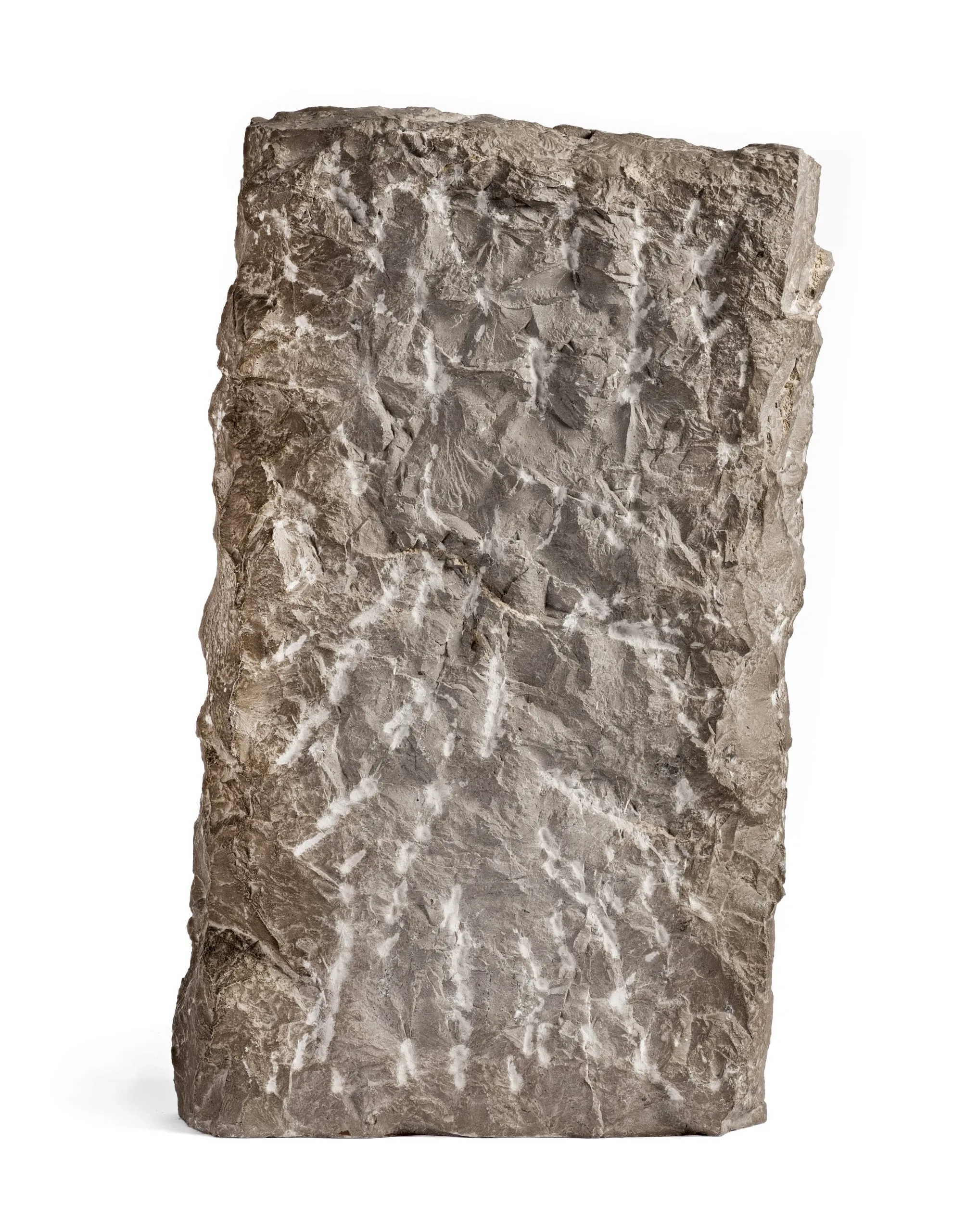
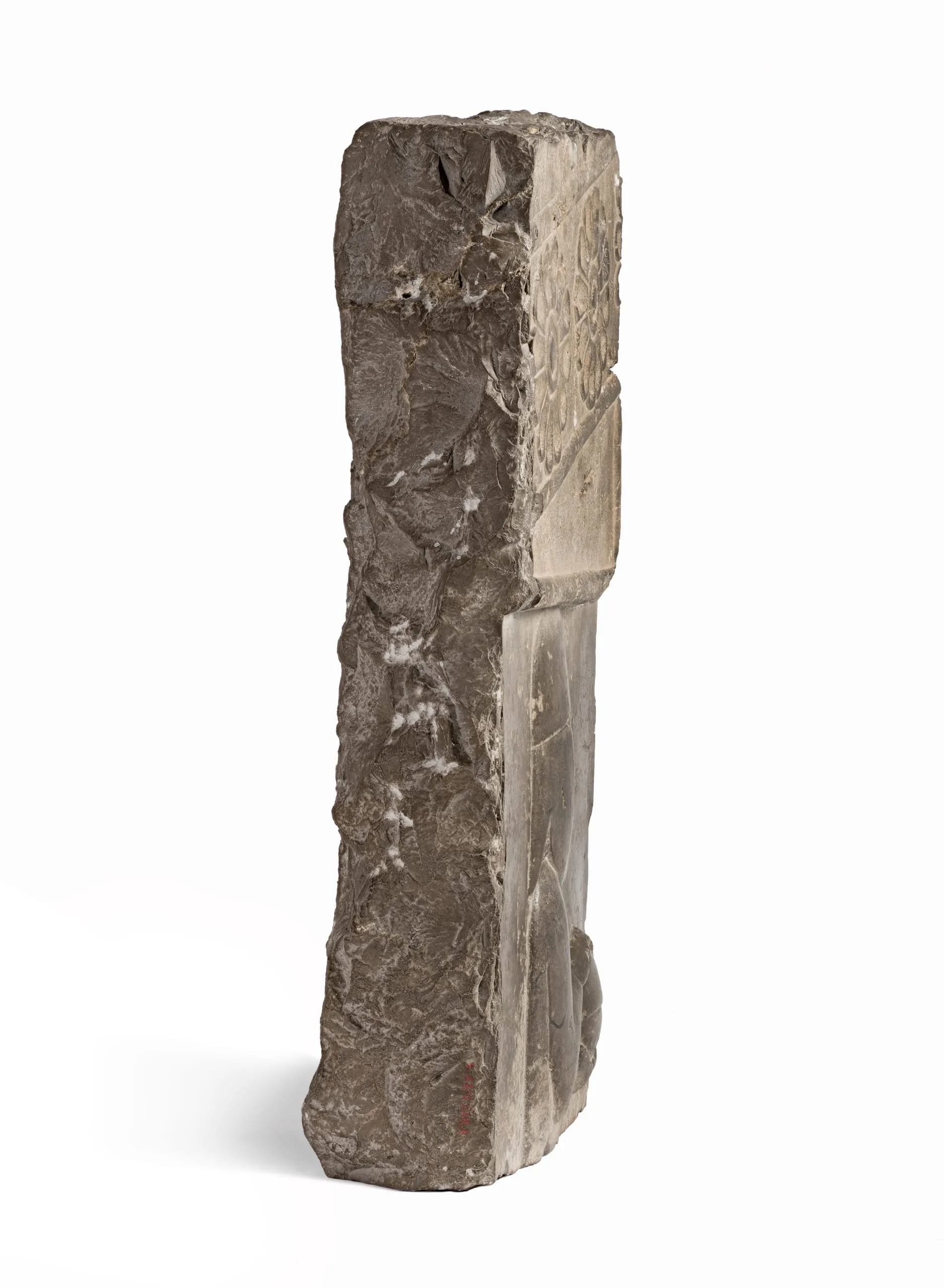
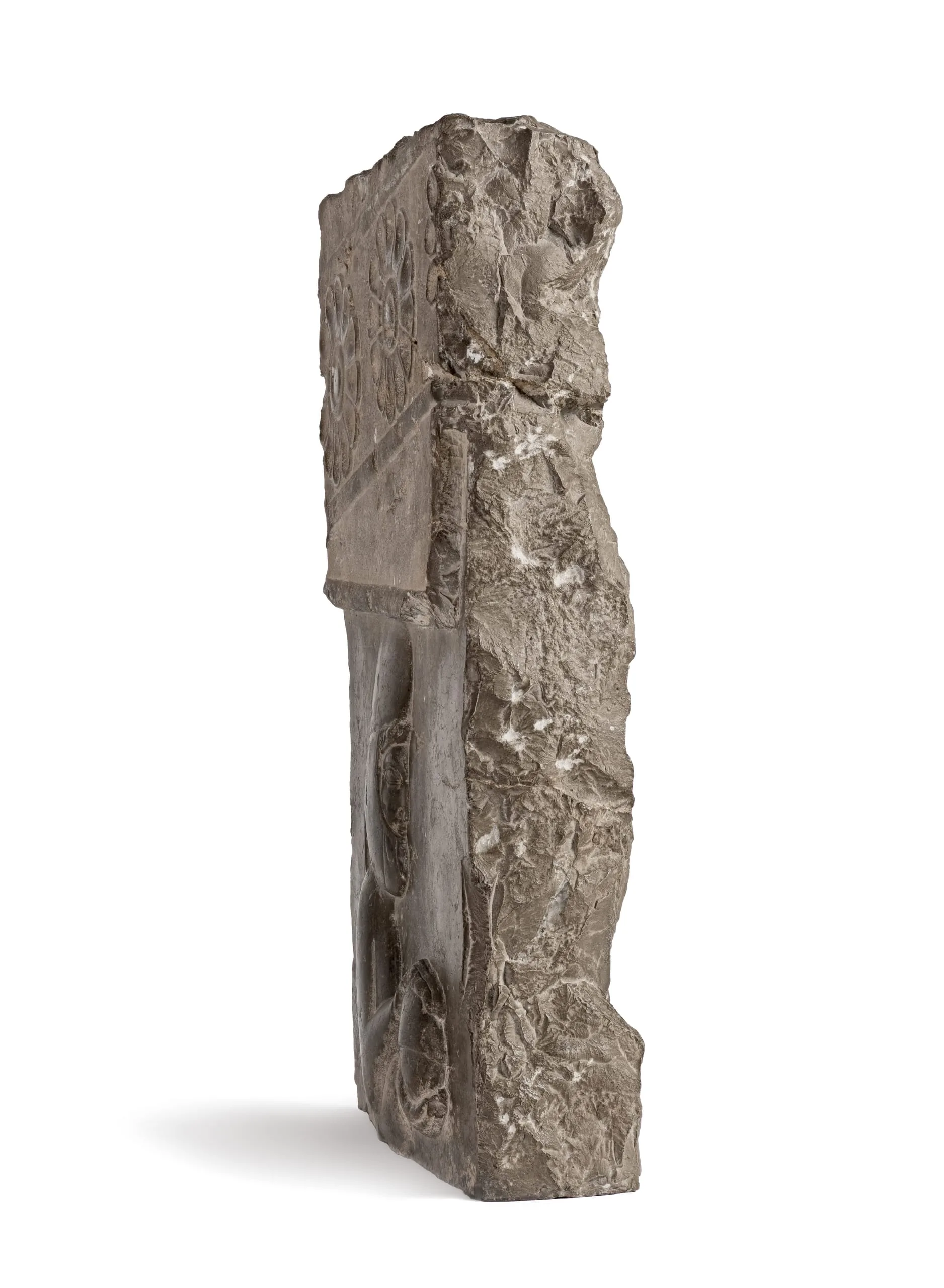
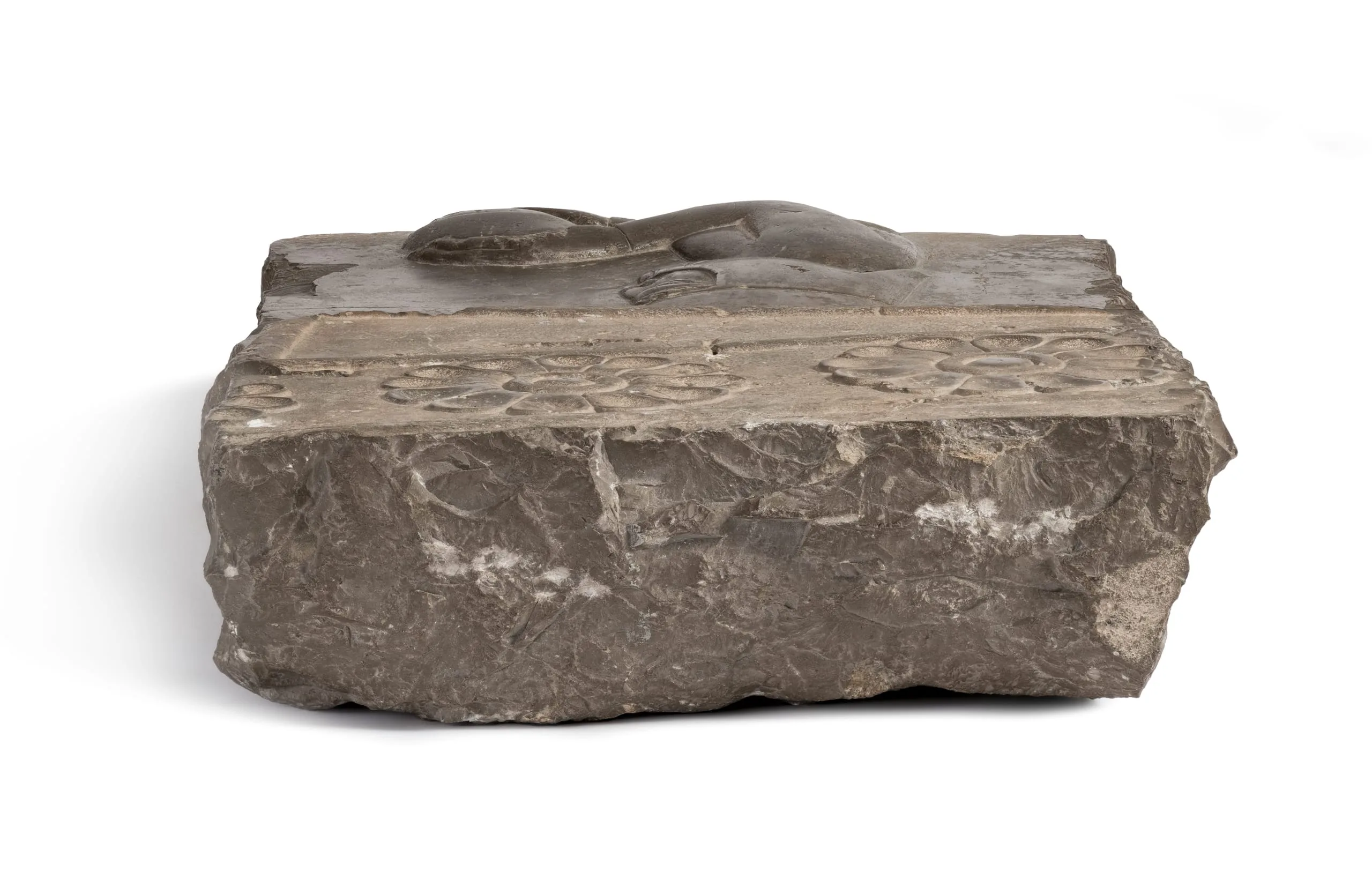
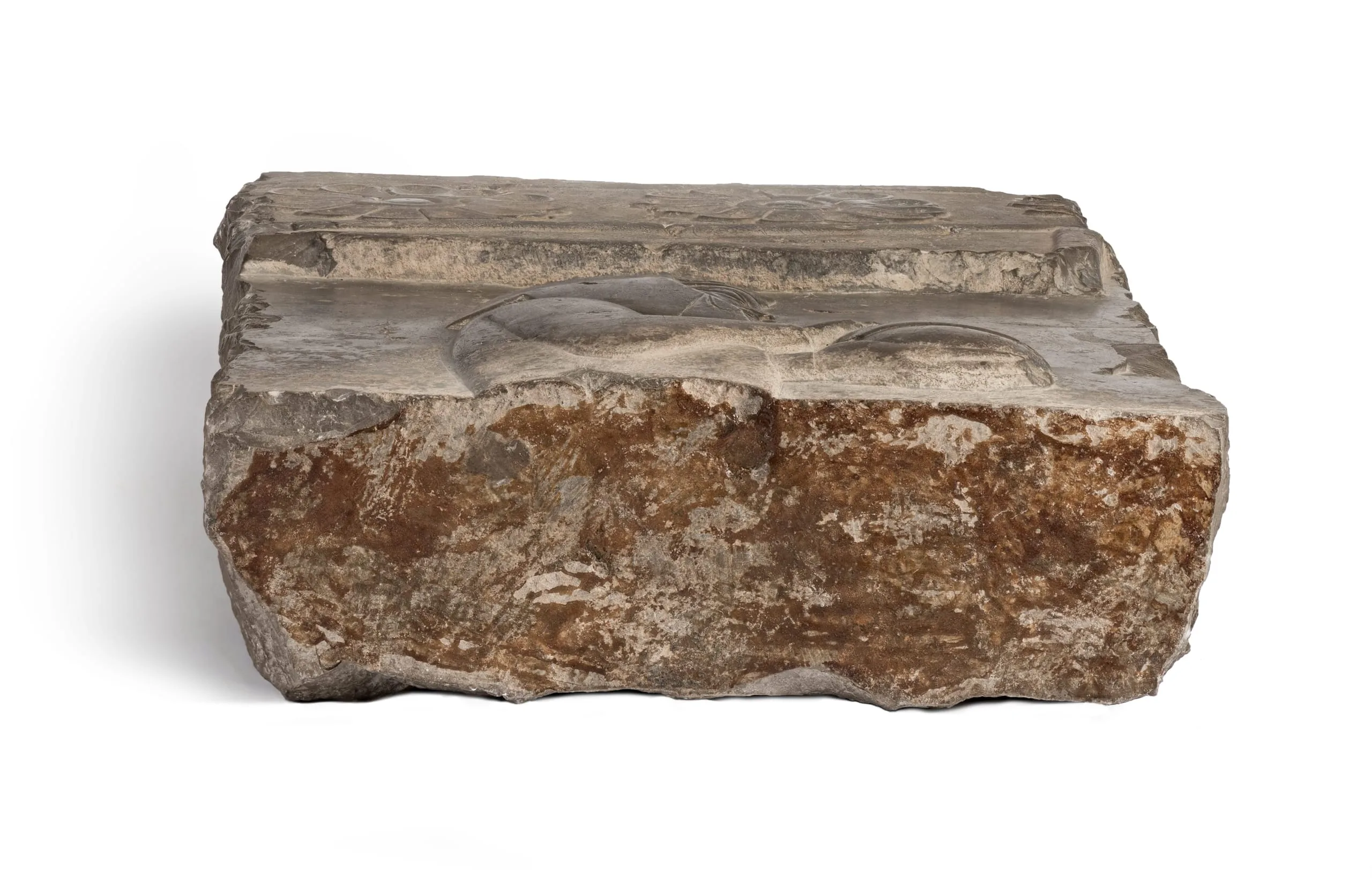
The magnificent palaces of the capital of Persepolis were built by Darius I (the Great, reigned 521-486 BC) around 518 BC. Construction continued for more than sixty years, resulting in the erection of a large number of buildings. The structures, usually built on raised ground and platforms, were scaled via monumental staircases decorated with friezes of glazed bricks or polychrome bas-reliefs. The Persepolis palaces contain the best-known examples of stone relief decoration from the Achaemenid empire. Apadana, the king's main audience hall at Persepolis, had double staircases with an elaborate series of reliefs that were mirror images of each other. Delegations from all the empire, including Median and Persian noblemen, guards, and attendants, are represented on the reliefs bringing presents and tributes. On this fragment is a figure in Median dress holding a covered vessel. The fragment, a gift of Carl Homes, was probably a part of the decorated staircase of Tachara, the private palace of Darius I.