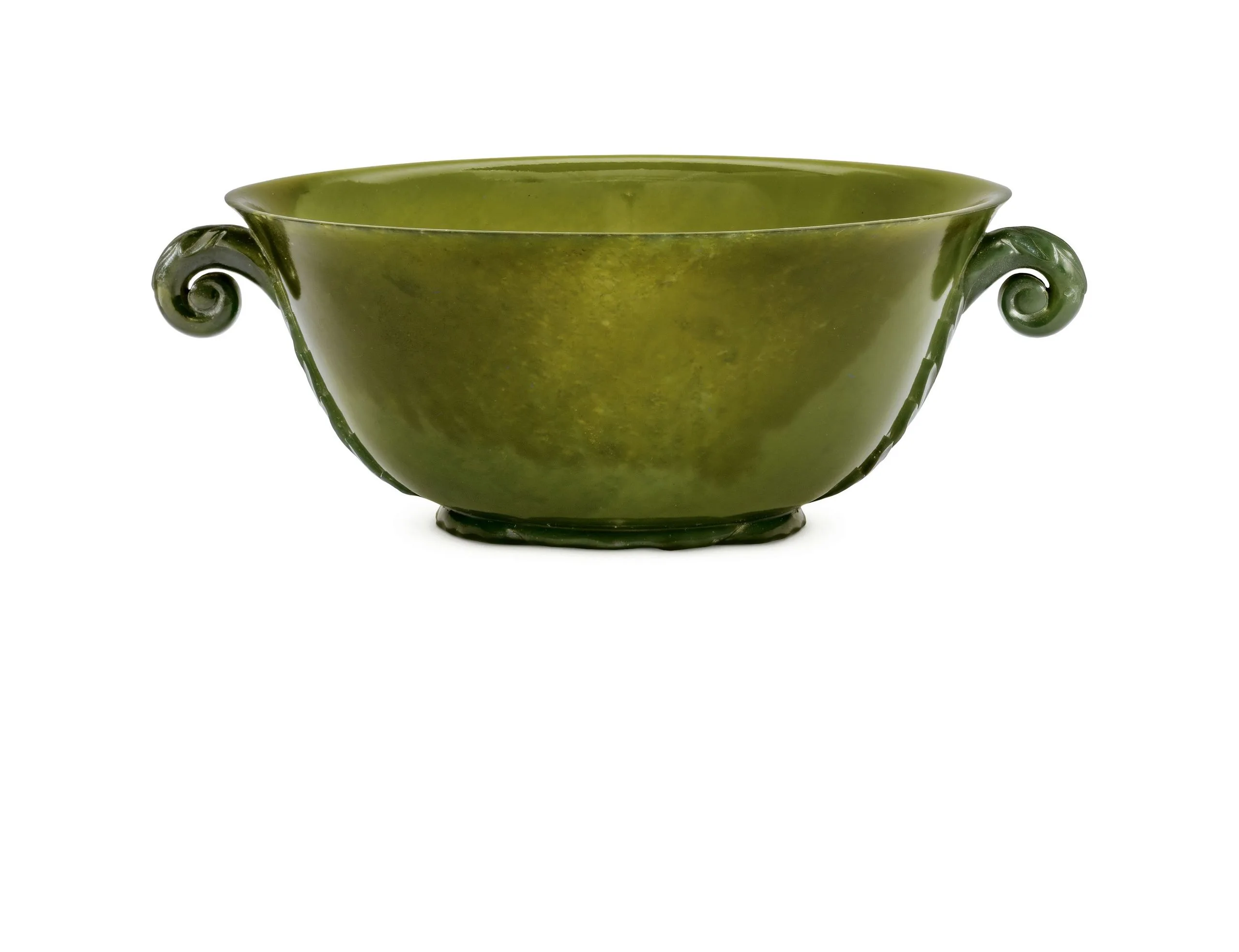
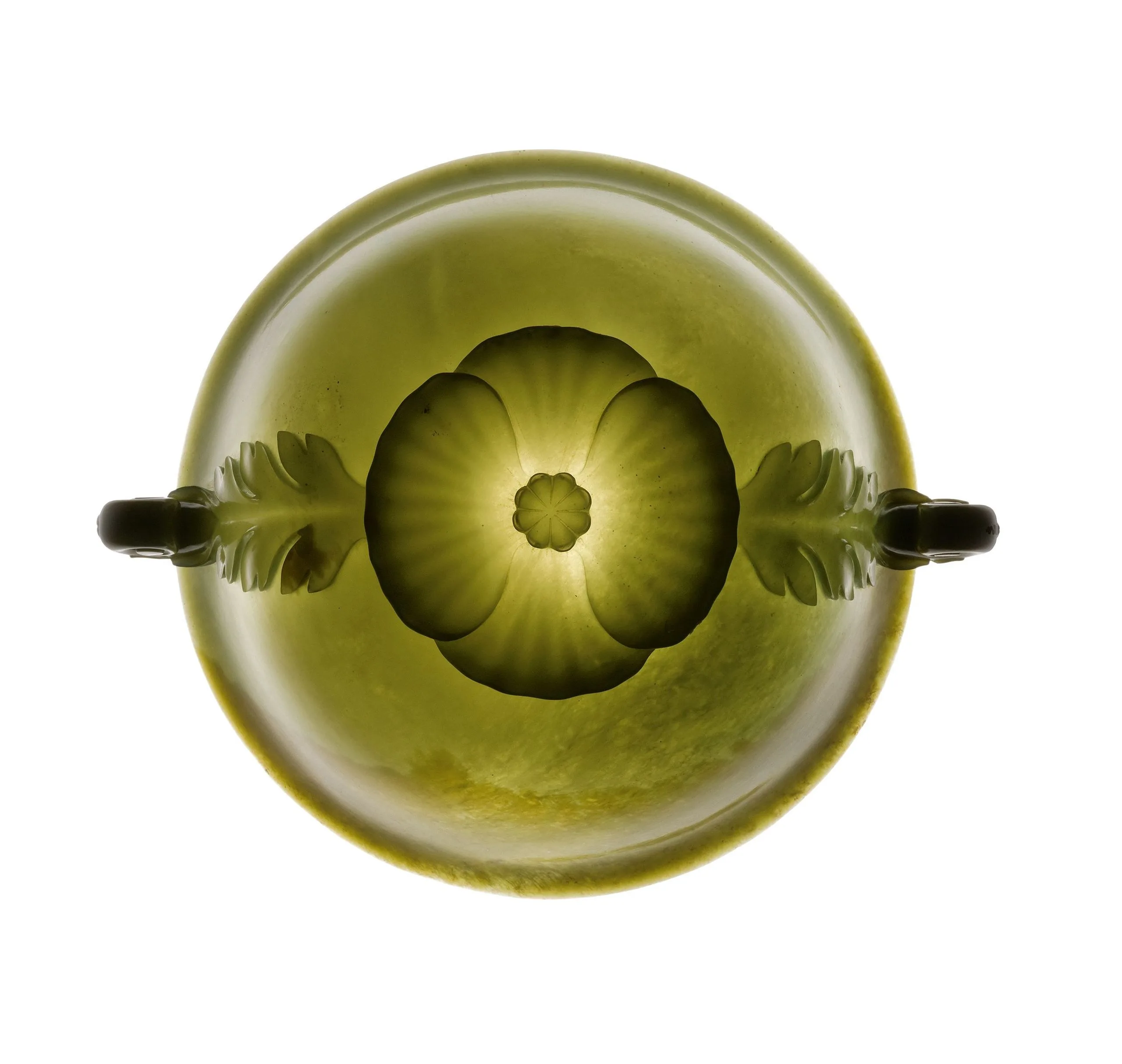
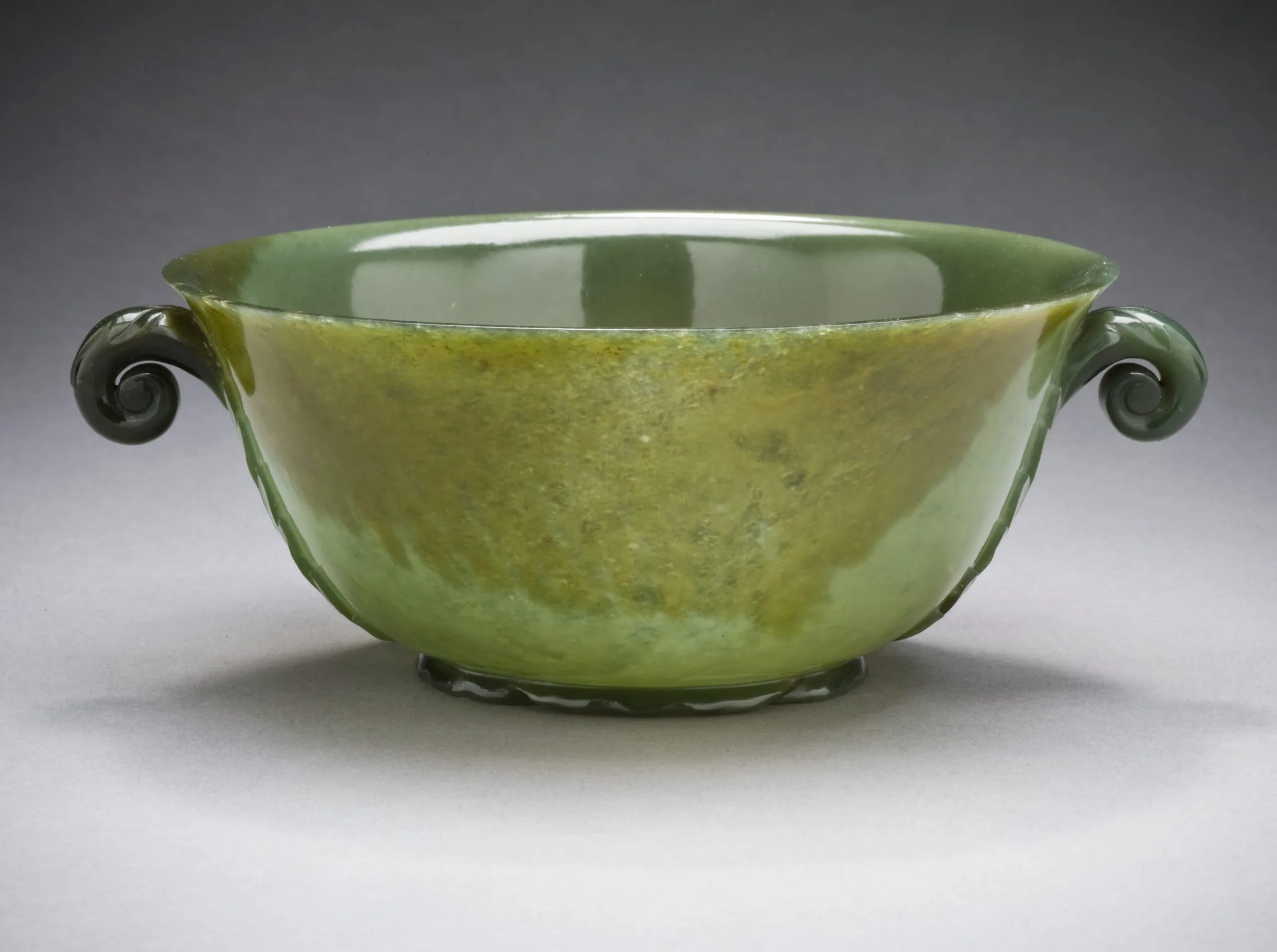
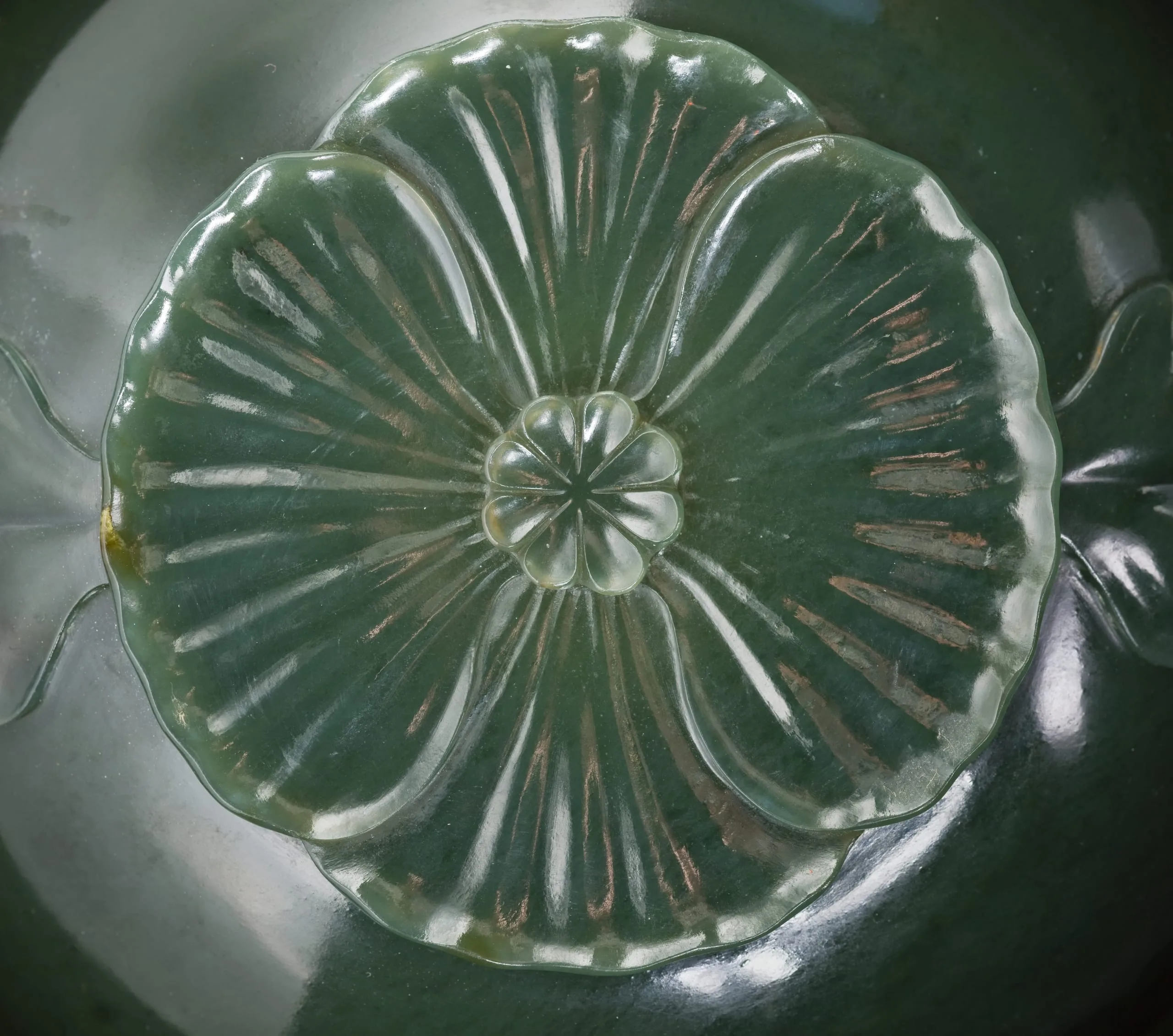
Epitomizing the refined aesthetic sensibility and incomparable technical expertise of the most accomplished jades produced for the Mughal Emperor Shah Jahan (r. 1628-58), this sublime bowl made of mottled dark green jade has a flared lip and opposite handles formed from the scrolled terminals of raised acanthus leaves that adorn the otherwise plain exterior walls of the vessel. The low foot is formed from four overlapping lotus leaves oriented at right angles around a small rosette in the center.
The Mughal’s use of acanthus leaves as an ornamental motif was inspired by the similar ancient and enduring decorative tradition in Western art. They had first appeared as early as the seventh century BCE on Greek Corinthian columns and were soon adopted by artists in the Gandharan region of northern South Asia (primarily present-day Pakistan and Afghanistan) who produced works in an assimilated Greco-Roman style. Acanthus leaves later reentered the South Asian artistic vocabulary during the Mughal period through contact with European Renaissance art. Acanthus leaves and other foliate forms in Mughal decorative arts often had a dual function, serving as adornment and, simultaneously, as handles or to define the overall shape of an object. In addition to acanthus leaves, artists drew inspiration from a wide variety of flowers, foliage, and animals, which were often combined to create fantastic hybrid forms and intricate design programs.
When viewed from the bottom with transmitted light, the bowl has an ethereal appearance perfectly conveying its sensuous tactile appeal that invites caress yet simultaneously reveals its impalpable nature. The acanthus and lotus leaves are realistically represented, but their unnatural pairing and the subtle but exquisite modulation of the surface of the jade by the master lapidary combine to produce an otherworldly beauty and intangible quality that characterizes the finest Mughal jades.
See Stephen Markel, "Mughal Jades: A Technical and Sculptural Perspective." Asianart.com (July 2008), figs. 13-16. http://www.asianart.com/articles/markel2/index.html#2