LACMA

ShopMembershipMyLACMATickets
LACMA
Los Angeles County Museum of Art
5905 Wilshire Blvd.
Los Angeles, CA 90036
info@lacma.org
(323) 857-6000
Sign up to receive emails
Subscribe
© Museum Associates 2025

Museum Hours

Monday

11 am–6 pm

Tuesday

11 am–6 pm

Wednesday

Closed

Thursday

11 am–6 pm

Friday

11 am–8 pm

Saturday

10 am–7 pm

Sunday

10 am–7 pm


  • About LACMA
  • Jobs
  • Building LACMA
  • Host An Event
  • Unframed
  • Press
  • FAQs
  • Log in to MyLACMA
  • Privacy Policy
© Museum Associates 2025
Collections

Unknown
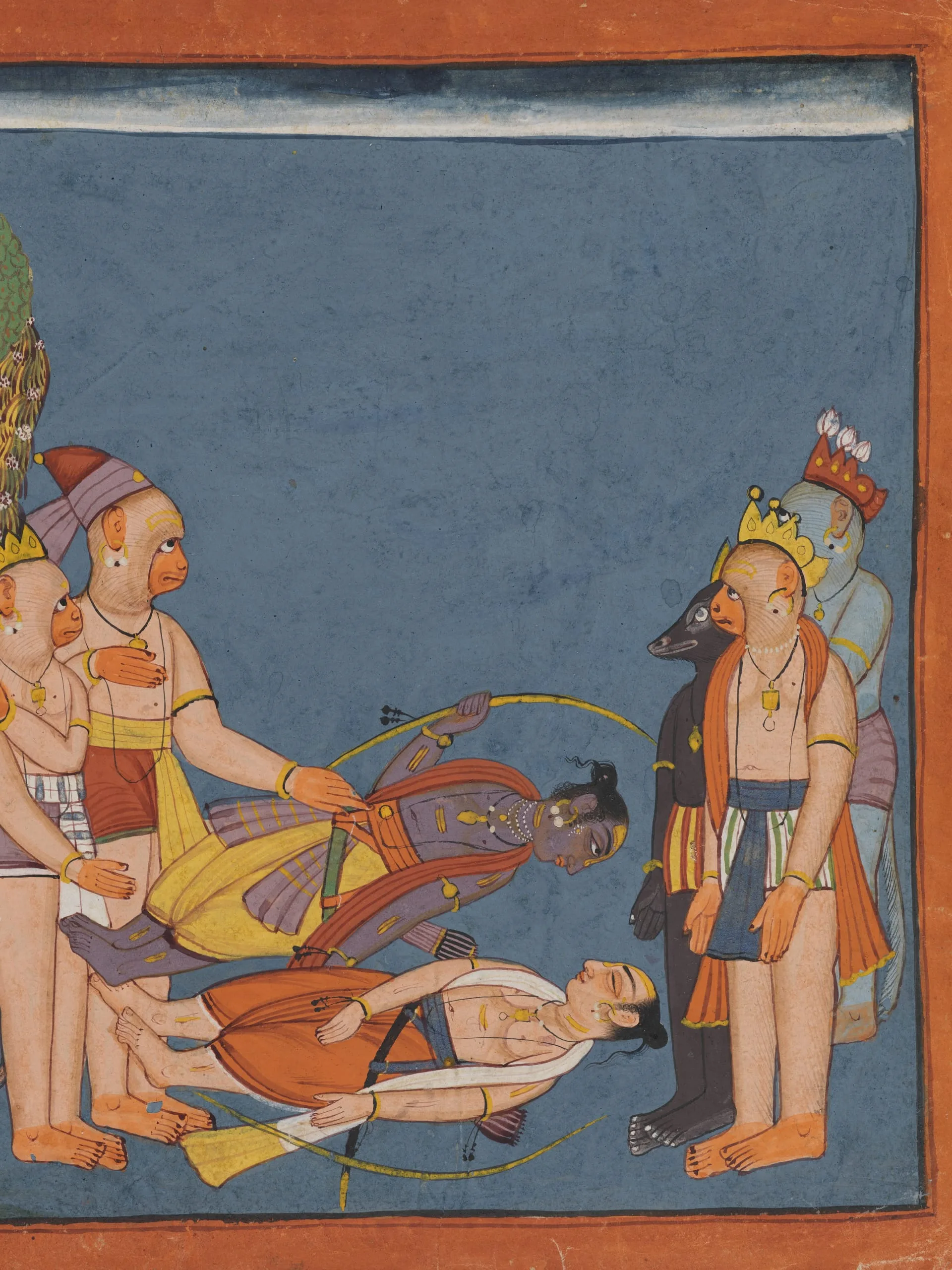
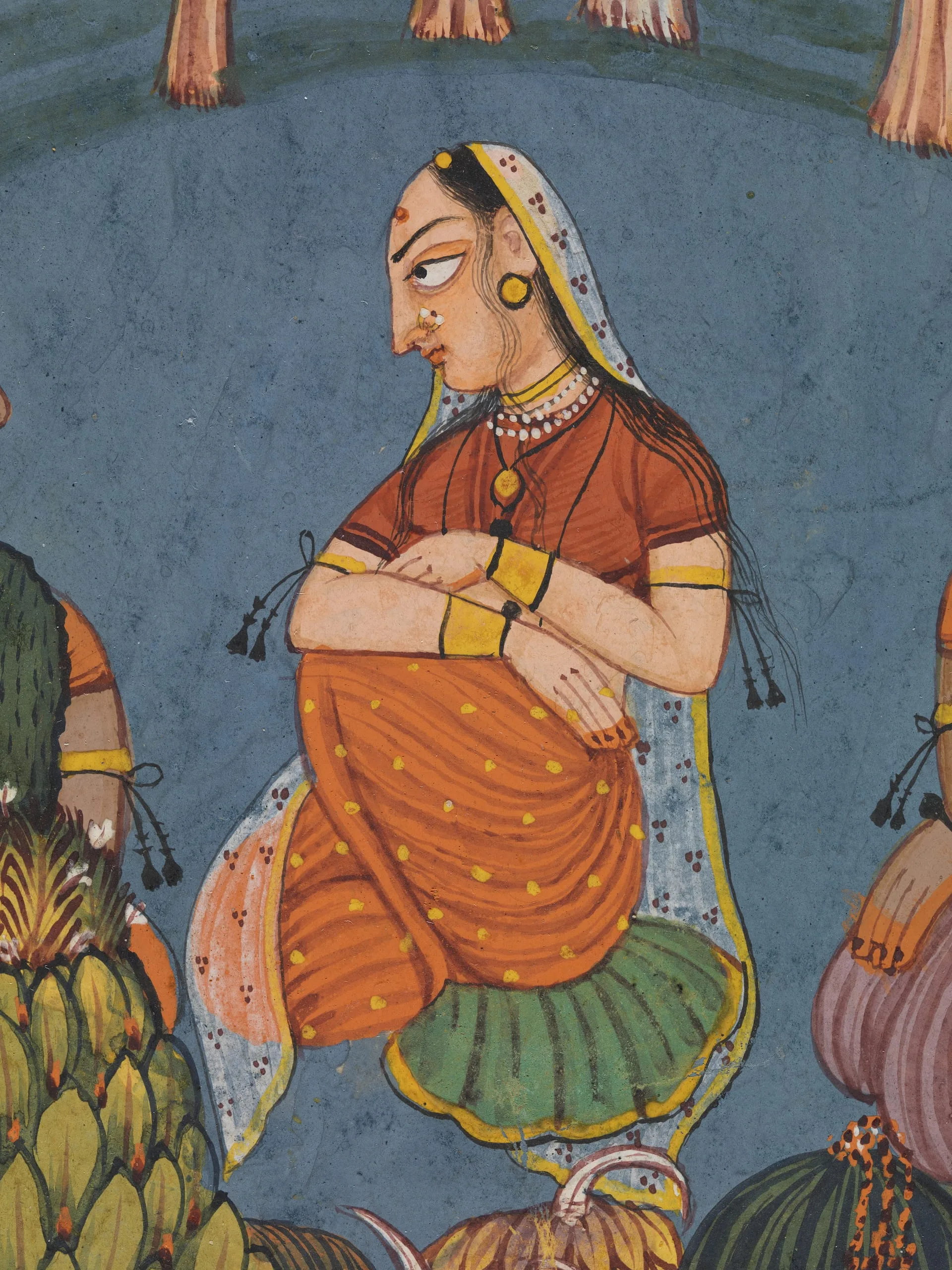
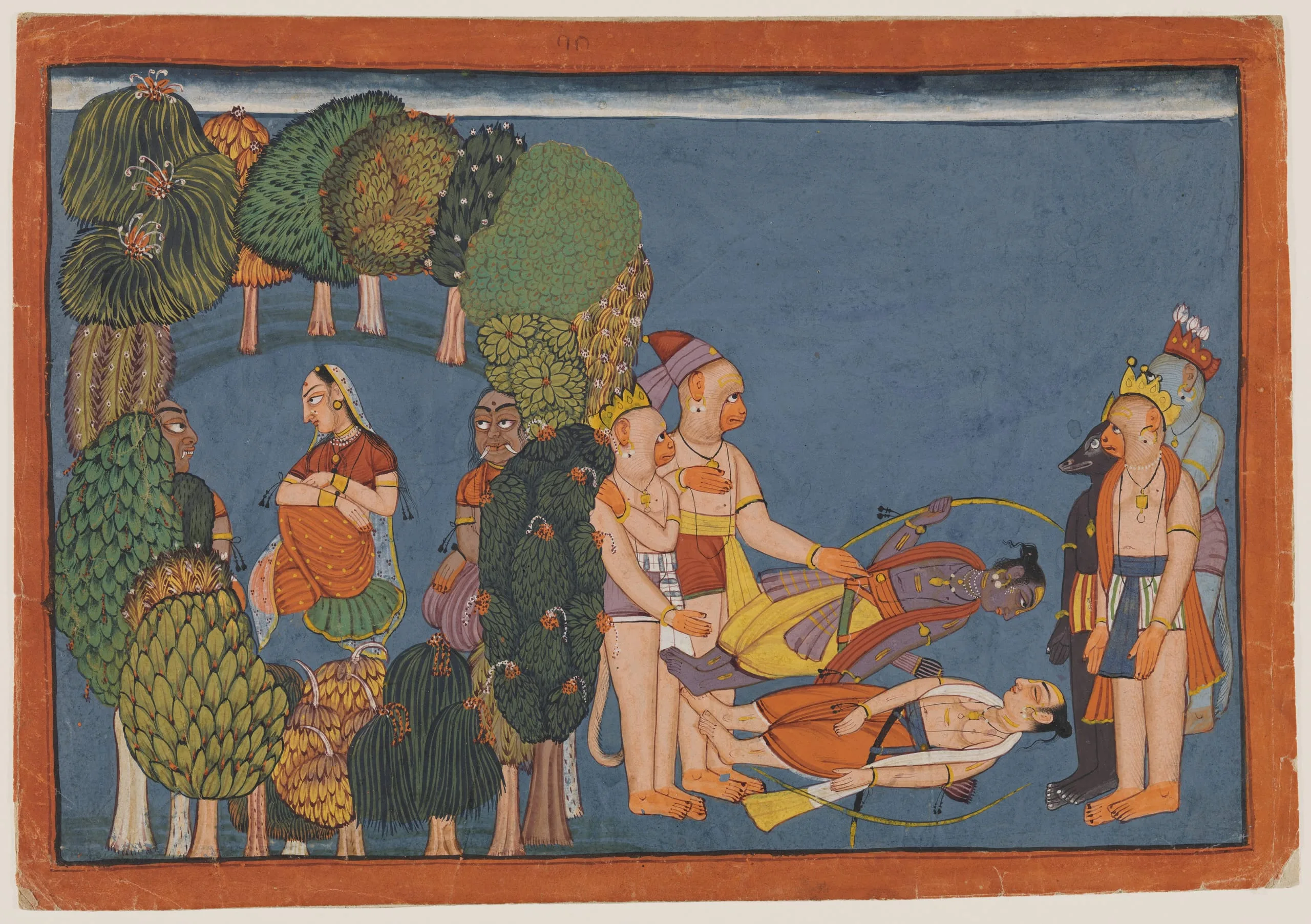
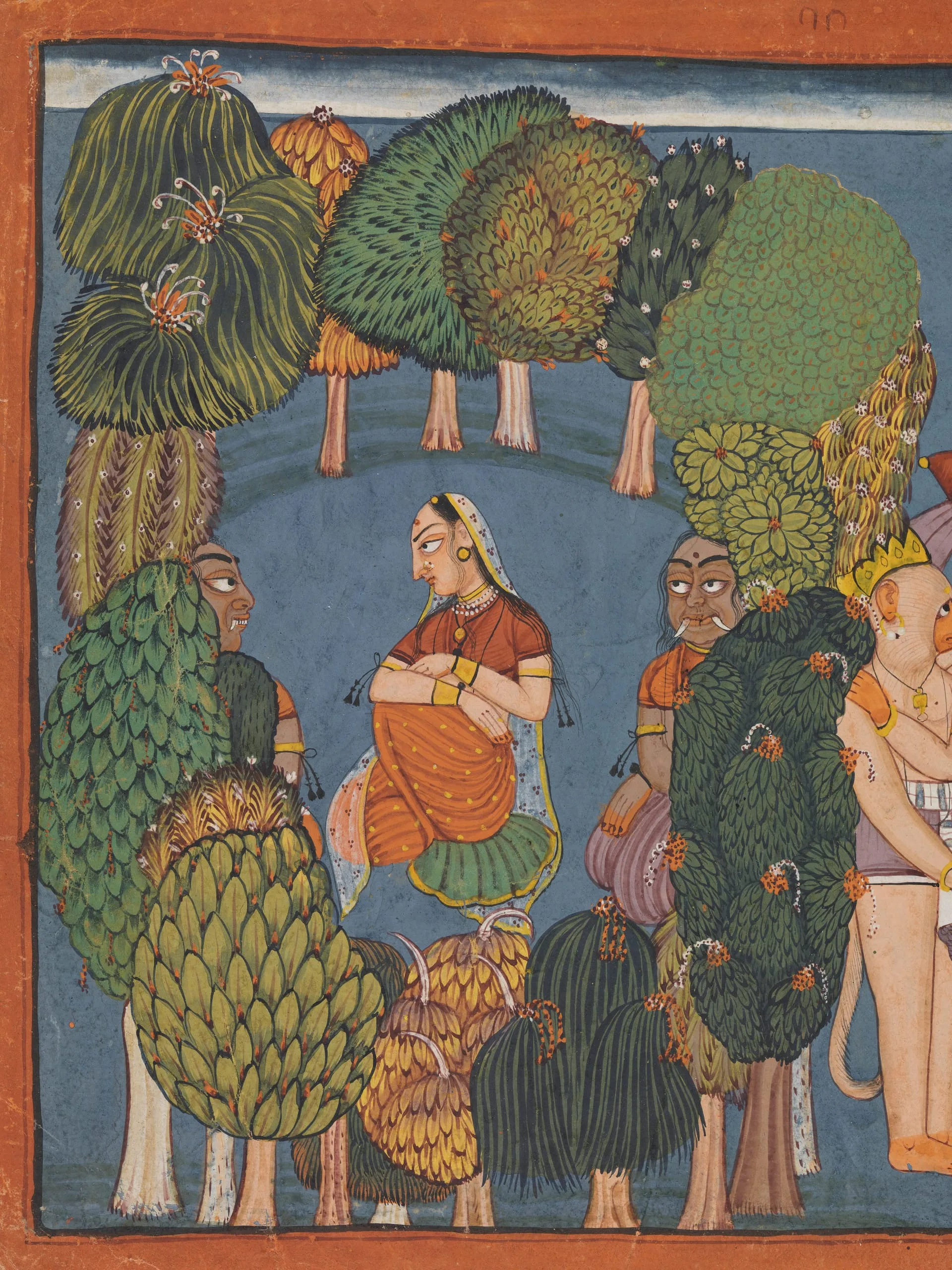
Sita Imprisoned in the Forest Grove (left); Rama and Lakshmana Stricken (right), Folio from the "Shangri" Ramayana (Adventures of Rama)circa 1700

Not on view
Indian painting on paper depicting a group of figures with varied skin tones and crowns gathered around two reclining figures, with stylized trees at left against a blue background
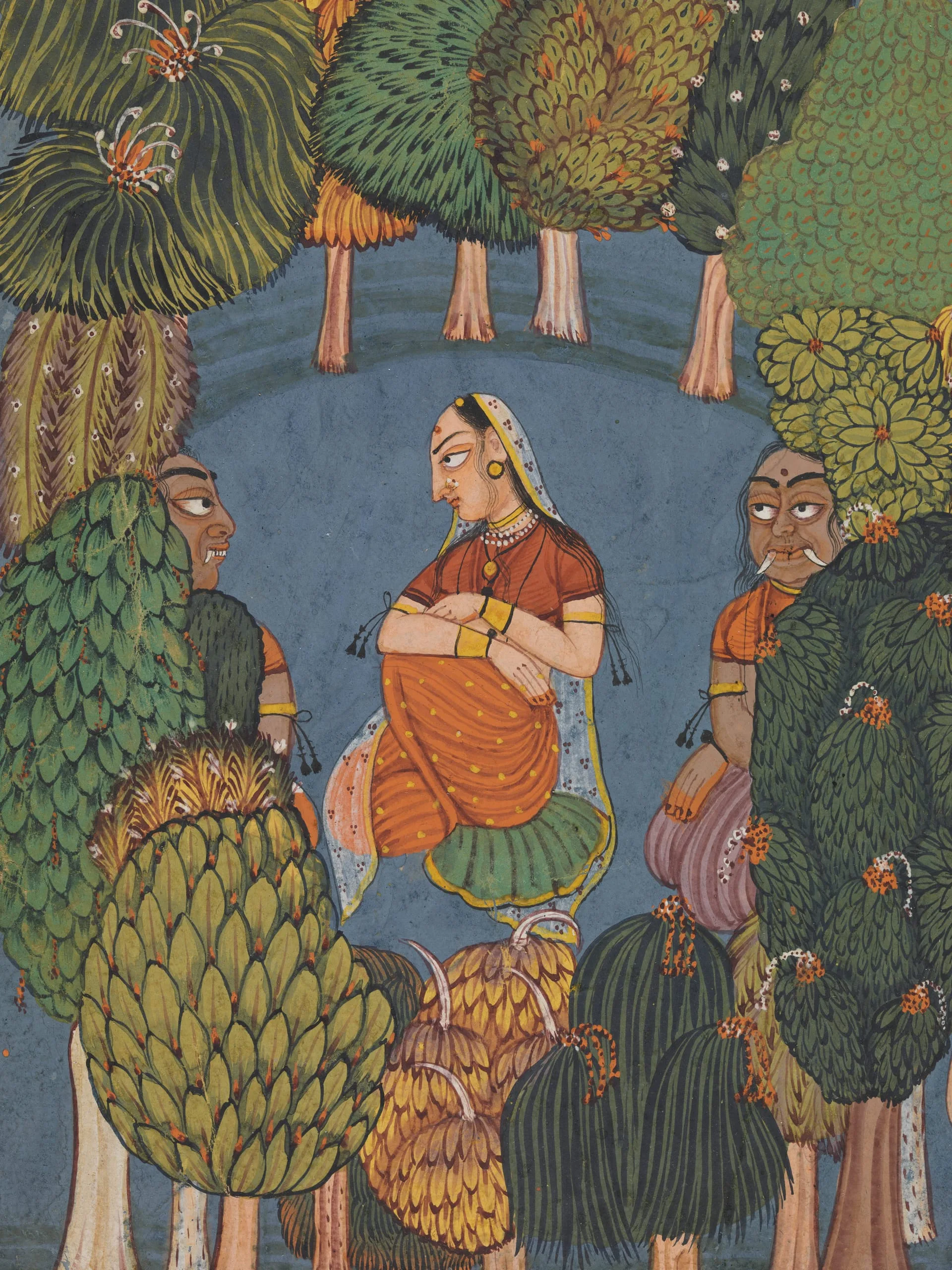
Indian manuscript painting, opaque watercolor on paper, a woman in orange and green garments with gold jewelry stands with arms folded, surrounded by monkey figures with lush stylized trees against a blue ground, orange border.
Indian opaque watercolor manuscript painting on blue ground; group of figures with animal heads including a dark-furred figure and a boar-headed crowned figure at right, flanking a dark-skinned reclining figure attended by others at left, rendered in flat planes of orange, yellow, and ochre with fine linear detail.
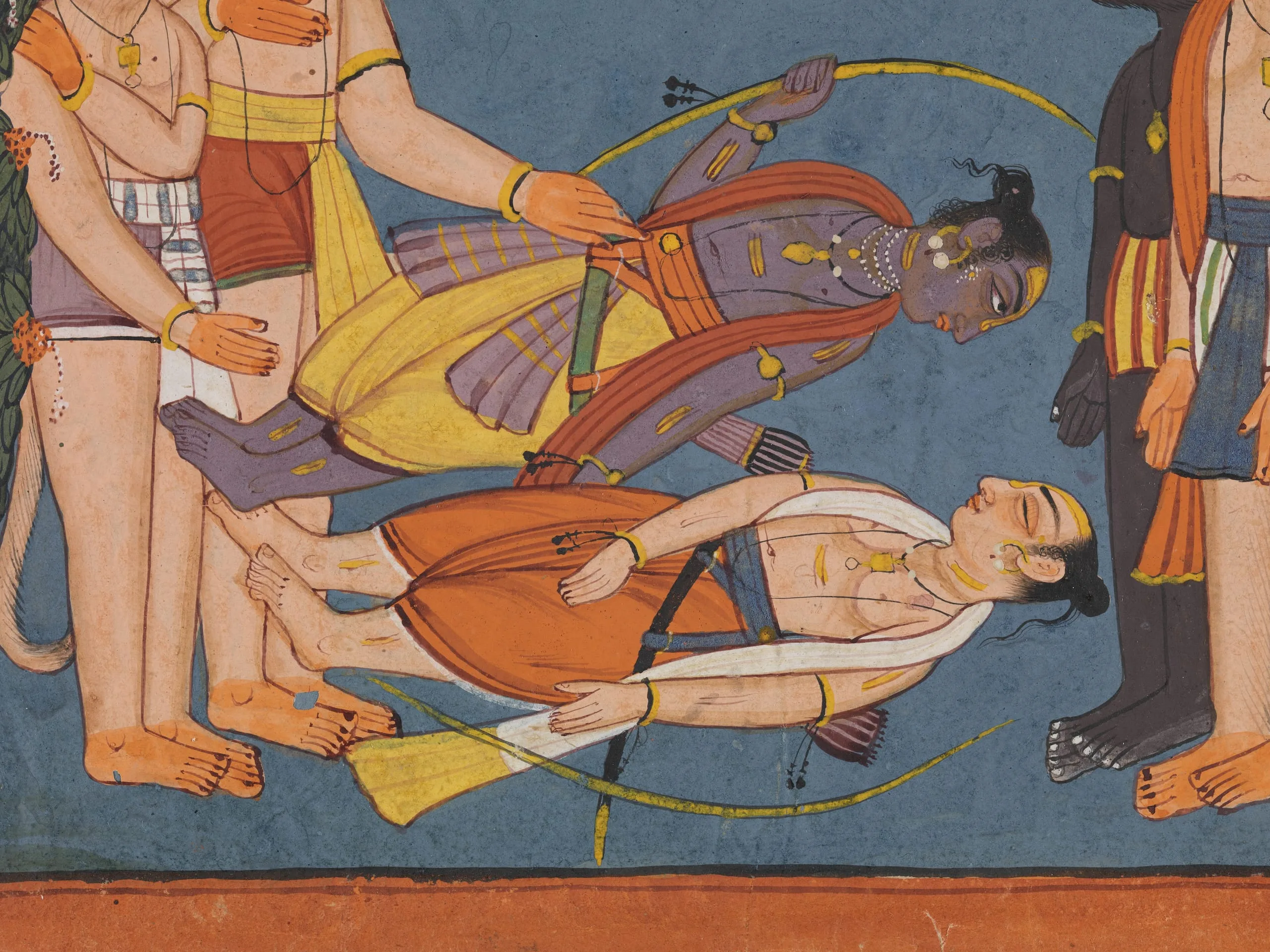
Opaque watercolor manuscript painting on paper; a blue-skinned figure in yellow and orange garments leans over a recumbent figure with closed eyes, surrounded by standing attendants against a flat blue-gray ground; fine line work with gold jewelry details and arrows visible in the foreground.
Indian miniature painting, a richly adorned woman in orange and green skirts with a blue veil stands in profile at center, arms crossed, flanked by two dark-complexioned demonic figures partially concealed within densely layered stylized trees against a blue-grey ground.
Indian miniature painting, a woman in orange and red garments with gold jewelry and a white veil seated cross-armed at center, flanked by two dark, leafy demoness figures with prominent tusks, against a deep blue background with tree trunks above
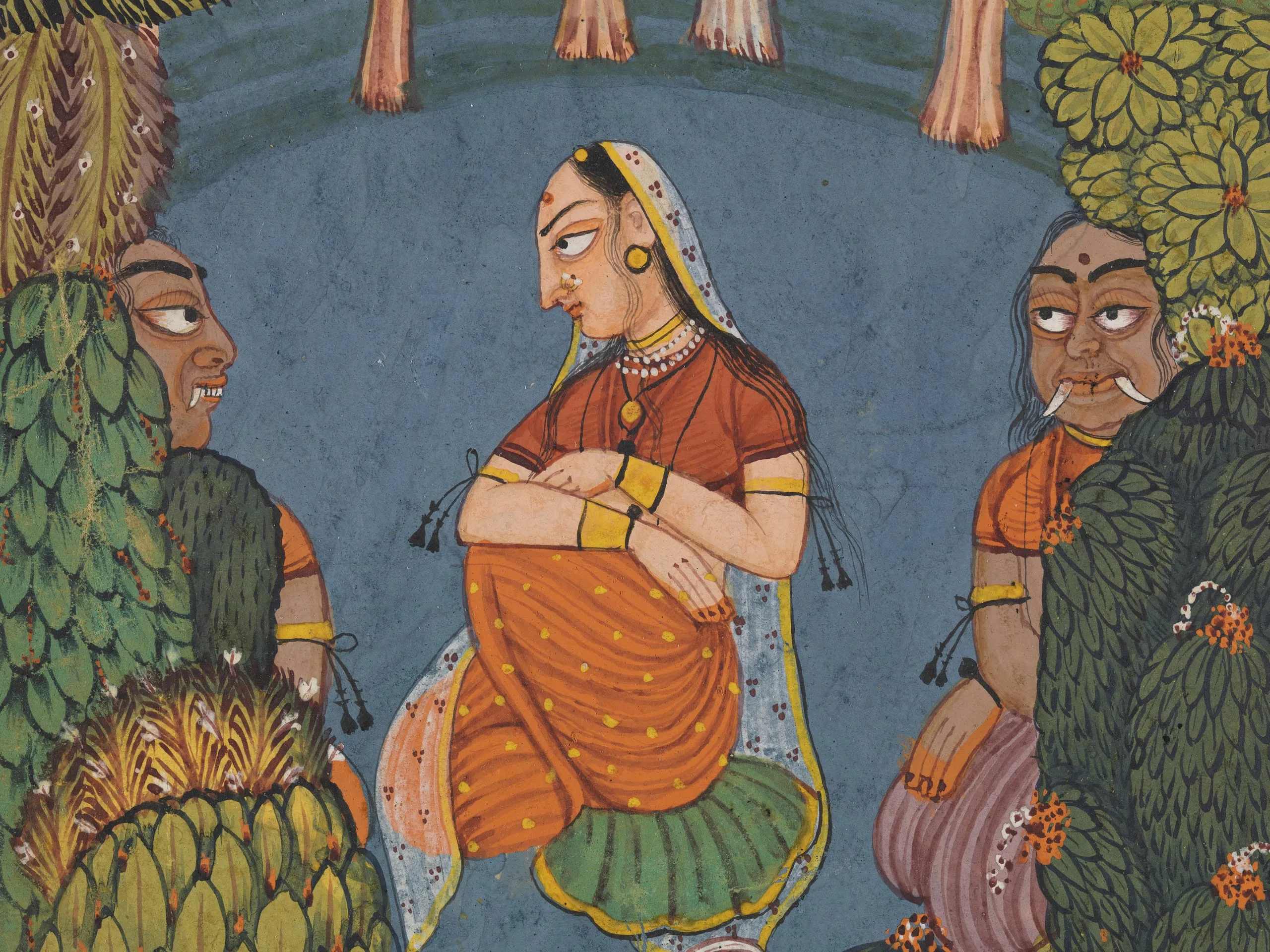
Indian miniature painting, detail of a woman in profile wearing a rust-red choli, orange skirt with gold dots, and pale blue dupatta, adorned with gold jewelry and earrings, arms crossed, seated against a blue-grey ground with stylized foliage below.
Artist or Maker
Unknown
Title
Sita Imprisoned in the Forest Grove (left); Rama and Lakshmana Stricken (right), Folio from the "Shangri" Ramayana (Adventures of Rama)
Place Made
Northern India, Pahari kingdoms
Date Made
circa 1700
Medium
Opaque watercolor on paper
Dimensions
Sheet: 8 3/4 x 12 3/8 in. (22.23 x 31.43 cm); Image: 7 3/4 x 11 1/2 in. (19.69 x 29.21 cm)
Credit Line
Gift of The Walter Foundation
Accession Number
M.91.348.2
Classification
Drawings
Collecting Area
South and Southeast Asian Art
Curatorial Notes

The Ramayana narrates the epic saga of the valiant Prince Rama and his dutiful wife, Princess Sita, who was abducted by Ravana, the arrogant ten-headed King of Lanka (probably modern Sri Lanka), during Rama's unjust fourteen-year forest exile from his capital of Ayodhya, Uttar Pradesh. To rescue Sita, Rama and his faithful brother Lakshmana assembled a great army of monkeys and bears led by the Monkey-King Sugriva and his Monkey-General Hanuman. After several magical battles, the princess was freed, and the happy couple triumphantly returned home to rule their kingdom.

This painting illustrates two episodes from Book 6 (Yuddha kanda). On the right, Rama and Lakshmana lie on the ground after being struck down with numerous arrows by the demon Indrajit. Curiously, the arrows piercing the heroes are not depicted, nor is the blood streaming from their wounds. They are surrounded by four mourning monkey leaders and the Bear-King Jambavan (Ramayana 6:36:1-7). On the left, Sita is again imprisoned in the Forest Grove and guarded by two ogresses after being flown over the battlefield by the Demon-King Ravana to see the fallen Rama and Lakshmana (Ramayana 6:37:36-37).

This painting, and its series mates M.74.5.11, M.77.19.22, M.83.105.9, and M.87.278.2, are from the widely dispersed large series known as the “Shangri” Ramayana, so called because it was formerly in the ancestral collection of the Shangri branch of the royal family of Kulu, Himachal Pradesh.
Selected Bibliography
  • Mace, Sonya Rhie. "Reconstructing the Indrajit Cycle of the "Shangri" Ramayana." Arts of Asia Spring (2026): 92-101.