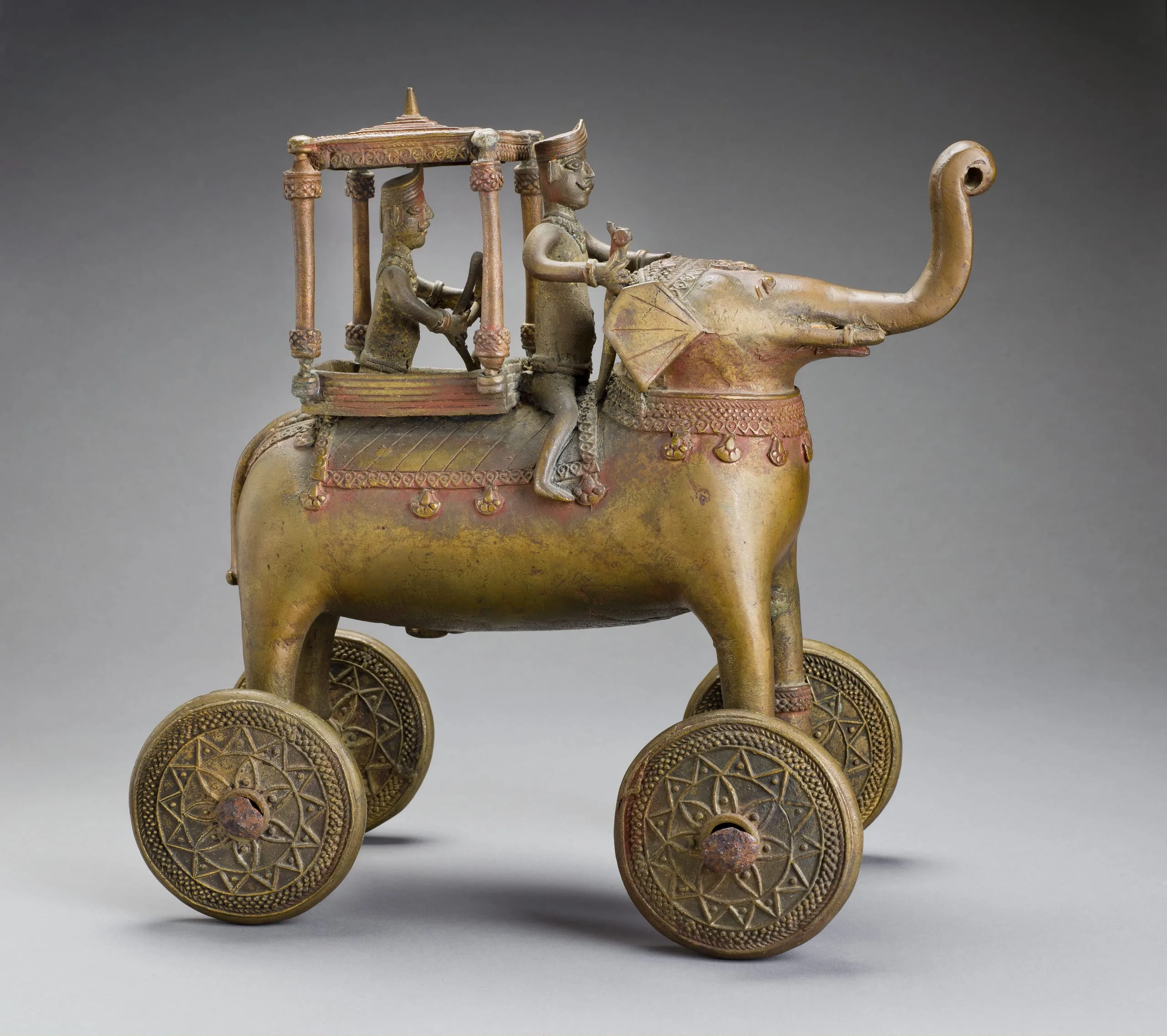
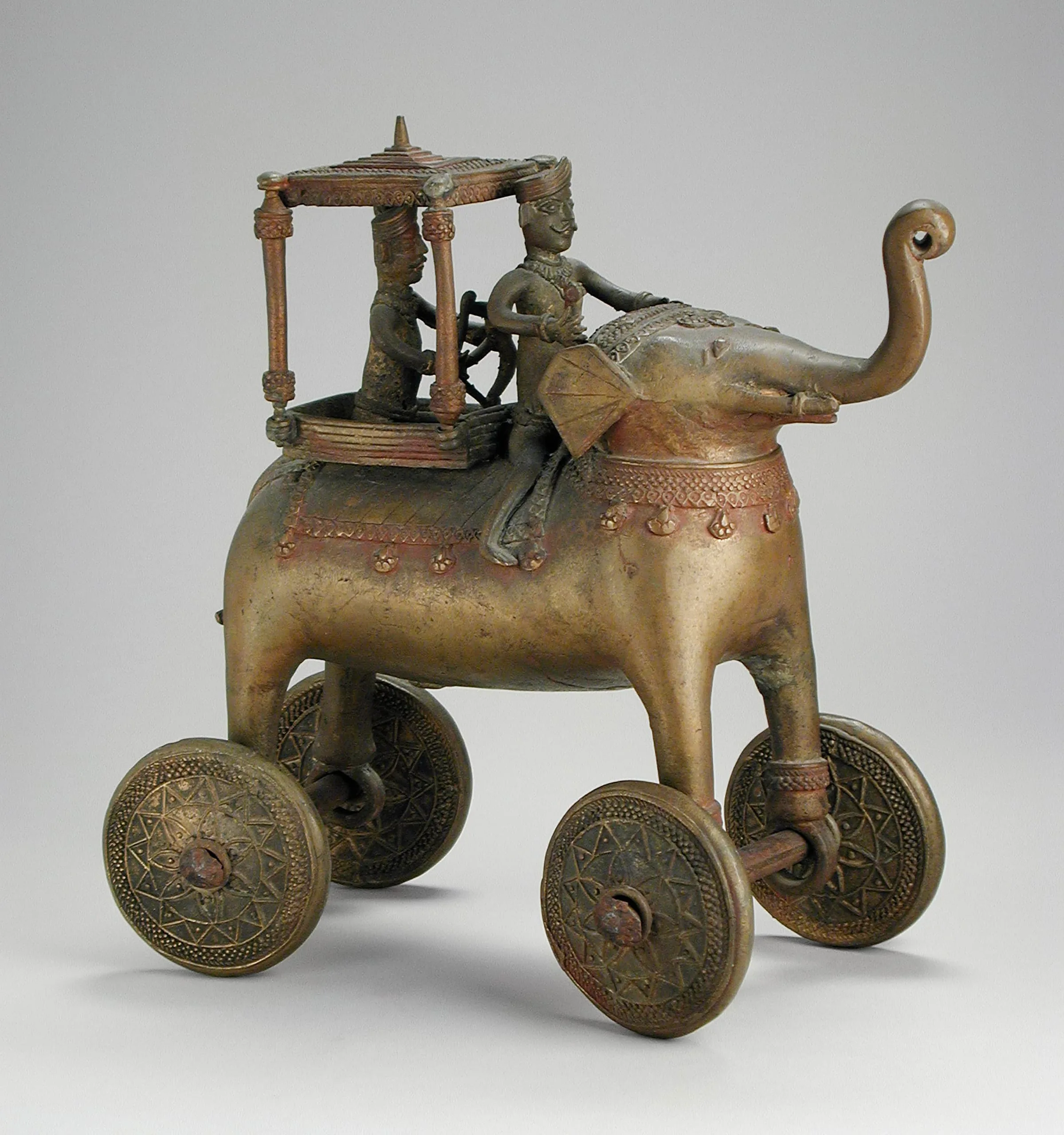
The Ghadwas (or Gadhwas) are an indigenous (adivasi) artisan community from the Bastar region of southern Chhattisgarh in central India. They are renowned for casting the so-called ‘Bastar bronzes,’ which are technically made of brass or bell metal and first modeled in clay rather than in wax. Reportedly first fashioned in the 11th–12th century, the folkish Bastar sculptures encompass a broad spectrum of subject matter ranging from depictions of protective deities to push toys with wheels for children, such as this lively LACMA example.
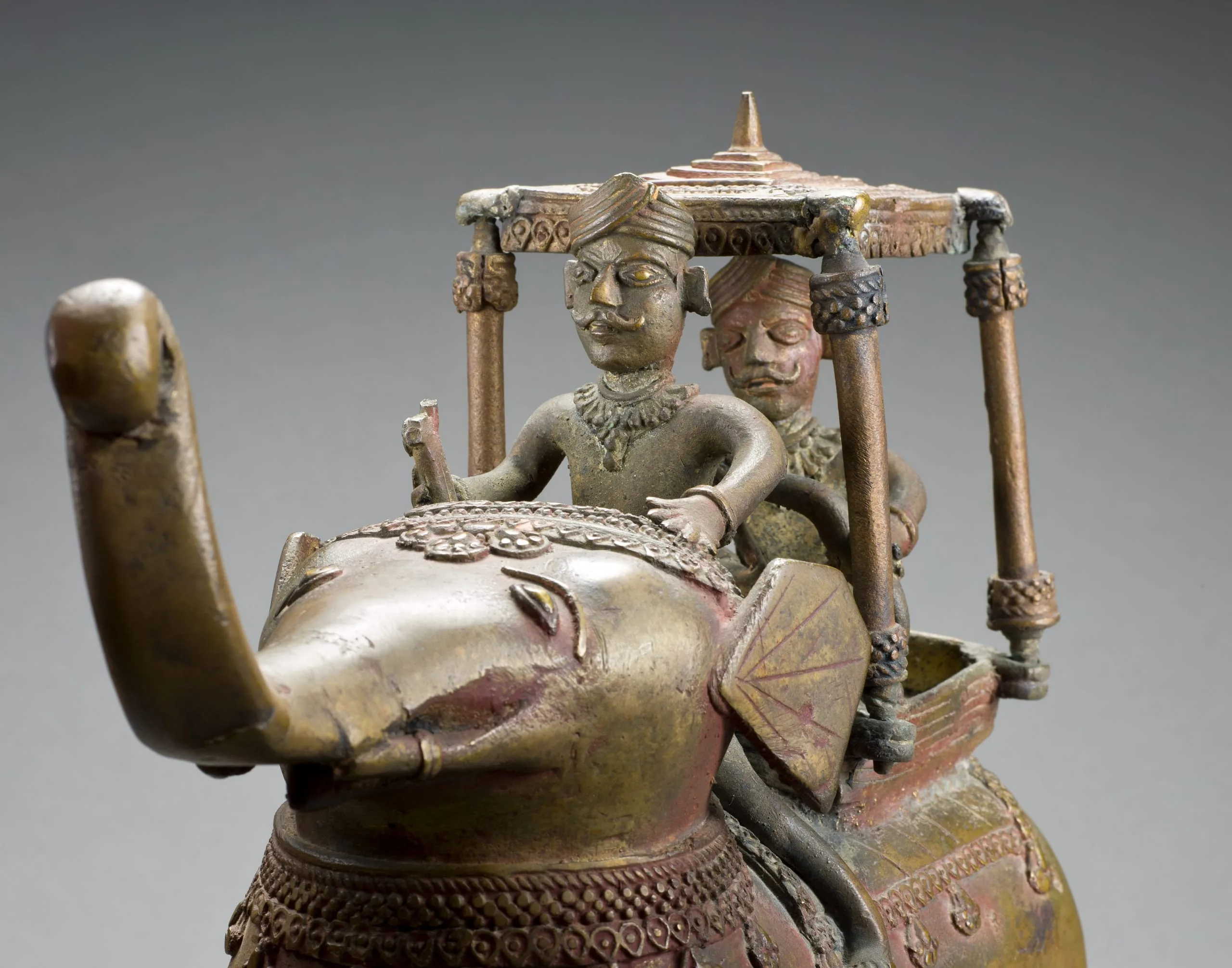
This toy elephant has a royal court official riding in a howdah and a driver (mahout) holding an elephant goad (ankush). Both figures are mustachioed and wear necklaces, rope belts, and a distinctive turban with layered folds, an angled top, and a pointed peak. This is likely a stylized rendition of a Marathi pheta turban worn by court officers and warriors in Maharashtra and central India (see M.77.15). See also M.80.6.3, M.2013.56.1, M.2013.56.2, and M.2025.83.