- Title
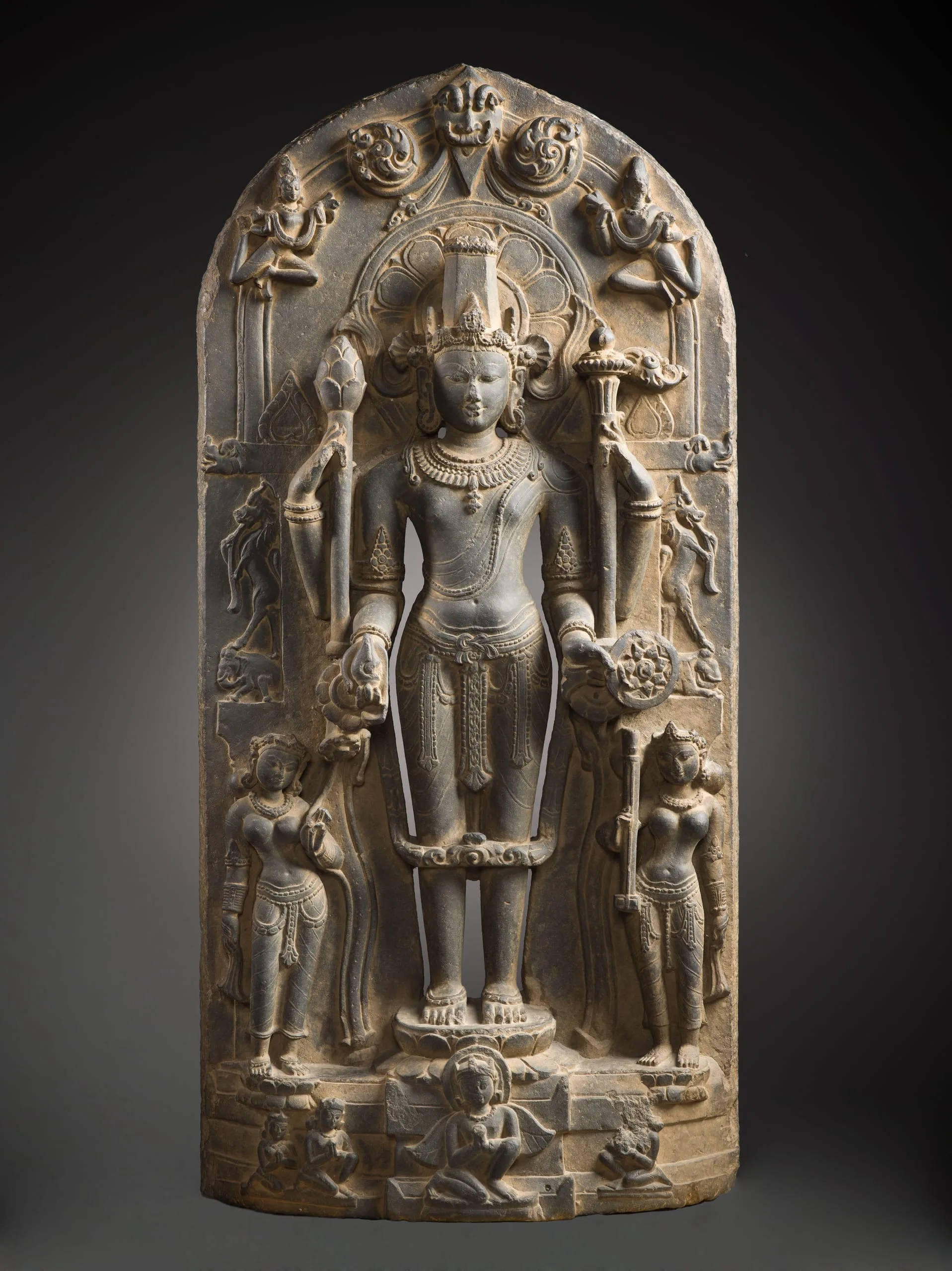
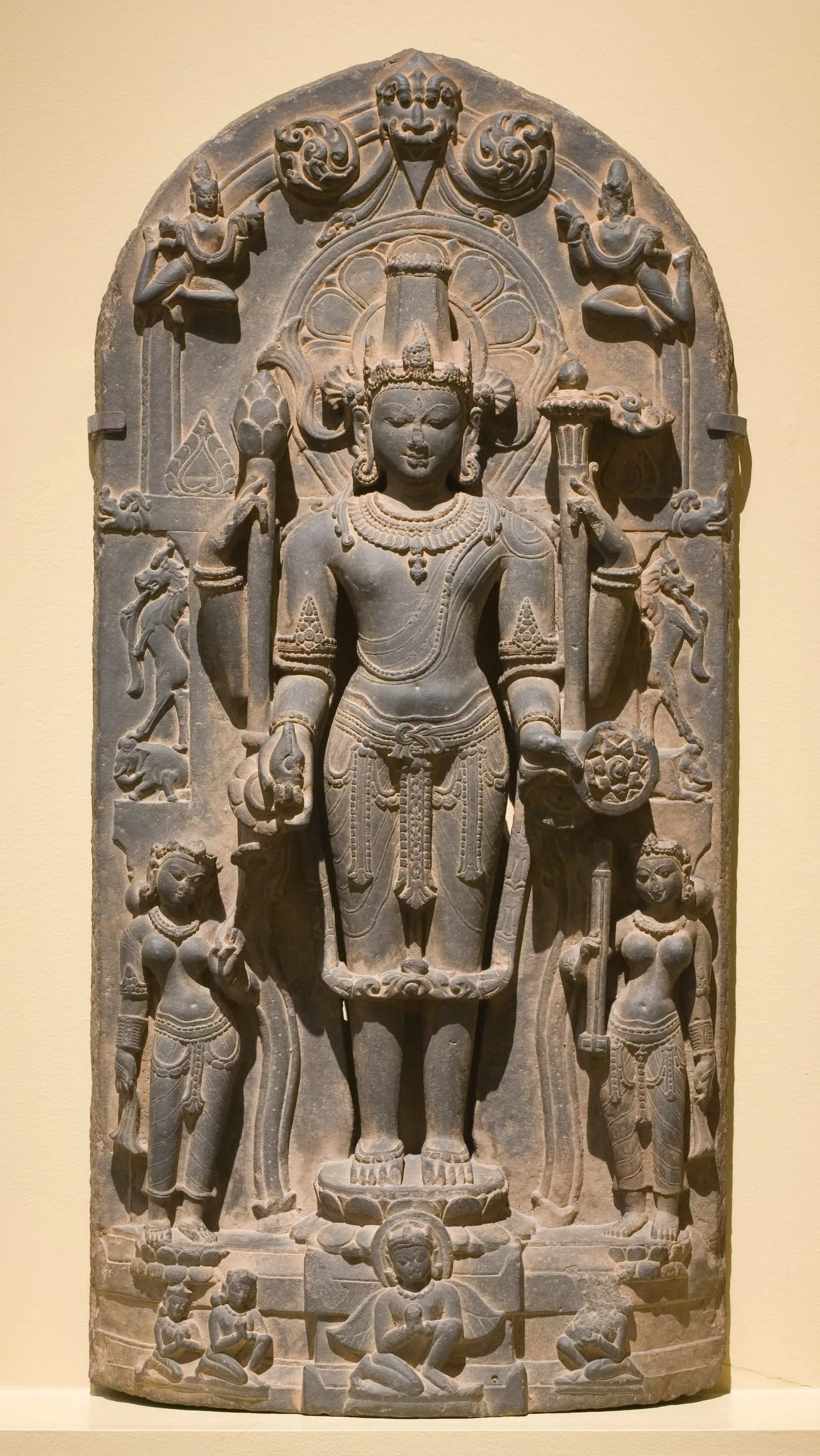
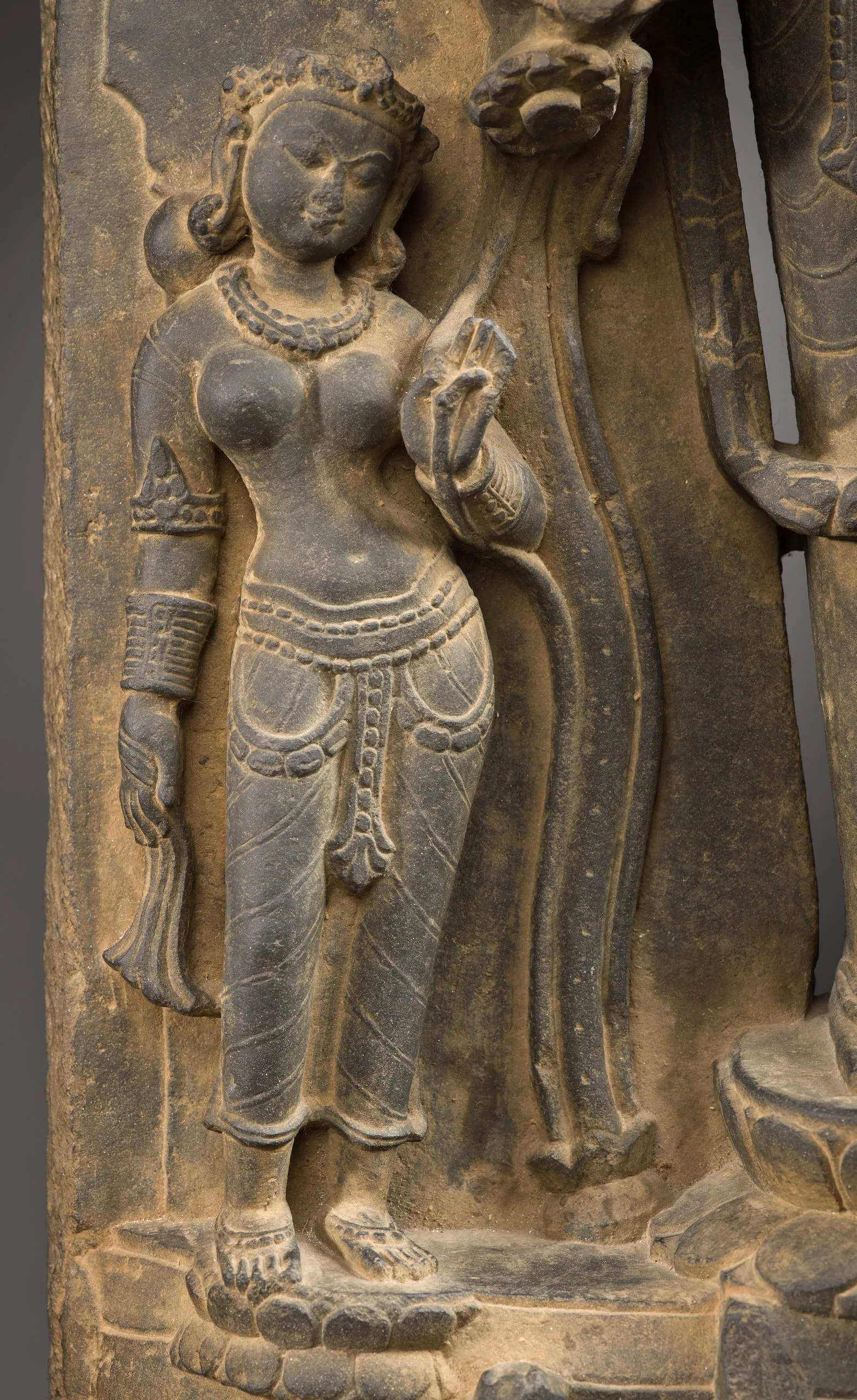
- The Hindu God Vishnu in his Emanation as Narayana
- Date Made
- circa 1000
- Medium
- Schist
- Dimensions
- 44 x 18 x 6 in. (111.76 x 45.72 x 15.24 cm)
- Accession Number
- M.91.294.1
- Curatorial Notes
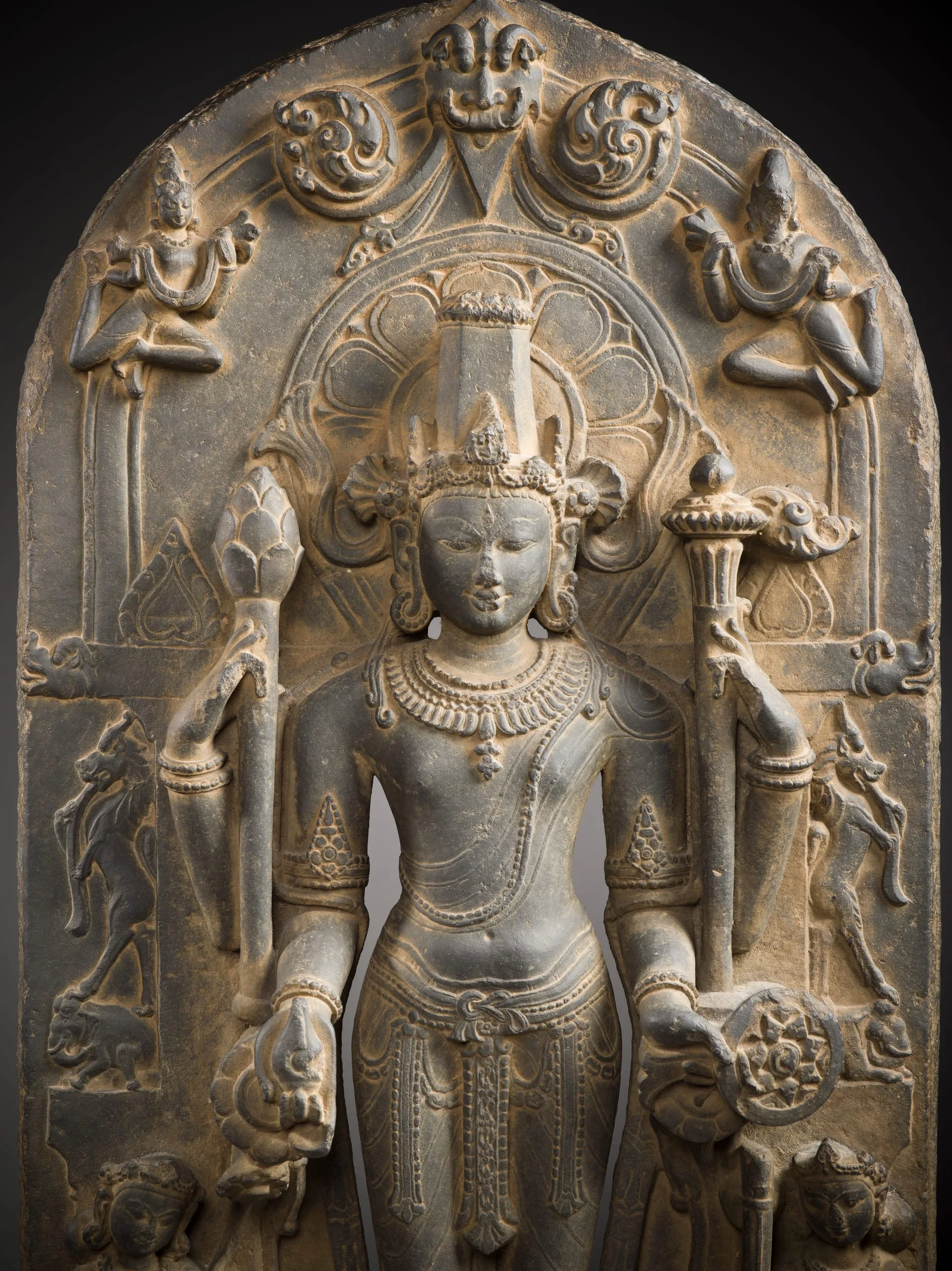
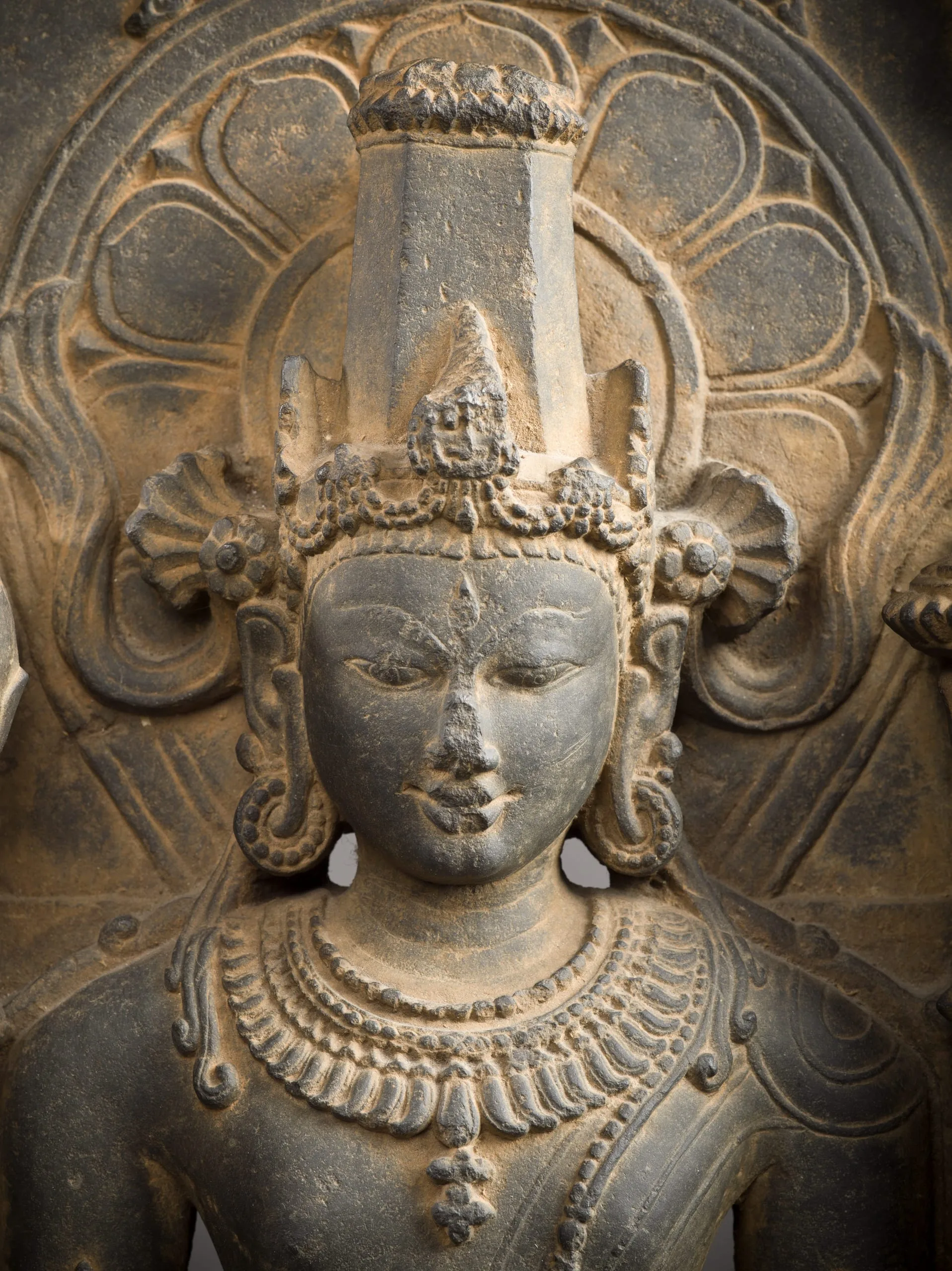
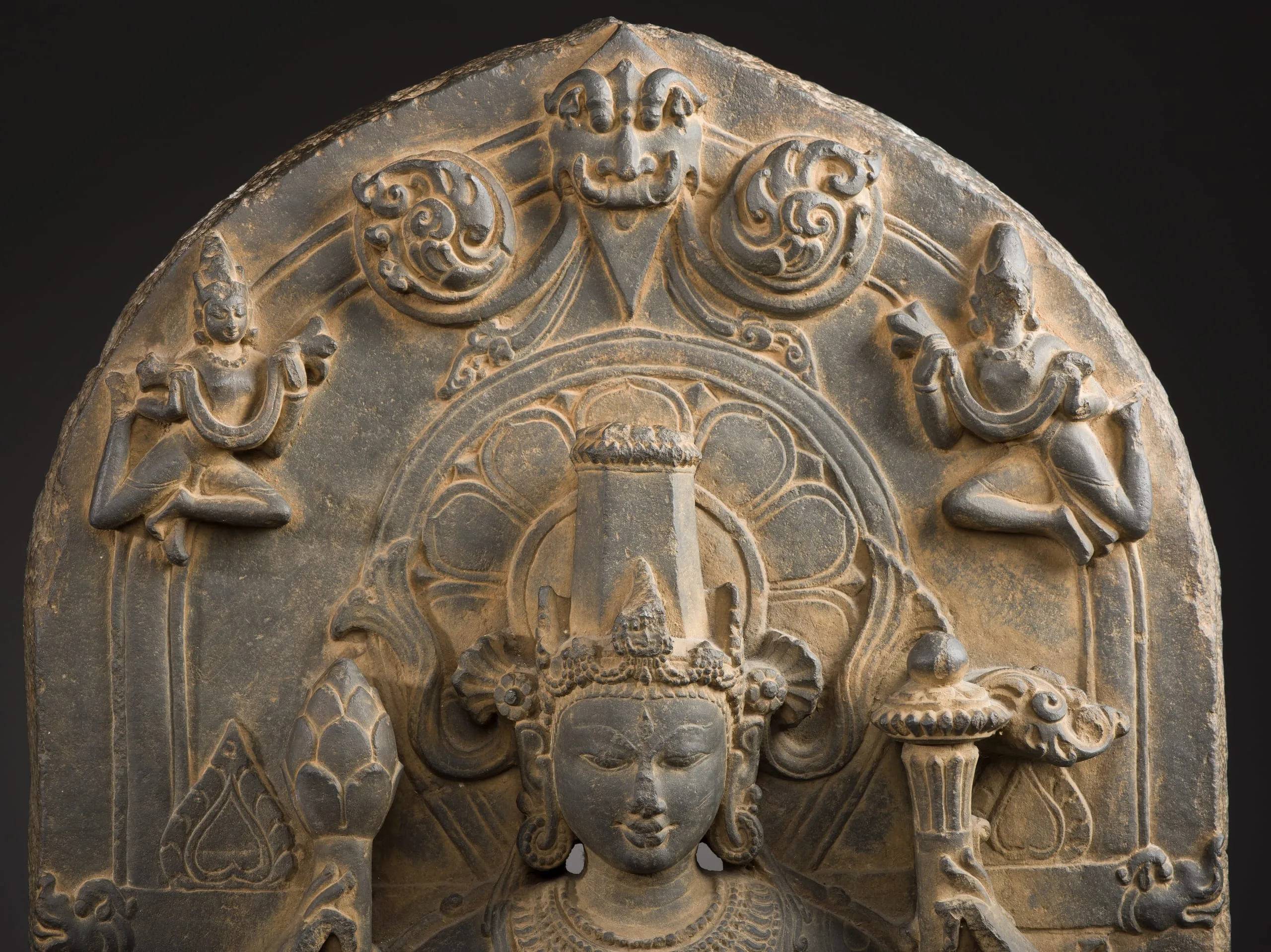
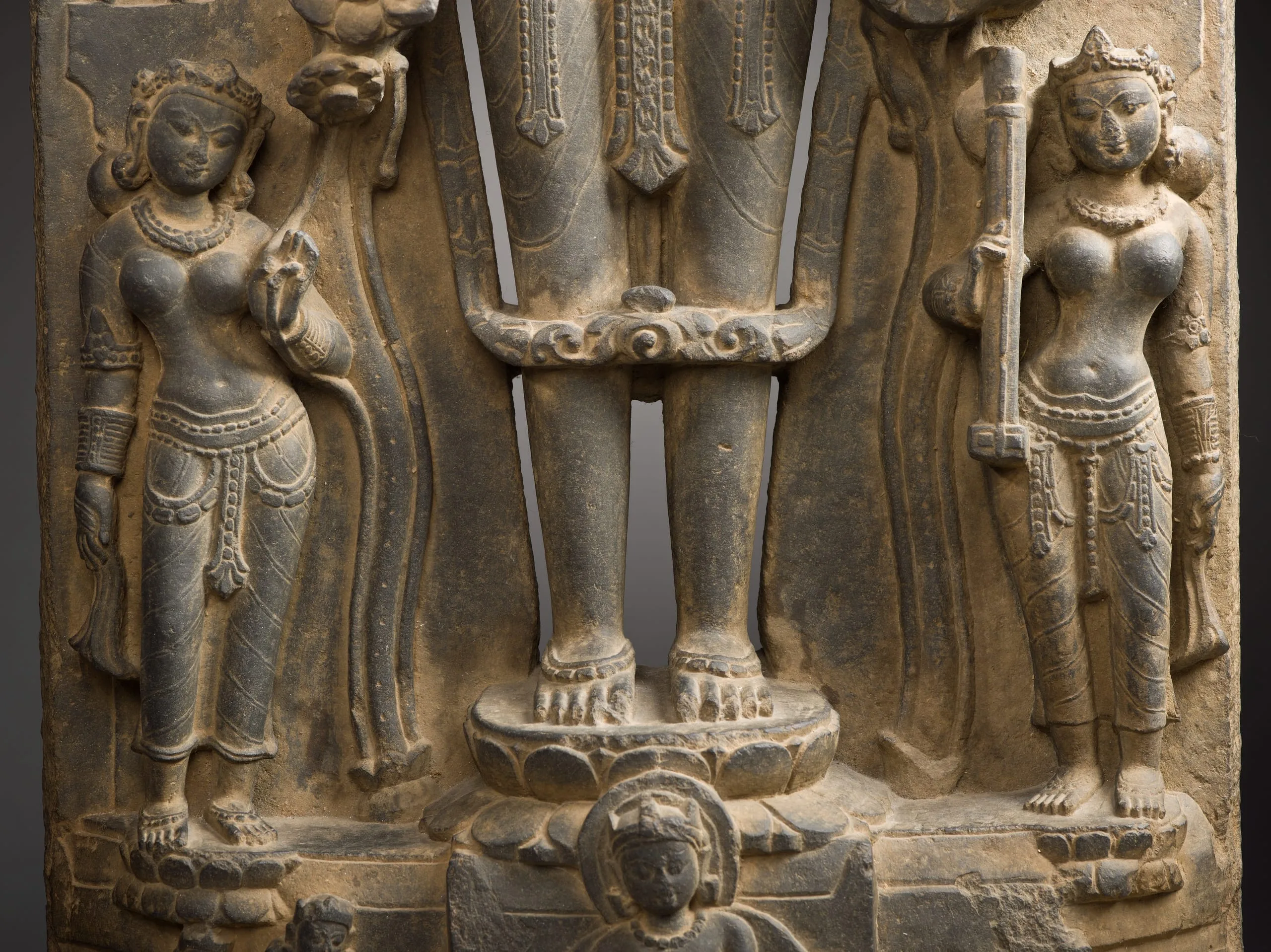
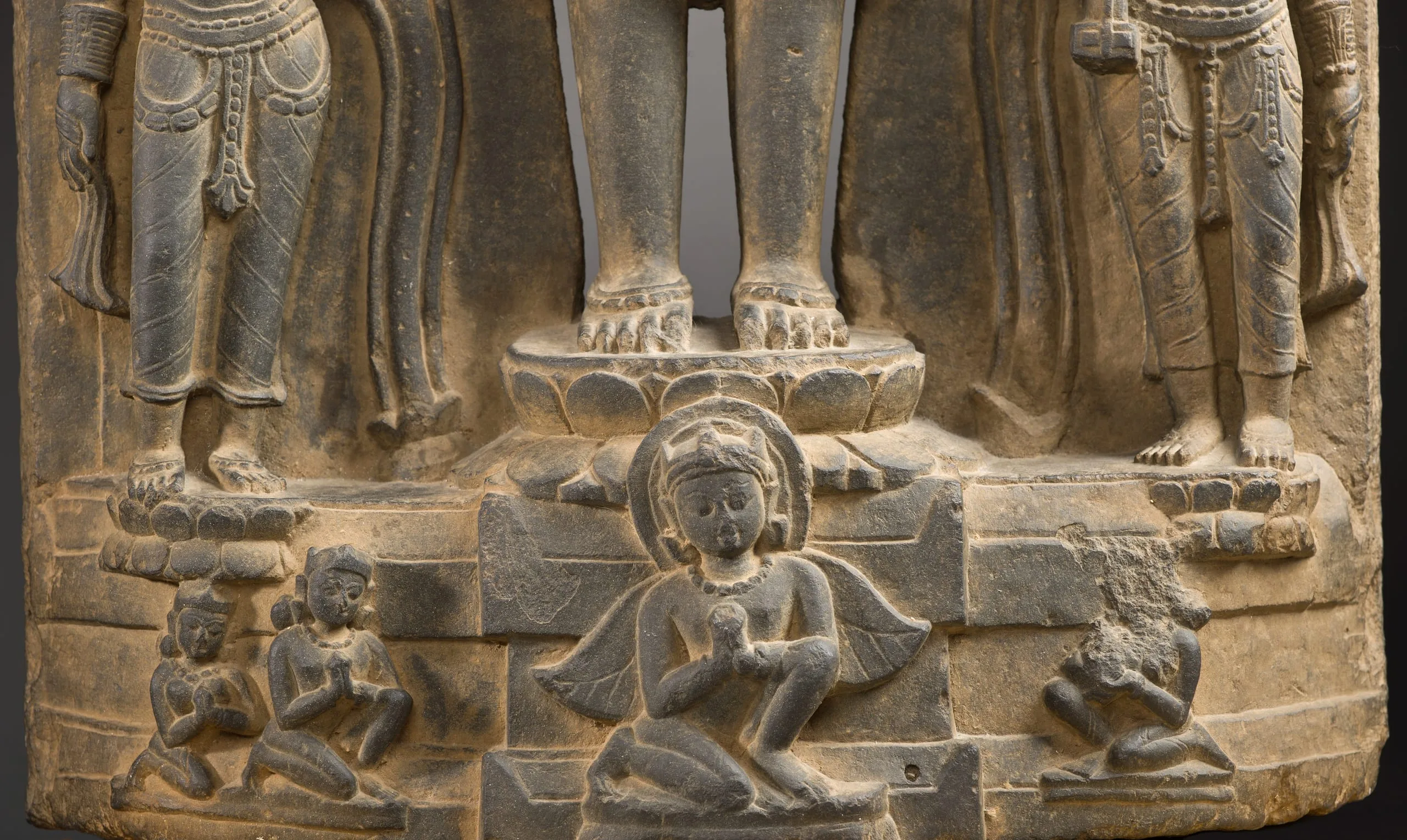
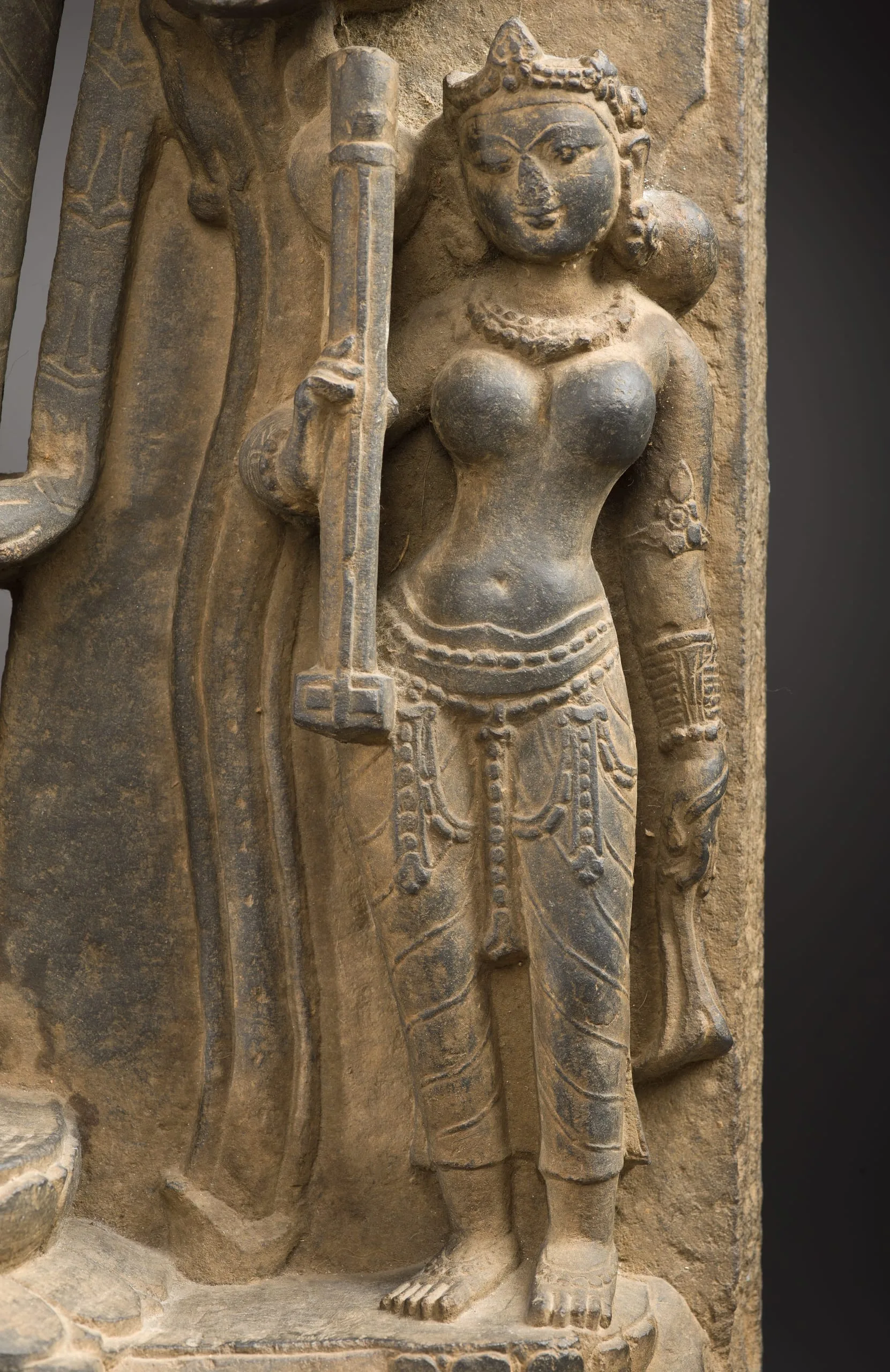
Vishnu, the Hindu God of Preservation, has twenty-four philosophical aspects (chaturvinshati-murtis) as described in the late 3rd-century BCE devotional text, the Pancharatra (Five Nights). The various forms have different names and are differentiated iconographically by the position of Vishnu’s standard attributes held in his four hands. In this representation, known as Narayana, the lotus is held in his upper right hand, the conch in his lower right, the mace in his upper left, and the discus in his lower left. Vishnu is crowned and wears copious jewelry, including his long forest garland (vanamala) that hangs across the front of his knees. Behind him is elaborate throneback adorned along the sides with rearing leographs standing on elephants and a "Face of Glory" (kirttimukha) at the apex. Two celestial garland bearers (maladharas) fly above Vishnu in his honor. Vishnu is flanked by his two wives. On his right is Lakshmi holding a lotus. On his left is Sarasvati holding a zither (vina). In the center of the base is Vishnu’s half avian mount, Garuda. To his right are the donor couple who commissioned the sculpture. To his left is a now-damaged figure that cannot be identified.
See also M.85.279.4, The Hindu God Vishnu in his Emanation as Shridhara.